
How to Build a Promotional Sunglasses Program
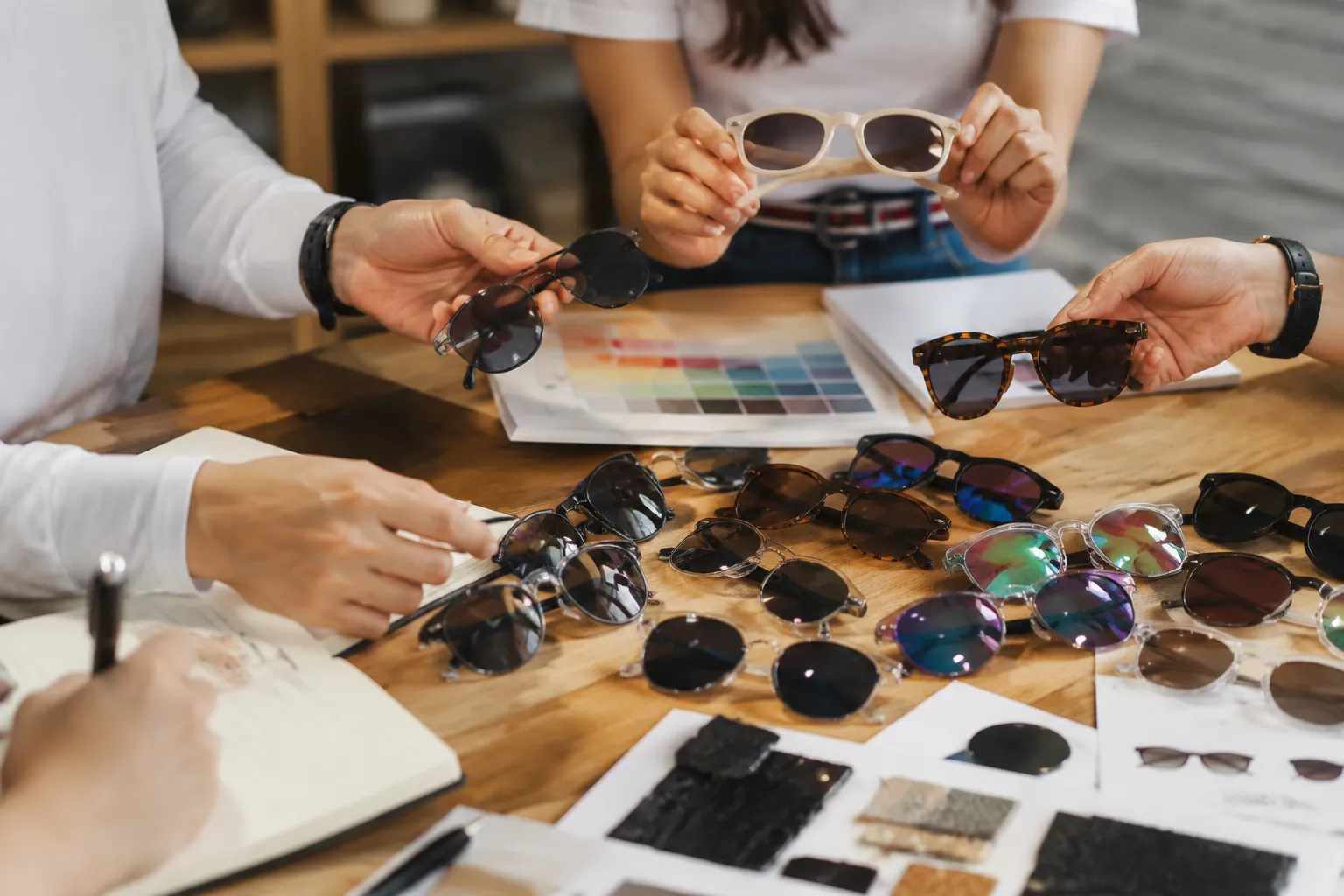
This guide is for buyers sourcing promotional sunglasses for events, retail campaigns, staff kits, and large giveaways. The goal is simple: launch a logo-driven program that arrives on time, stays inside the landed-cost target, and avoids preventable quality or compliance issues. Sunglasses look easy to buy. They are not. Logo placement, color assortment, lens specification, labeling, and testing can all shift cost and timing. Start with the distribution plan, delivered budget, and warehouse-in date. Then build the specification around those constraints.
Start with distribution, budget, and delivery date
Many promotional sunglasses programs go off track before sampling even starts. A buyer picks a frame from a render or sample board, then tries to force that choice into a budget, audience, and delivery window it was never built to fit. Reverse the order.
Start with four fixed inputs: recipient type, total quantity, target landed cost per pair, and required in-warehouse date. Those inputs drive the rest of the spec: frame construction, lens type, logo method, packaging level, compliance scope, and whether one SKU or several colorways are realistic.
- Single-event giveaway: prioritize broad appeal, straightforward frame and lens colors, one-position branding, and simple bulk packing.
- Multi-country campaign: prioritize market-specific labeling, carton marking, document control, and consistency across production lots.
- Retail promotion or gift-with-purchase: put more budget into finish quality, hinge feel, logo execution, and upgraded pouch or box presentation.
- Distributor or store program: lock carton quantity, color split, barcode format, and pack ratios early for each destination.
For a deadline-sensitive program, a workable brief is usually one frame body, a limited number of frame colors, one lens specification, and one or two logo positions. More variables mean more approvals, more packing complexity, and more room for mistakes. If the order supports a fixed event date, simplicity usually wins.
Define fit expectations early too. For mass distribution, buyers usually choose commercial shapes that suit a broad range of wearers, not narrow fashion styles. Ask for the full size spec and a wear-fit sample before you lock the style. Do not rely on artwork alone.
Choose the right construction for the campaign
Not every sunglass build suits a promotional program. Construction affects unit cost, production stability, decoration performance, and defect risk. The best option is usually the one the factory can produce consistently at the required volume and price.
| Build option | Best use | Typical cost position | Lead-time impact | Main trade-off |
|---|---|---|---|---|
| Injection molded plastic frame | Mass giveaways, event programs, low to mid price tiers | Lowest | Usually the fastest and most scalable | Less premium hand-feel than acetate |
| Acetate frame | Retail promotions, VIP kits, gift-with-purchase | Higher | Usually longer because of additional finishing steps | Better finish, but harder to fit aggressive price targets |
| CNC-machined detail components | Small runs with special shape detail or hardware accents | Mid to high | Adds machining and assembly time | Useful for precision, less efficient for low-cost bulk |
| Standard tinted lenses | Outdoor campaigns and general giveaways | Low | Usually stable and repeatable | Less visual differentiation |
| Mirror or gradient lenses | Fashion-led activation and higher-perceived-value programs | Mid | Can add approval and color-control time | Stronger visual impact, tighter QC required |
For promotional volume, injection molding is often the most practical starting point because it supports repeatable production and broad price coverage. Typical issues include flash, sink marks, color variation, and surface defects. Ask how the supplier controls those points during molding and finishing, especially if the order includes multiple frame colors.
Acetate can create a stronger retail impression, but it usually requires more cutting, polishing, fitting, and finishing. That adds both cost and time. If the program runs on a tight giveaway budget, acetate should be a deliberate choice, not an automatic upgrade.
Branding geometry matters too. Deep temple texture, sharply curved print zones, and very small branding areas reduce decoration consistency. Before you approve the frame, confirm that the logo area is flat or stable enough for the chosen branding method.
Build the budget around specification and quantity breaks
Promotional eyewear pricing only means something when tied to a defined specification and order volume. Buyers often focus on ex-factory price. That is too narrow. The more useful measures are sample cost, quantity break, and delivered cost per usable pair.
Some suppliers will accept a low formal MOQ for a test order, but small runs usually cost more per unit because setup, decoration prep, sampling, packing planning, and document handling still have to happen. At higher volumes, those fixed costs spread out better.
- Small pilot orders: useful for concept approval, influencer seeding, or internal review, but usually the least cost-efficient.
- Entry promotional orders: often the first level where setup cost becomes easier to absorb across the run.
- Mid-volume orders: may justify upgraded pouching, a second logo position, or tighter color control if the budget allows.
- Large-volume orders: usually provide the best leverage on production efficiency, print setup, and packing standardization.
Do not compare quotes unless the specification matches line by line. A quote that includes a pouch, barcode labels, individual polybags, or upgraded lenses is not directly comparable to one that does not. Ask for pricing broken into clear components: frame, lens, branding, inner packing, outer carton configuration, and testing cost if applicable.
Also judge value by usable output, not headline unit price. A cheaper ex-factory quote can become the expensive option if it leads to print defects, packing errors, or rework after arrival. Ask what inspection controls are in place and how nonconforming units are handled before shipment.
Plan the timeline around approvals and freight reality
Lead-time failures usually come from slow approvals, late spec changes, or bad freight assumptions, not from the production line itself. The schedule has to reflect real decision points. No guesswork.
A typical custom promotional sunglasses timeline includes these stages:
- Project confirmation: finalize frame style, quantity by color, vector logo files, packaging specification, destination markets, and compliance scope.
- Sample development: prepare branded or pre-production samples for review.
- Buyer review and revision: approve the sample or issue one consolidated round of comments.
- Production booking: lock materials, artwork, print setup, packaging details, and carton planning after final approval.
- Bulk production: run molding, decoration, assembly, packing, and internal quality checks.
- Final inspection and shipment: complete inspection, confirm packing list and carton marks, then book freight.
If the order must arrive before a fixed event, count backward from the warehouse-in date, not the factory ship date. Leave room for final inspection, export handling, and freight variability. The cheapest freight option is not the right option if it puts the launch at risk.
Mixed assortments need earlier control. If each store, distributor, or country requires a specific color ratio, barcode, or carton mark, freeze those instructions before bulk packing starts. Late assortment changes often create sorting delays and shipment errors.
One rule protects the schedule: lock logo size, color reference, lens specification, packaging, and carton pack-out before approving the sample. Changes after that point often trigger a new sample round or rework in production.
Choose a branding method that matches the frame and use case
On promotional eyewear, decoration quality often determines whether the product feels controlled or cheap. A simple frame with clean branding usually performs better than a more ambitious frame with inconsistent logo execution.
The most common branding methods are pad printing, laser engraving, and metal logo plates. Each has a different cost, appearance, and production risk profile.
| Logo method | Best for | Typical strengths | Main risks |
|---|---|---|---|
| Pad printing | Large runs, bold logos, low-cost campaigns | Low cost, fast setup, strong color visibility | Adhesion failure, loss of detail on small text, placement variation |
| Laser engraving | Minimal branding, permanent mark effect | Clean finish, no ink adhesion issue | Low contrast on some materials and colors |
| Metal logo plate | Retail promotions, premium gift programs | Higher perceived value, dimensional branding | Higher labor content, higher cost, added assembly variables |
Pad printing is often the most economical choice for promotional runs, but it has to match the substrate and the expected handling of the product. Temples flex during use. That matters. Buyers should confirm surface preparation, ink compatibility, and adhesion testing during approval.
Approval should cover more than artwork. Ask for a physical sample or a documented pre-production approval showing logo size, logo position, print color reference, and the result of a basic adhesion check for printed marks. If the logo includes fine text, verify readability on the actual temple shape rather than approving from a flat digital file.
When consistency matters across a large run, define the logo placement reference point on the approved sample and keep that sample on file for production comparison and final inspection.
Define compliance requirements before sampling
Promotional sunglasses are still eyewear. Compliance expectations depend on the destination market and how the product will be distributed. Define those requirements at the quotation stage, not after production starts.
Depending on market, relevant references may include CE EN ISO 12312-1, ANSI Z80.3, AS/NZS 1067, REACH, and FDA registration where applicable. System certifications such as ISO 9001 and BSCI can indicate process discipline and audit coverage, but they do not replace product-specific performance or labeling requirements.
The key buyer action is simple: tell the supplier which countries will receive the goods and whether the product is being sold, gifted, or used in a promotion. That affects documentation, labeling, and testing expectations.
- EU orders: confirm whether the program requires compliance with CE EN ISO 12312-1 and what labeling must appear on the product or packaging.
- US orders: clarify expectations around ANSI Z80.3 and ask whether any channel partner is requesting FDA registration details or additional documentation.
- Australia/New Zealand: confirm whether AS/NZS 1067 applies to the shipment.
- Material compliance: request REACH control where relevant, especially if coatings, colorants, or components differ across SKUs.
If testing or compliance review is required on the final decorated product, avoid changing materials, lens specification, coatings, or decoration after approval. Even a small spec change can create new verification work and delay shipment.
Use QC checkpoints that protect repeatability
Low-cost promotional projects leave little room for rework. Buyers often negotiate price tightly but leave quality expectations vague. That is how programs end up with scratched lenses, inconsistent prints, loose hinges, or incorrect assortments.
A useful QC plan should cover incoming material inspection, in-line checks, and final random inspection. The checklist should match the real risk of the program. A giveaway item may not need luxury finishing standards, but it still needs acceptable appearance, correct branding, safe assembly, and accurate packing.
At minimum, request inspection around these points:
- Frame appearance: surface defects, color consistency, symmetry, warpage, and visible molding issues.
- Lens quality: scratches, coating uniformity where applicable, and left-right visual match.
- Assembly: hinge function, screw security, alignment, and overall opening-and-closing feel.
- Branding: logo position, print or engraving clarity, color match where relevant, and adhesion result for printed logos.
- Packing: assortment accuracy, barcode labels, pack counts, carton marks, and destination labeling.
For repeat programs, standardize the base SKU whenever possible. Approve one or two proven frame bodies, then rotate only colorways, artwork, or campaign inserts. That usually reduces approval time and improves reorder consistency.
Practical rule: the tighter the target price, the more precise the specification and QC plan need to be.
Before shipment release, ask for final carton photos, packing list confirmation, and a summary of any inspection findings and corrective actions. That step helps prevent sorting work and allocation errors after arrival.
Have a custom sunglasses project in mind?
Send us your styles, target market and quantities and we will return a detailed quote with MOQ, lead time and a sample plan.
Get a QuoteWhy source this from Wenzhou with LumiShades
Wenzhou in Zhejiang Province is widely regarded as China’s eyewear manufacturing capital, producing a large share of the world’s sunglasses. That concentration matters to buyers: a deep local supply chain for acetate sheet, hinges, lens blanks, plating and packaging means shorter component lead times, easier color and material matching, and a workforce with decades of eyewear-specific skill. LumiShades has manufactured in this ecosystem since 2009, and our vertical integration — in-house injection molding, acetate cutting, CNC milling, lens tinting, decoration and quality control — means no part of your order is quietly subcontracted to a workshop you cannot audit.
For international buyers, that vertical control translates into accountability. When a single factory owns every step, defects are traced and fixed at source rather than bounced between vendors, and your specifications survive intact from first sample to bulk. We back this with 15+ years of experience, shipments to 60+ countries, more than 5 million pairs produced per year and a 98.5% on-time delivery rate. Our certifications — CE EN ISO 12312-1, FDA registration, ANSI Z80.3, AS/NZS 1067, REACH, ISO 9001 and BSCI audit — mean the compliance documentation your market requires already exists. Explore our manufacturing capabilities and quality control process to see how this works in practice.
Frequently asked questions
What is the practical MOQ for a promotional sunglasses program? There is no universal MOQ because it depends on the frame, branding method, packaging, and supplier setup. Some factories accept small pilot orders, but those runs usually carry a high unit cost because sampling, logo setup, and packing prep are spread across fewer pieces. For buying decisions, ask each supplier for pricing at several quantity breaks using the exact same specification, then compare delivered cost per usable pair rather than the lowest headline MOQ.
How fast can a custom logo sunglasses order be produced? Production timing depends on the product specification, sample approval speed, order size, and freight mode. Ask the supplier for a stage-by-stage schedule covering sample development, approval, bulk production, final inspection, and shipment booking. Then work backward from the required warehouse-in date and add buffer time for freight and customs handling, especially if the campaign is tied to a fixed event.
Which logo method is best for low-cost giveaway sunglasses? Pad printing is usually the most cost-effective method for large giveaway runs because it is widely used, visually clear, and relatively efficient to set up. Before approving it, request a branded sample that shows actual logo size, placement, and color on the chosen frame material. Also ask the supplier to confirm how print adhesion is checked, because a cheap logo is still a problem if it rubs off during normal handling.
Can one style be packed for different stores or countries? Yes, but the packing plan must be defined before bulk packing starts. Give the supplier a written matrix showing destination, SKU, color ratio, carton quantity, barcode requirement, and carton mark for each channel or country. Then require packing list confirmation and carton photos before shipment release so you can verify that the allocation matches the distribution plan.
What compliance documents should I ask for? Ask for documents based on the destination market and sales channel, not a generic file pack. For the EU, discuss CE EN ISO 12312-1 and required labeling. For the US, discuss ANSI Z80.3 and whether the customer or channel partner expects FDA registration information. For Australia or New Zealand, discuss AS/NZS 1067. Where material control matters, ask about REACH. You can also request relevant ISO 9001 or BSCI information as background on factory systems, but those do not replace product-specific compliance evidence.
Ready to start?
Explore our shield & oversized sunglasses or request a quote — our sales team replies within 12 hours.
Request a Quote