
Promotional Sunglasses: From Brief to Delivery
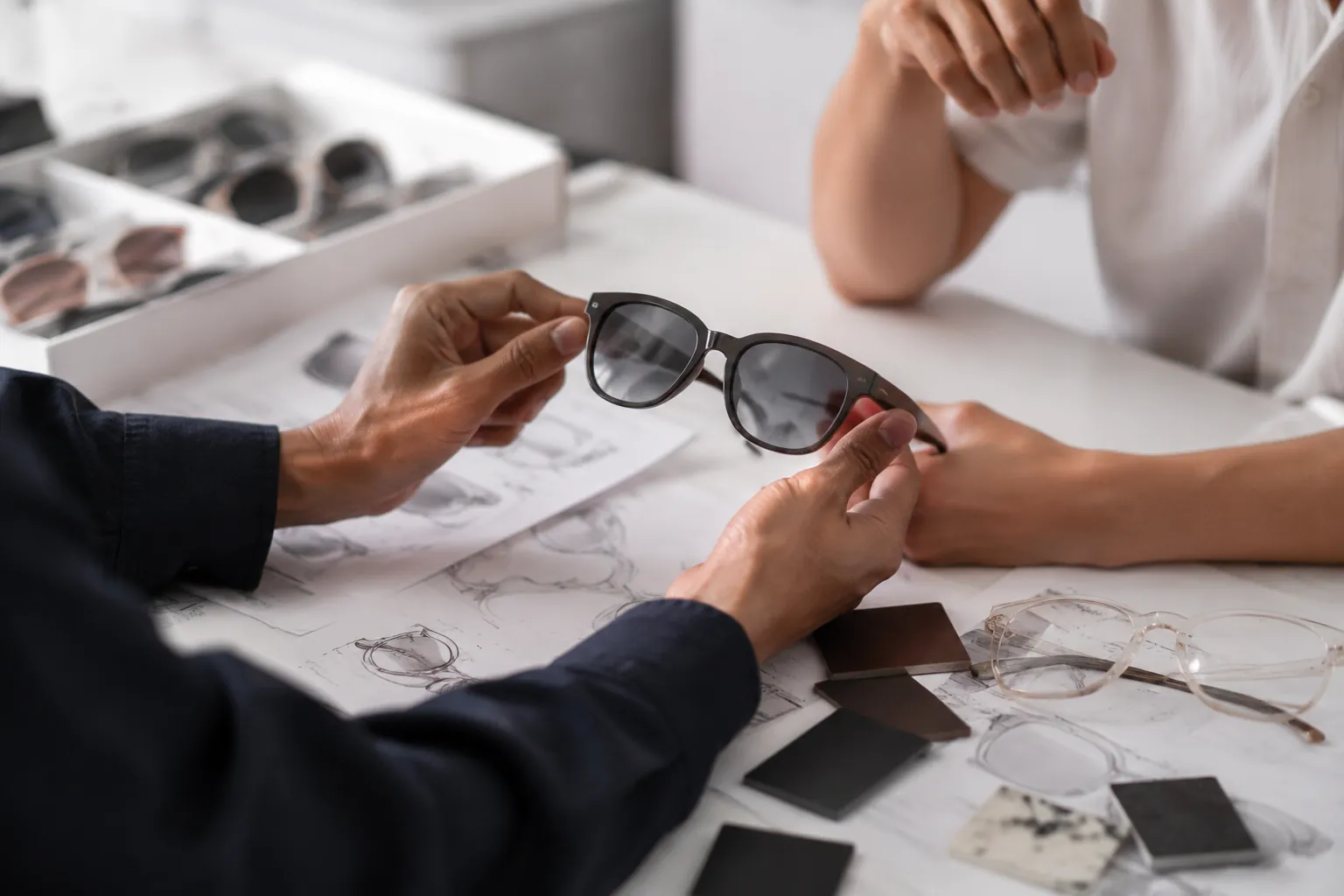
This guide is for promotional buyers sourcing branded sunglasses for events, retail campaigns, giveaways, festivals, travel programs, distributor promotions, and brand activations. It shows how to turn a campaign brief into a factory-ready order: quantity, frame choice, lens category, decoration, packaging, compliance, and delivery timing. Good photos are not enough. The order must arrive on time, pass the right checks, fit the budget, and survive normal handling before, during, and after distribution.
Start With the Campaign Date
Promotional sunglasses are deadline products. A fashion launch may move. An event giveaway usually cannot. Start with the handout date, then work backward through freight, customs, inspection, packing, production, sample approval, and artwork confirmation.
For a standard branded sunglasses project, a practical factory planning window is often 7-10 days for physical samples and 25-35 days for bulk production after the approved sample, deposit, and confirmed packaging files. That assumes an existing frame mold, standard lens color, one or two logo positions, and no late changes to barcodes, warning labels, carton marks, or compliance language. Custom molds, polarized lenses, complex mirror coatings, printed retail boxes, multi-region packaging, or special test requirements need more time. Simple fact: every extra variable adds risk.
A practical planning model for an air-freight promotional order is:
- Confirm the handout date, delivery address, and receiving rules.
- Reserve 5-10 days for air freight, customs clearance, and local delivery.
- Reserve 25-35 days for bulk production, QC, and packing.
- Reserve 7-10 days for physical samples and courier transit.
- Reserve 2-4 days for artwork correction, quotation, PI approval, and deposit arrangement.
That puts a serious buyer at about 45-60 days before the event for many standard air freight orders. Sea freight needs a longer buffer and should be checked against the actual port, season, sailing schedule, and destination clearance process. Do not hide the real deadline from the factory. A production team may compress some steps, but it cannot responsibly complete lens preparation, decoration drying, assembly, packaging, inspection, and shipment release in one afternoon.
Translate the Brief Into Factory Terms
A useful brief is not a mood board. It tells the factory what to make, what can move, and what cannot fail. For low-MOQ promotional sunglasses, the fastest route is usually an existing frame with customized frame color, lens color, logo, and packaging. LumiShades supports MOQ from 50 pairs per design, but unit pricing usually improves at higher quantities because setup time, fixtures, printing plates, color mixing, inspection, and packing labor are spread across more units.
Send these details in the first email, not after three quotation rounds:
- Quantity by SKU: for example, 300 black frames with smoke lenses and 300 white frames with blue mirror lenses.
- Target unit price: if the project must stay near a specific landed or FOB cost, state the target early so the specification can be built around it.
- Use case: beach event, music festival, hotel amenity, school event, sports promotion, trade show, retail gift with purchase, or distributor campaign.
- Logo positions: outside temple, inside temple, lens corner, pouch, box, hang tag, sticker, or multiple locations.
- Destination market: EU, US, Australia/New Zealand, UK, or mixed shipment.
- Packaging rules: polybag, microfiber pouch, printed box, barcode, warning text, recycling mark, carton marks, pallet rules, or marketplace label if required.
- Shipping mode: courier, air freight, sea freight, or buyer forwarder pickup.
Be direct about priorities. If the product will be worn outdoors for several days, lens performance, comfort, and fit matter more than a decorative box. If it is a one-day giveaway, a PC frame with UV-protective lenses and a clean temple print may be enough. If it supports a premium retail brand, hinge feel, logo registration, pouch material, and carton presentation need tighter control.
Choose Decoration by Surface and Wear
Many promotional delays start with late branding decisions. Decoration is not only where the logo goes. It affects fixtures, drying time, rejection rate, surface preparation, and how the product looks after normal handling.
For event sunglasses, the practical choice is usually pad printing or laser engraving on the temple. A common temple logo may be around 18-35 mm wide and 4-8 mm high, depending on the temple shape. Position tolerance on standard plastic temples is often planned at about ±0.5-1.0 mm, but the actual tolerance should be confirmed on the approved sample and production fixture. Curved, textured, narrow, or tapered temples reduce the printable area. Tiny details suffer first.
| Branding Option | Best Use | Typical Control Point | Buyer Note |
|---|---|---|---|
| Pad printing on temple | Low-MOQ events and simple one or two-color logos | Ink adhesion, logo position, drying time | Ask for tape test, rub test, and approved logo size in millimeters |
| Laser engraving | Dark frames, subtle permanent logos, and fast setup | Contrast, engraving depth, and readability | Works best for clean single-color marks without tiny gradients |
| Metal logo plate | Retail gifts and higher perceived-value campaigns | Plate thickness, edge finish, glue or pin strength | Confirm placement tolerance and attachment method before bulk |
| Lens logo print | Photo events, influencer kits, and short-term campaigns | Visual obstruction, scratch resistance, placement | Keep the mark small and outside the main field of view |
| Custom frame color | Brand color matching when quantity and timing allow | Pantone variance and material batch consistency | Approve a physical color sample because screens are unreliable |
Promotional buyers often request a full-color logo on a curved temple. Sometimes it works. Sometimes it looks weak because the artwork is too small, the surface is textured, or the print stretches around the curve. Ask the factory for the maximum printable area before finalizing artwork. A logo that looks clean at 28 mm wide on a flat PDF may need to become smaller or simpler on the actual temple.
Pick Materials for the Real Use Case
Do not specify acetate only because it sounds premium. Material choice should match the budget, quantity, wearing time, brand position, and delivery date. Injection-molded PC frames are common for promotional sunglasses because they are light, consistent, and efficient at volume. TR90-style materials can offer better flexibility and comfort but usually cost more. Acetate gives richer color, polish, and a more premium hand feel, but it requires cutting, tumbling, hinge setting, polishing, and more hand adjustment.
A one-day mass giveaway usually does not need acetate. A retail gift, hotel amenity, or loyalty-program reward may justify a higher-grade frame if the budget and timeline allow it. If the program needs several thousand pairs in multiple colors, injection molding is normally more predictable. If the order needs a small quantity with a premium look, an existing acetate style may work. Fully custom acetate color and shape should not be treated like a fast promotional item.
Lenses matter more than many buyers expect. Ask for UV protection documentation and the correct sunglass category for the intended use and destination market. Category 2 lenses are often more comfortable for mixed light or indoor-outdoor events. Category 3 lenses are more suitable for bright sunlight. Mirror coatings look strong in photos but can show scratches more easily during assembly and packing, so pouch quality and handling control matter. For driving-related campaigns, avoid lens colors or claims that may conflict with traffic signal recognition or local requirements.
A practical specification for many outdoor promotions is a PC frame, UV-protective category 3 lenses, pad-printed temple logo, and microfiber pouch. For trade shows or indoor giveaways, a lighter category 2 tint may make more sense. Before approving the production sample, confirm the exact material, lens category, UV claim, decoration method, and packaging.
Understand MOQ, Price Breaks, and Lead Time
MOQ is not only about material. It is also about setup. The factory has to prepare artwork, fixtures, printing plates, material colors, lens batches, packing materials, carton labels, inspection plans, and worker instructions. At 50 pairs per design, the setup cost is heavy per unit. At 300 pairs, it becomes more reasonable. At 1000 pairs and above, production can usually run with fewer stops and better line efficiency.
LumiShades supports MOQ from 50 pairs per design for custom sunglasses, with better pricing normally available at higher quantities such as 300, 1000, and 5000+ pairs. Any quoted unit price depends on frame, lens, decoration, packaging, compliance requirements, order split, and delivery terms. Treat early pricing as specification-dependent, not universal. A mirror lens, polarized lens, metal logo plate, printed box, and individual barcode will cost more than a standard frame, UV-protective lens, one temple print, and pouch-only packing.
| Order Level | Best Fit | Price Behavior | Lead-Time Advice |
|---|---|---|---|
| 50 pairs per design | VIP kits, buyer testing, and small events | High setup share per unit | Use existing frames, standard lenses, and one simple logo |
| 300 pairs per design | Local campaigns and boutique retail promotions | Better material and decoration efficiency | Confirm whether custom color is realistic before sampling |
| 1000 pairs per design | Distributor promotions and national event programs | Stronger price break and steadier QC flow | Lock packaging and carton marks before sample approval |
| 5000+ pairs per design | Large seasonal programs and multi-country rollouts | Best efficiency on suitable specifications | Plan pre-production sample approval, inline QC, and carton checks |
If you have six logo variants at 100 pairs each, ask whether one shared frame and lens combination can run first, with logo printing split later. That reduces material changeover and can protect the schedule. If each variant also changes frame color, lens color, pouch logo, barcode, and carton mark, the order behaves like several small jobs instead of one efficient campaign.
Approve Samples Like a Production Buyer
Sample approval is the cheapest place to find a mistake. After bulk production starts, every correction is slower and more expensive. Check more than the logo. Inspect the sample under daylight and indoor light. Wear it for several minutes. Open and close the temples repeatedly. Check whether the frame sits level, whether the lenses rattle, and whether the pouch scratches or sheds lint onto coated lenses.
For normal promotional eyewear, confirm logo size in millimeters, distance from the hinge, color match, edge sharpness, rub resistance, temple alignment, hinge tension, lens seating, tint darkness, mirror uniformity, barcode readability, and carton quantity. If the logo is too close to the hinge, correct it before printing plates and fixtures are released for bulk production. If a pouch is too tight, workers may scratch mirror lenses during packing.
- Logo: confirm size, position, Pantone or CMYK reference, sharpness, rub resistance, and approved artwork file.
- Frame: check mold lines, sink marks, burrs, surface gloss, temple alignment, and hinge opening.
- Lens: check tint category, UV claim documents, scratches, distortion, mirror uniformity, and lens seating.
- Fit: check bridge comfort, pressure points, temple opening width, and whether the frame sits level.
- Packaging: confirm pouch size, box print, barcode, warning text, carton quantity, carton marks, and gross weight.
- Compliance: confirm destination market, test standard, warning language, and whether available reports match the chosen lens and material.
For repeat orders, keep a signed golden sample. Factory QC should use it for color, logo position, lens tint, finish, and packaging. A digital photo helps communication, but it is not enough for final color or tint control. Screen brightness and camera exposure can hide real differences.
Match Compliance to the Market
Sunglasses are regulated consumer products. Promotional use does not remove that responsibility. If the glasses are handed to consumers in the EU, US, Australia, or New Zealand, confirm the relevant documentation before shipment. Compliance can also affect packaging language, warning labels, product claims, and lens category selection.
Recognized compliance references for sunglasses may include CE EN ISO 12312-1, ANSI Z80.3, AS/NZS 1067, REACH, FDA registration, ISO 9001, and BSCI. The key is matching the documentation to the destination market and the actual product specification. A report for one lens type, coating, frame material, or product family may not automatically cover a different lens color, polarized version, mirror coating, or material.
For EU programs, CE EN ISO 12312-1 is the central sunglass standard, and REACH is relevant for chemical restrictions in materials, coatings, inks, and packaging. For the US, buyers may request FDA registration information and ANSI Z80.3 alignment. For Australia and New Zealand, AS/NZS 1067 is the relevant sunglass standard. If one production run ships to several regions, tell the factory early so packaging marks, warning language, and documents can be prepared correctly.
Do not approve promotional sunglasses only because they look good in a photo. Confirm lens category, UV protection, chemical compliance, product claims, and destination-market documents before bulk shipment.
Be careful with claims. If packaging says polarized, the lenses must be polarized. If it says UV400, the supplier should support that claim with relevant testing or documentation. Do not add claims that create extra testing cost and legal risk unless the campaign truly needs them.
Plan Packaging Around Real Handling
Packaging is often treated as the final detail. That is a mistake. Packaging affects sampling, unit cost, carton size, freight cost, barcode control, QC time, and the customer's first impression. A microfiber pouch is efficient for promotional sunglasses because it protects the lenses and can carry a logo. A printed box improves retail appearance but increases packing labor and carton volume. Individual polybags cost less but may look too basic for brand campaigns.
Confirm packaging before bulk starts: individual packing method, pouch or box artwork, barcode file, warning text, instruction leaflet if needed, master carton quantity, carton dimensions, gross weight target, shipping marks, pallet rules, and warehouse receiving requirements. For larger orders, ask for a carton drop test or at least a packing photo showing inner quantity, carton layout, and carton marks. A common promotional packing plan may use 1 pair per pouch, 12 or 20 pairs per inner box, and 100 or 200 pairs per master carton, but final numbers depend on frame size and box choice.
A realistic production schedule after sample approval is:
| Stage | Typical Timing | What Can Delay It |
|---|---|---|
| Material and lens preparation | 3-7 days | Custom color, polarized lenses, mirror coating, late lens category change |
| Frame production and finishing | 7-12 days | Small split lots, mixed colors, acetate handwork, re-polishing |
| Logo decoration | 3-6 days | Multi-color print, poor artwork, drying time, fixture changes |
| Assembly and adjustment | 4-8 days | Hinge correction, lens fitting issues, mixed SKU instructions |
| QC, packing, and carton marking | 3-5 days | Barcode changes, missing labels, packaging defects, carton mark errors |
This is why 25-35 days for bulk production is a realistic planning range for many standard promotional sunglasses orders. It is not padding. It is the time required to prepare materials, make frames, decorate logos, assemble lenses, inspect quality, pack units, and release cartons for shipment. On-time delivery depends on fast buyer approvals, clean artwork, accurate documents, and stable packaging decisions.
Have a custom sunglasses project in mind?
Send us your styles, target market and quantities and we will return a detailed quote with MOQ, lead time and a sample plan.
Get a QuoteWhy source this from Wenzhou with LumiShades
Wenzhou in Zhejiang Province is widely regarded as China’s eyewear manufacturing capital, producing a large share of the world’s sunglasses. That concentration matters to buyers: a deep local supply chain for acetate sheet, hinges, lens blanks, plating and packaging means shorter component lead times, easier color and material matching, and a workforce with decades of eyewear-specific skill. LumiShades has manufactured in this ecosystem since 2009, and our vertical integration — in-house injection molding, acetate cutting, CNC milling, lens tinting, decoration and quality control — means no part of your order is quietly subcontracted to a workshop you cannot audit.
For international buyers, that vertical control translates into accountability. When a single factory owns every step, defects are traced and fixed at source rather than bounced between vendors, and your specifications survive intact from first sample to bulk. For procurement review, buyers can request process records, approved samples, quality checkpoints and project-specific compliance files before placing a bulk order. Required testing and documentation are confirmed against the destination market and product specification rather than assumed from a generic certificate list. Explore our manufacturing capabilities and quality control process to see how this works in practice.
Frequently asked questions
Can I order only 50 pairs with my logo? Yes. LumiShades supports MOQ from 50 pairs per design. For this quantity, use an existing frame, standard lens color, and one simple pad print or laser engraving position. Send the logo file, desired logo size, destination market, and packaging request before quotation so the factory can confirm whether the order is practical.
How much time should I allow before an event? Plan about 45-60 days before the handout date for many standard air freight orders. This usually allows 7-10 days for samples, 25-35 days for bulk production, a few days for approvals and payment steps, and 5-10 days for freight, customs, and local delivery. Add more time for sea freight, custom molds, polarized lenses, mirror coatings, printed boxes, or multi-country compliance packaging.
Which branding method is safest for a tight deadline? Pad printing or laser engraving on the temple is usually the safest choice because setup is more predictable than metal plates, lens printing, or complex multi-color decoration. Use vector artwork, confirm the printable area in millimeters, approve a physical sample, and avoid changing logo color or position after sample approval.
What logo tolerance should I expect on promotional sunglasses? On standard plastic temples, logo position is often planned at about ±0.5-1.0 mm, but the actual tolerance depends on the temple shape, fixture, surface texture, and decoration method. Ask the factory to mark the approved logo size and distance from the hinge on the sample approval sheet, then use that sample as the bulk production reference.
What compliance documents should I ask for? Match documents to the destination market and actual product specification. For the EU, ask about CE EN ISO 12312-1 and REACH. For the US, ask about FDA registration information and ANSI Z80.3 alignment. For Australia and New Zealand, ask about AS/NZS 1067. Confirm whether the documents cover the selected lens color, coating, material, and claims such as UV400 or polarized.
Can I mix several colors in one promotional order? Usually yes, but every color split can affect material preparation, setup, inspection, price, and timing. To control cost and lead time, keep the same frame and lens where possible, then split only the logo or frame color. If each SKU has a different frame color, lens color, pouch, barcode, and carton mark, treat it as several small production jobs.
What is the easiest way to keep the unit price low? Use an existing injection-molded frame, standard UV-protective lenses, one temple logo, and simple pouch or polybag packing. Keep artwork simple, avoid late packaging changes, reduce SKU splits, and order at higher quantities such as 300, 1000, or 5000+ pairs per design when the campaign volume allows.
Ready to start?
Explore our shield & oversized sunglasses or request a quote — our sales team replies within 12 hours.
Request a Quote