
Private Label Sunglasses for Boxes and Loyalty Programs
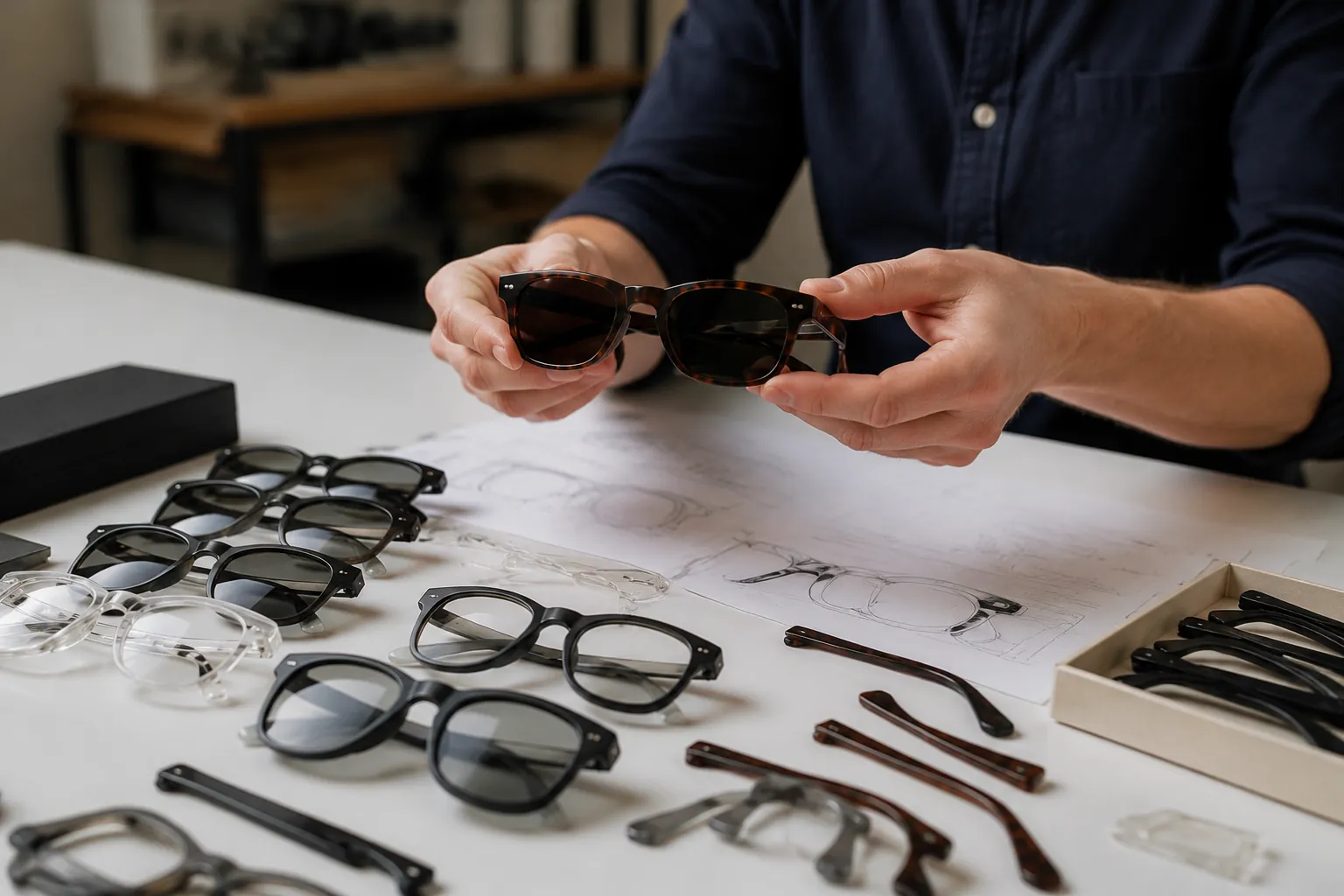
Private label sunglasses fit subscription boxes, loyalty programs, and gift-with-purchase campaigns. They are easy to brand, easy to pack, and easy to repeat if the spec stays tight. The hard part is not the idea. It is matching MOQ, sample timing, decoration, packaging, and compliance to a fixed launch date. If the order must arrive on time, fit the box, and clear the destination market, those details matter more than the concept deck.
What promotional buyers actually need
Subscription boxes and loyalty programs buy sunglasses differently from fashion labels. The product is tied to a campaign date, not a season. So the supplier has to work backward from a deadline. That changes the priorities. Repeatability matters. Sample speed matters. Pack-out matters.
Most promotional buyers do not need a long development cycle. They need one frame style, one or two colors, one logo location, and packaging that fits the box without wasting space. Simple is usually better. Fewer variables mean fewer delays.
For any private label program, confirm the frame build, decoration method, packaging, and destination-market standard before bulk production. Do that early. It keeps the order aligned with the launch plan and cuts late rework.
The first useful question is not "What looks good?" It is "What can be sampled, approved, packed, and repeated without delay?" That question saves time and money.
Choose the right frame build
Frame construction should match the program. A mass loyalty giveaway needs a different build from a retail gift item that needs a more premium feel. Pick the wrong material and the landed cost rises. Or the box no longer fits.
| Build | Best use | Strengths | Trade-offs |
|---|---|---|---|
| Injection-molded plastic | High-volume promo programs and standard loyalty rewards | Fast tooling, lower piece cost, repeatable output, and consistent color when the resin is controlled | Less surface depth than acetate; fine detailing and gloss control depend on mold quality |
| Acetate | Retail boxes, premium gift campaigns, higher perceived-value items | Rich surface feel, strong brand presentation, more finishing options, and polished visible edges | Higher material cost, more labor in cutting and polishing, and less flexibility if artwork changes late |
| Metal or mixed-material | Premium redemption items and slim-profile styles | Light visual profile, strong decoration opportunities, useful when the box needs a less bulky frame | More parts and fastening points, tighter process control, and more chances for delay if hinges, pads, or temple tips vary |
For most loyalty redemptions, injection molding is the simplest route. It keeps unit cost lower and output more consistent. Still, check fit, hinge alignment, temple opening, and lens seating before bulk approval. Small errors show up fast.
Acetate works better when the buyer wants the glasses to feel like an accessory, not a giveaway. Metal frames can also work well for a slim profile. They bring more assembly variables, though. That makes them less forgiving on a tight schedule.
Lock the carton size and target landed cost before finalizing the frame build. A style can look compact on screen and still miss the box depth once it is folded, bagged, tagged, and packed with a cloth or case.
Branding choices that keep the schedule moving
Decoration is where many private label sunglass programs lose time. The frame is usually manageable. The problem is logo method, placement, curing, alignment, and repeatability. Choose the least complicated method that still does the job.
- Laser engraving: best on metal parts, hinges, or temple details; permanent, clean, and low-risk once the file is approved.
- Pad printing: good for temple logos, lens marks, and simple one-color artwork; efficient for short runs and repeat orders.
- Metal logo plates: useful on acetate or plastic temples when the brand wants a tactile premium detail.
- Hot stamping or foil marking: suitable for some packaging elements and limited brand marks, though it needs careful temperature control.
- Single-color or limited-color print: the most stable option when the buyer needs repeatability across multiple drops.
For promotional use, simple branding usually wins. One logo. One location. One color. One approval path. That reduces scrap and shortens the sample cycle.
Large logos across curves can cause registration issues, especially on temple arms. The angle changes. The print edge is harder to control. Keep that in mind.
Lenses need extra clarity. Define whether the mark is permanent or removable, whether it sits inside or outside the optical zone, and how durable it must be after handling, wiping, and packing. For most box programs, a small lens mark or temple mark is enough.
Ask for a real tolerance. Not "OK by eye." The supplier should state placement tolerance, acceptable print shift, and the sample approval standard before bulk starts.
Packaging that fits the box
Packaging is where many campaigns fail quietly. A frame can look correct on paper and still create problems once the pouch, insert card, cleaning cloth, barcode label, or case is added. In subscription boxes, every millimeter and gram matters.
For subscription boxes, packaging has to balance protection, presentation, and cubic efficiency. A microfiber pouch is the lightest option. A folding carton adds branding and shelf presence but also bulk. A rigid gift box feels premium, but it can raise carton size and freight cost fast.
Approve the packed sample, not just the frame sample. Ask for outer dimensions, packed weight, and a packed-set photo that shows the exact consumer configuration. If the set includes a pouch, insert, cloth, and carton, measure those items together.
Check carton wall thickness, closure method, print area, insert fit, and whether the folded temples press into the lens surface. A simple folding carton may add only a little weight, but it can still push the box over spec. A rigid box may protect better, but it may also need a different shipping plan and a higher fulfillment fee.
The most common mistake is approving a nice sample and then learning the packed unit is too tall, too wide, or too heavy. For campaign buying, packaging is part of the product.
A sourcing sequence that avoids rework
Buyers save time when they treat the order as a controlled sequence. Not a loose creative project. A clean process reduces revision loops and helps the factory hold the quoted cost.
A practical workflow looks like this:
- Confirm target audience, price ceiling, destination market, and delivery month.
- Choose the frame category: injection, acetate, or mixed-material.
- Lock logo method, placement, and decoration size.
- Approve the sample with packaging included, not just the bare frame.
- Confirm the compliance standard by market before bulk production starts.
- Release mass production only after pre-production confirmation and pack-out approval.
That order matters. Each step affects the next one. If decoration is approved before packaging is fixed, the logo may clash with the carton window or insert layout. If the frame is approved before lens tint is finalized, the buyer can end up with the wrong appearance or light transmission target. If market compliance is left to the end, the shipment can stall while paperwork is corrected.
A 7-10 day sample window is useful because it lets the buyer review styling, decoration, and packing together. A 25-35 day bulk window can work for standard promotional orders when artwork and compliance documents are ready. Add custom inserts, special finishes, or multiple pack components, and the schedule should expand.
Ask for a pre-production sample when the artwork, material, or pack-out is not standard. It is usually the cheapest way to avoid a full rework later.
Compliance by destination market
Promotional sunglasses are still regulated eyewear. The destination market sets the standard. The standard sets the documentation. A casual giveaway can still create a compliance problem if the lens category, markings, or material set does not match the market.
| Market / requirement | What to verify | Why it matters |
|---|---|---|
| CE EN ISO 12312-1 | Lens protection, labeling, and test basis for sunglasses sold in relevant European channels | Confirms the product is handled as consumer eyewear, not generic novelty plastic |
| ANSI Z80.3 | Impact and optical requirements for U.S. sunglasses programs | Common benchmark for retail and promotional eyewear in the U.S. market |
| AS/NZS 1067 | Australian and New Zealand sunglass requirements | Needed for programs entering those markets, especially where retail or redemption compliance is checked closely |
| REACH | Chemical compliance for restricted substances in materials, coatings, and inks | Important for safety review, customs files, and buyer procurement checks |
Ask for the compliance file before mass production, not after. If a gap turns up late, the fix may require retesting, artwork changes, label changes, or shipment delay. That is avoidable if the market requirement is set during sample approval.
If you sell into more than one market, separate the SKUs by destination and label them clearly in the purchase order. That keeps paperwork, packaging, and test references aligned.
Supplier documents such as FDA registration, ISO 9001, and BSCI can support factory qualification. They do not replace product-specific compliance for the frame, lens, and decoration configuration being ordered.
Pricing, MOQ, and lead-time logic
In low-MOQ promotional eyewear, unit price is only part of the cost. Buyers need to see how the quote changes with quantity, decoration, packaging, and schedule pressure. The cheapest line item is not always the cheapest landed result.
| Order level | Typical buyer use | Cost behavior | Planning note |
|---|---|---|---|
| 50 pairs/design | Pilot campaign, test box, limited loyalty drop | Higher unit cost because setup, artwork, and packing prep are spread across fewer pieces | Best for validation, not for lowest landed cost |
| 300 pairs | Small retail test or regional promotion | Better price leverage and more efficient packing | Often the first level where a campaign starts to look commercially efficient |
| 1000 pairs | Multi-market or multi-month rollout | Material, labor, and decoration costs spread more efficiently | Common balance point between risk and cost |
| 5000+ pairs | Large retail chain, major loyalty program, or recurring box | Lower per-unit cost compared with smaller runs, depending on the specification | Requires stable forecast and minimal design churn |
Lead time is usually driven by three variables: tooling or mold readiness, decoration complexity, and packaging approval. A standard frame with a simple one-color logo can often stay within the 25-35 day bulk window. Add a new mold, extra surface finishes, multi-part packaging, or unusual lens treatment, and the schedule will stretch.
Compare quotes on the full landed package, not just the frame price. Ask for unit price at the target quantity, sample cost, packing cost, freight assumptions, and any charge for special artwork or inserts. A lower quote can turn expensive once packaging upgrades or corrections are added.
For repeat programs, the best way to improve price is to reduce variance. Stable materials, stable logo placement, and stable carton configuration help the factory hold both cost and schedule.
What to lock before you place the order
Before release, the buyer should have a clear spec sheet. A vague email thread is not a spec sheet. It almost always leads to rework.
- Frame material and color code
- Lens tint, category, and appearance target
- Logo method, size, and exact placement
- Pouch, box, or case dimensions
- Carton pack count and outer carton size
- Destination market compliance standard
- Target sample date and bulk ship window
- Approved packed weight and packed dimensions
If those items are fixed, the factory can move without constant clarification. If they are still open, every approval round increases the chance of a mismatch between design intent, pack-out, and shipping reality. That is how simple sunglass programs become late, expensive, or both.
For subscription boxes and loyalty programs, the best private label sunglasses are the ones that ship on time, fit the box, and pass the compliance check without drama. Fancy is optional. Predictable is not. Tight spec, realistic schedule, measured packaging. That is the formula.
Have a custom sunglasses project in mind?
Send us your styles, target market and quantities and we will return a detailed quote with MOQ, lead time and a sample plan.
Get a QuoteWhy source this from Wenzhou with LumiShades
Wenzhou in Zhejiang Province is widely regarded as China’s eyewear manufacturing capital, producing a large share of the world’s sunglasses. That concentration matters to buyers: a deep local supply chain for acetate sheet, hinges, lens blanks, plating and packaging means shorter component lead times, easier color and material matching, and a workforce with decades of eyewear-specific skill. LumiShades has manufactured in this ecosystem since 2009, and our vertical integration — in-house injection molding, acetate cutting, CNC milling, lens tinting, decoration and quality control — means no part of your order is quietly subcontracted to a workshop you cannot audit.
For international buyers, that vertical control translates into accountability. When a single factory owns every step, defects are traced and fixed at source rather than bounced between vendors, and your specifications survive intact from first sample to bulk. For procurement review, buyers can request process records, approved samples, quality checkpoints and project-specific compliance files before placing a bulk order. Required testing and documentation are confirmed against the destination market and product specification rather than assumed from a generic certificate list. Explore our manufacturing capabilities and quality control process to see how this works in practice.
Frequently asked questions
What is the minimum order for a private label sunglasses campaign? The MOQ used in this article is 50 pairs per design. That works best for a pilot box, a small loyalty drop, or a limited regional test. At that level, unit cost is higher because setup and packing preparation are spread across fewer units.
How fast can I get a sample with logo and packaging? A straightforward sample can often be ready in 7-10 days after artwork is approved. To move that fast, send the logo file, confirm the decoration method, and approve the packaging size at the same time. If the job needs a new mold, special insert, or more complex finishing, allow more time.
Which branding method is best for low-volume promotional orders? Pad printing and laser engraving are usually the safest choices for small promotional runs. They are simple to set up, repeatable, and easier to control than multi-step decoration. Use the method that matches the material: laser engraving works best on metal parts, while pad printing is often better for simple logos on temples or packaging.
What certification should I ask for if I sell in the U.S. or Europe? Ask for the standard that matches the destination market and the exact SKU: CE EN ISO 12312-1, ANSI Z80.3, AS/NZS 1067, and REACH. Also request supplier documents for factory qualification, including FDA registration, ISO 9001, and BSCI where relevant. Make sure the documents match the same frame, lens, and decoration configuration you are ordering.
How do I keep the sunglasses from overrunning my box size or shipping budget? Approve the final packed sample, not just the frame sample. Confirm packed dimensions, packed weight, pouch or case choice, and outer carton count before mass production so the item fits the subscription box and the freight plan stays accurate. If the product includes a rigid box or extra insert, measure the fully packed set together.
What order size gives the best pricing? Pricing usually improves as volume increases, with better efficiency at 300, 1000, and 5000+ pairs. The best value depends on the full landed package, not just the frame price, so compare decoration, packaging, sample cost, and freight assumptions as one quote. For recurring programs, stable specifications usually matter more than chasing the lowest first quote.
Ready to start?
Explore our aviator sunglasses or request a quote — our sales team replies within 12 hours.
Request a Quote