
Logo Durability Tests for Branded Sunglasses
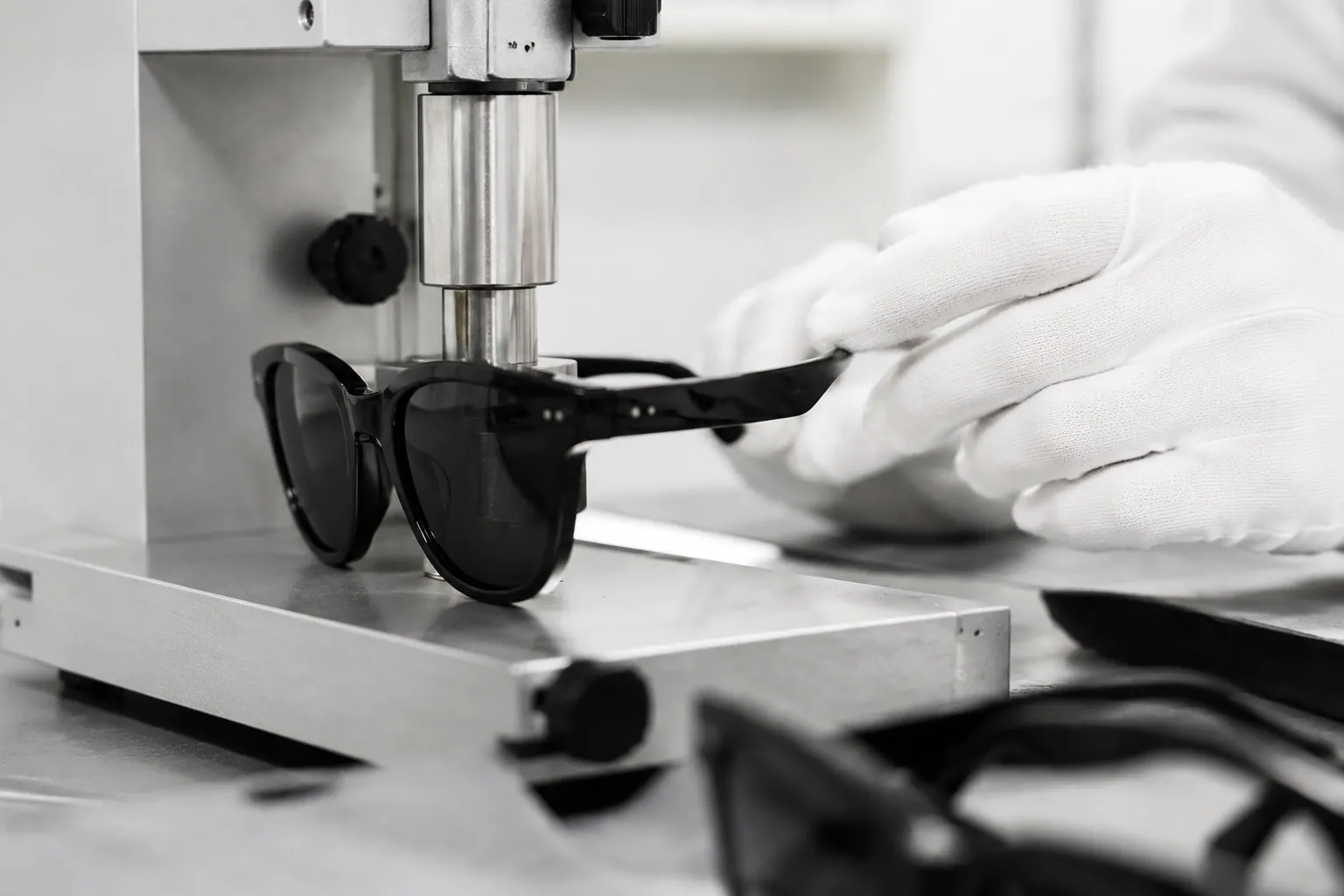
This guide is for brands, importers, distributors, resort buyers, event companies, and retail teams ordering custom sunglasses for beach, festival, sports, and private-label programs. It explains how logo method, frame material, lens coating, surface finish, packaging, and quality control affect durability in real use. Use it to write tighter specifications, approve samples with evidence, and avoid bulk orders where the logo looks fine in a photo but rubs, clouds, chips, or peels after sunscreen, sweat, sand, heat, and repeated handling.
The Real Failure Modes: Sweat, Sunscreen, Sand, Heat, and Handling
Branded sunglasses do not fail in clean, lab-like conditions. They fail in beach bags. On sweaty faces. Inside hot cars. In resort display trays. After staff wipe them with the wrong cleaner.
The highest-risk areas are the temple logo, lens logo, mirror coating, soft-touch or rubberized frame finish, metal logo plate, nose pads, hinge zone, and glossy surfaces that rub against packaging.
Sweat contains salts and organic acids. These can contribute to staining, corrosion, or ink weakening if the decoration system does not match the frame surface. Sunscreen is often worse. Many formulas contain oils, alcohols, silicones, and UV filters that can soften inks, attack soft-touch coatings, or leave visible residue on transparent frames. Sand adds abrasion. Heat speeds up the damage, especially when coatings, adhesives, or inks are under-cured or poorly specified.
For resort, surf, festival, marathon, promotional, and travel-retail programs, the approval question should not be: does the sample look good? The better question is: does the logo remain acceptable after dry rub, wet rub, sunscreen contact, handling, and packing-abrasion checks on the exact approved material and finish?
Logo durability is not only an ink issue. It depends on material pairing, surface preparation, fixture accuracy, curing time, adhesive selection, lens coating compatibility, packaging protection, and inspection discipline. Ask for evidence from the actual pre-production sample. Not from a different frame. Not from a different coating. Not from a generic supplier claim.
Logo Method Comparison: What Holds Up Best
The right logo method depends on the channel, expected wear, target price, order quantity, and frame material. A short influencer drop may tolerate a simpler decoration method. A resort retail program handled all day by customers wearing sunscreen needs tougher proof.
The cheapest decoration is not always the cheapest order. Rework, returns, retailer complaints, and visible brand damage cost more.
| Branding method | Best use | Typical control point | Durability notes | Buyer caution |
|---|---|---|---|---|
| Laser engraving | Acetate temples, metal parts, selected coated or painted surfaces after testing | Confirm position on a signed sample; tolerance depends on fixture and surface shape | Usually strong against surface abrasion because the mark is cut into or through the surface layer | Contrast can be low on black, tortoise, or transparent frames unless the engraving is filled or placed on a contrasting area |
| Pad printing | PC, TR90-style injected frames, acetate temples, promotional models | Confirm logo position, color, opacity, and cure condition on the actual surface | Can be durable when the surface is cleaned, treated if needed, and fully cured; weak when production is rushed or the ink system is incompatible | Must pass dry rub, wet rub, sunscreen contact, and packing checks on the exact frame finish |
| Metal logo plate | Retail sunglasses, resort programs, private-label collections | Check plate placement, edge finish, attachment method, and plating appearance | Can provide strong perceived value and good wear when inserted, riveted, or bonded correctly | Check plating quality, adhesive strength, sharp edges, lift, and movement after hinge flexing |
| Hot stamping or foil effect | Fashion detail, limited editions, packaging-matched temple accents | Confirm coverage, edge definition, and adhesion on curved or textured areas | Attractive finish but often more vulnerable to abrasion than engraving or a well-protected plate | Avoid as the main logo for high-abuse beach, rental, or sports channels unless testing proves it is suitable |
| Lens logo print | Event merchandise, small retail lens corner marks, promotional branding | Confirm size, position, visibility, and field-of-view impact | Highly exposed to wiping, skin oil, towels, paper napkins, and cleaners | Keep small, place outside the main field of vision, and test on the exact lens coating |
For high-contact programs, laser engraving or a properly installed metal plate often keeps its appearance longer than surface print. Pad printing is still practical and cost-efficient for many custom sunglass orders. But it needs process control.
On smooth injected frames, surface pretreatment may be needed to improve ink adhesion. On acetate, pay attention to cleaning, fixture support, ink compatibility, and curing. A print may feel dry soon after production but still need more cure time before chemical-resistance testing gives a reliable result.
Frame Material and Color: Why Some Finishes Scuff Faster
Frame material changes how decoration behaves. A white logo that holds well on matte black injected material may fail on glossy transparent smoke if the same ink, pad pressure, and cure process are used. Acetate, PC, and nylon-based materials accept decoration differently. Surface finish can matter as much as base material.
Acetate is cut from sheet material, so color and pattern often run through the sheet rather than sitting only on the surface. It usually gives thicker, flatter temple areas for CNC cutting, engraving, and logo plate installation. It suits boutique, resort, and private-label models where retail appearance matters.
Injected PC and nylon-based frames can be lightweight and cost-efficient for higher-volume promotional, event, and sports programs. Their molded surfaces may be slick, textured, painted, or coated. Slick surfaces may need pretreatment before pad printing. Deep texture can hide minor scuffs, but it can also break up small text and thin logo lines. Always check fine artwork on the actual production texture.
- Gloss black: strong logo contrast, but fine scratches can show under retail lighting.
- Matte black: more forgiving during handling, but dark or low-gloss ink may lack contrast.
- Transparent smoke or crystal clear: popular for resort and lifestyle programs, but residue, hinge grease, dust, and internal stress marks are more visible.
- White or pastel frames: excellent logo visibility, with higher staining and color-transfer risk during packing, handling, and sunscreen exposure.
- Rubberized or soft-touch coating: premium feel, but must be checked against sunscreen, skin oil, sweat, and cleaning wipes before approval.
- Metallic paint: premium look, but chips at hinge edges, lens grooves, and temple tips should be checked after flexing and packing tests.
Do not approve color, opacity, or decoration durability from a rendering. Request physical samples in the real material, finish, lens tint, logo method, and packaging. If LumiShades or another supplier quotes a sample timeline, confirm what that sample includes: actual frame material, actual surface finish, actual logo process, actual lens coating, and intended packaging. A substitute sample may help with shape review. It is not enough for durability approval.
Lens Coatings and Printed Details: The Quiet Complaint Area
Buyers often focus on the temple logo and overlook the lens. Consumers do not. They wipe lenses with shirts, towels, tissues, paper napkins, wet wipes, and lens cloths. Mirror coatings and lens logo prints take constant abuse in beach, festival, and sports environments.
Specify lens quality by market requirement and use case. Common compliance references include CE EN ISO 12312-1 for sunglasses sold in Europe, ANSI Z80.3 for nonprescription sunglasses in the United States, AS/NZS 1067 for Australia and New Zealand, REACH for restricted substances relevant to the European market, FDA registration where applicable for the U.S. market, ISO 9001 for quality-management systems, and BSCI for social compliance auditing. These references matter. They do not prove that a printed logo or mirror coating will resist sunscreen, sand, or repeated wiping.
Separate two approval questions. First, does the lens meet the required safety and performance standard for the destination market? Second, does the selected coating and any printed mark survive the intended handling conditions?
A sunglass lens may meet UV and optical requirements while still using a mirror coating that is a poor fit for a sand-heavy resort program. Test the real coating.
For lens logos, keep the mark small and outside the main field of vision. A practical retail mark is usually placed near an upper or outer lens corner, away from the wearer's direct view. Large promotional graphics may satisfy the brief but distract users and increase complaints. If the logo is printed on a dark lens, confirm visibility in daylight and indoor retail lighting. If it is printed on a mirror lens, test wiping before approval and specify protection such as individual polybags, microfiber pouches, lens films, sleeves, or compartment dividers.
A Practical Durability Test Plan Before Bulk Production
You do not need a full lab for every order. You do need a repeatable approval plan. The goal is simple: catch weak ink adhesion, under-cured printing, plating defects, adhesive failure, color transfer, coating softness, lens scuffing, and packaging abrasion before mass production starts.
- Approve material and finish first. Confirm frame material, color, surface texture, lens tint, logo method, logo size, logo position, and packaging on physical samples.
- Run dry rub testing. Rub the logo area with a clean dry cotton cloth using consistent pressure and a defined number of cycles. Record the cycle count so results can be repeated.
- Run wet rub testing. Repeat with water or a mild soap solution. Inspect for ink lift, haze, color bleeding, surface gloss change, or tackiness.
- Test sunscreen contact. Apply a representative SPF sunscreen that matches the sales environment. Leave it in contact for a defined time, wipe clean, allow the surface to dry, and inspect for ink softening, swelling, haze, staining, or coating change.
- Check alcohol exposure if relevant. Retail staff, event teams, and rental operators may wipe products with alcohol-based cleaners. Test alcohol wiping only if it reflects real use or customer requirements, especially on soft-touch coatings and lens logos.
- Inspect hinge and plate areas. Open and close the temples for a defined number of cycles. Check plate lift, cracks, glue lines, hinge torque, temple alignment, and sharp edges.
- Run packing abrasion. Put samples into the intended pouch, polybag, display tray, or shipping carton and simulate movement. Mirror lenses and glossy frames should not contact hard or abrasive surfaces directly.
Record results with photos taken under consistent lighting, distance, and angle. Avoid vague comments such as acceptable or looks fine. Define the pass condition: no obvious ink loss at normal viewing distance, no tackiness, no plate movement, no coating peel, no sharp edge, no lens haze in the viewing area, and no objectionable color transfer to the pouch or packaging.
For repeat orders, keep a signed reference sample. The supplier should match it for frame color, logo position, print opacity, lens tint, surface finish, hinge feel, and packaging. This prevents a common second-order problem: the shipment is technically similar but visibly different on a retail shelf.
Cost, MOQ, and Lead-Time Logic for Tougher Branding
Durability choices affect cost. The bigger impact is often sampling time, setup control, tooling, inspection, packaging, and rework risk.
If LumiShades quotes MOQ from 50 pairs per design, confirm whether that minimum applies to the chosen frame, color, lens, logo method, and packaging. Small runs work for market tests, influencer drops, resort shops, team merchandise, and limited retail pilots. They also carry higher unit cost because setup and handling are spread across fewer pairs.
| Order situation | Typical branding choice | Lead-time impact | Cost logic |
|---|---|---|---|
| 50 pairs/design test run | Pad print or laser logo on an existing frame | Sampling and production timing depend on stock frame availability, logo process, and packaging | Higher unit cost because setup, artwork handling, and inspection are spread over few pairs |
| 300 pairs/design retail pilot | Pad print with confirmed ink system and simple lens tint | Usually manageable if artwork, logo position, and sample comments are locked quickly | Better unit price than a micro run; enough quantity to justify defined QC checks |
| 1,000 pairs/design resort or distributor order | Laser engraving or metal plate, stronger pouch or retail packaging | May need an extra sample round for plate color, placement, edge finish, and attachment strength | Tooling, fixture, or plate setup cost becomes less significant per pair |
| 5,000+ pairs/design program | Optimized decoration, controlled color, stricter inspection, packing-abrasion checks | Requires locked specifications, confirmed materials, and production-line control | Best chance to reduce unit cost, but mistakes are more expensive if not caught early |
The fastest way to lose time is changing logo position, lens tint, frame finish, packaging, or compliance requirements after sample approval. Another common delay is choosing a coating because it feels premium, then discovering it fails sunscreen, rub, or packing checks. Decide the use environment first. Then choose the decoration package. Confirm the timeline in writing.
QC Points Buyers Should Put in the Purchase Order
If the purchase order only says custom logo sunglasses, problems are likely. A strong PO includes measurable requirements, approved references, inspection timing, and the documents required for the destination market. This is critical for importers and distributors who need repeatable product across shipments.
- Logo position tolerance: specify left or right temple, distance from hinge, height from temple edge, orientation, and acceptable variation. Tighter tolerances may require better fixtures and more inspection time.
- Logo size and line detail: provide vector artwork and confirm minimum line width after sampling. Fine text and thin icons should be tested on the actual surface texture.
- Logo color reference: use a physical color chip or signed sample. Screen colors, email screenshots, and renderings are not reliable approval standards.
- Print opacity: state whether the frame color may show through. This matters on black, tortoise, transparent, and dark matte frames.
- Lens tint and category: confirm lens color, visible darkness, UV requirements, and the applicable sunglass standard for the destination market.
- Rub and chemical resistance: define the dry rub, wet rub, sunscreen contact, sweat exposure, and alcohol-wipe expectations for your channel.
- Packaging protection: require protective film, microfiber pouch, sleeve, divider, or individual bag if mirror lenses, glossy frames, metal plates, or delicate coatings are used.
- Compliance documents: request CE EN ISO 12312-1, ANSI Z80.3, AS/NZS 1067, FDA registration, REACH, ISO 9001, or BSCI only where relevant to your market and customer requirements.
Inspection should cover more than finished appearance. Check incoming lens color, UV documentation, frame color consistency, hinge torque, lens fitting, temple alignment, logo adhesion, plate edges, surface scratches, and packaging-abrasion risk.
For larger orders, request first-article inspection after the first production units are made. Do not wait until the whole shipment is packed. If logo position, color, or adhesion is wrong at the start, stop and correct it before the defect spreads across the order.
Recommended Specs by Sales Channel
Different channels punish sunglasses in different ways. A festival pair may be thrown into a backpack. A resort pair may be handled all day by customers wearing sunscreen. A sports retail pair faces sweat, wiping, and frame flex. A boutique pair faces close inspection under bright lights.
Match the decoration system to the abuse pattern. That is the spec.
| Channel | Main risk | Recommended spec | Avoid |
|---|---|---|---|
| Beach and resort retail | Sunscreen, sand, salt water, heat, frequent handling | Laser logo or tested pad print, durable frame finish, tested lens coating, protective pouch or sleeve | Untested soft-touch coating, large lens prints, fragile mirror lenses without protection |
| Festivals and events | Rough handling, low care, bulk packing | Simple injected frame, high-contrast pad print, individual polybag or pouch, basic rub and packing checks | Sharp metal plates, delicate coatings, complex decoration that cannot tolerate rough use |
| Sports retail | Sweat, repeated wiping, flexing, movement | Secure logo method, stable frame material, hinge control, sweat and rub checks, logo away from flex zones | Decoration near hinge stress areas and inks not tested against sweat or sunscreen |
| Fashion boutique | Display scratches, close inspection, premium appearance | Acetate finish, engraving or metal logo plate, clean plating, controlled packaging | Poor plating, uneven logo placement, visible glue lines, cloudy transparent frames |
The best buying decision is not always the most expensive one. It is the one that survives how your customer actually treats the product.
Send the supplier a short use-case note with the RFQ: sales channel, target price, order quantity, destination market, packaging plan, required compliance documents, logo file, and expected wear conditions. For branded sunglasses, decoration durability is not a small detail. It is the brand on the product. If it rubs off, the whole pair looks cheap even when the frame and lens are acceptable.
Have a custom sunglasses project in mind?
Send us your styles, target market and quantities and we will return a detailed quote with MOQ, lead time and a sample plan.
Get a QuoteWhy source this from Wenzhou with LumiShades
Wenzhou in Zhejiang Province is widely regarded as China’s eyewear manufacturing capital, producing a large share of the world’s sunglasses. That concentration matters to buyers: a deep local supply chain for acetate sheet, hinges, lens blanks, plating and packaging means shorter component lead times, easier color and material matching, and a workforce with decades of eyewear-specific skill. LumiShades has manufactured in this ecosystem since 2009, and our vertical integration — in-house injection molding, acetate cutting, CNC milling, lens tinting, decoration and quality control — means no part of your order is quietly subcontracted to a workshop you cannot audit.
For international buyers, that vertical control translates into accountability. When a single factory owns every step, defects are traced and fixed at source rather than bounced between vendors, and your specifications survive intact from first sample to bulk. For procurement review, buyers can request process records, approved samples, quality checkpoints and project-specific compliance files before placing a bulk order. Required testing and documentation are confirmed against the destination market and product specification rather than assumed from a generic certificate list. Explore our manufacturing capabilities and quality control process to see how this works in practice.
Frequently asked questions
Which logo method is best for sunglasses sold at beach resorts? Start with laser engraving or a properly installed metal logo plate if the budget and frame design allow it. Both usually resist surface abrasion better than a simple surface print. Pad printing can also work, but approve it only after testing on the exact frame finish with dry rub, wet rub, sunscreen contact, and packing-abrasion checks. Do not approve a beach-resort order from a photo or from a sample made on a different material.
Can I start with only 50 pairs per design? Yes, if the supplier confirms that 50 pairs applies to your selected frame, color, lens, logo method, and packaging. Use a small run to test logo position, color contrast, packaging, retail response, and basic durability before scaling. Expect a higher unit cost than larger orders because artwork setup, fixture preparation, production handling, and QC are spread across fewer units.
How long should I allow for samples and bulk production? Ask the supplier to confirm timing in writing based on the actual specification. Allow time for at least one physical sample round, durability checks, written comments, and possible resampling before bulk release. Bulk timing depends on material availability, frame color, lens coating, logo method, packaging, inspection requirements, and compliance documents. Changes after sample approval are the most common cause of delay.
Do CE or ANSI standards prove the logo will not rub off? No. CE EN ISO 12312-1, ANSI Z80.3, and AS/NZS 1067 relate to sunglass safety and performance requirements, such as optical and UV-related criteria. They do not prove logo adhesion, sunscreen resistance, plating durability, or mirror-coating scratch resistance. Treat compliance review and decoration durability testing as separate approval steps.
What should I send with my RFQ to avoid weak branding? Send the destination market, sales channel, expected use environment, order quantity, target price, preferred frame material, frame color, lens color, logo file in vector format, logo size, logo position, packaging plan, and required documents such as CE EN ISO 12312-1, ANSI Z80.3, AS/NZS 1067, REACH, FDA registration, ISO 9001, or BSCI where relevant. Also state whether the product will face sunscreen, sweat, alcohol wiping, sand, bulk packing, or retail display handling.
Ready to start?
Explore our shield & oversized sunglasses or request a quote — our sales team replies within 12 hours.
Request a Quote