
Sunglasses Display Programs: Sourcing One Retail Kit
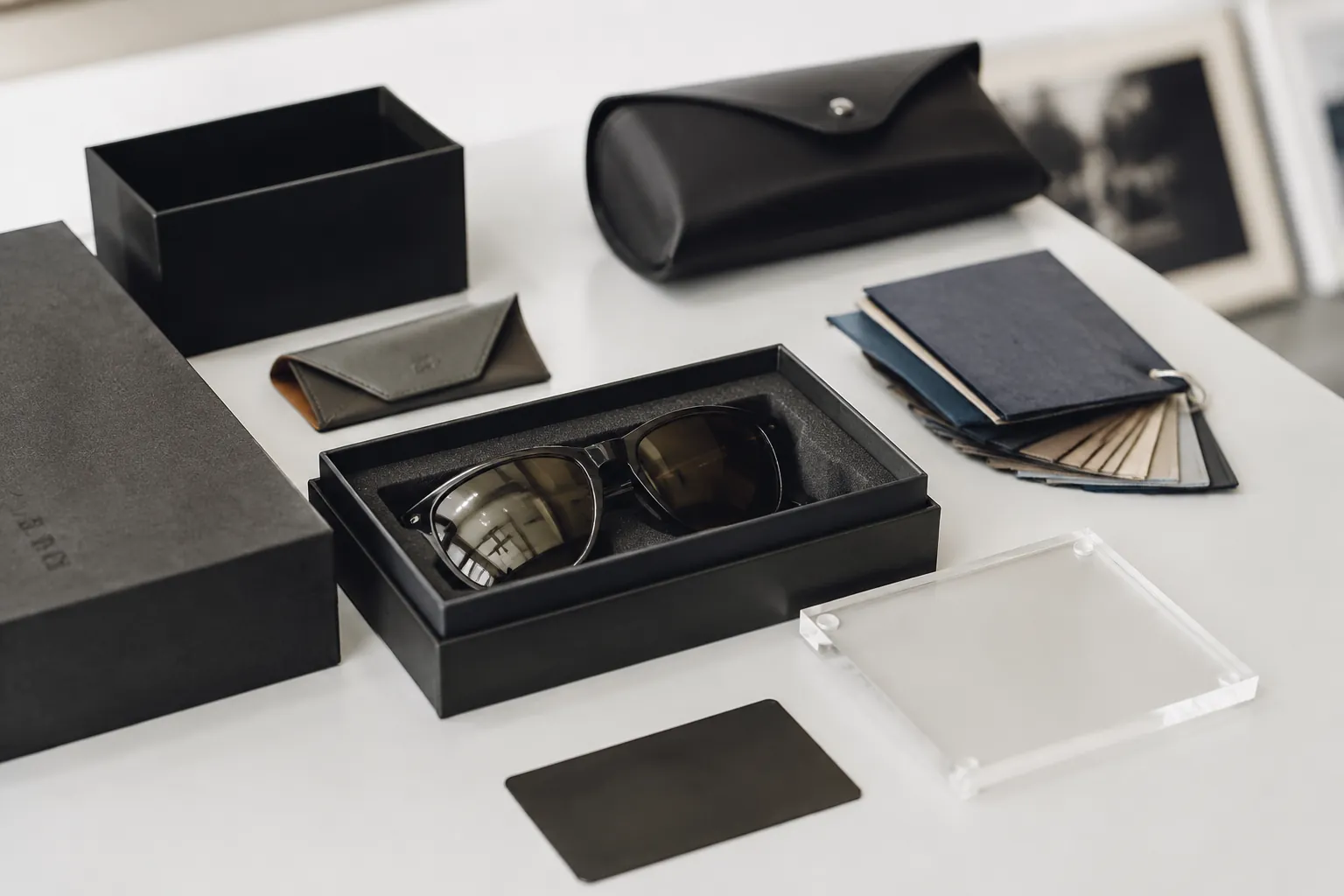
This guide is for distributors, chain retailers, travel shops, pharmacies, resort stores, and brand owners who need a complete sunglasses retail program, not loose frames. A solid program treats the sunglasses, hang tags, cases, barcodes, fixture, assortment plan, carton marks, and replenishment rules as one kit. That reduces mismatched parts, failed scans, fixture damage, late artwork changes, and landed-cost surprises. The point is not just to make attractive sunglasses. It is to deliver a retail-ready system that stores can receive, display, sell, and reorder with less friction.
Start With the Retail Program, Not the Frame
A sunglasses display program fails fast when the buyer treats frames, packaging, and fixtures as separate buys. The frame may pass inspection. The kit still fails. The hang tag may block the lens mark, the case may be too thick for the slot, or the counter unit may tip once loaded. Those are program-control problems.
Start with the store. A pharmacy counter, a resort wall rack, a travel-retail spinner, and a distributor starter carton all need different specs. Define the program in retail terms first, then translate it into factory documents: pair count, footprint, assortment ratio, barcode rules, display loading, carton structure, and refill logic. Keep it specific.
- Store format: counter display, spinner rack, wall fixture, clip strip, tray-in-cabinet, or mixed wholesale carton.
- Starter fill: common launches use 24, 36, 48, 72, or 96 pairs depending on footprint, price point, and sell-through expectations.
- Assortment split: most programs use a channel mix of men/unisex, women/fashion, sport or polarized, and seasonal or kids styles.
- Packaging level: hang tag only for value programs, microfiber pouch for mid-range, zipper case or paper box for premium and giftable SKUs.
- Reorder method: by individual SKU, by style group, or by pre-packed refill carton such as 12 or 24 pairs per assortment.
LumiShades can coordinate frames, cases, tags, logo plates, printing, lens tinting, and display packing around one production file. That matters because a retail kit has more failure points than a frame-only eyewear order.
Build the Assortment Like a Buyer, Then Spec Like a Factory
The assortment is the commercial engine of the display. It has to look full and varied without creating so many SKUs that replenishment turns messy. For a first program, control usually works better than breadth: 6 to 12 frame shapes, 2 to 4 colors per shape, and a clear split between polarized and non-polarized lenses. A 48-pair display might use 12 styles with 4 pairs each. A 72-pair program may carry 18 style-color combinations with deeper quantities on proven shapes.
Factory specs should follow the job of each frame. A sport style needs temple grip, lens coverage, bridge stability, and impact-resistant handling. A fashion impulse style needs surface finish, logo position, lens color consistency, and clean tag placement. Do not write only "black frame, smoke lens." That is not enough. Specify material, lens category, hinge type, temple width, logo method, packaging, barcode, and display position.
| Program Type | Typical Fill | Frame Strategy | Packaging Strategy | Replenishment Risk |
|---|---|---|---|---|
| Counter impulse display | 24 to 48 pairs | 6 to 10 easy-fit shapes with strong color contrast | Hang tag, barcode sticker, optional pouch | Top sellers empty first; use 12-pair mixed refill cartons |
| Distributor starter kit | 48 to 96 pairs | Balanced men, women, unisex, sport, and polarized mix | Retail tag plus case option for premium SKUs | Too many slow SKUs reduce repeat orders |
| Resort or travel retail | 36 to 72 pairs | Polarized, mirrored, gradient, lifestyle colors | Pouch or zipper case for higher perceived value | Seasonal colors sell quickly, then age fast |
| Pharmacy or convenience | 24 to 60 pairs | Durable classic shapes, readers if required | Clear price ticket, scan code, simple lens claim | Mixed returns and fixture damage create shrink |
Catalog frames are a starting point, not the plan. Buyers should build around target cost, material choice, and channel demand. Lower MOQ helps pilots. Larger runs usually improve efficiency because materials, lens colors, and decoration can be consolidated across styles. Final landed cost depends on material, lens type, hinge quality, logo method, packaging, and fixture cost.
Match Frame Materials to Display Handling
Retail sunglasses get handled roughly. Customers open temples with one hand, drop frames into slots, try them on over hats, and set them back crooked. The material has to survive that. A frame that looks fine in a sample photo can still create returns in store.
PC injection frames are common for value and mid-volume programs because cycle time and cost are efficient. They are rigid, lightweight, and suitable for fashion shapes, but lower-grade PC can show stress whitening near the lens groove. TR90 is more flexible and has better memory, which makes it useful for sport, kids, and active styles. Acetate gives better color depth and a more premium hand feel, but it requires cutting, tumbling, polishing, and careful hinge setting. Metal frames need control of plating thickness, solder joints, pad arms, screw security, and nose pad alignment.
- Hinge torque: define a consistent opening feel; left and right temples should not differ visibly during manual inspection.
- Temple alignment: check rocking on a flat surface; the frame should sit evenly and not twist noticeably on a table.
- Lens fit: lenses should sit without rattle, edge gaps, whitening, or excess pressure around the groove.
- Surface finish: matte coating, metallic spray, rubber paint, and mirror lenses should pass rub and tape checks before approval.
- Display compatibility: confirm temple width, hang tag hole, and case thickness against the actual hook, slot, or tray.
LumiShades supports injection molding, acetate cutting, CNC milling, lens tinting, laser engraving, pad printing, and metal logo plate application. The practical benefit is faster correction. If hinge resistance is weak, a logo plate sits proud, or a lens edge rattles after handling, the fix can happen in one production chain instead of being pushed across several vendors.
Control Lenses, Tint, and Compliance Early
Sunglasses are regulated products. A stylish lens with weak UV performance is not acceptable, and a wrong category mark can create retailer and customs problems. Buyers should define the selling market before artwork is approved because marking and test requirements vary. Common requirements include CE EN ISO 12312-1 for many European programs, ANSI Z80.3 for the United States, AS/NZS 1067 for Australia and New Zealand, FDA registration for U.S.-related handling, and REACH for restricted substances.
Lens category must match the intended use. Category 3 is common for bright outdoor retail sunglasses, with visible light transmission in a dark-sunglasses range suited to strong sun. Category 2 is lighter and works for fashion or moderate sunlight. Category 0 or 1 is too light for strong sun. Category 4 is very dark and is not suitable for driving in many markets, so it should not be mixed casually into general retail displays.
Approve UV400 performance, visible light transmission range, polarization where applicable, and color tolerance before mass production. For polarized styles, check axis consistency and visible distortion. For gradient and mirror lenses, approve physical samples under store-like lighting, not only digital photos. Grey, brown, green, smoke gradient, blue mirror, and silver mirror all behave differently under fluorescent, LED, and outdoor light.
Buyer rule: approve lenses by test requirement, category, visible light transmission range, and physical sample. Do not approve by color name alone.
For multi-market distributors, keep compliance files by SKU group. If the same frame ships to multiple markets, the documentation package should be planned before hang tags are printed. Reprinting tags after goods are finished causes delay and sorting cost.
Design Packaging Around Scanning, Fit, and Damage Control
Packaging is not decoration first. It is identification, protection, and retail handling. A hang tag must hold the barcode, country of origin if required by the buyer, lens category or UV claim where used, brand mark, and price area if the retailer needs it. It must also avoid scratching lenses or blocking try-on comfort.
Cases and pouches should be checked against real frame dimensions. Oversized wrap frames often do not fit standard zipper cases. Thick temples can crush in narrow paper boxes. If the display uses slots, bulky packaging can reduce the number of sellable units on the fixture. That changes the economics of the whole program.
- Confirm retail scan system, barcode format, and barcode size before artwork is locked.
- Build a packaging size chart by frame family, not only by SKU.
- Test one packed pair through drop, compression, and carton stacking checks.
- Approve label placement on frame, tag, case, inner box, master carton, and display refill carton.
- Create a packing photo standard so the factory line repeats the same layout across shifts.
Decoration should be engineered, not guessed. Laser engraving works well for subtle temple marks and avoids ink wear. Pad printing is economical for logos, but fine artwork can distort on curved temples. Metal logo plates improve perceived value, but they need a recess or strong adhesive control so edges do not catch during handling. For small temple logos, keep artwork placement consistent across the run so side-by-side pairs appear straight on the display.
Engineer the Fixture Before Bulk Production
The fixture should be developed before the frame order is frozen. A display that arrives late or fails a loading test can hold up the whole retail launch even if the sunglasses are finished. Decide whether the fixture is disposable cardboard, acrylic, metal wire, wood, MDF, or mixed material. Each option changes unit cost, carton volume, freight risk, and store durability.
| Fixture Type | Best Use | Main Advantage | Main Risk | Buyer Check |
|---|---|---|---|---|
| Cardboard counter display | Seasonal and value programs | Low cost, printable brand panels, ships flat | Crushed corners, weak load bearing, moisture damage | Load test with full pairs, tags, and cases |
| Acrylic counter display | Mid-price retail counters | Clean visibility and premium appearance | Scratching, cracking, protective film residue | Carton dividers, edge finish, film removal test |
| Metal wire rack | High-traffic stores and repeat use | Strong structure and stable hooks | Higher freight volume and coating chips | Hook spacing, balance, weld quality, coating adhesion |
| Wood or MDF display | Brand presentation programs | Better retail presence and heavier feel | Weight, moisture sensitivity, edge damage | Edge sealing, carton compression, screw security |
Send the factory a fixture drawing or ask for one based on pair count, footprint, hook spacing, packaging type, and maximum counter size. Then test a loaded sample. Shake it. Tilt it. Pull one pair from the top row and see whether the rest stay put. For pre-loaded shipment, run a carton drop and vibration-style handling check. Pre-loaded displays save store labor but raise damage risk and carton volume. Flat-packed displays reduce breakage but require store assembly. Choose based on retailer capability, not freight cost alone.
Plan MOQ, Price Breaks, and Lead Time as One Calendar
A display program has more moving parts than a frame-only order, so the schedule must include sampling, artwork, compliance review, fixture approval, carton engineering, packing trials, and final inspection. Lower MOQ helps pilots and market tests. For repeat cost control, buyers should plan around 300, 1000, and 5000+ pair levels. At larger volume, component consolidation matters: using the same hinge, lens base, case size, or tag format across several SKUs can cut complexity more than negotiating one style in isolation.
Samples usually take 7 to 10 days when artwork, material, and lens choices are clear. Fixture samples may take 7 to 15 days depending on material. Bulk production is typically 25 to 35 days after sample approval, deposit, artwork confirmation, and component readiness. Printed packaging and displays often become the bottleneck if barcode data or retailer copy is approved late.
| Stage | Typical Timing | Buyer Input Needed | Common Delay |
|---|---|---|---|
| Program brief | 1 to 3 days | Pair count, market, target price, fixture type | Unclear SKU structure or missing retail constraints |
| Frame and packaging samples | 7 to 10 days | Artwork, lens choice, logo method, barcode format | Late tag copy or uncertain lens category |
| Fixture sample | 7 to 15 days | Footprint, loading quantity, display material | Load failure, carton redesign, unstable hook spacing |
| Bulk production | 25 to 35 days | Approved sample, deposit, packing standard | Component mismatch or late printed materials |
| Final inspection and packing | 2 to 5 days | AQL level, carton marks, shipment split | Mixed SKU labels or unreadable barcodes |
Do not approve frames first and deal with replenishment later. The carton structure should support reorders from day one: style code, color code, lens code, barcode, display position, and refill carton quantity.
Set QC Rules for the Complete Kit
Inspection should cover the sellable kit, not just the sunglasses. For frames, check lens fit, hinge action, temple alignment, surface defects, logo position, screw security, nose pads, lens tint consistency, polarization if specified, and packaging cleanliness. For tags and cartons, check barcode readability, spelling, SKU match, country marking, and compliance statements. For displays, check loading strength, print color, assembly, balance, carton protection, and whether each pair can be removed without damaging the tag or frame.
Buyers should still require written QC documents, even from a supplier they trust. Use an approved golden sample, signed packing photos, defect classification, and AQL agreement. Critical defects should be blunt: wrong lens category, failed UV claim, unreadable barcode, wrong SKU in carton, broken display structure, missing required marking, sharp burrs, loose lens, or detached logo plate.
- Pre-production check: confirm materials, lens samples, artwork files, barcode data, fixture dimensions, and case fit.
- In-line check: catch color drift, hinge variation, printing shift, mixed components, and lens tint mismatch before final packing.
- Final random inspection: inspect frames, packaging, displays, cartons, assortment ratio, and scan readability.
- Load test: fill the display to planned count and check balance, hook spacing, removal behavior, and carton protection.
- Replenishment audit: verify refill cartons match the store plan, not only the purchase order total.
The best sunglasses display programs are boring at shipment. Every carton tells the warehouse what is inside. Every SKU scans. The display holds the full load. The reorder list matches store selling behavior. That control is what turns a frame purchase into a repeatable retail program.
Build Replenishment and Documentation Into the Launch
A display program only works when replenishment is clear. The buyer should decide how the store will reorder, how cartons will be labeled, and how the supplier will match replacement pairs to the original assortment. That includes item codes, color codes, lens codes, barcode placement, and whether each refill carton is mixed or single-style.
Documentation should travel with the goods. Keep the approved sample reference, test requirements, carton labels, fixture drawing, and packing standard in one file set so warehouse staff and retail teams use the same language. If the same style ships to different regions, separate the documentation by market so marks and claims do not get mixed.
For chain retail or distributor programs, the practical goal is simple: reduce store decision-making. The less the store team has to sort or guess, the faster inventory moves. Good assortment planning and a clean refill system usually do more for repeat sales than adding another frame shape.
Have a custom sunglasses project in mind?
Send us your styles, target market and quantities and we will return a detailed quote with MOQ, lead time and a sample plan.
Get a QuoteWhy source this from Wenzhou with LumiShades
Wenzhou in Zhejiang Province is widely regarded as China’s eyewear manufacturing capital, producing a large share of the world’s sunglasses. That concentration matters to buyers: a deep local supply chain for acetate sheet, hinges, lens blanks, plating and packaging means shorter component lead times, easier color and material matching, and a workforce with decades of eyewear-specific skill. LumiShades has manufactured in this ecosystem since 2009, and our vertical integration — in-house injection molding, acetate cutting, CNC milling, lens tinting, decoration and quality control — means no part of your order is quietly subcontracted to a workshop you cannot audit.
For international buyers, that vertical control translates into accountability. When a single factory owns every step, defects are traced and fixed at source rather than bounced between vendors, and your specifications survive intact from first sample to bulk. For procurement review, buyers can request process records, approved samples, quality checkpoints and project-specific compliance files before placing a bulk order. Required testing and documentation are confirmed against the destination market and product specification rather than assumed from a generic certificate list. Explore our manufacturing capabilities and quality control process to see how this works in practice.
Frequently asked questions
Can we start a sunglasses display program with only 50 pairs per design? Yes. A pilot can start at 50 pairs per design if the assortment is tightly controlled and the retailer accepts a small test launch. Use the pilot to confirm fit, scanability, packaging, and fixture loading before scaling. For repeat sourcing, group later orders around 300, 1000, or higher volumes when possible so materials, packaging, and replenishment stay simpler.
Should we ship displays pre-loaded or flat-packed? Choose based on store labor, transit risk, and fixture material. Pre-loaded displays cut setup time and help standardize launch merchandising, but they increase carton size and damage risk in transit. Flat-packed displays ship more safely and cheaply, but they need store assembly. Test a fully loaded sample in both formats before production.
What compliance documents should we request for mixed-market distribution? Request the documents that match the exact product and destination market: CE EN ISO 12312-1, ANSI Z80.3, AS/NZS 1067, REACH, and FDA registration where relevant. Ask for the test report or declaration tied to the finished lens category, frame style, and marking on the goods. If one SKU goes to more than one region, keep the files separated by market so tags and claims do not get mixed.
How long should we allow for samples and bulk production? A practical planning window is 7 to 10 days for frame and packaging samples when artwork is ready, 7 to 15 days for fixture samples depending on material, and 25 to 35 days for bulk production after sample approval and deposit. Add more time if barcodes, printed cartons, or retailer copy are not finalized at the start. The biggest avoidable delay is late artwork approval.
What is the most common mistake in retail display sourcing? Approving the frame before testing the packaging and fixture together. A frame can look good on its own and still fail in the real kit if the case is too thick, the tag blocks the lens mark, the barcode does not scan, or the loaded display becomes unstable. Always test the assembled retail kit, not only the sample frame.
How should replenishment be structured for distributors? Use a clear system of style, color, lens, barcode, and display-position codes so the warehouse can reorder accurately. For many distributors, pre-set refill cartons in 12-pair or 24-pair assortments are easier to manage than rebuilding every order from scratch. The refill carton should match the sales mix, not only the original purchase order.
Ready to start?
Explore our cat-eye sunglasses or request a quote — our sales team replies within 12 hours.
Request a Quote