
Corporate Gift Sunglasses Sourcing Deadline Guide
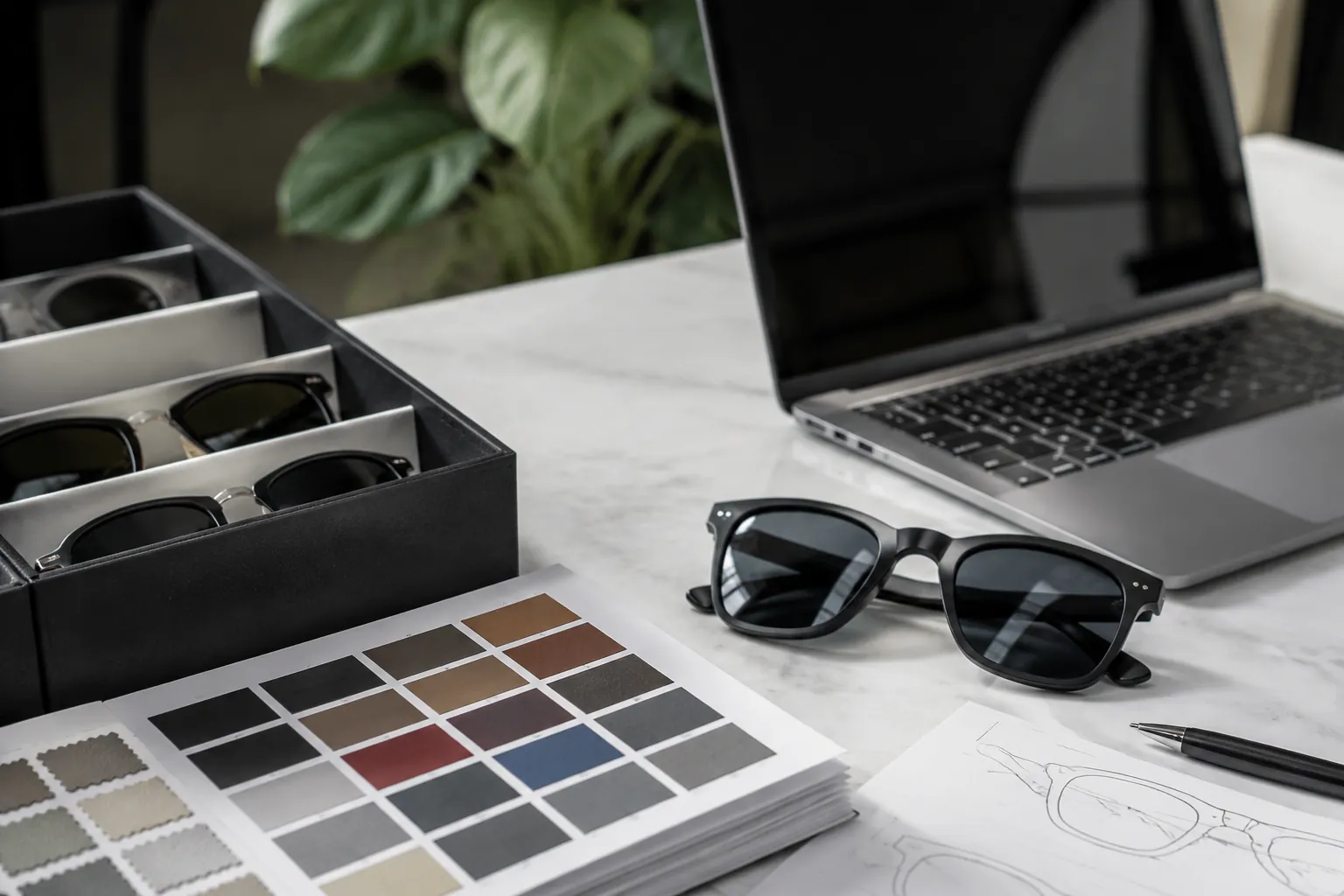
This guide is for promotional buyers, brand teams, importers, distributors, and retailers sourcing sunglasses for events, staff kits, travel campaigns, festivals, and retail gift-with-purchase programs. It shows how to work backward from a fixed delivery date, choose practical materials, approve logo decoration, manage low-MOQ color splits, and avoid late packaging or compliance issues. The goal is simple: lock the right specifications early, cut approval delays, prevent logo and packing errors, and leave enough time for freight, customs clearance, and final receiving.
Start With the Event Date
Corporate gift eyewear is deadline-driven. If sunglasses arrive one week late, the order has missed its purpose. The conference is over. The staff trip has ended. The summer campaign has moved on. Start with the required in-hand date at the warehouse or event venue, not the factory ship date.
For branded sunglasses using an existing frame, allow time for artwork confirmation, sampling, sample review, bulk production, inspection, packing, freight, customs clearance, and local delivery. A practical planning range is 7-10 days for samples and 25-35 days for bulk production after written sample approval. The real timeline depends on frame material, lens type, logo method, packaging, order quantity, peak-season capacity, and buyer approval speed.
- Set the required delivery date at the final receiving point.
- Subtract freight, customs clearance, and local delivery time.
- Subtract 2-4 days for inspection, carton marking, and shipment release.
- Subtract the agreed bulk production time after written approval.
- Subtract sample production and sample transit time.
- Add time for artwork correction, internal approval, and compliance document review.
If the event is less than six weeks away, simplify the order. Use an existing frame model, stock frame color, standard lens color, one temple logo, microfiber pouch, and single-destination packing. If the event is eight to ten weeks away, buyers can consider custom color matching, branded cases, printed inserts, barcode labels, or multiple SKUs. If the program needs new tooling, premium acetate, complex packaging, retailer compliance review, or multiple destination shipments, start earlier and confirm every milestone in writing.
Choose Materials by Use and Risk
The safest corporate gift sunglass is not always the cheapest one. It is the style that fits enough users, carries the logo cleanly, meets destination-market requirements, and can be produced with controlled variables. Common frame options include injection-molded PC, TR90, acetate, and metal.
Ask which processes the supplier controls in-house and which are outsourced. That affects how quickly issues can be checked and corrected, including hinge torque, temple logo position, lens tint consistency, screw tightness, plating appearance, and packaging fit. More handoffs mean more risk. Written specifications and inspection checkpoints matter more.
| Frame Option | Best Use | MOQ / Timing Logic | Main Control Point |
|---|---|---|---|
| Injection PC | Low-cost event giveaways | Fastest when existing molds and stock colors are used | Surface finish, hinge fit, and temple warpage |
| TR90 | Sports, travel, and outdoor staff gifts | Better when flexibility, light weight, and comfort matter | Logo adhesion, color stability, and flexibility after assembly |
| Acetate | Premium corporate gifts and retail GWP | Allow extra time for cutting, tumbling, polishing, and adjustment | Hand finish, temple balance, and color batch consistency |
| Metal | Executive gifts and aviation-style programs | Best when plating color and nose-pad comfort are approved early | Plating consistency, solder points, and screw or nose-pad fit |
For tight deadlines, avoid new molds unless the campaign size and schedule justify the tooling time. Existing molds reduce uncertainty. A custom color on an existing injection frame is usually lower risk than a new shape. PC often suits mass event giveaways. TR90, acetate, and metal can feel more valuable, but each needs closer review of finish, fit, and decoration method.
Match the Logo to the Surface
A logo that looks clean on a PDF can fail on a curved sunglass temple. Thin lines may disappear. Large ink blocks can rub near the hinge. Metallic marks may look uneven on textured or curved surfaces. Before approval, ask the supplier to confirm the printable area in millimeters, logo width, logo height, position from the hinge, surface shape, and decoration method.
Common decoration choices include pad printing, laser engraving, metal logo plates, and pouch or case printing. If the artwork has two colors, gradients, very fine text, or an icon under 5 mm, do not approve by digital mockup alone. Request a decorated sample. At minimum, require first-piece decoration approval before mass production.
- Pad printing: Practical for one- or two-color logos on many PC, TR90, and acetate frames. Adhesion depends on surface treatment, ink selection, curing, and rub testing.
- Laser engraving: Durable on suitable metal parts and some coated surfaces. Contrast must be checked because engraving can look subtle on silver, clear, or pale colors.
- Metal logo plate: Suitable for premium gifts. It adds cost, tooling detail, and assembly time, but it can create a more permanent brand effect.
- Lens logo: Use carefully. Keep it outside the main viewing area and confirm that it does not affect optical performance, required markings, or user visibility.
- Pouch or case print: Useful when the frame surface is too narrow or curved. One-color pouch printing is usually simpler than multi-color printed boxes.
For corporate gift orders, the outer temple near the hinge or mid-temple is usually the most practical logo position. It stays visible when the sunglasses are worn or placed on a table. Avoid oversized logos. They can make the gift look cheap. A smaller, crisp mark usually works better than a large logo squeezed onto a curved part.
Plan Low-MOQ Colors Carefully
Low MOQ can help with test campaigns, executive gifts, regional teams, or distributor samples. It can also create production problems. Separate the minimum order by design, frame color, lens color, logo version, and packaging version. Each split affects price, setup time, inspection, and packing accuracy.
A common mistake is splitting a modest order into too many frame colors, lens colors, logo versions, and packaging variants. It looks flexible in a spreadsheet. On the production floor, it creates changeovers, mixed cartons, extra inspection steps, and a higher chance that one SKU is short, mislabeled, or packed in the wrong carton. Keep the color plan tight unless the order volume and schedule support the complexity.
For small runs, use stock colors where possible: black, tortoise, clear, white, navy, gray, or standard translucent colors. For larger runs, custom injection color becomes more practical, especially if the frame is simple and the logo is one color. For high-volume programs, discuss production lanes, staged shipment dates, destination-specific carton marks, and any agreed spare parts or overrun allowance before production begins.
If brand color accuracy matters, provide Pantone references and approve a physical sample. Plastic, acetate, metal plating, pouch fabric, and printed paper do not reflect color the same way. Agree on a realistic commercial tolerance before bulk production. A slight shade difference between a molded frame and a printed box may be acceptable. A visibly wrong corporate logo color may not be.
Decide Packaging Early
Packaging is where many promotional eyewear budgets drift. A microfiber pouch is light, useful, and fast to pack. A hard case improves perceived value but increases carton volume and freight cost. A printed gift box adds die-line approval, barcode placement, color proofing, and packing time.
For event giveaways, a microfiber pouch with a one-color logo and hangtag is often enough. For corporate travel gifts, a pouch plus cleaning cloth is practical. For distributor or retail programs, confirm barcode stickers, SKU labels, country-of-origin marking, warning text if required, and carton marks that match the receiving warehouse requirements.
Confirm packaging before sample approval. Sunglasses are awkward to pack. Temple shape, lens curvature, pouch size, case size, and box dimensions all affect carton quantity. A switch from pouch to hard case after approval can change master carton dimensions, gross weight, freight quote, and pallet count. That can change landed cost and delivery timing.
- Ask for inner carton quantity, master carton quantity, carton size, and estimated gross weight before booking freight.
- Confirm whether each pair is polybagged, pouched, boxed, case-packed, or packed with cloth, leaflet, hangtag, or barcode label.
- Provide barcode, SKU, color, destination, and carton label files before mass packing starts.
- Use simple packaging when the order has a hard event deadline or may require air freight.
For corporate gifts, packaging should protect the sunglasses and present the brand clearly. It does not need unnecessary inserts or extra parts. More components mean more hand assembly, more weight, more approval steps, and more chances to pack the wrong item.
State the Market Before Sampling
Sunglasses are not just promotional products. They are eyewear. Requirements depend on the destination market and intended use. State the selling or distribution market at the quote stage so the supplier can align lens category, labeling, test documents, and packaging claims.
Common compliance references include CE EN ISO 12312-1 for the EU, ANSI Z80.3 for non-prescription sunglasses in the US, AS/NZS 1067 for Australia and New Zealand, REACH for restricted substances, FDA registration where applicable for US-market eyewear suppliers, ISO 9001 for quality management systems, and BSCI for social compliance audits. Do not ask a supplier to print certification claims that are unsupported, outdated, or irrelevant to the destination market.
For the EU, CE marking and EN ISO 12312-1 alignment are central for sunglasses. For the US, buyers commonly review FDA registration status and ANSI Z80.3 alignment. For Australia and New Zealand, AS/NZS 1067 is the common reference. REACH matters for restricted substances in materials, inks, coatings, and packaging components. If the sunglasses are for children, sports, driving, safety use, prescription use, or another special category, confirm requirements separately. Do not assume a general fashion sunglass covers every use.
Also check lens category, UV protection claim, and visible light transmission. A very dark lens may look good in a render but may be poor for indoor events or low-light use. Mirrored lenses can show handling scratches more easily. Polarized lenses cost more and need correct labeling. UV400 or category claims should be backed by test evidence, not only printed on a pouch, hangtag, or product page.
Approve Samples Like Bulk Depends on It
A sample is not only for the marketing team. It is the control point for bulk production. The sample clock should start only after the frame choice, lens choice, logo artwork, logo method, packaging direction, compliance market, and approval route are clear.
Check the frame first. Open and close both temples several times. Look at hinge alignment, screw tightness, temple tension, nose bridge comfort, lens seating, and whether the frame sits flat. Check lens color under daylight and indoor light. Compare the logo with the approved artwork and measure its position. If the logo is 3 mm too far back on the sample, state the correction clearly and revise the written specification.
For bulk approval, sign off these points in writing: frame model, material, frame color, lens color, lens category if applicable, logo method, logo size, logo position, packaging, carton label format, destination market, required compliance documents, and approved sample date. Avoid vague approvals such as "same as picture." Pictures help. Written specifications prevent disputes.
Practical rule: if five people need to approve the sample, send sample photos, measurements, and the physical sample route at the same time, or appoint one decision owner. Sequential approval turns a safe schedule into an urgent order.
If the sample fails, decide whether the fix is cosmetic or structural. A logo color correction is usually manageable. A frame fit problem, lens distortion, weak hinge, wrong lens category, or incorrect packaging size needs more time and may require a revised sample before bulk production starts.
Control Production and Inspection
Once bulk production starts, the buyer's job is to prevent surprises. Ask for a production schedule with key dates: material preparation, frame molding or cutting, lens tinting, decoration, assembly, QC, packing, inspection, and shipment release. Deadlines still depend on clean approvals, stable specifications, and timely document review.
Useful inspection points include incoming material checks, first-piece logo approval, lens tint verification, hinge and screw checks, surface defect grading, UV protection test confirmation, packing audit, and carton condition checks if required. For logo sunglasses, first-piece decoration approval is critical. Catching a logo shift after a small first run is manageable. Catching it after thousands of decorated temples is expensive.
For larger orders, request AQL inspection or arrange your own third-party inspection before final payment or shipment release. Define major defects clearly: cracked frame, loose lens, sharp edge, wrong logo, lens scratch in the viewing area, wrong packaging, missing required label, mixed SKU carton, incorrect barcode, or wrong carton mark. Minor defects may include small cosmetic marks outside the main viewing or wearing area, depending on the agreed tolerance.
Provide consignee details, shipping marks, and document requirements early. If the goods are going to multiple event cities, distributors, or warehouses, split the packing list before production packing begins. Re-sorting finished cartons wastes time and increases the risk of shipment errors.
Have a custom sunglasses project in mind?
Send us your styles, target market and quantities and we will return a detailed quote with MOQ, lead time and a sample plan.
Get a QuoteWhy source this from Wenzhou with LumiShades
Wenzhou in Zhejiang Province is widely regarded as China’s eyewear manufacturing capital, producing a large share of the world’s sunglasses. That concentration matters to buyers: a deep local supply chain for acetate sheet, hinges, lens blanks, plating and packaging means shorter component lead times, easier color and material matching, and a workforce with decades of eyewear-specific skill. LumiShades has manufactured in this ecosystem since 2009, and our vertical integration — in-house injection molding, acetate cutting, CNC milling, lens tinting, decoration and quality control — means no part of your order is quietly subcontracted to a workshop you cannot audit.
For international buyers, that vertical control translates into accountability. When a single factory owns every step, defects are traced and fixed at source rather than bounced between vendors, and your specifications survive intact from first sample to bulk. For procurement review, buyers can request process records, approved samples, quality checkpoints and project-specific compliance files before placing a bulk order. Required testing and documentation are confirmed against the destination market and product specification rather than assumed from a generic certificate list. Explore our manufacturing capabilities and quality control process to see how this works in practice.
Frequently asked questions
Can we order only 50 pairs with our company logo? Often yes, if the supplier supports low-MOQ custom orders. For 50 pairs, keep the specification simple: existing frame model, stock frame color, standard lens, one logo position, and light packaging such as a microfiber pouch. Ask the supplier to confirm MOQ by design, frame color, lens color, logo method, and packaging version before you approve the quote.
How long should we allow before a corporate event? Work backward from the in-hand date, not the factory ship date. Allow time for artwork approval, sampling, sample transit and review, bulk production after written approval, inspection, packing, freight, customs clearance, and local delivery. Eight to ten weeks is safer for most overseas gift orders using existing frames. More time is needed for new tooling, complex packaging, retailer compliance review, or multiple destination shipments.
Which logo method is most durable for sunglasses? Laser engraving and metal logo plates are generally more durable than standard pad printing, but they do not suit every frame material, surface, budget, or logo style. Pad printing can work well for many promotional sunglasses if the surface is treated properly, the ink is cured correctly, and adhesion is checked. Ask for the printable area, logo size, decoration sample, and rub-test expectation before approval.
Can we match our exact brand color? You can provide Pantone references, but exact visual matching across plastic, acetate, metal plating, fabric, ink, and printed paper is not guaranteed because each material reflects color differently. Approve a physical frame sample, molded color chip, plating sample, pouch proof, or printed packaging proof before bulk production. Also agree which color difference is acceptable and which difference requires correction.
What compliance documents should we request? State the destination market and intended use first. Common references include CE EN ISO 12312-1 for the EU, ANSI Z80.3 for US non-prescription sunglasses, AS/NZS 1067 for Australia and New Zealand, REACH for restricted substances, and FDA registration where applicable for US-market eyewear suppliers. Also ask for lens category, UV protection test evidence, labeling details, and any ISO 9001 or BSCI documentation only if relevant to your buying requirements.
What is the best packaging for deadline-sensitive gift orders? A microfiber pouch with a simple one-color logo is usually the lowest-risk option for speed, cost, packing efficiency, and freight weight. Hard cases and printed boxes can improve presentation, but they add artwork approval, carton volume, packing labor, and freight cost. Before approval, confirm item-level packing, carton quantity, carton size, gross weight, barcode labels, and carton marks.
Ready to start?
Explore our wayfarer sunglasses or request a quote — our sales team replies within 12 hours.
Request a Quote