
Private Label Sunglasses for Chain Store Control
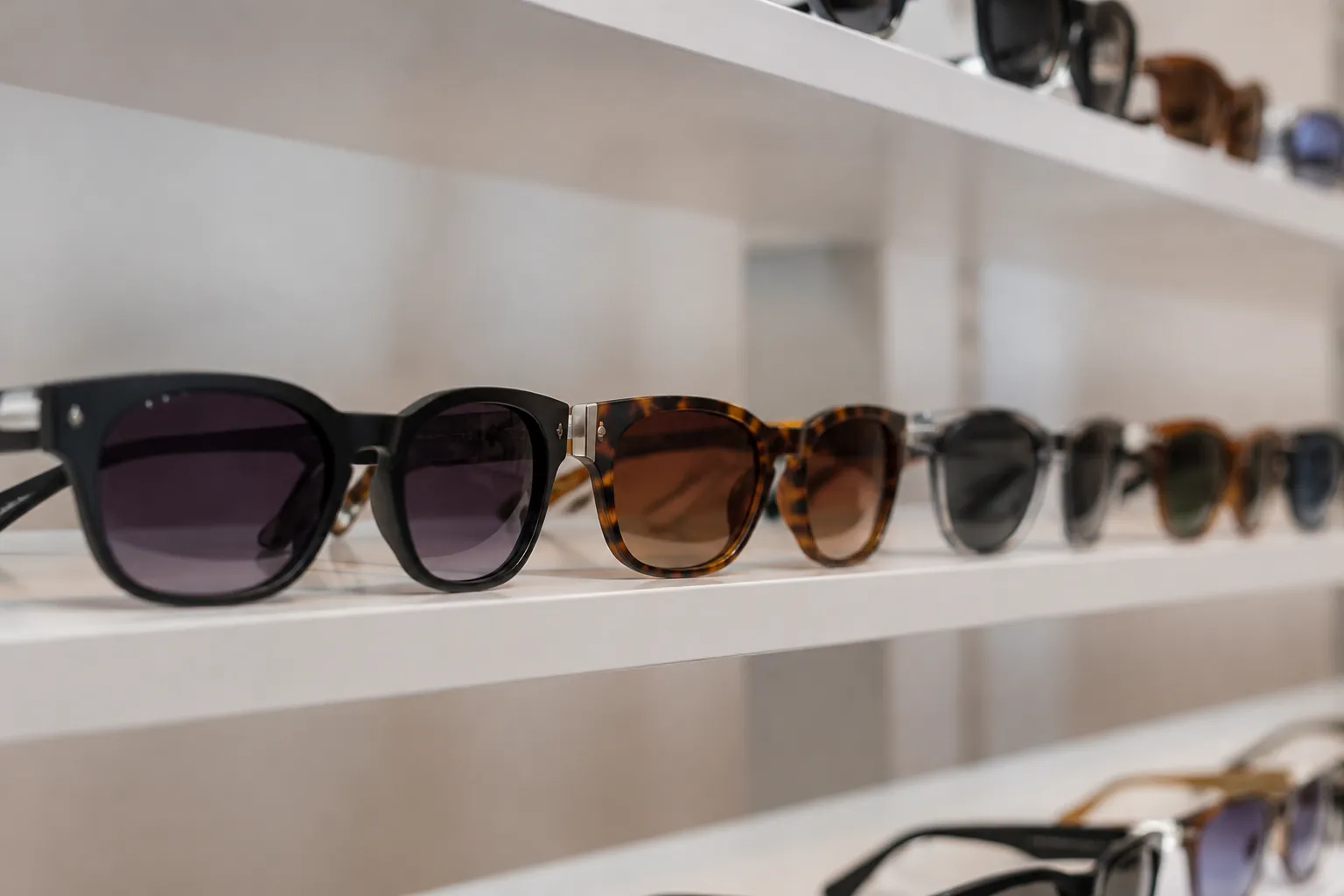
This guide is for chain stores, importers, distributors, and retail buyers building private-label sunglass programs across multiple styles and repeat seasons. The hard part is not designing one good frame. It is keeping fit, color, trim finish, branding, labeling, and packaging consistent across every SKU and every reorder. That takes a controlled specification system, measurable tolerances, and approval gates that match how eyewear is actually developed and produced. Set those controls early. You reduce sample revisions, cut mismatch claims, simplify replenishment, and protect margin across the range.
Start with a controlled SKU architecture
Many private-label sunglass programs lose consistency because each style is treated as a separate project. That creates avoidable variation: one hinge on one style, a different logo plate on another, a new box size for one SKU, and a different lens category label format on the next. By the second reorder, the assortment no longer acts like a controlled program. It acts like a set of exceptions.
Build one master specification with three layers. First, lock the platform rules that should stay stable across the line: eye size range, bridge family, temple length options, base curve range, hinge construction, screw type, lens category labeling format, branding area, and packaging structure. Second, define the visual identity rules: approved frame colors, metal finishes, print colors, logo methods, pouch material, insert format, and barcode position. Third, list the variables that may change by SKU, such as frame shape, temple pattern, lens tint, or seasonal colorway.
For a 12-SKU chain-store range, a practical control model may use one hinge type, a small number of temple constructions, a limited set of fit blocks, one logo plate size if plates are used, one carton structure, and a core color library with a small seasonal extension. That still gives buyers shelf variety. It avoids constant resets in tooling, assembly sequence, and packing instructions.
Be direct with the factory. Ask which parts are standardized across the line and which are truly style-specific. That one distinction makes approvals faster, reorders cleaner, and root-cause analysis easier if quality issues show up later.
Standardize fit before you approve colors
Many buyers start with color because color is easy to review remotely. Fit should come first. If the fit block is unstable, every later approval sits on weak ground. Claims usually follow.
Choose a small family of fit blocks and reuse them across related shapes. A fit block is the underlying geometry of the style: front width, lens width, bridge opening, temple spread, pantoscopic angle, temple length, and wrap. In many chain-store programs, a limited number of fit blocks is enough to cover the assortment. The exact number depends on the target customer, price point, and shelf mix.
Define measurable tolerances in the technical package and confirm that the factory can measure them the same way every time. Common controls include front width, lens width, bridge size, temple length, temple alignment, and left-right symmetry. The exact tolerance should match the frame material, construction method, and the buyer's wear standard. The point is not the number alone. The point is a documented pass-fail rule tied to the sealed sample.
Material choice affects fit stability. Injection-molded frames can be repeatable when tooling, molding conditions, and post-mold handling are controlled. Acetate can deliver stronger perceived value and richer visual depth, but dimensional consistency depends heavily on sheet variation, machining accuracy, polishing, and manual finishing. CNC processing can improve repeatability, but buyers should still require tolerance limits and first-article checks on production-intent parts.
| Control Point | What to Fix | Typical Buyer Rule | Why It Matters |
|---|---|---|---|
| Front width | Approved fit block | Measure against sealed sample and documented tolerance | Keeps wear profile and shelf assortment consistent |
| Temple length | Limited approved lengths | Use only pre-approved lengths unless fit review requires change | Reduces comfort complaints and picking errors |
| Bridge geometry | Nose fit profile | Reuse within each fit family | Improves repeat-customer satisfaction |
| Hinge construction | Screw and hinge type | Standardize wherever possible across the line | Simplifies repairs, assembly control, and reorders |
Before bulk approval, request a true wear-fit review set, not only cosmetic prototypes. That set should use the actual hinge, actual lens thickness, final temple construction, and production-intent material. A painted mock-up can confirm appearance. It cannot reliably confirm balance, spread, or production repeatability.
Build a color system that survives repeat orders
Color inconsistency causes constant friction in multi-SKU eyewear programs because the visual standard goes far beyond the frame front. Buyers must control frame material color, lens tint, plating finish, pad-print ink, pouch fabric, carton print, insert paper, and barcode label output. If those references are not tied to one controlled standard, the shelf will drift even when each component looks acceptable on its own.
Start by separating colors into three groups: core brand colors, seasonal colors, and material-dependent colors. Core brand colors are year-round standards such as black, dark tortoise, crystal smoke, or navy. Seasonal colors are fashion-led and may rotate by season. Material-dependent colors need separate approval by substrate because they behave differently in injection resin, acetate sheet, print ink, coating, or metal plating.
Do not approve acetate and injection from the same digital target alone. The same named color can look different depending on material, surface finish, transparency, polish level, and production method. Tortoise patterns can vary by sheet composition and lamination pattern. Gradient lenses can shift in density and transition depending on lens material and tinting process. Matte and gloss finishes also change color perception.
- Approve physical master references for each frame material instead of relying on one visual target for all substrates.
- Review lens tints under a fixed light condition and use the same condition for bulk QC.
- Limit plating options to clearly named finishes such as bright gold, matte gunmetal, or silver rather than using vague match language.
- Use one approved print reference for cartons, labels, pouches, and inserts to reduce drift between suppliers or print runs.
For repeat orders, each sealed color standard should identify the material, finish, and approval date or revision. Without that record, repeat orders turn into subjective debates. That wastes time.
Use packaging standards that work at store level
Store-ready packaging needs tighter control than packaging designed only for shipment. The product must arrive clean, correctly labeled, visually aligned, and easy for store teams to receive, scan, display, and replenish. A box that looks good in a sample review may still fail in daily store handling if the format is inconsistent or the labeling logic is unclear.
Start by defining the packaging hierarchy: unit pack, inner pack, master carton, and pallet label if required by the warehouse. Then specify what stays fixed and what changes by SKU. Common fixed elements include box structure, warning text zone, barcode position, master logo location, and country-of-origin statement. Common variable elements include SKU code, color code, lens category label, EAN or UPC, and style name.
Document the packing sequence. For example: clean frame, apply lens film if used, insert pouch, add leaflet, verify barcode scan, close unit carton, group by color code into inner pack, then consolidate by assortment into the master carton. If that sequence is not written, operators will improvise. The result is often mixed colors, reversed labels, missing literature, or inconsistent shelf presentation.
Decoration method also affects retail durability and packaging control. Pad printing is flexible and cost-efficient, but adhesion and rub resistance should be verified on the final substrate and finish. Laser marking can be durable and clean, but readability depends on material contrast and placement. Metal logo plates can create a premium look, but they add component control and assembly risk if fixation is weak.
For most chain programs, a small number of approved box formats is easier to manage than a wide mix of pack sizes. Keep it simple. The best structure is the one that protects the product, supports scanning and replenishment, and stays consistent across the range.
Match MOQ and price breaks to your assortment plan
MOQ discipline separates a controlled private-label program from an assortment that looks broad but is hard to replenish profitably. Buyers should align order quantities with the styles and colors most likely to repeat, rather than spreading small quantities across too many combinations.
A common mistake is using too many low-volume colorways. On paper, a large color count creates variety. In practice, it can raise unit cost, complicate packaging, and fragment replenishment. Many chain programs work better when anchor SKUs carry the volume: proven shapes and the most reliable commercial colors. Seasonal colors can support the range without disrupting the core.
| Order Level | Typical Use | Buyer Benefit | Trade-Off |
|---|---|---|---|
| Low MOQ by design | Line trial or new account test | Lower entry risk and faster market feedback | Higher unit cost and fewer customization options |
| Mid-volume launch | First retail launch | Better costing and steadier material planning | Needs a firmer sell-through assumption |
| Core program volume | Chain-store repeat SKU | Stronger unit economics and more efficient packaging procurement | Requires tighter inventory discipline |
| National rollout volume | Repeat core item or broad distribution | Greater purchasing leverage and more stable replenishment planning | Forecast errors become more expensive |
Lead time follows the same logic. A stable repeat with frozen artwork and unchanged packaging is usually easier to schedule than a first run with new acetate colors, new decoration, or a new box structure. Place real volume where demand confidence is strongest. Keep experiments contained so one slow seller does not weaken the whole program.
Set approval gates for samples, compliance, and bulk
Good sunglass programs are built on approval gates, not assumptions. If buyers approve too many variables at once, problems usually surface in bulk, when correction is slow and expensive.
- Approve 2D artwork for logo placement, packaging copy, barcode layout, warning text, and color coding.
- Approve development samples for shape, fit block, hinge construction, and lens specification.
- Approve pre-production samples in final materials, final decoration, and final packaging.
- Confirm the compliance file required for each destination market and SKU family.
- Release bulk only after the sealed sample is signed and revision-controlled.
For sunglasses sold into multiple markets, keep style-specific records separate from factory-level system records. Depending on the destination market and product specification, buyers may need documents related to CE EN ISO 12312-1, ANSI Z80.3, AS/NZS 1067, REACH, and FDA registration where applicable. Factory-level records may include ISO 9001 and BSCI. Verify exactly which documents apply to which SKU family. Do not assume one lens test or one declaration covers every tint, mirror treatment, or material combination.
Timing also depends on approval discipline. Sample development moves faster when feedback is consolidated and returned in one clear round. Bulk planning is more reliable when artwork, trims, and packaging are frozen before production is scheduled. Assign one internal owner to collect comments from merchandising, sourcing, compliance, and packaging teams before sending feedback to the factory.
Control production drift with measurable QC points
Final inspection cannot correct process drift that started earlier in molding, machining, polishing, tinting, printing, assembly, or packing. Buyers need measurable checkpoints during production, especially when one private-label program covers multiple styles and repeat orders.
At minimum, QC should cover four stages: incoming material inspection, first-article approval, in-line process checks, and final random inspection. Incoming checks should verify frame color against the sealed standard, lens blanks or finished lenses against approved tint references, trims against finish standards, and packaging print against the approved artwork revision. First-article checks should confirm that the line is using the correct hinge, logo method, lens specification, labeling format, and packaging components before mass output continues.
In-line control should focus on the defects that most often generate claims: temple alignment, lens seating, left-right color mismatch, scratches, print registration, logo plate security if plates are used, screw tightness, and carton assortment accuracy. Lens tint should be reviewed under the agreed light condition, not under changing workshop lighting. Cartons should be checked against the packing list by SKU, color code, and quantity, not only by the outer label.
If the pass-fail rules are not written in advance, the factory and the buyer may judge the same pair differently. Many avoidable claims start there.
Even when a supplier has its own internal QC system, chain-store buyers should issue a private-label checklist tied to their approved standard. That matters even more when the same collection is reordered by different business units or shipped to different countries.
Plan reorders so consistency improves over time
The best private-label programs get easier to manage with each reorder because the approved standard becomes more precise. Weak programs restart the same discussion every season because no one keeps a disciplined record.
Create a reorder file for each SKU family and keep it current. At minimum, include the approved fit block, frame material reference, lens specification, logo method, plating finish if used, packaging artwork version, barcode file, applicable compliance records, and bulk photos of the accepted standard. Also record any approved deviation. If a variation was accepted for commercial reasons, document it so teams do not reopen the same issue on the next order without context.
Reorder planning should distinguish between an immediate repeat and a controlled refresh. A standard frame with unchanged lens, branding, and packaging may move quickly. A revised box board, a new plating finish, a new mirror treatment, or updated artwork should trigger another pre-production review even if the frame shape stays the same. That is how buyers stop small changes from entering bulk without approval.
For distributors and chain retailers, this discipline protects margin. It reduces dead stock caused by shelf inconsistency, cuts repeated internal approvals, and shortens the path from forecast to shipment. The value of a private-label program is not unlimited variation. It is controlled variation that can be repeated with confidence.
Have a custom sunglasses project in mind?
Send us your styles, target market and quantities and we will return a detailed quote with MOQ, lead time and a sample plan.
Get a QuoteWhy source this from Wenzhou with LumiShades
Wenzhou in Zhejiang Province is widely regarded as China’s eyewear manufacturing capital, producing a large share of the world’s sunglasses. That concentration matters to buyers: a deep local supply chain for acetate sheet, hinges, lens blanks, plating and packaging means shorter component lead times, easier color and material matching, and a workforce with decades of eyewear-specific skill. LumiShades has manufactured in this ecosystem since 2009, and our vertical integration — in-house injection molding, acetate cutting, CNC milling, lens tinting, decoration and quality control — means no part of your order is quietly subcontracted to a workshop you cannot audit.
For international buyers, that vertical control translates into accountability. When a single factory owns every step, defects are traced and fixed at source rather than bounced between vendors, and your specifications survive intact from first sample to bulk. For procurement review, buyers can request process records, approved samples, quality checkpoints and project-specific compliance files before placing a bulk order. Required testing and documentation are confirmed against the destination market and product specification rather than assumed from a generic certificate list. Explore our manufacturing capabilities and quality control process to see how this works in practice.
Frequently asked questions
How many fit blocks should a chain-store sunglass program use? Use only as many fit blocks as needed to cover your target customer and shelf strategy. For many chain-store programs, a small fit-block family is easier to control than assigning a new geometry to every style. Start by grouping styles into narrow, standard, and fuller fits, then confirm each block with wear testing, sealed measurements, and documented tolerances in the tech pack.
What is the best MOQ strategy if I need many SKUs but limited volume per store? Split the assortment into core SKUs and test SKUs. Put most of the volume into proven shapes and commercial colors that are likely to reorder, and keep seasonal or fashion-led options in lower quantities. Before placing the order, ask the supplier for MOQ by frame material, lens option, and packaging type so you can see where complexity increases cost. That makes it easier to protect margin and replenish the winners without carrying too many slow combinations.
How do I prevent color mismatch between samples and bulk orders? Approve physical standards by material and finish, not only digital artwork or photos. Keep separate sealed references for injection colors, acetate colors, lens tints, plating finishes, logo colors, and packaging print. Record the approval date or revision, define the light condition for inspection, and require bulk QC to compare production against the same reference standard used during approval.
Which compliance documents matter for private-label sunglasses? The answer depends on the destination market, product construction, and lens specification. Common documents buyers may need include CE EN ISO 12312-1, ANSI Z80.3, AS/NZS 1067, REACH, and FDA registration where applicable. Keep those style-specific or market-specific records separate from factory-level records such as ISO 9001 and BSCI, and confirm with the supplier which documents apply to each SKU family before bulk release.
What usually causes delays in a 25 to 35 day bulk lead time? The most common causes are late artwork changes, unresolved color approvals, trim changes after sample signoff, packaging revisions, and fragmented buyer feedback from multiple departments. To reduce delay risk, freeze artwork and labeling before production planning, return one consolidated comment list per sample round, and make sure the factory has the signed sealed sample, approved packaging file, and confirmed compliance requirements before bulk starts.
Ready to start?
Explore our aviator sunglasses or request a quote — our sales team replies within 12 hours.
Request a Quote