
Wholesale Festival Sunglasses Planning Guide
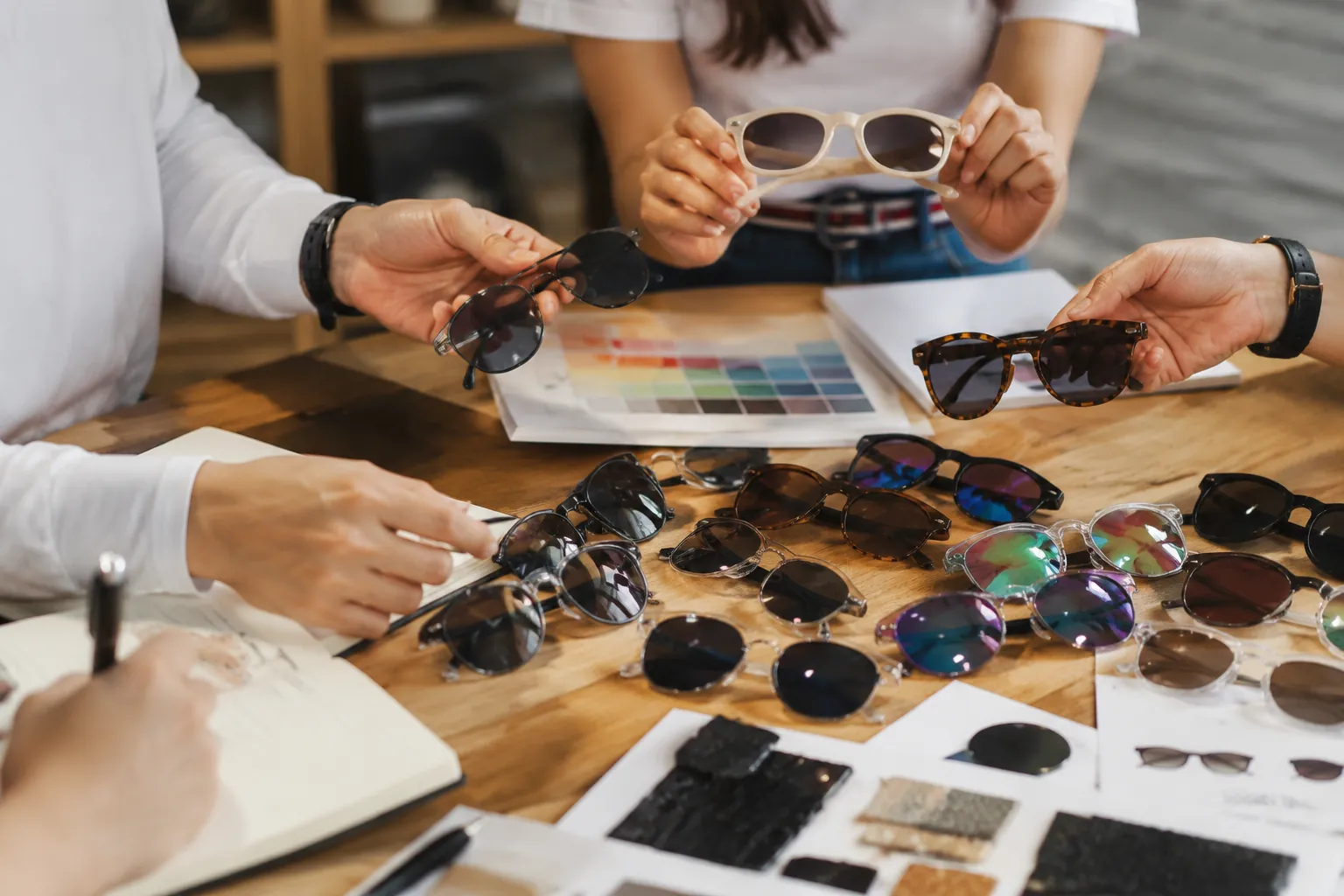
This guide is for event buyers, merch teams, distributors, and promotional product importers ordering sunglasses for music festivals, beach events, brand activations, and outdoor campaigns. It shows how to brief a factory on frame style, lens performance, logo method, packaging, compliance documents, MOQ, inspection criteria, and delivery timing. Use it to cut approval delays, replace vague specs, and make bulk sunglasses orders more predictable before the event date is locked.
Start With The Deadline
Festival sunglasses are deadline products. If they arrive late, the unit price no longer matters. Start with the event date, then work backward through sampling, approval, deposit payment, material preparation, production, inspection, freight booking, customs clearance, and final delivery.
For existing molds and standard decoration, confirm current sample and production lead times before placing the order. Allow time for sample preparation, buyer review, bulk production after approval and deposit, final inspection, and international freight. Build in margin. Timelines can shift when artwork changes, packaging is revised, holidays interrupt production, customs asks for extra documents, or buyers approve samples late.
- Day 0: confirm event date, required warehouse arrival date, delivery country, delivery address, and preferred freight method.
- Day 1-2: send quantity by SKU, frame reference, logo vector file, lens requirement, packaging type, labeling needs, and compliance market.
- Sample stage: review a physical sample or pre-production sample showing frame color, lens color, logo position, and customized packaging if required.
- Approval stage: approve the sample in writing, pay the agreed deposit, and freeze the bill of materials, artwork, carton marks, and packing method.
- Production stage: complete bulk production, inline checks, final inspection, carton labeling, and shipment booking.
For air freight with existing molds, plan several weeks from first sample request to warehouse receipt. Sea freight needs more time because vessel booking, transit, port handling, customs clearance, and final trucking vary by destination. If the event date is close, simplify the order: use existing molds, standard lens colors, one-color pad printing, and stock pouch or polybag packaging.
Choose Styles For Real Use
Do not choose festival sunglasses only from a mood board. People wear them outdoors, drop them, push them onto their heads, pass them around, and throw them into tote bags. A good render is not enough. The frame still needs stable hinges, smooth temple tips, clean lens fit, and enough rigidity for the job.
| Style Type | Best Use | Typical MOQ Logic | Factory Risk To Control |
|---|---|---|---|
| Wayfarer-style PC frame | Mass giveaways, sponsor activations, low unit cost | Low MOQ may be possible with existing molds; larger runs improve setup efficiency | Loose hinges, visible gate marks, poor temple alignment |
| Round metal or mixed frame | VIP merch, fashion-led outdoor events | Better suited to higher quantities because assembly labor and inspection points increase | Lens alignment, solder marks, nose pad symmetry, plating scratches |
| Acetate frame | Retail merchandise, artist drops, limited editions | Best for paid merchandise because cutting, polishing, and hand assembly raise cost | Sheet color variation, polishing consistency, longer process time |
| Sports wrap frame | Beach events, outdoor sports festivals, staff use | Works best when lens curvature and frame fit are confirmed before bulk production | Lens curvature mismatch, optical distortion, pressure at temples |
For broad giveaways, a standard polycarbonate injection frame is often the most practical choice. It is light, affordable, and suitable for common logo methods. For paid merchandise, acetate, metal details, better hinges, or upgraded packaging can support a higher retail price. Keep the rule simple: free booth sunglasses need durability, comfort, and speed; merch-stand sunglasses need materials and finishing that feel retail-ready.
Approve Material Before Color
Material affects cost, finish, lead time, logo performance, and perceived value. Polycarbonate and other injection plastics work well for event eyewear because color can be mixed into resin and molded efficiently. Acetate gives richer color and a smoother hand feel, but it takes sheet cutting, CNC milling, tumbling, polishing, and hand assembly. Metal frames can look premium, but plating, solder joints, screws, and nose pads add inspection risk.
- PC or plastic injection frames: practical for promotional volume and low weight; approve color against a physical sample or molded color chip.
- Acetate frames: suitable for premium merchandise; sheet patterns and color depth can vary, so define acceptable variation.
- Metal frames: higher perceived value; plating color, screw torque, solder quality, and lens seating need careful inspection.
- TR or flexible materials: useful for active outdoor use; check logo adhesion, paint compatibility, and frame recovery on samples.
Be realistic about color matching. For plastic frames, approve color under daylight and indoor lighting before bulk production. For brand-critical colors, provide Pantone references and request a physical sample. Do not approve from a screen image alone. For acetate, do not expect every pair to show identical pattern placement unless sheet selection and cutting direction are agreed in advance.
Match Logo Method To The Job
Logo decoration is where many event orders slow down. A logo that looks clean on a flat PDF may fail on a curved temple, rubberized coating, glossy black frame, or mirrored lens. Send vector artwork early. State the logo size in millimeters. Specify the exact position instead of writing only "small on side." For temple logos, confirm the printable area on the chosen frame before approving artwork.
| Logo Method | Good For | Typical Position | Process Detail |
|---|---|---|---|
| Pad printing | One or two-color sponsor logos, fast promotional runs | Temple outside, pouch, case | Low cost and quick; very fine lines may fill or break on curved or textured surfaces |
| Laser engraving | Subtle tone-on-tone branding | Metal temple, acetate temple, selected lens or trim positions | Durable; contrast depends on base material, coating thickness, and color |
| Metal logo plate | Retail-style branding and higher perceived value | Temple insert or front corner | Requires accurate recess, adhesive control, or mechanical fixing; not ideal for rush orders |
| Lens logo printing | Photo moments and sponsor exposure | Upper lens corner | Keep outside the main viewing area; oversized marks can reduce wearer acceptance |
Approve decoration on a real sample whenever the logo is visible to the end user. Ink opacity on matte black temples, white frames, transparent colors, or mirrored lenses cannot be judged reliably from a digital mockup. For giveaways, pad printing is usually the practical choice. For paid merchandise, laser engraving or a metal logo plate can make the product feel more permanent and less promotional.
Specify Lens Performance
Festival buyers often ask first for bright colors, mirror coatings, gradients, or transparent tints. Appearance matters. Performance matters more. Sunglasses still need to meet the rules of the destination market. Lenses affect UV protection, visible light transmission, optical clarity, labeling, and wearer comfort. A blue mirror lens, smoke gray lens, and brown lens can all photograph well while performing differently in strong sunlight.
For the EU, buyers commonly request CE marking supported by EN ISO 12312-1 testing. For the United States, ANSI Z80.3 is a common sunglasses performance reference, and FDA registration may be relevant for eyewear import handling. For Australia and New Zealand, AS/NZS 1067 applies. REACH matters for chemical restrictions on materials, coatings, and packaging in Europe. Confirm the standard, test report, labeling, and importer documentation required for the exact product and sales channel.
- Category 0-1: fashion or light tint; usually not suitable as the main outdoor sunglass for strong sun.
- Category 2: medium tint; suitable for mixed daylight but may feel weak in hard sun.
- Category 3: common for outdoor sunglasses and often a practical festival choice in strong daylight.
- Polarized lenses: useful for glare reduction near water, beach events, and outdoor sports promotions; usually higher cost than standard lenses.
- Mirror lenses: strong visual impact for photos; coating consistency, scratch resistance, and packaging protection need sample approval.
Ask the factory to confirm UV protection, lens category, lens color, and applicable test standard on the approved sample or specification sheet. For bulk inspection, define unacceptable defects clearly: deep scratches in the central viewing area, visible bubbles, coating spots, severe color variation, poor edge fit, or lens movement inside the frame. For wrap styles, lens curvature must match frame geometry. If it does not, wearers may notice distortion or temple pressure.
Build Packaging For Distribution
Packaging has two jobs: protect the sunglasses during freight and make distribution easy on site. A premium box that slows booth staff is a problem. A thin polybag that lets lenses rub in transit is also a problem. Choose packaging based on how the sunglasses will be used: giveaway, VIP kit, or paid merchandise.
| Packaging Type | Best Use | Cost And Freight Impact | Control Point |
|---|---|---|---|
| Polybag | Lowest-cost mass giveaways | Lowest unit cost and smallest carton volume | Weak scratch protection; add lens film or separator if needed |
| Microfiber pouch | Event giveaways and sponsor promotions | Moderate cost; adds logo area and cleaning function | Confirm pouch size, drawstring quality, fabric weight, and logo print opacity |
| Printed paper box | Retail merch and artist drops | Higher carton volume and higher crush risk | Specify paper weight, insert method, barcode placement, and carton packing |
| Semi-hard or hard case | VIP kits and premium sales | Highest freight volume and slower handout speed | Confirm sunglasses fit, zipper quality, odor, and carton compression risk |
Carton marking matters as much as inner packaging. For multi-design orders, outer cartons should show style code, frame color, lens color, logo version, quantity, and destination if orders ship to several event sites. If mixed SKUs arrive without clear marks, staff can lose hours sorting under pressure. That is avoidable. Approve the carton plan before production packing starts.
Use MOQ And Price Breaks Wisely
MOQ and price breaks depend on mold availability, material, lens type, logo method, packaging, color splits, and inspection requirements. A low MOQ can work for samples, VIP variants, artist colors, or small regional events. Larger runs usually improve efficiency because artwork setup, material purchasing, line changeover, and inspection are spread across more units.
| Order Level | Best Use | Price Behavior | Planning Advice |
|---|---|---|---|
| Low quantity per design | Small events, samples, limited VIP sets | Higher unit cost because setup is spread across fewer pairs | Use existing molds, standard lenses, and one logo position |
| Mid quantity per design | Local festivals, sponsor booths, test campaigns | Better decoration efficiency and more stable unit cost | Limit frame and lens color splits |
| High quantity per design | Regional event series and distributor stock | Stronger material purchasing and line efficiency | Confirm inspection criteria and carton labels early |
| Program quantity | National campaigns, large festivals, retail promotions | Best opportunity to optimize material, packaging, and freight cost together | Freeze approved sample, packaging, and shipping plan before deposit |
The lowest FOB quote is not always the lowest landed cost. Mirrored lenses, extra logo positions, mixed color assortments, custom pouches, retail boxes, and hard cases all affect labor, scrap risk, packing time, and freight volume. Give the factory your target landed budget, not only a target factory price. That lets the quote balance product specification with shipping reality.
Put QC In The Factory Brief
Festival orders are often high quantity and deadline-driven. QC still needs detail. The purchase order should state what will be checked and which defects can stop shipment. If the supplier operates under ISO 9001 or BSCI, request current certificates if they matter to your sourcing policy. But certificates do not replace product inspection. Use measurable criteria instead of relying only on "same as sample."
- Frame fit: temples open and close smoothly, no sharp burrs, no obvious warping, and left/right temple height within an agreed visual tolerance.
- Hinge strength: screws seated correctly, no loose movement, no cracking during inspection, and no obvious temple wobble.
- Lens condition: no deep scratches, bubbles, coating spots, severe color variation, poor edge fit, or loose lenses.
- Logo placement: size confirmed in millimeters, color matched to the approved sample, and placement tolerance agreed before bulk decoration.
- Packaging: correct pouch, box, insert, barcode, carton mark, quantity per carton, SKU separation, and destination label if required.
- Compliance: correct labeling and documentation for the destination market, such as CE EN ISO 12312-1, ANSI Z80.3, AS/NZS 1067, REACH, or FDA registration where applicable.
For mixed designs, request a pre-shipment photo set by SKU, logo version, packaging, and carton label. For larger or higher-risk orders, consider a third-party final inspection before balance payment. Wrong lens colors, missing pouch logos, incorrect labels, and mixed cartons are easier to fix before export than at a festival warehouse.
A useful buyer brief should include event date, delivery country, required arrival date, quantity by SKU, target landed budget, frame reference, material preference, lens color and category, UV requirement, logo file, logo method, packaging type, compliance market, barcode or carton needs, inspection standard, and freight preference. The order becomes more predictable when the approved sample, artwork, packaging, and carton plan are frozen before bulk production starts.
Have a custom sunglasses project in mind?
Send us your styles, target market and quantities and we will return a detailed quote with MOQ, lead time and a sample plan.
Get a QuoteWhy source this from Wenzhou with LumiShades
Wenzhou in Zhejiang Province is widely regarded as China’s eyewear manufacturing capital, producing a large share of the world’s sunglasses. That concentration matters to buyers: a deep local supply chain for acetate sheet, hinges, lens blanks, plating and packaging means shorter component lead times, easier color and material matching, and a workforce with decades of eyewear-specific skill. LumiShades has manufactured in this ecosystem since 2009, and our vertical integration — in-house injection molding, acetate cutting, CNC milling, lens tinting, decoration and quality control — means no part of your order is quietly subcontracted to a workshop you cannot audit.
For international buyers, that vertical control translates into accountability. When a single factory owns every step, defects are traced and fixed at source rather than bounced between vendors, and your specifications survive intact from first sample to bulk. For procurement review, buyers can request process records, approved samples, quality checkpoints and project-specific compliance files before placing a bulk order. Required testing and documentation are confirmed against the destination market and product specification rather than assumed from a generic certificate list. Explore our manufacturing capabilities and quality control process to see how this works in practice.
Frequently asked questions
How early should I start a bulk sunglasses order for a music festival? Start as soon as the event date and delivery address are confirmed. For existing molds and standard decoration, build a schedule that includes sample preparation, buyer review, written approval, deposit payment, bulk production, inspection, freight, customs clearance, and final delivery. Add extra time for sea freight, custom packaging, acetate frames, metal logo plates, multiple color splits, or new testing documents.
What is the best logo method for low-cost event sunglasses? Pad printing is usually the most practical method for low-cost giveaways because it is fast, economical, and works on many plastic temples. Send vector artwork, confirm the printable area on the chosen frame, specify logo width and height in millimeters, and approve a physical sample before bulk printing. Avoid very thin lines or tiny text on curved temples because they may fill, blur, or lose clarity.
Can I order several frame colors under one MOQ? Sometimes, but do not assume mixed colors share one MOQ without checking. Each frame color, lens color, logo version, and packaging version can create a separate SKU with its own setup, material, inspection, and packing work. For better pricing and fewer errors, keep color splits low and confirm quantities, carton labels, and SKU separation before approval.
Which certifications or compliance documents should I request for sunglasses sold overseas? Match documents to the destination market and sales channel. For Europe, ask about CE marking supported by EN ISO 12312-1 and relevant REACH requirements. For the United States, ANSI Z80.3 is commonly referenced for non-prescription sunglasses, and FDA registration may be relevant for import handling. For Australia and New Zealand, check AS/NZS 1067. Also confirm required product labels, warnings, importer details, and test report validity before shipment.
Are mirrored lenses suitable for festival giveaways? Yes. Mirrored lenses can work well for festivals because they create strong visual impact, but they need tighter control than basic smoke lenses. Approve a real sample for UV protection, lens category, mirror color, coating uniformity, scratch risk, and packaging protection. During inspection, check for coating spots, rubbing marks, color mismatch, and scratches in the main viewing area.
What information does LumiShades need to quote accurately? Send quantity by SKU, event deadline, required arrival date, delivery country, frame reference, material preference, lens color and category, UV requirement, logo vector file, logo method, packaging type, compliance market, barcode or carton label needs, target landed budget, and freight preference. If you have a retail price target or giveaway budget, share it early so the factory can recommend a realistic specification instead of quoting the wrong product level.
Ready to start?
Explore our round sunglasses or request a quote — our sales team replies within 12 hours.
Request a Quote