
Kids Sunglasses Manufacturing Guide for Importers
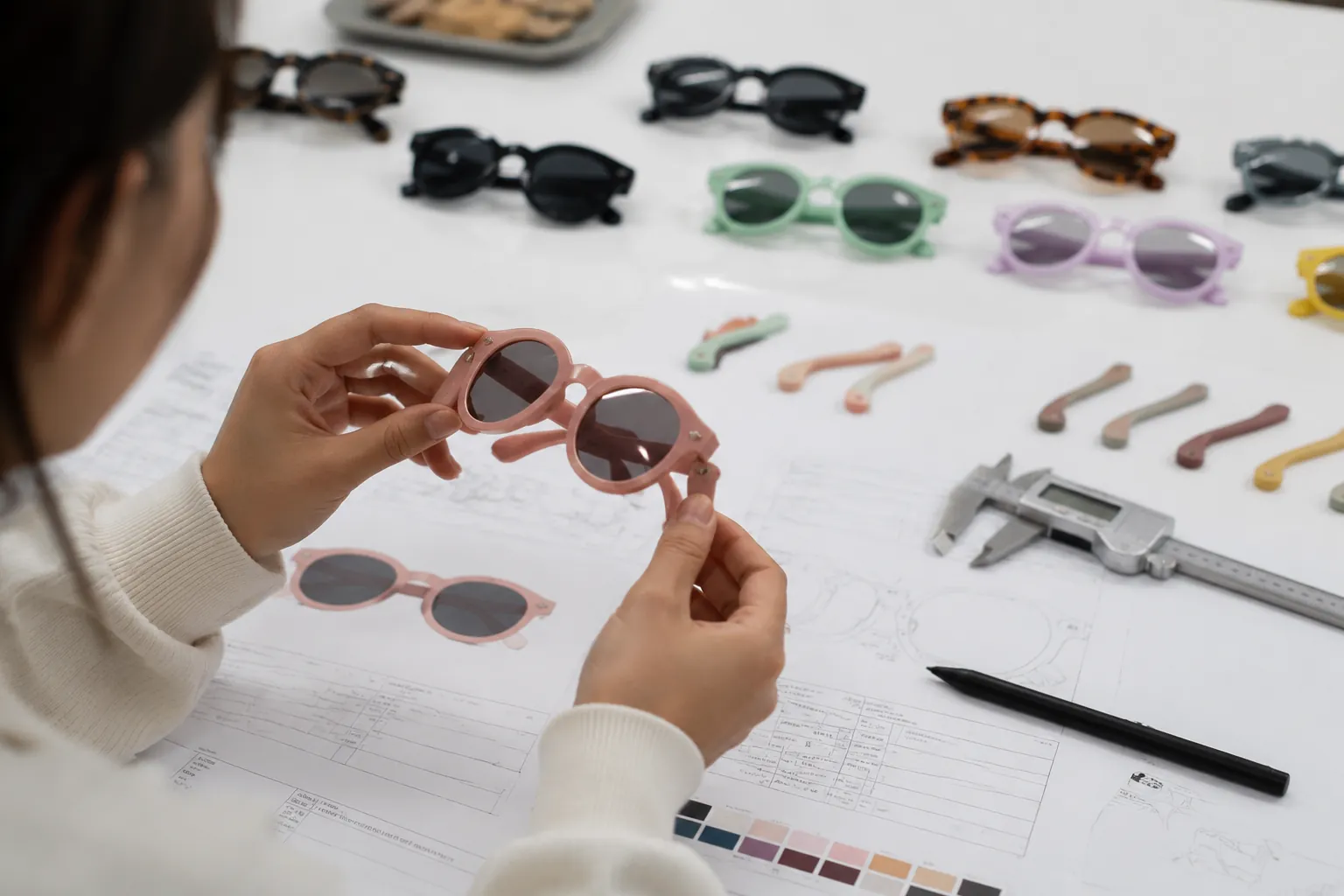
This guide is for importers, retailers, distributors, and children's product brands sourcing custom kids sunglasses in volume. It explains how to turn a frame idea into a controlled purchase specification: age fit, materials, lens category, decoration, labeling, durability checks, MOQ, price logic, lead time, and compliance files. The aim is simple: reduce weak hinges, wrong labels, poor material choices, vague UV claims, and disputes after mass production starts.
Start With the Sales Case, Not the Frame Photo
Many kids sunglasses projects start with a shape: heart, round, square, aviator, sport wrap, or a smaller version of an adult fashion frame. That helps merchandising. It is not enough for manufacturing.
Start with the sales channel, age band, destination market, retail price point, intended use, and compliance route. A beach gift shop, pharmacy rack, school fundraiser, resort promotion, and branded DTC launch do not need the same sunglass. The same frame can fail if the lens category, package, warning label, fit, or durability level is wrong for the channel.
Before asking for a quotation, prepare a one-page intake sheet. Include age range, target countries, expected retail price, frame material, lens material, lens color, lens category, UV claim, logo method, packaging format, barcode needs, carton mark requirements, and order quantity by color. Also state whether the program is a market test, seasonal reorder, promotional giveaway, or long-term retail SKU.
Quote against a specification, not a product photo. Small runs usually carry higher unit costs because mold setup, injection color changes, decoration setup, lens tint batching, packaging artwork, and inspection time are spread across fewer units. Larger runs can improve efficiency, but the final price still depends on material, hinge type, lens construction, decoration, packaging, testing, and inspection requirements.
Buyer rule: if the age band, destination market, and lens category are not defined, the factory cannot responsibly lock the fit, label, test plan, or quote.
Fit: Age Band, Bridge, Temple, and Retention
Children's sunglasses are not just smaller adult sunglasses. Kids often have smaller bridges, flatter nose profiles, narrower head widths, and low tolerance for weight or pressure. A frame can look right in a photo and still slide down, pinch behind the ears, or feel unstable during movement.
Split the range before sampling. Common commercial bands are 2-4 years, 5-7 years, 8-12 years, and teen/youth. These are planning references, not medical sizing rules. For each band, approve physical samples on suitable head forms or child fit models when possible. CAD drawings and front-view photos do not show nose contact, temple pressure, or retention.
| Age band | Typical frame front | Temple length | Weight target | Main control point |
|---|---|---|---|---|
| 2-4 years | 105-115 mm | 105-115 mm | Under 18 g if possible | Soft bridge contact and secure retention |
| 5-7 years | 115-122 mm | 115-125 mm | 18-23 g | Hinge tension and temple spread |
| 8-12 years | 122-132 mm | 125-135 mm | 20-28 g | Lens height, wrap, and fashion proportion |
| Teen/youth | 130-138 mm | 130-140 mm | 22-32 g | Adult styling with smaller bridge fit |
The table gives practical commercial starting points. It does not replace measurement of the approved sample. Ask the factory to record lens width, bridge width, temple length, frame front width, lens height, frame curve, and finished weight. For repeat orders, use the signed sample and measurement sheet as the control standard.
A practical tolerance for many children's eyewear programs is +/-0.5 mm for critical fit dimensions and +/-1.0 mm for less critical dimensions, unless the tooling, material, or design requires something else. Finished weight should also be controlled against the approved sample. Put the acceptable range in the purchase specification.
For toddlers, consider strap holes, flexible temples, or softer temple tips if the channel expects active outdoor use. For youth fashion styles, avoid babyish proportions. Sell-through often depends on adult design language adjusted for child fit.
Material Safety and Behavior
Children bend frames, chew temple tips, drop sunglasses, and leave them in heat. Material choice has to cover restricted substances, impact behavior, weight, finish durability, part retention, odor, and cost. Do not treat material as a line item only.
Injection-molded frames are common for kids because they support consistent color, repeatable production, and accessible pricing. Polycarbonate can be impact-resistant and economical, but stiffness and comfort still need checking. TR90-style nylon materials are often lighter and more flexible, but they cost more and require controlled processing. TPE or rubberized parts can improve grip, but soft-touch materials and coatings should be checked for odor, migration, peeling, and color transfer. Acetate can give stronger color depth and polish for premium youth styles, but it is heavier and needs cutting, tumbling, polishing, hinge setting, and more handwork.
Ask the supplier to identify the actual material used for each component. A broad claim such as "eco material," "BPA free," or "safe for kids" is not enough for an import file. The buyer needs to know which material is used, which claim is being made, which component was tested or declared, and whether the documentation matches the production color and process.
- Frame resin: request the material type, grade or supplier declaration when available, color masterbatch information, and REACH-related restricted substance support for EU programs.
- Hinges and screws: specify suitable corrosion-resistant hardware and check screw torque after assembly and cycling. Loose screws are a common eyewear complaint.
- Temple tips: inspect for sharp edges, pull-off risk, odor after storage, and color transfer after rubbing.
- Coatings: avoid finishes that chip at hinge corners, bridge contact points, or temple bend areas. Matte and rubberized coatings need abrasion and adhesion checks.
- Decorative parts: metal badges, charms, glued parts, and novelty details add inspection points. They should not create sharp edges or detachable small-part risks.
For children's products, material control should be tied to the exact SKU and market. REACH documentation matters for EU restricted substance control, but it should be reviewed against the actual parts, colors, coatings, and decorations used in production.
Lens Category Is a Compliance Decision
Lens tint is not just a style choice. It affects visible light transmission, category marking, warning text, and where the sunglasses can be sold. For children, many general outdoor retail programs use category 2 or category 3 lenses, depending on the intended use and market rules. Very dark lenses may look strong in photos. They also raise labeling and use-case questions.
For the EU, sunglasses are commonly assessed against EN ISO 12312-1 as part of the technical basis for CE marking. For the United States, ANSI Z80.3 is commonly used for nonprescription sunglass performance claims, while FDA registration and device listing obligations may apply to regulated parties and products. FDA registration is not a performance certification and does not replace product testing. For Australia and New Zealand, AS/NZS 1067 is the relevant sunglass standard family for category and performance requirements.
| Lens choice | Typical use | Risk to control | Manufacturing control |
|---|---|---|---|
| Grey smoke | General outdoor retail | Too dark or inconsistent visible light transmission | Measure visible light transmission by approved method and batch plan |
| Brown | Beach, travel, lifestyle | Color shift complaints | Approve tint master sample under controlled lighting |
| Mirror coating | Fashion and promotional programs | Scratches, coating variation, and adhesion failure | Add coating adhesion, abrasion, and surface inspection checks |
| Gradient tint | Youth fashion styles | Uneven shade between left and right lenses | Control dip time, lens position, and batch lighting |
The purchase order should state lens material, lens color, UV claim, lens category, coating, applicable standard, and whether the lens is plano only or part of an optical-ready frame. A vague "UV400 kids lens" line is too weak. UV400 describes a UV protection claim; it does not define lens category, visible light transmission, labeling, optical quality, impact behavior, or market compliance.
Approve a master lens sample and require retained samples for repeat orders. Link the approved lens to the category and claim shown on hangtags, inserts, packaging, and online listings. The label must match the product.
Decoration, Branding, and Packaging Control
Decoration choices affect cost, durability, inspection time, and lead time. Pad printing is economical for logos on temples, but it needs ink adhesion checks and can wear on high-contact areas. Laser engraving can be durable on suitable materials, but it may be subtle on dark or transparent frames. Metal logo plates can look premium, but they add tooling, bonding, edge inspection, and corrosion checks. Full-color retail packaging can help shelf presentation, but artwork errors can delay shipment or create compliance risk.
Keep decoration away from areas that flex heavily unless the method has been tested on the actual material. Temple bends, hinge corners, and bridge contact points are common failure areas. If the buyer wants a large printed character, glitter finish, novelty attachment, or glued trim, test the real sample before mass production. A rendering is not proof.
Packaging is part of the controlled specification. Approve hangtags, polybags, microfiber pouches, hard or soft cases, barcode labels, inner boxes, export cartons, and carton marks before bulk packing. A simple retail pack may include one pair, one hangtag or insert, one polybag or pouch, and barcode labeling. Premium youth programs may add a case and printed sleeve. That increases packing labor, material cost, carton volume, and freight cost.
Artwork version control matters. Common errors include wrong lens category, missing importer address, old barcode, inconsistent UV claims, incorrect language versions, and unapproved age wording. Before packing, the factory should compare the approved PDF artwork against the printed item and the actual product claim. Record the check. Incorrect labeling can force repacking or relabeling before shipment.
Durability Testing and Production QC
Children's sunglasses need a practical QC plan. They are handled roughly, and returns can be costly. The frame must survive opening, closing, twisting, storage heat, and normal rough handling. The lens must seat correctly without popping out under normal use. Decoration should remain legible and attached for the intended price level and sales channel.
A useful production plan includes incoming material checks, first-article inspection, in-process checks after molding or cutting, lens inspection after tinting or coating, decoration inspection, assembly inspection, and final AQL inspection before packing. For mass production, the first approved pieces from each color should be measured against the signed sample before full-line production continues.
Typical checks include hinge open-close function, screw tightness, temple alignment, lens seating, frame front width, bridge width, lens defects, sharp edges, surface scratches, logo position, color match, packaging accuracy, and carton condition. State hinge cycling requirements in the buyer's specification and match them to the hinge type and price level. Check screw loosening after cycling, not only initial screw tightness.
For injection frames, watch for flash around the lens rim, gate marks, stress whitening after bending, color streaking, sink marks, and weak hinge anchoring. For acetate frames, inspect polish quality, lamination lines, hinge setting, and lens groove accuracy. For metal trim, check bonding strength, corrosion risk, and exposed edges. Inspection photos should be tied to PO number, style number, color, batch, and inspection date.
MOQ, Price, Sampling, and Lead Time
Sampling is where most problems should be removed. Timing depends on whether the supplier is using available tooling, modifying an existing style, developing a new mold, sourcing special material, preparing custom packaging, or adding custom metal parts. Bulk production should start only after sample approval, artwork approval, material confirmation, and compliance review.
Confirm MOQ by design, color, material, lens, decoration, and packaging. A supplier may accept a small trial run, but small orders carry setup pressure. Machine setup, color matching, decoration screens or fixtures, lens tint setup, packing preparation, inspection, and documentation still have to happen. Larger orders usually spread those costs more efficiently. They also require tighter planning for materials, packaging, inspection, and shipment.
| Quantity level | Best use | Price behavior | Lead-time note |
|---|---|---|---|
| 50 pairs/design | Small test, event, early validation | Highest unit cost because setup is not diluted | Keep colors, lenses, and decoration simple |
| 300 pairs/design | Retail trial or distributor sample run | Better setup spread, still sensitive to decoration and packaging | Good point to test packaging, labeling, and sell-through |
| 1000 pairs/design | Standard import program | More efficient production planning for suitable specs | Freeze QC criteria before PO release |
| 5000+ pairs/design | Volume retail or seasonal program | Best opportunity for stronger unit economics, subject to material and spec | Book material, packaging, testing, and carton routing early |
Do not approve bulk production from a styled product photo. Approve physical samples, measurements, lens tint, lens category, logo placement, decoration durability, packaging artwork, carton marks, and every compliance claim. Then freeze the specification. Late changes after material booking can create delay, rework cost, mixed-version risk, or documentation mismatch.
Compliance File to Request Before Shipment
A serious importer needs a document pack, not a verbal promise. The correct file depends on the destination market, product type, lens category, material, and sales channel. The structure is usually similar: product identification, applicable standards, test reports, material declarations, labeling artwork, and factory quality records.
Common compliance references for kids sunglasses include CE marking supported by EN ISO 12312-1 for relevant EU programs, ANSI Z80.3 for US sunglass performance claims, AS/NZS 1067 for Australia and New Zealand, REACH documentation for EU restricted substances, FDA registration or listing information where applicable in the United States, ISO 9001 for factory quality management, and BSCI for social compliance audits. Reference only the claims that apply to the actual product and market. Extra claims create extra proof obligations.
- Product specification sheet: style number, size, material, color codes, lens category, UV claim, logo method, packaging, approved sample date, and revision number.
- Test reports: matched to the product or defined product family, lens type, standard, report date, and issuing laboratory. Check whether the report covers the actual lens color, category, and construction.
- Material support: resin, coating, metal, ink, glue, and decoration declarations, including REACH-related documentation for EU programs.
- Labeling files: hangtag, warning text, user information, barcode, importer details, language versions, age wording, lens category statement, and carton marks.
- QC records: inspection photos, AQL results, defect notes, corrective actions, measurement records, and retained sample references.
Request the compliance file before final balance payment and before shipment booking. That gives the buyer and supplier time to correct paperwork while the goods are still at the factory. After shipment, every missing label, wrong claim, or incomplete document costs more to fix.
Have a custom sunglasses project in mind?
Send us your styles, target market and quantities and we will return a detailed quote with MOQ, lead time and a sample plan.
Get a QuoteWhy source this from Wenzhou with LumiShades
Wenzhou in Zhejiang Province is widely regarded as China’s eyewear manufacturing capital, producing a large share of the world’s sunglasses. That concentration matters to buyers: a deep local supply chain for acetate sheet, hinges, lens blanks, plating and packaging means shorter component lead times, easier color and material matching, and a workforce with decades of eyewear-specific skill. LumiShades has manufactured in this ecosystem since 2009, and our vertical integration — in-house injection molding, acetate cutting, CNC milling, lens tinting, decoration and quality control — means no part of your order is quietly subcontracted to a workshop you cannot audit.
For international buyers, that vertical control translates into accountability. When a single factory owns every step, defects are traced and fixed at source rather than bounced between vendors, and your specifications survive intact from first sample to bulk. We back this with 15+ years of experience, shipments to 60+ countries, more than 5 million pairs produced per year and a 98.5% on-time delivery rate. Our certifications — CE EN ISO 12312-1, FDA registration, ANSI Z80.3, AS/NZS 1067, REACH, ISO 9001 and BSCI audit — mean the compliance documentation your market requires already exists. Explore our manufacturing capabilities and quality control process to see how this works in practice.
Frequently asked questions
What MOQ should I use for a kids sunglasses market test? Use the smallest MOQ that still lets you test the real selling condition. For a basic concept check, a small run such as 50 pairs per design can work if the supplier accepts it and the specification is simple. For a stronger retail test, 300 pairs per design is often more useful because you can validate packaging, barcode labels, color mix, sell-through, and return feedback. Confirm MOQ by design, color, lens, decoration, and packaging before comparing prices.
Which standards matter for selling kids sunglasses in the EU, US, and Australia? For the EU, confirm CE marking requirements and support the product with EN ISO 12312-1 testing plus REACH documentation for restricted substances. For the US, use ANSI Z80.3 to support nonprescription sunglass performance claims and confirm FDA registration or listing obligations where applicable. For Australia and New Zealand, use AS/NZS 1067 for sunglass category and performance requirements. Match the test report to the actual lens category, material, and product family.
Can I use the same kids sunglass for several countries? Often yes, but do not assume one package works everywhere. The frame and lens may be shared, while hangtags, warning statements, language versions, importer details, category wording, barcodes, and compliance references may need market-specific artwork. Confirm all destination markets before sampling so the approved product and approved labels stay aligned.
Is acetate a good choice for children's sunglasses? Acetate can work well for premium youth styles where color depth, polish, and fashion positioning matter. It is usually less practical for toddler or rough-use programs because it is heavier and requires more handwork than many injection materials. If using acetate, approve the finished weight, bridge comfort, hinge setting, lens groove accuracy, polish quality, and drop or handling performance before bulk production.
What tolerances should I put in a kids sunglasses spec? Start with the approved sample and measurement sheet. For many children's sunglass programs, +/-0.5 mm is a practical tolerance for critical fit dimensions such as bridge width, frame front, and temple length, while +/-1.0 mm may be acceptable for less critical dimensions. State a finished weight range against the approved sample. Tighten or relax tolerances only after reviewing tooling, material behavior, and inspection capability.
What should I approve before mass production starts? Approve the physical sample, size measurements, frame material, lens material, lens category, tint color, UV claim, logo position, decoration method, packaging artwork, barcode labels, carton marks, and every compliance claim shown on the product, tag, insert, carton, or online listing. Keep a signed sample and a dated specification sheet so production, QC, and shipment documents all refer to the same version.
How long should I plan from sample to bulk shipment? Plan the schedule in stages: sample development, sample review, artwork approval, compliance document review, bulk production, inspection, balance payment, and freight booking. Simple projects using existing tooling may sample faster than new mold or special-material projects. Bulk timing depends on order size, material availability, lens work, decoration, packaging, testing, and factory capacity. Add time for label corrections and document review before shipment.
Ready to start?
Explore our shield & oversized sunglasses or request a quote — our sales team replies within 12 hours.
Request a Quote