
How to Check a Sunglasses Test Report
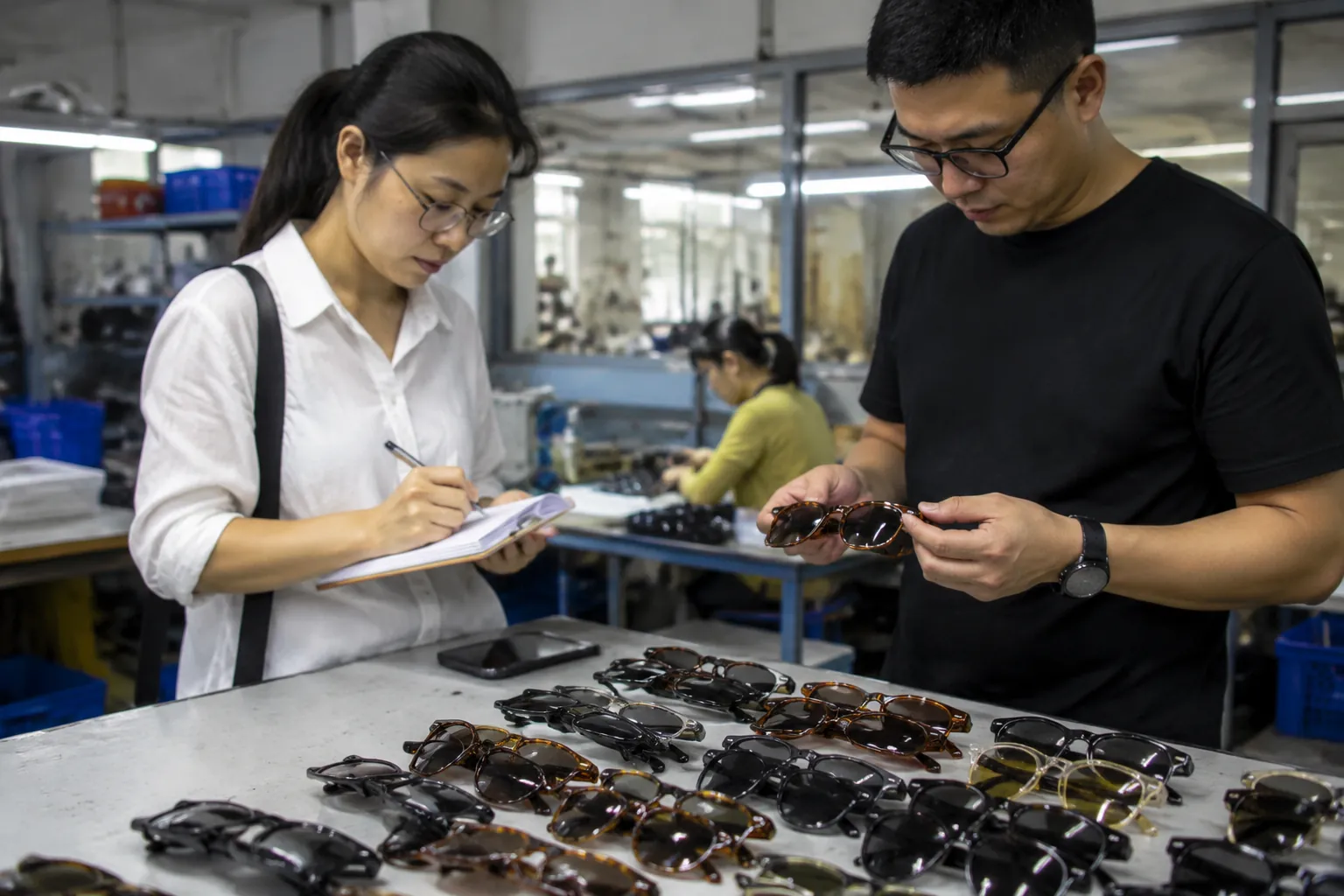
If you import sunglasses, the test report is often one of the first documents customs teams, marketplaces, and internal compliance reviewers ask to see. A report can look complete and still fail to identify the exact model, lens type, material, or target market standard. This article shows overseas buyers what to verify before submission so they can reduce the risk of holds, rejected listings, and model-mix errors.
Start with the exact product on the report
The first check is simple: does the report match the product you plan to ship? Many problems start here. A report for a black acetate wayfarer does not automatically cover a transparent TR90 sport frame with mirrored lenses, even if both came from the same factory. Same supplier. Not the same product.
For sunglasses, the report should identify the model or sample clearly enough that a third party can link it to the commercial SKU. Look for the exact commercial reference, not just a sales description. At minimum, the file should include:
- Model name or item number
- Retail SKU or internal sample code
- Frame material: acetate, injection-molded plastic, metal, TR90, or mixed construction
- Lens type and tint category
- Colorway reference, such as matte black / smoke or crystal / mirrored silver
- Decoration method, if it affects the product surface or edge condition
If a supplier sends a generic report with wording like "fashion sunglasses" or "polarized eyewear," push back. Customs officers and marketplace reviewers need a clear match between the report and the SKU you are shipping. If the report does not map to the exact order code, treat it as incomplete until the supplier provides a corrected document or an explicit product mapping.
The tested sample should also match the approved sample within your product tolerances. If the report sample has a different bridge width, lens base curve, lens coating, or hinge style, the report may no longer describe the production item in a meaningful way.
Buyer rule: If you cannot point to the exact retail SKU on the report, do not submit it as product-specific evidence.
Check the standard, not just the logo on the page
Many importers see a CE mark and stop reading. That is a mistake. CE is not a test method. For sunglasses, the report must name the actual standard used and the scope of testing. A document that looks official but does not identify the standard clearly is often not enough for submission.
For sunglasses and fashion eyewear, common references include CE EN ISO 12312-1, ANSI Z80.3, and AS/NZS 1067. These are not interchangeable. A report written for one market does not automatically satisfy another. If you sell into the EU, the report should support the relevant EU product compliance requirement for sunglasses. If you sell into the U.S., FDA registration is a separate regulatory filing and does not replace product performance testing. Australia and New Zealand may require AS/NZS 1067. Do not mix them up.
| Standard / filing | Typical market use | What the buyer should verify |
|---|---|---|
| CE EN ISO 12312-1 | EU sunglasses compliance support | Standard name, lens category, transmittance result, and exact product identification |
| ANSI Z80.3 | U.S. sunglasses performance testing | Relevant optical and performance results, plus matching sample description |
| AS/NZS 1067 | Australia / New Zealand | Correct standard version, product scope, and classification details |
| FDA registration | U.S. regulatory filing item | That the registration exists and is current; it is not a performance test |
A good report should also show the test items that matter for sunglasses: visible light transmittance, ultraviolet protection, lens category, and any impact or mechanical checks required by the target standard. If the document only shows a logo and one sentence of compliance language, it is too thin for serious import use.
Ask one blunt question: does this report support the destination market, or does it only look compliant? If the answer is unclear, keep checking.
Read the dates like a customs officer would
Dates matter more than many buyers think. A report can be genuine and still be unsuitable for your shipment. Check the issue date, revision date, sample date, and test completion date. These dates help you judge whether the file is current, outdated, or disconnected from the product in your container.
Why does this matter? Because sunglasses changes are often small enough to overlook internally but meaningful enough to invalidate a report. A changed lens tint can alter transmittance. A new mold can change frame dimensions. A different hinge supplier can change fit or mechanical behavior. Even a switch from clear lenses to mirrored coated lenses may require a new review because the optical stack is no longer the same.
Use this sequence:
- Confirm the report issue date and revision status.
- Check the sample date and make sure it lines up with the approved production spec.
- Look for page numbering and make sure every page is present.
- Verify the laboratory name, report number, and signatory are complete.
- Ask whether the file still applies after any material, tint, coating, or tooling change.
Document timing should follow product freeze, not the other way around. Once a style is approved, any later change to resin, lens tint, coating, or decoration method should trigger a document review. The date on the report tells you whether that review happened.
Match the test sample to the production batch
This is where many importers get burned. The report may be valid, but only for the tested sample. If the production batch differs in material or construction, the report becomes weak evidence at best. Compliance reviewers care about the actual product in the carton, not the sample approved months earlier.
Check whether the test sample matches the mass-production item in these areas:
- Frame resin or acetate sheet specification
- Lens material and tint specification
- Base curve or lens shape
- Hinge type, screw construction, and spring mechanism if used
- Surface finish such as matte, glossy, rubberized, or soft-touch coating
- Decorations such as laser engraving, pad printing, hot stamping, or metal logo plates
Decoration is not cosmetic from a compliance angle. A metal logo plate can introduce sharper edges or new contact points. Pad printing can affect surface durability and appearance if the ink or finish changes. Hot stamping can alter the surface layer of acetate or injection-molded frames near the temple area. Even a change from laser engraving to UV printing can matter because the process changes the surface treatment.
Material behavior matters too. Acetate is processed differently from TR90 or injected nylon. Acetate can be more sensitive to heat during finishing, while TR90 is often chosen for flexibility and light weight, and metal frames bring different edge and corrosion-control considerations. If the tested sample was made from one material family and production shifted to another, do not assume the report still applies.
For repeat styles, keep a retained reference sample. That retained piece should match the approved spec, including lens color and decoration. When the factory says the production batch is the same as the report, you can compare it to the retained sample instead of relying on memory.
Blunt truth: If the factory changed the frame mold, lens source, or decoration method after testing, do not assume the old report still supports the current production run.
Verify the lab identity and traceability fields
A report is only as useful as the traceability behind it. You need enough information to show that the document came from a real testing laboratory and refers to a real sample. Customs teams and marketplace compliance desks may not retest your product, but they can reject weak paperwork quickly.
Look for these fields on the report:
- Testing laboratory name and address
- Accreditation or qualification reference if shown
- Report number
- Sample receipt date
- Test completion date
- Page count and page numbering
- Signatory or authorized reviewer name
Also check for obvious problems: misspelled lab names, inconsistent model codes, missing pages, copied tables that do not match the product, or a report number format that looks unlike the lab's normal structure. If the report says one lens color on page 1 and another on page 3, stop. That is not a minor typo. It is a document control issue.
Good traceability also includes an internal link between the lab sample and the factory's production record. That record should show the approved BOM, the mold or cut pattern, the lens tint code, and the final carton-level SKU. When those details line up, the report is easier to defend.
For buyers sourcing from China or other manufacturing hubs, it helps when the manufacturer has its own QC records supporting the same SKU. In-house injection molding, acetate cutting, CNC finishing, lens tinting, and inspection make it easier to keep sample records, production records, and shipment documents aligned. That is not a substitute for a test report. It does reduce document confusion and makes mismatches easier to catch before export.
Use a simple check matrix before you send the file out
Do not rely on memory. Use a file check matrix for every style, every colorway, and every destination market. It takes minutes and can prevent costly submission mistakes. When you handle multiple SKU variants, the matrix becomes your first line of defense against accidental file reuse.
| Check item | Pass condition | Red flag |
|---|---|---|
| Model reference | Matches PO, SKU, or sample code exactly | Generic description only |
| Standard | Correct market standard named clearly | Only CE logo shown, no standard stated |
| Dates | Issue, sample, and test dates are visible and sensible | Old report with no revision control |
| Sample description | Frame, lens, tint, and decoration match production | Material change after testing |
| Lab traceability | Report number, page count, and sign-off present | Missing pages or inconsistent numbering |
| Scope of use | Market destination fits the standard | Trying to use one report for EU, U.S., and AU without checking scope |
If you source multiple colorways, do not assume one report covers every variant. Sometimes it does, especially when only the lens color changes within the same tested family. Sometimes it does not, particularly when polarization, mirrored coatings, or a darker tint changes the optical results. The answer must come from the report and the product spec, not the sales pitch.
A strong matrix also helps during product refreshes. If a frame width changes, a temple becomes shorter, or the lens coating changes from standard smoke to polarized smoke, record that change and flag the report for review. Small changes add up quickly in eyewear.
Know how pricing and lead time affect documentation timing
Compliance paperwork has a schedule, just like production. If you are buying samples in 7-10 days and bulk in 25-35 days, plan document review before the shipment is packed. Waiting until carton labels are printed is too late. At that point, a bad report becomes a logistics problem, not just a paperwork problem.
Pricing and MOQ also affect how carefully buyers should control documentation. For low MOQs such as 50 pairs per design, buyers often place one test run and use that as the compliance sample. That can work if the product is frozen and the factory is disciplined. At 300, 1,000, or 5,000+ pairs, the economics improve, but so does the risk of small spec changes creeping into mass production. A lower unit price is useful only if you do not later pay for retesting, relabeling, or a rejected marketplace submission.
Use this sequence:
- Freeze the style sheet and artwork.
- Confirm the compliance market and required standard.
- Approve the sample and keep one retained reference piece.
- Check the test report against the approved sample.
- Release bulk production only after the paperwork is confirmed.
- Recheck any post-approval changes before shipping documents are issued.
That order matters. Reverse it and you create avoidable risk. The cheapest eyewear order is not always the cheapest landed result if the report has to be redone or the listing gets suspended.
Questions to ask your supplier before submission
Before you send any report to customs, Amazon, Walmart, or a distributor's compliance desk, ask these questions in writing. The goal is to force a clear yes-or-no answer, not a vague sales reply.
- Does this report cover the exact SKU, colorway, and lens type we are shipping?
- Was the tested sample made from the same frame material, lens material, and coating stack?
- Has anything changed since the report date: mold, tint, coating, printing, logo plate, hinge, packaging, or supplier?
- Which market is this report intended for: EU, U.S., or Australia/New Zealand?
- Can you provide the linked sample photo, internal QC record, and final commercial specification?
- If the report covers multiple variants, which ones are explicitly included and which are excluded?
If the supplier hesitates, that tells you something. A competent factory should be able to map the report to the production record without confusion. If they cannot, the report is probably not ready for external use. At that point, ask for a corrected file or a fresh test tied to the current production spec.
One last point: real compliance documents are specific. A factory may be able to support CE EN ISO 12312-1, FDA registration needs, ANSI Z80.3, AS/NZS 1067, REACH-related obligations, ISO 9001 quality management, or BSCI audit requests, but none of those should be implied without the actual document in hand. The safest submission is the one that matches the product, market, and date range exactly.
Have a custom sunglasses project in mind?
Send us your styles, target market and quantities and we will return a detailed quote with MOQ, lead time and a sample plan.
Get a QuoteWhy source this from Wenzhou with LumiShades
Wenzhou in Zhejiang Province is widely regarded as China’s eyewear manufacturing capital, producing a large share of the world’s sunglasses. That concentration matters to buyers: a deep local supply chain for acetate sheet, hinges, lens blanks, plating and packaging means shorter component lead times, easier color and material matching, and a workforce with decades of eyewear-specific skill. LumiShades has manufactured in this ecosystem since 2009, and our vertical integration — in-house injection molding, acetate cutting, CNC milling, lens tinting, decoration and quality control — means no part of your order is quietly subcontracted to a workshop you cannot audit.
For international buyers, that vertical control translates into accountability. When a single factory owns every step, defects are traced and fixed at source rather than bounced between vendors, and your specifications survive intact from first sample to bulk. We back this with 15+ years of experience, shipments to 60+ countries, more than 5 million pairs produced per year and a 98.5% on-time delivery rate. Our certifications — CE EN ISO 12312-1, FDA registration, ANSI Z80.3, AS/NZS 1067, REACH, ISO 9001 and BSCI audit — mean the compliance documentation your market requires already exists. Explore our manufacturing capabilities and quality control process to see how this works in practice.
Frequently asked questions
Can I use one sunglasses test report for the EU, U.S., and Australia? Not automatically. Check whether the report specifically supports CE EN ISO 12312-1, ANSI Z80.3, or AS/NZS 1067. Market coverage is not interchangeable, and a report prepared for one market should not be submitted for another unless the document clearly supports that destination and product scope.
Does FDA registration replace a product test report? No. FDA registration is not a performance test and does not prove the sunglasses meet a product standard. You still need the correct report for the product and destination market, including the exact sample description and standard name.
What if the lens tint changed after testing? Treat the report as unverified until the change is reviewed. A tint change can affect visible light transmittance, lens category, and overall report validity. If the tint, coating, or mirror layer changed, ask the supplier or lab whether the current product still matches the tested sample and whether retesting is required.
How old can a sunglasses test report be? There is no universal age limit. The key question is whether the report still matches the current product, materials, and market requirement. A recent report can still be wrong if the frame mold, lens tint, hinge, or decoration changed after testing. Use the latest report that matches the final production specification.
What is the fastest way to spot a weak report? Check the model number, standard name, dates, sample description, and page numbering first. If any of those are vague or inconsistent, stop and ask for a corrected file. Generic wording, missing pages, or a report that does not name the exact SKU are the most common warning signs.
Ready to start?
Explore our square sunglasses or request a quote — our sales team replies within 12 hours.
Request a Quote