
Kids Sunglasses Sourcing Guide: Fit, Safety, Compliance
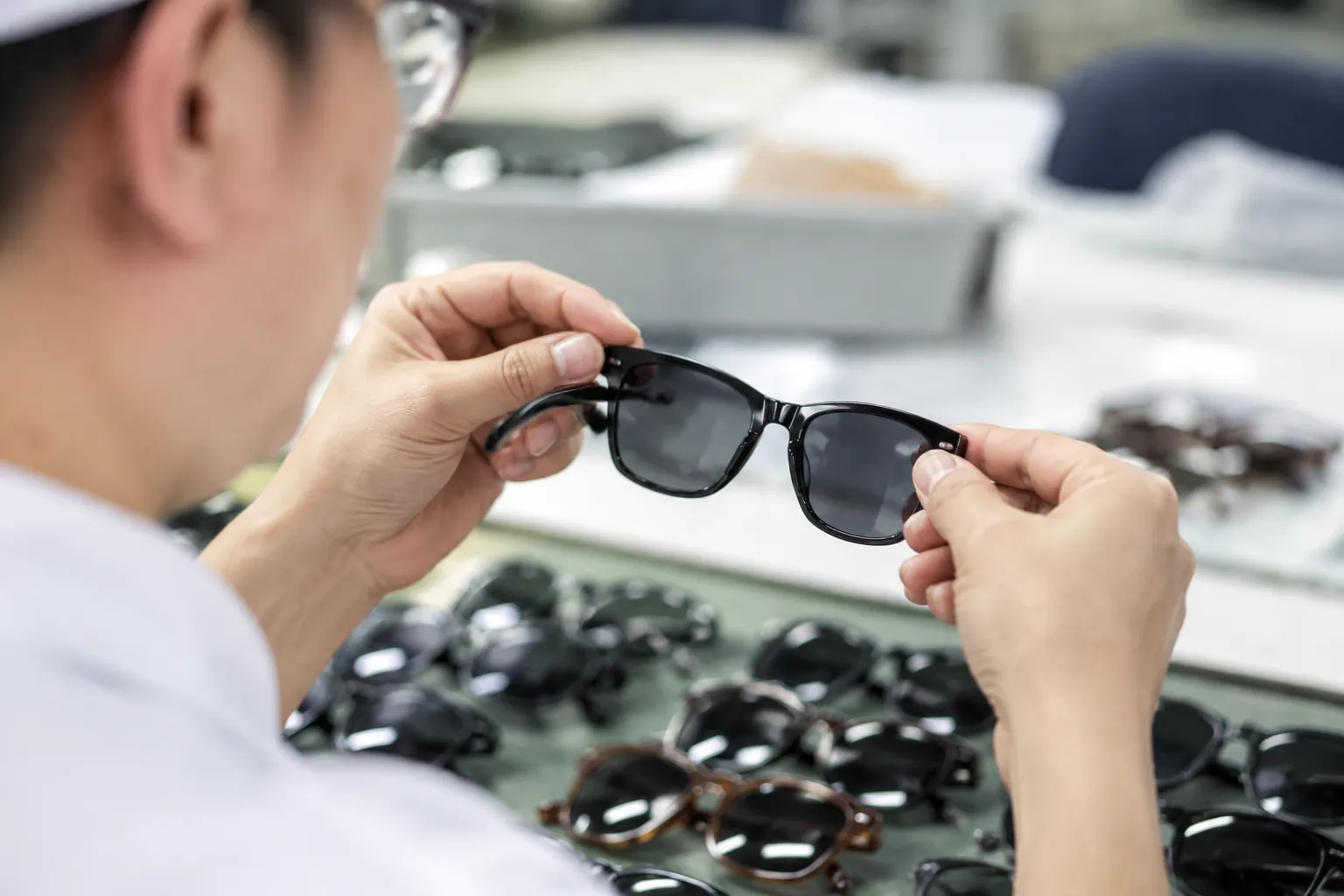
This guide is for brands, importers, distributors, promotional buyers, and retailers sourcing kids sunglasses in bulk. It explains what to define before sampling and production: age-band fit, frame material, lens category, UV claims, small-parts risk, decoration method, labeling, testing, MOQ, price drivers, and lead-time gates. The aim is practical. Fewer failed inspections. Fewer unsupported claims. Cleaner RFQs. Production samples that match the product you plan to sell.
Start With Age Band, Fit, And Use Case
Kids sunglasses are not adult frames scaled down. A toddler frame, a school-age fashion frame, and a youth sport frame need different bridge geometry, temple length, hinge strength, lens coverage, and flexibility. Start with wearer age and use case. Color comes later.
For preschool children, comfort depends on short temples, low bridge height, rounded edges, low frame weight, and controlled flexibility. For older children, the shape can move closer to junior adult proportions, but oversized lenses may still drag the frame forward. For active or sport use, wrap angle, temple grip, and lens retention matter more than the fashion silhouette.
| Age band | Typical frame width target | Temple length focus | Main sourcing risk |
|---|---|---|---|
| 2-4 years | 105-115 mm | Short, soft-contact temples | Pinching, chewing, detachable parts |
| 5-8 years | 115-125 mm | Stable fit without pressure | Lens popping, hinge looseness, slipping |
| 9-12 years | 125-135 mm | Closer to junior adult sizing | Oversized fashion frames sliding down |
| Youth sport | 120-135 mm, depending on wrap | Grip, spread recovery, head movement | Pressure points, lens stress, coating wear |
Use these ranges as sourcing starting points, not universal fit rules. Head size varies by market, age, and style. Ask the factory to record sample weight, front width, bridge width, lens size, temple length, temple opening angle, and frame-base curve. For repeat production, set tolerances for critical dimensions in the purchase specification. Confirm what the factory can hold for the selected material and mold.
Your RFQ should state target age, face width range, lens category, destination market, packaging method, logo method, and sales channel. Without those details, the supplier is quoting an idea, not a controlled children's eyewear product.
Frame Materials: What Breaks, Bends, Or Feels Wrong
For kids eyewear, material choice affects both safety and returns. Injection-molded plastics, polycarbonate, and flexible TR-style materials are common because they can produce light, repeatable frames when the design is right. Acetate can look more premium, but it is usually heavier. It also needs tighter control of edge polishing, hinge setting, and front thickness. A good-looking acetate sample can still be too rigid for a young child.
Ask what material the supplier proposes, whether it is already used in comparable children's frames, and what dimensional and color tolerances can be held in bulk. Do not treat material names as performance proof. A flexible material still needs hinge, lens-retention, odor, surface, and colorfastness checks on the finished product.
- Injection molded PC or similar plastic: useful for repeatable kids frames, bright color options, and scalable production after mold approval. Confirm impact behavior, lens retention, gate marks, and color consistency.
- TR-style flexible compounds: useful for active children because the frame can bend and recover. Check odor, surface tackiness, color migration, hinge retention, and deformation after cycling.
- Acetate: strong for pattern depth and retail feel, but usually heavier than molded plastics. Request polished edges, controlled front thickness, bridge comfort checks, and hinge pull checks.
- Metal components: use carefully on young children. Screws, plaques, spring hinges, decorative pins, and nose-pad parts can create small-parts or sharp-edge risks if poorly fixed.
For development samples, ask for more than one piece per color. One sample can hide variation in hinge tightness, temple alignment, lens fit, polish, and decoration placement. Check whether temples open evenly, whether the frame returns after gentle twisting, and whether the lens groove holds the lens after repeated flexing.
Define finish expectations early. Bright colors show scratches, sink marks, flow marks, and color drift. For molded frames, inspect gate marks, parting lines, sink marks, and color consistency under daylight and retail lighting. For acetate, inspect edge polish, temple alignment, exposed lamination lines, and sharp corners around the bridge and end pieces.
Lens Claims Must Match The Market And The Tint
"UV400" is easy to print. Proof is harder. The finished sunglasses, lens tint, filter category, and label statements must match the destination market. For Europe, EN ISO 12312-1 is the key standard used with CE marking. For the United States, ANSI Z80.3 is commonly requested for non-prescription sunglasses. Australia and New Zealand buyers should review AS/NZS 1067. FDA registration may be relevant to supplier or facility documentation in the US, but it is not product approval.
Lens category is not decoration. Category 0, 1, 2, 3, and 4 lenses have different visible light transmission ranges and use statements. Many children's fashion sunglasses sit in Category 2 or Category 3, depending on tint. Category 4 is very dark and unsuitable for driving. For children, it is often impractical for mixed indoor-outdoor use. If a product uses multiple lens colors, review each tint. Smoke, brown, pink gradient, and blue mirror lenses can test differently.
Ask the supplier for a pre-production lens test plan covering UV transmittance, visible light transmittance, optical quality, lens category, and coating adhesion where relevant. Mirrored lenses need extra abrasion attention because weak coatings scratch quickly in backpacks, school bags, and retail handling. Polarized lenses add another control point: confirm polarization efficiency, axis consistency, and label accuracy. Do not claim "polarized" unless the production lens is polarized.
A clear specification states lens material, lens thickness, tint color, mirror or non-mirror finish, category target, standard to test against, and whether spare lenses or alternate lens colors are included. A gray lens report does not automatically cover a pink mirror lens in the same frame.
Decoration And Small Parts: The Quiet Failure Point
Small decorative details can make a style more saleable. They can also create safety and inspection failures. Metal logo plates, rhinestone-style trims, loose charms, screw heads, glued badges, and decorative hinge covers should be treated as risk items on kids sunglasses. If a component can detach under reasonable pulling, twisting, chewing, or impact, it can become a choking or ingestion hazard for younger children.
For children's styles, laser engraving and pad printing usually carry less mechanical risk because they do not add a separate part. Metal plates can still be used, but the attachment method must be defined before sampling and checked after decoration. If a buyer chooses charms, glued badges, or raised trims, the order file should include pull, torque, rub, and aging checks suitable for the product and destination market.
| Decoration method | Best use | Process detail to confirm | Kids product risk |
|---|---|---|---|
| Laser engraving | Subtle logo on temple or lens | Depth, placement tolerance, contrast | Low mechanical risk, but check legibility |
| Pad printing | Colored logo or small graphic | Ink adhesion, curing time, rub resistance | Can wear off if surface prep is poor |
| Metal logo plate | Premium retail styling | Rivet, insert, heat-stake, screw, or adhesive method | Detachment and sharp-edge risk |
| Glued charm or badge | Novelty styles | Adhesive type, bonding area, aging test | High risk for toddler products |
Define logo placement tolerance, color, size, and approved position on the sample. Request rub testing on printed logos and pull or torque checks on attached parts after the finished decoration process. Timing matters. Printing, plating, adhesive curing, and heat exposure can change surface behavior.
The practical rule is simple: remove unnecessary detachable decoration from toddler styles. A molded logo, engraving, or pad print is usually safer and more durable than a shiny add-on.
Testing Package To Request Before Bulk Production
A serious kids sunglasses order should not rely on one old certificate from a different model. Ask for model-specific evidence or, where appropriate, material-family evidence backed by checks on final production samples. This matters most when changing lens tint, frame material, hinge structure, decoration, coating, or packaging.
| Check | What it confirms | Buyer instruction |
|---|---|---|
| CE EN ISO 12312-1 | EU sunglass filter and optical requirements | Match model, lens category, and label copy |
| ANSI Z80.3 | US non-prescription sunglass performance expectations | Useful for US importers and retailers |
| AS/NZS 1067 | Australia/New Zealand sunglass requirements | Check category, warnings, and use statements |
| REACH | Restricted substances in plastics, coatings, colorants, and metals | Review for all child-contact materials |
| FDA registration | Supplier or facility registration context where applicable | Do not present registration as product approval |
| ISO 9001 / BSCI | Quality management and social compliance documentation | Use as factory-level support, not product performance proof |
| Small-parts and pull checks | Security of plaques, screws, trims, and charms | Apply to decorated finished samples |
| In-line QC records | Dimensional, hinge, lens, color, and packing control | Ask for AQL plan, defect photos, and inspection dates |
Read certificates closely. CE EN ISO 12312-1, ANSI Z80.3, AS/NZS 1067, and REACH relate to product or material compliance topics. ISO 9001 and BSCI are factory-level systems or audit documents. They do not prove that a specific kids sunglass model meets lens, labeling, or small-parts requirements.
Define pass-fail criteria before production. "Good quality" is not measurable. Better criteria include front width tolerance, temple opening angle range, screw tightness, lens retention, logo position, lens color tolerance, surface defect limits, carton drop condition, barcode accuracy, and label text approval.
For larger orders, use staged control: incoming material check, first-article approval, in-line inspection at 20-30% production, final random inspection before shipment, and retained sealed samples. Keep one approved sample set signed, dated, and sealed. Compare production against that sample, not against memory or video approval.
Labeling And Packaging: Where Compliance Slips
Many kids sunglasses problems happen after the frame itself passes. The hangtag lists the wrong lens category. The pouch lacks a required warning. The retail sticker says "shatterproof" when the test report does not support that claim. Packaging is part of compliance. Treat it that way.
At minimum, define lens category, applicable standard, manufacturer or importer details, country of origin, SKU, batch or PO reference, age grading where used, and required warnings for the destination market. For Europe, CE marking must be used correctly and supported by appropriate technical documentation and declarations. For Australia and New Zealand, category and use statements need careful review against AS/NZS 1067 expectations. For the US, avoid casual claims such as "shatterproof" or "impact-proof" unless they are supported by applicable test evidence. Most sunglass lenses should not be marketed as shatterproof.
Packaging also affects product condition. Kids frames often use bright colors and mirrored lenses that show rub marks quickly. If the product ships in a polybag only, temple tips can press against lenses and create scuffs. For low-MOQ market tests, a microfiber pouch may be enough. For retail shelves, use an inner tray, card sleeve, or small box if surface finish and presentation matter. For e-commerce, run a simple packing drop check with the exact pouch, box, insert, and carton configuration.
Artwork approval should include barcode scan, warning text, lens category, logo color, country-of-origin statement, carton marks, and case-pack quantity. Once labels are printed, corrections are slow and expensive.
MOQ, Price, Sampling, And Lead-Time Reality
Sampling deserves attention. If the supplier offers a low MOQ, use it to validate fit, color, packaging, decoration, and buyer response before committing to a larger run. Pricing usually improves at higher quantities because material purchasing, color setup, decoration setup, packaging setup, and QC time spread across more units. Ask for quantity breaks. Do not assume the first price is scalable.
Sample lead time depends on whether the project uses an existing frame, a modified frame, new tooling, custom lenses, or new packaging. Bulk production should be counted only after sample approval, deposit, confirmed materials, approved artwork, and locked packaging. New injection tooling, special colors, polarized lenses, retail packaging, and third-party testing can add time. Do not bury lab testing inside the production schedule. Make it a separate gate.
| Order stage | Typical quantity or time | What to lock | Risk if rushed |
|---|---|---|---|
| Development sample | Supplier-specific timing | Frame size, material, lens color, hinge feel | Bad fit discovered after bulk starts |
| Low-MOQ run | Supplier-specific MOQ | Logo, label copy, pouch or box, SKU setup | Higher unit cost and limited test data |
| Commercial run | Quote by quantity break | QC checklist, color standard, test plan | Color drift, decoration defects, delayed approval |
| Bulk production | After approval, deposit, and locked specs | Signed sample, carton specs, inspection date | Shipment delay or failed final inspection |
Price changes usually come from five places: material, lens, tooling, decoration, and packaging. A flexible TR-style frame with polarized mirrored lenses and retail box will not price like a basic molded frame with standard smoke lenses and a polybag. Send the target retail channel, destination market, compliance requirements, and budget early so the supplier can engineer around real constraints.
Every PO should define approval gates, delivery terms, inspection timing, and responsibility for test fees, tooling fees, packaging changes, and failed-test retesting. A low unit price is not useful if the product cannot pass the required checks or ships with unsupported label claims.
Factory Questions To Ask Before You Place The PO
A good RFQ for kids sunglasses is specific. It should force the supplier to answer with process detail, not vague assurances. Send drawings, reference samples, or size targets if available. Also send the compliance destination. The same physical product may need different labeling and warning treatment for the EU, US, and Australia.
- Which standard will the finished sunglasses be checked against: CE EN ISO 12312-1, ANSI Z80.3, AS/NZS 1067, or more than one?
- Is the lens category confirmed for every tint, gradient, mirror, and polarized option?
- What frame material is proposed, and what weight range is expected for the target age band?
- What dimensional tolerances can be held for front width, bridge, temple length, and lens groove?
- Are there detachable parts, screws, plaques, charms, glued trims, spring hinges, or separate nose-pad parts?
- Can the logo be laser engraved or pad printed instead of attached as a separate component?
- What QC points are checked during molding, lens cutting, lens fitting, decoration, and final packing?
- Will pre-production samples include final lenses, final labels, final packaging, and final logo method?
- Which documents are product-specific, and which are factory-level documents such as ISO 9001 or BSCI?
- Who pays for third-party testing, and when is testing scheduled relative to production?
Keep one approved sample set sealed and signed. Use it for production comparison. If you approve a children's sunglasses sample over video only, you are accepting fit, weight, surface, and small-parts risk that you cannot properly inspect.
Buyer rule: Do not place a kids sunglasses order until the lens claim, age band, frame material, decoration method, warning text, packaging, testing plan, and inspection criteria are written into the order file.
Have a custom sunglasses project in mind?
Send us your styles, target market and quantities and we will return a detailed quote with MOQ, lead time and a sample plan.
Get a QuoteWhy source this from Wenzhou with LumiShades
Wenzhou in Zhejiang Province is widely regarded as China’s eyewear manufacturing capital, producing a large share of the world’s sunglasses. That concentration matters to buyers: a deep local supply chain for acetate sheet, hinges, lens blanks, plating and packaging means shorter component lead times, easier color and material matching, and a workforce with decades of eyewear-specific skill. LumiShades has manufactured in this ecosystem since 2009, and our vertical integration — in-house injection molding, acetate cutting, CNC milling, lens tinting, decoration and quality control — means no part of your order is quietly subcontracted to a workshop you cannot audit.
For international buyers, that vertical control translates into accountability. When a single factory owns every step, defects are traced and fixed at source rather than bounced between vendors, and your specifications survive intact from first sample to bulk. We back this with 15+ years of experience, shipments to 60+ countries, more than 5 million pairs produced per year and a 98.5% on-time delivery rate. Our certifications — CE EN ISO 12312-1, FDA registration, ANSI Z80.3, AS/NZS 1067, REACH, ISO 9001 and BSCI audit — mean the compliance documentation your market requires already exists. Explore our manufacturing capabilities and quality control process to see how this works in practice.
Frequently asked questions
What MOQ should I expect for custom kids sunglasses? MOQ is supplier-specific. It depends on whether you use an existing frame, a stock lens, a custom color, a custom logo, new packaging, or new tooling. Ask for separate quantity breaks for sample orders, low-MOQ market tests, and commercial production. Also ask what changes at each break: unit price, setup fees, color options, packaging options, inspection scope, and whether third-party testing is included or quoted separately.
Can I use one UV test report for every lens color? Do not assume one report covers every lens. Test evidence should match the actual lens material, tint, coating, category, and production process. A dark gray lens report does not automatically cover a pink gradient, blue mirror, brown polarized, or clear fashion lens. If you plan to sell multiple lens colors, list each tint in the test plan and ask the lab or supplier which versions need individual testing.
Which compliance standards should I request for children's sunglasses? Use the destination market as the starting point. For Europe, request CE documentation supported by EN ISO 12312-1. For the US, ANSI Z80.3 is commonly requested for non-prescription sunglasses. For Australia and New Zealand, review AS/NZS 1067. REACH may also matter for restricted substances in plastics, coatings, colorants, and metals. FDA registration, ISO 9001, and BSCI can support supplier due diligence, but they should not be treated as proof that a specific sunglass model meets product performance requirements.
Are metal logo plates safe on kids sunglasses? Metal logo plates can be used, but they add detachable-part risk. Define the fixing method before approval: rivet, insert, heat-stake, screw, or adhesive. Then request pull, torque, sharp-edge, and visual checks on finished decorated samples. For toddler and preschool styles, laser engraving, molded branding, or pad printing is usually a lower-risk option because it avoids a separate decorative component.
How long should sampling and bulk production take? Timing depends on the supplier and project scope. Existing-frame samples are usually faster than new tooling, special colors, polarized lenses, mirror coatings, or retail packaging. Ask the supplier for a dated timeline that separates sample making, sample approval, material purchasing, third-party testing, bulk production, in-line inspection, final inspection, and shipment booking. Do not count bulk production from the first RFQ. Count it from locked specifications, approved samples, deposit, and approved artwork.
What should I check on a pre-production sample? Check the same details that will appear in the purchase order: age-band fit, frame width, bridge comfort, frame weight, temple opening, hinge feel, lens retention, UV claim, lens category, decoration adhesion, sharp edges, small-parts risk, label copy, pouch or box fit, barcode scan, carton markings, and color match. The pre-production sample should use final lenses, final decoration, final labels, and final packaging whenever possible. Keep an approved sealed sample for comparison during inspection.
Ready to start?
Explore our shield & oversized sunglasses or request a quote — our sales team replies within 12 hours.
Request a Quote