
Sunglasses Nose Pads: Fit, Cost, and Reorder Risk
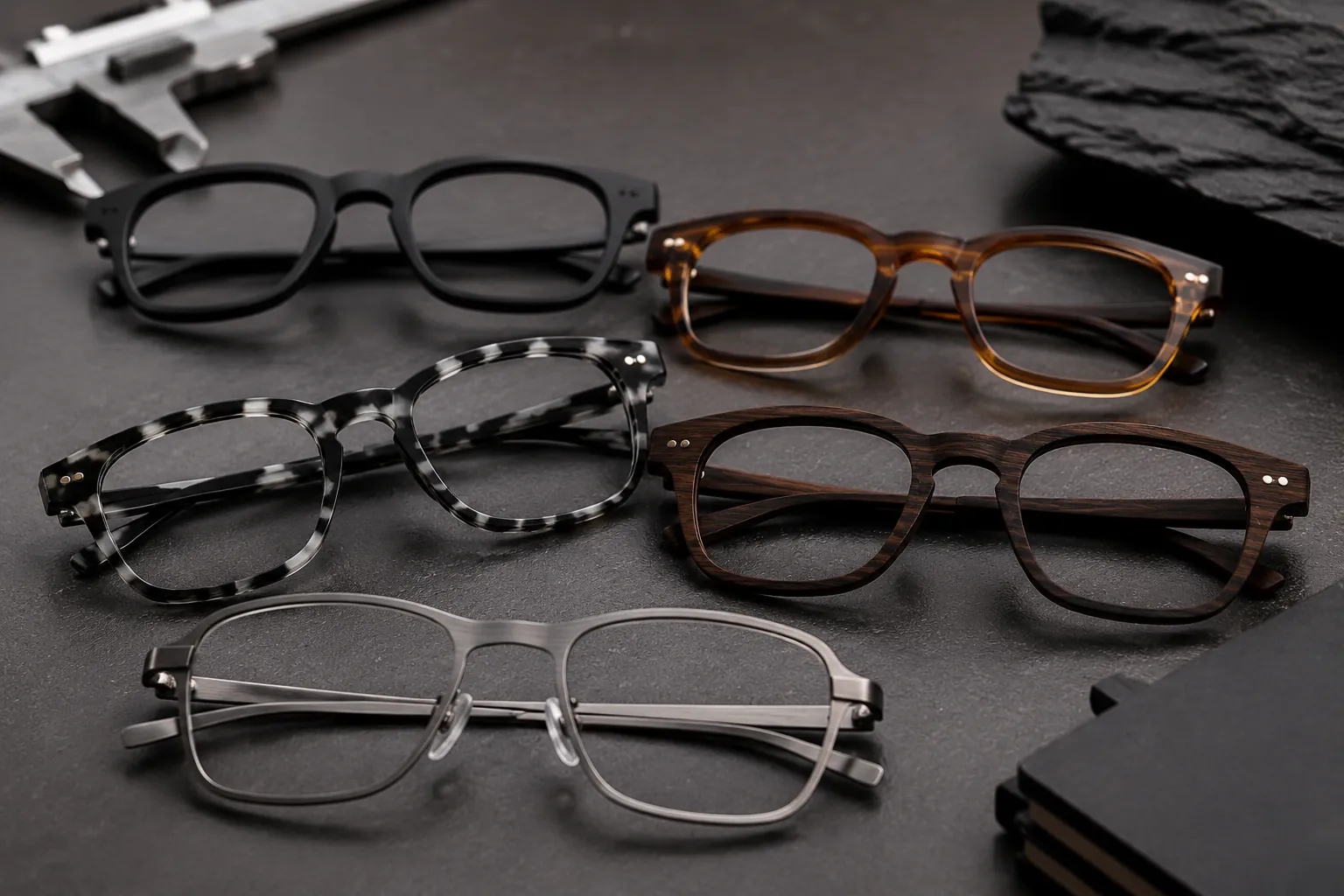
Nose pads cause a disproportionate share of fit complaints. If they slide, pinch, yellow, or loosen, customers blame the whole frame. Reorders suffer. This guide compares four nose pad constructions by cost, comfort risk, production impact, and inventory stability for brands importing 500 to 50,000 pairs of custom sunglasses.
Why nose pad choice belongs in sourcing
Nose pads look like a small design detail. They are not. The pad choice affects mold design, assembly speed, QC checks, rejection rates, and unit cost. On some frames, the difference can reach $0.35 per pair. Across a production run, that is real money.
Three failure patterns show up often:
- Fit complaints spike when a brand switches from adjustable pads to molded pads without changing bridge geometry. The bridge is now fixed. If it does not match the wearer's nose profile, the frame tilts forward or leaves a temple gap.
- Color mismatch returns happen when clear silicone pads yellow in storage. The usual cause is simple: UV-stabilized silicone was skipped to save a fraction of a cent. The saving is tiny. The return cost is not.
- Metal arm fatigue appears when low-grade pad arms lose tension after repeated adjustment. Some alloys work-harden and crack near the insertion point. The glasses slide, the customer sees a defective frame, and the SKU comes back.
The best pad is not always the most expensive one. It is the one that fits the target wearer, supports the retail price, and limits after-sales service. Small savings on the pad spec can turn into large costs after shipment.
Four questions before you specify pads
Before quoting a new frame, answer these four questions. They reduce sampling delays and prevent late spec changes.
- Who will wear the frame? Nose bridge height, width, and slope vary by market and customer group. A pad shape that works on a high, narrow bridge may fail on a lower, wider bridge. Fit starts with contact geometry.
- What is the retail price? Under $25 retail, molded pads often make sense. Above $60, buyers usually expect adjustable metal-arm pads with silicone sleeves. Between those points, the decision depends on frame weight, target user, and margin.
- Is the SKU fashion-led or daily-wear? A short-season fashion frame can tolerate a simpler pad. A daily-wear frame needs better weight distribution. Otherwise, discomfort shows up fast. Classify each SKU before quoting pad options.
- How long will inventory sit? Silicone can degrade in heat. Clear compounds may yellow, especially in non-climate-controlled storage. For long inventory cycles, material stability matters more than the lowest initial cost. Opaque silicone or acetate pads may be safer.
Molded acetate and injection pads
Molded pads are part of the frame front. On acetate frames, the pads are cut from the same sheet block as the bridge and polished with the frame. On injected frames such as TR90, polycarbonate, or nylon, the pads form in the same mold cavity as the front. No separate parts. No pad assembly.
Cost impact at production scale: Molded pads remove component cost and labor. They also remove QC steps: no arm insertion check, no sleeve installation check, no post-assembly bend test. Line speed improves because the pad is already there.
Failure modes:
- Fixed fit geometry. If the bridge curve does not match the wearer's nose, there is no adjustment path. The frame may tilt forward, sit too high, or gap at the temples. Test pre-production samples on real faces before cutting final tooling.
- Surface slickness on acetate. Polished acetate can slide on skin, especially with moisture. Heavy frames make the problem worse. A matte or micro-textured pad surface adds one finishing step but improves grip.
- No replacement route. If a molded pad wears smooth, scratches, or irritates the skin, the whole frame is effectively at end of life. This matters for brands building repeatable multi-year SKUs.
Best-use cases: Lower-cost injection frames, children's sunglasses, promotional products, and SKUs where price pressure is severe. Avoid molded pads on heavy acetate fronts, polished bridge surfaces, and frames aimed at repeat customers.
Adjustable silicone pad arms
This is the standard upgrade. A metal or TR90 arm is embedded in the frame and fitted with a removable silicone sleeve. The arm can be bent during fitting. That adjustability reduces bridge-shape risk.
Line-level changes: Each arm is a separate component. On acetate frames, the rim interior is machined and the arm base is heat-pressed into place. On injected frames, the arm is often inserted after demolding while the material is still warm to reduce stress cracking. The silicone sleeve is installed by hand. Labor goes up.
Arm material trade-offs:
- Stainless steel 304 arms: Good tension retention through repeated adjustment. This is the default choice for mid-range and premium frames.
- Nickel-silver arms: Cheaper, but more prone to fatigue. Some factories still use them on budget orders. Confirm the alloy, not just the price.
- TR90 arms: Light, nickel-free, and useful on lighter frames. Adjustment range is lower because the polymer tends to return toward its original shape.
Silicone sleeve quality: Specify UV-stabilized silicone and the correct Shore A durometer. Unstabilized clear silicone can yellow within months under ambient light. Stabilized compound holds clarity much longer. A simple aging check helps: keep one control sample stored away, expose another to bright indirect light, then compare color before production approval.
Best-use cases: Everyday sunglasses, premium frames above roughly $40 retail, heavier frames where grip matters, and brands that want to include spare sleeves in the case to reduce customer service claims.
Air-chamber pads
Air-chamber pads are hollow silicone sleeves with a sealed air pocket running through the pad. They fit on the same arm systems as standard adjustable pads. Under load, the chamber compresses. Contact area increases. Pressure drops.
Production performance: On heavier acetate frames, air-chamber pads can reduce complaints about sliding, pressure marks, and long-wear discomfort. The pad set costs more than solid silicone. But one avoided return can cover many pad upgrades. The case is strongest when existing feedback already points to nose-pad discomfort.
Critical QC checkpoints:
- Seal integrity testing at incoming QC. A pinhole leak can collapse the chamber after first wear. Use a submersion-and-squeeze test on a batch sample: place the pads in water, compress them, and check for bubble streams. Reject batches above the agreed defect limit.
- Dimensional clearance verification. Air-chamber pads are thicker than standard sleeves. On low-profile frames, added thickness can shift the eye point and change the optical axis. Check this on pre-production samples with pads installed.
- MOQ on the pads themselves. Air-chamber sleeves are less common than solid silicone sleeves. Custom colors often require higher minimums. Below the supplier threshold, stock colors and standard durometers may be the only options.
Best-use cases: Heavier acetate sunglasses, high-repeat brands, optical shops that fit frames in person, and SKUs with existing feedback such as "slides down nose" or "feels heavy."
Metal-arm pads
Full metal-arm pads use a metal contact surface instead of a silicone sleeve. They are common on titanium and ultra-thin frames where the pad is part of the visual design. They are a design solution, not a comfort shortcut.
Design rationale: Thin rims may not have enough material to hold a separate pad arm. Integrating the pad into the bridge preserves the minimal profile and reduces visible hardware.
Primary failure mode and mitigation approaches: Metal on skin has low friction. Sweat makes it worse. The frame can slide quickly on active users.
- CNC micro-grooving: Fine grooves increase friction. This adds machining time and reduces sliding, but it does not remove the issue completely.
- Silicone dot insert: A small silicone plug is press-fitted into the pad surface. It improves grip, but repeated compression can loosen the insert. Lost inserts create return claims.
- PVD-coated textured finish: Titanium nitride or diamond-like carbon coating can add surface texture. Durability is strong, but color choices are usually limited to gold, black, or dark grey.
Cost structure at volume: CNC-machined titanium pad structures cost far more than stainless arms with silicone sleeves. Machining time and material yield loss drive the cost. Volume helps, but metal-arm pads remain the highest-cost option in this group.
Regulatory compliance for EU and US markets: Metal parts that touch skin must meet nickel migration limits. REACH Annex XVII and EN 1811 set a nickel release limit below 0.5 µg/cm²/week for items in prolonged skin contact. Titanium alloys are generally compliant. Nickel-bearing stainless steel requires documentation with the exact alloy and nickel content. Do not rely on verbal assurance.
Best-use cases: Thin titanium frames, minimalist designs where the pad is visible, high-retail SKUs, and dry-climate markets where sweat-related sliding is less common.
Cost, comfort, and reorder risk compared
| Pad type | Added cost/pair at 1,000 units | Adjustment range | Typical comfort failure mode | Replacement possible? | Best retail price point |
|---|---|---|---|---|---|
| Molded (acetate or injection) | $0.00 (integrated) | None | Slippage on heavier frames; fixed geometry mismatch | No - frame end-of-life | Under $25 |
| Adjustable silicone on stainless 304 arm | $0.12-$0.18 | Bendable, about 15-20° per arm | Sleeve yellowing without UV stabilizer; arm fatigue if the wrong alloy is used | Yes - sleeves replaceable | $25-$80 |
| Air-chamber on stainless 304 arm | $0.22-$0.35 | Bendable, about 15-20° per arm | Seal leak causing chamber deflation; excess thickness on low-profile frames | Yes - sleeves replaceable | $50-$120 |
| Metal-arm (titanium, no sleeve) | $0.38-$0.90 | Limited metal flex only, about 5-8° | Metal-on-skin sliding; silicone insert loss over time | No - integrated into bridge | $150+ |
Costs reflect typical production with in-house CNC, injection, and assembly at 1,000 to 5,000 units. Component pricing changes with silicone compound, stainless steel, and titanium markets. Lock pad and arm pricing with suppliers within 30 days of production to avoid cost drift.
Spec sheet checklist before production
Production can stall when the pad spec is vague. Lock these details before the line starts.
- Pad type and arm material with full grade. Do not write "adjustable." Specify stainless steel 304 arm with wire diameter, titanium grade, or TR90 grade, plus sleeve type and UV stabilization.
- Pad dimensions with tolerances. List sleeve length, widest-point width, and thickness. Use tolerances such as ±0.3mm where appropriate. Air-chamber pads need exact thickness because stock options vary.
- Durometer callout. Shore A 40-50 is common for general use. Shore A 30 is softer but wears faster. Shore A 60 lasts longer but feels firmer. Pick the trade-off deliberately.
- Color reference. Use Pantone Solid Coated, RAL Classic, or an approved physical sample. "Clear" is not enough. Specify neutral-clear, UV-stabilized, with no blue or yellow cast, and define the acceptable Delta E against the reference.
- Insertion depth and slot tolerance. For acetate frames, define slot width against arm base width and depth from the inner edge. Loose slots create arm wobble and visible asymmetry.
- Spare parts packaging plan. If the pad is replaceable, decide whether spare sleeves ship in the case. On higher-retail frames, spares often cost less than handling missing-pad inquiries later.
- Finished frame test standard. Confirm EN ISO 12312-1 for sunglasses, ANSI Z80.3 for the US market, and AS/NZS 1067 for Australia/New Zealand where applicable. If the pad system changes bridge thickness or load path, test a complete pre-production frame.
Have a custom sunglasses project in mind?
Send us your styles, target market and quantities and we will return a detailed quote with MOQ, lead time and a sample plan.
Get a QuoteWhy source this from Wenzhou with LumiShades
Wenzhou in Zhejiang Province is widely regarded as China’s eyewear manufacturing capital, producing a large share of the world’s sunglasses. That concentration matters to buyers: a deep local supply chain for acetate sheet, hinges, lens blanks, plating and packaging means shorter component lead times, easier color and material matching, and a workforce with decades of eyewear-specific skill. LumiShades has manufactured in this ecosystem since 2009, and our vertical integration — in-house injection molding, acetate cutting, CNC milling, lens tinting, decoration and quality control — means no part of your order is quietly subcontracted to a workshop you cannot audit.
For international buyers, that vertical control translates into accountability. When a single factory owns every step, defects are traced and fixed at source rather than bounced between vendors, and your specifications survive intact from first sample to bulk. We back this with 15+ years of experience, shipments to 60+ countries, more than 5 million pairs produced per year and a 98.5% on-time delivery rate. Our certifications — CE EN ISO 12312-1, FDA registration, ANSI Z80.3, AS/NZS 1067, REACH, ISO 9001 and BSCI audit — mean the compliance documentation your market requires already exists. Explore our manufacturing capabilities and quality control process to see how this works in practice.
Frequently asked questions
What nose pad type causes the fewest returns in production? For frames over 30 grams, adjustable stainless steel 304 arms with air-chamber silicone sleeves usually generate the fewest nose-pad complaints. The air chamber spreads load across a larger contact area, and the steel arm holds adjustment well. On frames under 25 grams, molded pads can perform comparably because there is less mass pulling the frame down. Frame weight is the key variable.
Can I change the pad type on a reorder without changing the mold? Sometimes. Switching from molded to adjustable pads on an injection frame usually requires a mold insert change to create the arm slot. That adds tooling cost and downtime. On acetate frames, the slot can often be CNC-milled into the rim without changing the cutting pattern, but only if the bridge area has enough material to hold the arm. If the rim is too thin, the frame needs a pattern revision.
How do I verify nose pad quality before bulk production? Use pre-production samples, not only component photos. Check three things: bend the pad arms through their adjustment range multiple times and measure whether they hold position; expose sample pads to bright indirect light and compare them with a retained control for yellowing; run wear tests on different face shapes for a full day and document pressure marks, slippage, and asymmetry. These checks catch the most common failures before mass production.
What is the realistic MOQ for custom-colored silicone sleeves? Most silicone component suppliers require several thousand pairs for a custom Pantone match because the compound must be mixed and molded as a dedicated run. Below that level, choices are usually limited to stock clear, black, white, and sometimes translucent brown or grey. Some factories can combine smaller orders, but color tolerance may be wider than a dedicated batch.
Do nose pads need separate compliance testing? Usually no. Nose pads are tested as part of the complete sunglass frame. The main risk is metal that touches skin. For EU sales, nickel release under EN 1811 matters, especially for metal pad arms. Silicone pads are generally low risk. Titanium and 304 stainless usually pass; nickel-silver and ungraded alloys are more likely to fail. Always request alloy documentation.
What lead time impact should I expect if I change pad types after development starts? If the mold has not been cut, the impact is usually limited. If the mold exists but can accept a minor insert change, expect tooling modification and new sampling time. If the frame cannot physically accept the new pad system, plan for a pattern revision, prototype check, and new mold work. Late pad changes are a common cause of sampling delays.
Ready to start?
Explore our shield & oversized sunglasses or request a quote — our sales team replies within 12 hours.
Request a Quote