
5 Spring Hinge Options for Wholesale Sunglasses
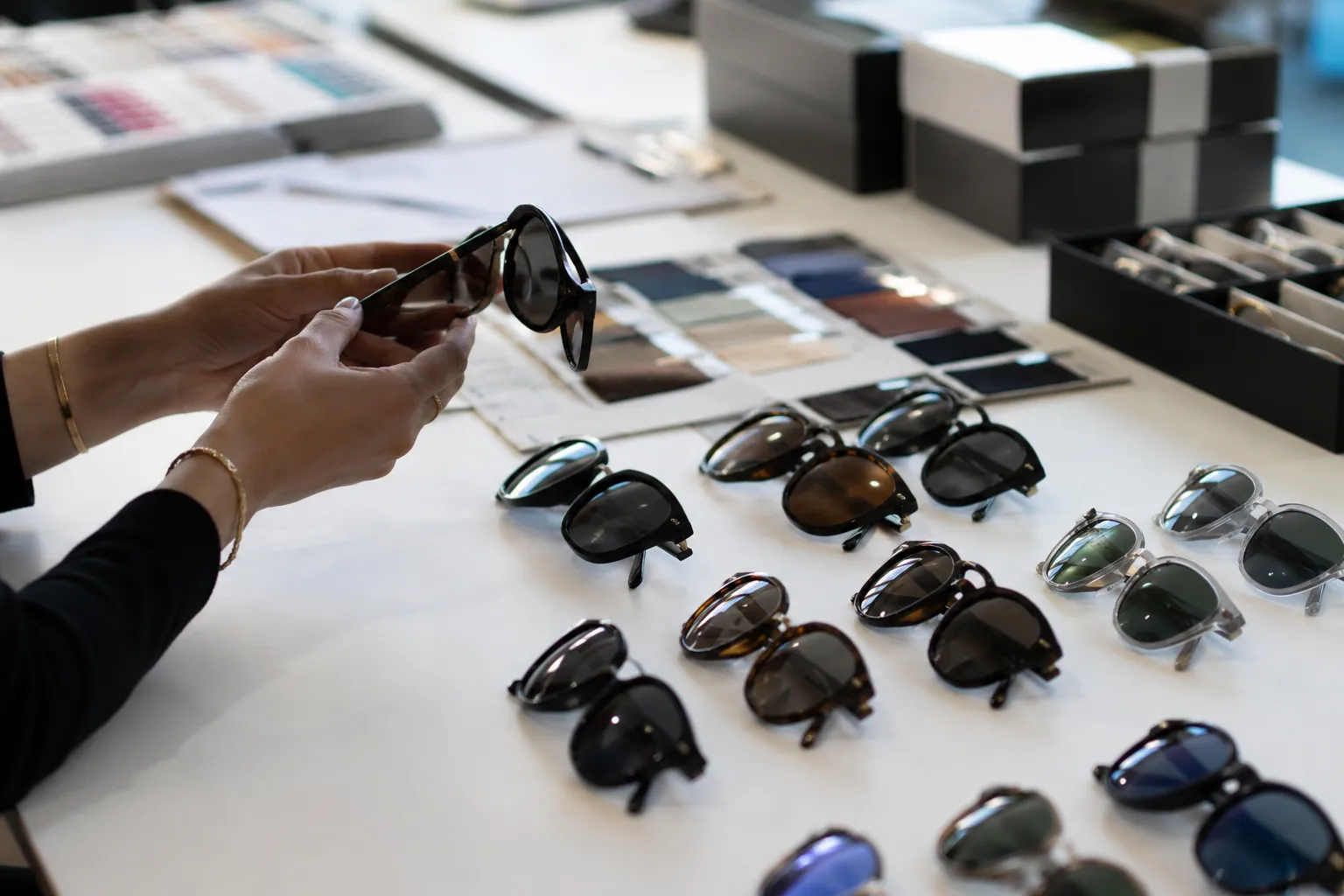
This guide is for overseas eyewear brands, importers, distributors, and retailers choosing hinge specifications for wholesale sunglass orders. The aim is practical: prevent avoidable temple failures, set clearer QC criteria, and make better landed-cost decisions before tooling, sampling, or bulk production. We compare five common sunglass hinge options, show where each one can fail, and explain how material, tolerance, decoration, MOQ, and lead time should shape the buying decision.
Start With Product Risk, Not Unit Price
Many hinge problems start at quotation stage. A buyer asks for the cheapest spring hinge. The supplier quotes a standard barrel spring hinge. Nobody confirms frame material, temple thickness, screw size, opening angle, insert method, plating, decoration position, or sales channel. That is how loose temples, cracked hinge bosses, missing screws, uneven temple spread, and crooked frames enter bulk production.
For wholesale sunglasses, hinge choice should follow the job of the frame. A small beach-kiosk test order does not need the same hardware as an acetate collection sold through optical retail. Kids' styles, wide-fit frames, sport-wrap frames, heavy acetate fronts, slim injected temples, and transparent PC colors all load the hinge differently. A hinge that works in a thick acetate temple may fail in a thin injected temple root if the plastic around the insert is weak.
Before approving a hinge, confirm the frame material, temple root thickness, screw specification, hinge width, hinge opening angle, plating or coating, decoration location, packaging pressure, and test method. Put these items in the sample approval record or purchase order. A line that only says "spring hinge" is not a specification.
The rule is simple. Choose by failure risk first, then by price. A small hardware saving can become expensive if it creates replacements, retailer chargebacks, repacking, manual sorting, or account disputes. The real cost is not just FOB price. It includes inspection time, after-sales handling, freight, and the buyer's relationship with the sales channel.
Top 5 Hinge Types Compared
The table below gives a procurement-level comparison. Return-risk wording is qualitative because actual complaint rates depend on the full product system: resin quality, acetate thickness, screw hardness, plating, hinge geometry, assembly method, packaging pressure, consumer use, and inspection standard. If a supplier offers a numeric return-rate guarantee, ask for the sample size, test method, defect category, warranty period, and responsibility boundary in writing.
| Hinge type | Best use | Typical tolerance focus | Cost impact | Lead-time impact | Hinge-related return risk |
|---|---|---|---|---|---|
| Standard barrel spring hinge | Basic fashion sunglasses, promotional orders, low to mid-price retail | Barrel gap, screw fit, spring box seating, smooth temple movement, visible wobble after cycling | Usually the lowest-cost spring option | Often minimal if stock parts and standard plating are used | Medium if screw fit, barrel clearance, or assembly control is weak |
| Double-spring hinge | Thicker acetate, wide-fit frames, heavier temples | Pocket depth, screw centerline, temple spread, left-right closing symmetry, spring balance | Higher than a standard spring hinge; quote the exact upgrade by style | Can increase if non-stock size, plating, or color matching is required | Low to medium when machining and assembly are controlled |
| Flex hinge | TR90, PC, injected comfort-fit styles, active lifestyle sunglasses | Insert position, hinge boss wall thickness, pull resistance, stress whitening, cracking near the temple root | Moderate; depends on hinge size and insert method | Can increase if the mold, insert position, or assembly fixture needs adjustment | Low to medium; failures often come from weak plastic housing rather than the spring itself |
| Titanium memory hinge | Premium lightweight frames, metal frames, selected hybrid designs | Elastic recovery, joining quality, surface finish, contact friction, deformation after over-opening | High compared with standard sunglass hinges | Often longer if special parts, forming, finishing, or supplier validation is required | Low when engineered correctly, but repair or replacement cost is higher |
| Hidden spring hinge | Premium acetate look, clean exterior styling, optical-retail sunglasses | CNC pocket accuracy, screw angle, polishing allowance, internal spring clearance, temple closing alignment | Moderate to high depending on machining and assembly complexity | Can increase because production-route samples and tighter inspection are needed | Medium if pocket tolerances, polishing allowance, or assembly alignment are not controlled |
For many B2B programs, double-spring and flex hinges give the best balance of comfort, durability, cost, and manufacturability. Titanium memory hinges are not automatically better for every sunglass. They belong in premium designs that can carry the part cost and process control. Hidden hinges improve appearance, but they demand accurate milling and assembly. Standard barrel spring hinges still make sense for price-sensitive programs when expectations and inspection criteria are clear.
1. Standard Barrel Spring Hinge: Low Cost, Easy To Under-Specify
A standard barrel spring hinge is a common starting point for wholesale sunglasses. It uses interlocking hinge barrels, a screw, and a small spring mechanism that lets the temple open past the normal stop. For injection-molded PC frames, promotional sunglasses, or lower-cost fashion styles, it can be the right commercial choice. It keeps the bill of materials controlled and often uses stock hardware, which can help sampling and production planning.
The weak point is usually not the hinge concept. It is loose fit, poor screw matching, weak plating, or inconsistent assembly. If the barrel gap is too large, the temple feels unstable. If the screw is soft, undersized, or poorly matched to the thread, it may loosen during use. If the spring box is not seated correctly, the temple may not return evenly. Fit suffers fast.
For bulk orders, buyers should specify basic inspection points instead of writing only "spring hinge" on the PO:
- Left and right temple opening force should feel consistent, with no grinding, sticking, scraping, or sharp spring noise.
- Screw heads should sit flush and should not strip under normal assembly tightening.
- Temple wobble should be checked before and after an agreed open-close cycle test, not only on fresh samples.
- Temple spread and closing alignment should be measured after cycling; visible left-right difference should trigger review.
- Transparent PC, crystal, and light-colored injected frames should be checked for stress whitening or cracks around the hinge area.
- Frames with pad printing, laser logos, heat transfer, or metal logo plates near the temple root should be inspected again after hinge installation.
Standard barrel spring hinges can control cost, especially for first orders and price-sensitive programs. They are less suitable when the sales channel has strict return handling, the temple is heavy, or the buyer expects a premium hand feel. If retailers charge for defects or returns, compare the hardware saving against inspection, replacement, and account-management cost.
2. Double-Spring And Flex Hinges: The Practical Middle Ground
Double-spring hinges spread load better than a simple single-spring structure. They are often used on thicker acetate sunglasses, large fashion frames, and styles made for wider head sizes. Their value is practical. They allow more outward flex and can reduce concentrated stress at one small spring point. That can improve comfort and reduce complaints about tight fit or loose hinge feel, if the frame is engineered correctly.
For acetate frames, the hinge area already carries process risk. Acetate fronts and temples are cut, shaped, tumbled, polished, and fitted. If the hinge pocket is drilled or CNC-milled off center, temple alignment suffers. A double-spring hinge does not fix poor machining. It performs well only when pocket depth, screw centerline, and closing symmetry are controlled. Approve production-route samples, not just hand-finished showroom samples.
Flex hinges are common in TR90, PC, and other comfort-fit injected styles. Buyers often like the hand feel because the frame adapts across more face widths. The main risk is not only the metal hinge. It is the plastic housing around it. If the hinge boss wall is too thin, resin drying is poor, insert placement is inconsistent, or assembly heat is not controlled, cracks can appear near the hinge before the spring itself fails. Transparent and light-colored plastics make stress whitening easier to see.
For injected frames, the supplier should test hinge pull resistance, open-close cycling, and visible stress on actual production parts. A polished sample made slowly by an experienced technician is not enough evidence for bulk production. Flex hinges are a good choice for mid-volume private-label programs where comfort is part of the retail claim and the temple root has enough material around the insert. They are a poor fit for ultra-slim injected designs unless the mold was designed around the hinge from the start.
3. Titanium Memory And Hidden Spring Hinges: Premium Parts Need Control
Titanium memory hinge systems use elastic metal behavior to recover after bending or over-opening. They suit selected lightweight premium sunglasses, metal frames, and hybrid designs where comfort, recovery, and low weight matter more than the lowest unit cost. They do not rescue weak frame engineering. Titanium parts still need correct forming, joining, finishing, friction control, and inspection.
The buying issue is process discipline. Surface treatment must be clean. Contact points should not bind. The frame must manage the interface between titanium hardware and acetate, stainless steel, or injected components. A well-made titanium memory hinge can improve comfort and recovery, but failure cost is higher than for a standard screw hinge. Use this option only where the margin supports higher component cost and tighter approval work.
Hidden spring hinges are chosen mainly for appearance. The spring function is concealed inside the temple or hinge pocket, so the frame looks cleaner from the outside. This is attractive for premium acetate sunglasses and optical-retail collections where visible hardware may reduce perceived value. The trade-off is tolerance. A visible hinge gives technicians more room to see and correct fit. A hidden hinge depends on accurate pocket milling, screw angle, temple thickness, polishing allowance, and internal spring clearance.
For hidden hinges, ask for samples made through the same route planned for bulk production: same acetate cutting, CNC milling, tumbling, polishing, assembly setup, decoration method, and inspection process. Hand-built samples are useful for design review, but they should not be the only approval basis. Hidden hinges are worth using when the retail price supports the extra machining and QC. For low-cost promotional sunglasses, a visible standard or double-spring hinge is usually easier to control.
Testing, QC, And Defect Tracking For Bulk Orders
A hinge specification only works if it is tested consistently. Write hinge checks into sample approval, pre-production sample confirmation, and final inspection criteria. Do not rely on a quotation line that only says "spring hinge." The order file should identify hinge type, material, color or plating, screw requirement, opening feel, cycle-test expectation, cosmetic standard, and acceptable defect limits around the hinge area.
A practical sunglass hinge test plan includes open-close cycling, screw tightness checks, pull checks where relevant, visual alignment, temple spread measurement, and packing-pressure review. The correct cycle count depends on product risk, sales channel, and buyer requirement. The point is not to create a laboratory report for every small order. The point is to catch common failures before cartons ship.
Useful QC checkpoints include:
- Incoming hinge inspection: check plating or coating, screw threads, spring action, size consistency, burrs, and color match before assembly.
- Insert or pocket check: confirm molded insert position on PC/TR90 frames or CNC pocket depth on acetate before final polishing and assembly.
- In-process assembly check: confirm left-right temple symmetry, smooth opening, screw seating, and temple closing alignment after hinge installation.
- Post-decoration check: inspect laser engraving, pad printing, heat transfer, or metal logo plates near hinge zones for heat marks, scratches, cracking, or adhesive overflow.
- Final AQL inspection: include temple wobble, screw tightness, opening resistance, lens seating, frame balance, and packaging pressure.
Defect data should be separated by cause. Loose hinge, broken hinge, cracked temple at hinge, missing screw, stripped screw, misaligned temple, decoration damage near hinge, and user damage are different problems. If all complaints sit under one generic return code, procurement cannot correct the next order. Good defect coding shows whether the next fix is a better hinge, a thicker temple root, a different screw, tighter CNC control, improved packaging, or clearer retail handling instructions.
Compliance belongs to the complete sunglass, not only the hinge. Buyers shipping to the EU, US, Australia, or New Zealand should keep lens and frame documentation aligned with applicable requirements such as CE EN ISO 12312-1, ANSI Z80.3, AS/NZS 1067, REACH, and FDA registration where applicable. Supplier credentials such as ISO 9001 and BSCI can support quality and social-compliance review, but they do not replace product testing for UV protection, lens category, impact resistance, labeling, nickel release, or restricted substances.
MOQ, Price, Lead Time, And Decoration Logic
Hinge choice changes more than hinge price. It can affect sample timing, plating schedules, assembly speed, inspection workload, repairability, and decoration risk. When comparing quotations, ask for the base hinge and at least one upgrade option. The cost difference should be shown by style and order quantity. The quote should also state whether the hinge is stock, whether plating is standard, and whether any mold, insert, CNC, or fixture change is required.
At low order quantities, a hinge upgrade may look inefficient because sourcing, setup, and inspection time are spread across fewer pairs. At higher quantities, the added cost per pair may be easier to justify if the sales channel has strict returns handling or if the frame is heavier, more premium, or harder to repair. Evaluate the hinge as part of total landed cost, not as an isolated component.
Changing the hinge after mold trials, pre-production sample approval, or decoration approval can create real delays. The supplier may need to adjust insert position, retest temple strength, reorder plated hardware, revise screw length, change assembly fixtures, or recheck decoration alignment. Treat these changes as engineering revisions, not simple purchasing substitutions.
Decoration also matters. Laser engraving near the hinge area can reveal fixture or alignment problems if the temple does not sit flat. Pad printing near the temple root can be scratched during hinge assembly if the process order is wrong. Metal logo plates add weight and can change how the temple feels when opened. Lens tinting usually does not affect hinge function directly, but darker lenses can make quick visual inspection less reliable. Check temple alignment mechanically.
The cleanest buying process is direct: freeze the hinge before pre-production approval, confirm decoration sequence, run hinge checks on production-route samples, then release bulk. Late hinge decisions are rarely cost-neutral.
How To Choose For Your Next PO
Use the hinge as part of the product brief, not as an afterthought. The right choice depends on sales channel, frame material, order quantity, target FOB price, retail claim, repair policy, and expected return cost. A promotional frame can use a simpler hinge if QC is honest. A retail acetate frame needs tighter tolerance control. A comfort-fit injected frame needs enough plastic around the hinge, not just a springier part.
| Buyer scenario | Recommended hinge | Why | Watch point |
|---|---|---|---|
| Small market test or promotional order | Standard barrel spring | Keeps sampling and first-order cost controlled when expectations are realistic | Check screw tightness, barrel gap, temple wobble, and packaging pressure carefully |
| Acetate fashion style with heavier temples | Double-spring or hidden spring | Improves fit comfort or appearance when machining is controlled | Confirm CNC pocket accuracy, screw centerline, and closing symmetry before bulk |
| Retail distributor with strict returns handling | Double-spring or flex | Better practical balance for comfort, stability, and inspection control | Define cycle test, screw check, temple spread, and defect codes in the order file |
| Premium lightweight metal program | Titanium memory | Supports recovery, comfort, and lightweight positioning | Validate forming, joining, surface finish, and supplier capability before approval |
| Sport-inspired injected frame | Flex hinge | Improves comfort across face widths | Make the hinge boss thick enough and test for cracks or stress whitening |
For most wholesale sunglass programs, use this default logic: standard barrel spring for low-cost tests, double-spring for heavier acetate, flex for comfort-fit injected frames, titanium memory for premium lightweight products, and hidden spring where the clean look is worth tighter production control. The best hinge is not the most expensive one. It is the hinge that fits the material, order size, retail promise, and inspection discipline behind the product.
Have a custom sunglasses project in mind?
Send us your styles, target market and quantities and we will return a detailed quote with MOQ, lead time and a sample plan.
Get a QuoteWhy source this from Wenzhou with LumiShades
Wenzhou in Zhejiang Province is widely regarded as China’s eyewear manufacturing capital, producing a large share of the world’s sunglasses. That concentration matters to buyers: a deep local supply chain for acetate sheet, hinges, lens blanks, plating and packaging means shorter component lead times, easier color and material matching, and a workforce with decades of eyewear-specific skill. LumiShades has manufactured in this ecosystem since 2009, and our vertical integration — in-house injection molding, acetate cutting, CNC milling, lens tinting, decoration and quality control — means no part of your order is quietly subcontracted to a workshop you cannot audit.
For international buyers, that vertical control translates into accountability. When a single factory owns every step, defects are traced and fixed at source rather than bounced between vendors, and your specifications survive intact from first sample to bulk. We back this with 15+ years of experience, shipments to 60+ countries, more than 5 million pairs produced per year and a 98.5% on-time delivery rate. Our certifications — CE EN ISO 12312-1, FDA registration, ANSI Z80.3, AS/NZS 1067, REACH, ISO 9001 and BSCI audit — mean the compliance documentation your market requires already exists. Explore our manufacturing capabilities and quality control process to see how this works in practice.
Frequently asked questions
What hinge type gives the lowest return risk for acetate sunglasses? For thicker acetate sunglasses, a well-fitted double-spring hinge is often the safest practical choice because it gives more outward flex and handles heavier temples better than a basic spring hinge. A hidden spring hinge can also work for premium acetate, but only if CNC pocket depth, screw angle, polishing allowance, and closing alignment are checked on production-route samples.
Can I use the same hinge across PC, TR90, acetate, and metal frames? You may standardize some hinge parts to simplify sourcing, but one hinge is rarely ideal for every material. PC and TR90 need enough plastic around the insert, acetate needs accurate pocket machining, and metal frames need suitable joining, plating, and finishing. Ask the supplier to confirm hinge size, screw length, insert method, pull resistance, and cycle-test results for each material.
What should I test before approving bulk production? Before bulk approval, test open-close cycling on sample pairs, screw tightness after cycling, left-right temple symmetry, visible hinge wobble, pull resistance where relevant, and cracks or stress whitening around the hinge area. Also confirm that decoration near the temple root is not scratched or weakened by hinge assembly. Check lens compliance separately against the target market requirements.
Does a spring hinge affect CE or ANSI sunglass compliance? The hinge is not the main compliance item, but it can affect frame integrity and durability. The complete sunglass must still meet applicable requirements such as CE EN ISO 12312-1, ANSI Z80.3, AS/NZS 1067, REACH, and FDA registration where applicable. Do not treat a hinge upgrade as a substitute for UV, lens category, impact, labeling, nickel release, or restricted-substance checks.
Is a hidden spring hinge worth the cost for wholesale orders? It is worth considering for premium acetate or optical-retail programs where a clean exterior appearance supports the retail price. It is usually not the best choice for low-cost promotional sunglasses because it adds machining and inspection demands. Approve it only after checking production-route samples for pocket accuracy, smooth movement, temple closing alignment, and polishing clearance.
What MOQ makes hinge upgrades more economical? There is no universal MOQ because hinge cost depends on hinge size, stock availability, plating, tooling or fixture changes, order quantity, and inspection requirements. Ask for a quotation that compares the base hinge and upgrade hinge at your actual order quantities. Then compare the added cost with expected return handling, retailer penalties, and replacement cost.
Ready to start?
Explore our rimless sunglasses or request a quote — our sales team replies within 12 hours.
Request a Quote