
5 Frame Builds for Private Label Sunglasses Reorders
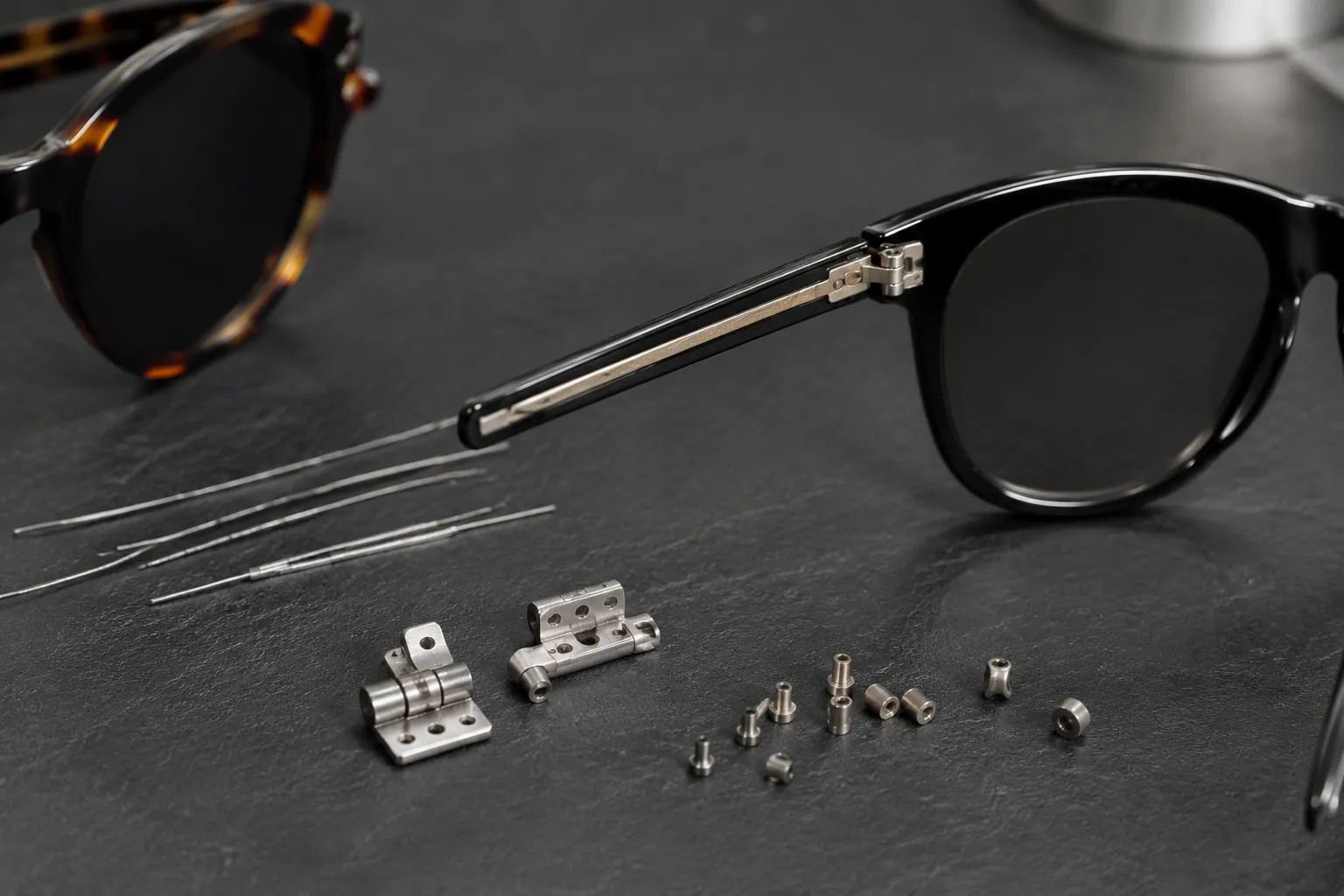
This guide is for brands, importers, distributors, and retailers planning repeat orders of private label sunglasses. Not just first samples. The aim is simple: choose a frame construction that can be reordered with controlled fit, color, lens seating, hinge feel, packaging, documents, and landed cost. LumiShades manufactures in Wenzhou with injection molding, acetate cutting, CNC milling, lens tinting, decoration, assembly, and QC support in-house. This comparison focuses on the production details buyers can check: drawings, tolerances, material batches, approved samples, tooling control, inspection points, and common defects.
The Reorder Scorecard Buyers Should Use
A sales sample can look good and still fail as a reorder item. The problems often appear on the second or third purchase order, when the buyer needs the same front width, temple tension, lens color, logo position, packaging format, and shipping date.
Judge every frame construction by six points: dimensional stability, color repeatability, lens seating, hinge reliability, MOQ flexibility, and landed cost. Do not leave dimensional stability to guesswork. Write it into the purchase file.
Buyers should agree tolerances for front width, bridge, temple length, lens groove, pantoscopic angle, face curve, hinge opening angle, and logo position before bulk production. Practical discussion targets often include about +/-0.3 mm on critical lens-fit areas, +/-0.5 mm on frame width, +/-1.0 mm on temple length, and about +/-3 degrees on hinge opening angle against the approved sample. These are not universal standards. Rimless, semi-rimless, high-wrap, shield, and precision metal designs may need tighter drawings and more inspection points.
Landed cost is not the quoted frame price. It includes lens material, tint category, polarization, coating, logo method, packaging, inspection, reject handling, carton volume, freight mode, duty, and rework risk. A low unit quote can become expensive if it leads to extra sorting, replacement screws, repacking, or air freight after a late fix.
LumiShades can support 50 pairs per design for samples or small market tests. Pricing usually becomes more workable at 300 pairs, stronger at 1000 pairs, and more competitive at 5000+ pairs when materials, colors, lenses, and components are standardized. Samples normally take 7 to 10 days. Bulk production is usually 25 to 35 days after sample approval and after lens category, logo method, packaging, and compliance requirements are confirmed.
Fast Comparison: Five Builds Side by Side
The table below is a buyer's short list. It assumes export sunglasses with UV-protective lenses, private label decoration, retail packaging, and destination-market compliance planning. Depending on the market, buyers may need CE EN ISO 12312-1, ANSI Z80.3, AS/NZS 1067, REACH documentation, FDA registration information, ISO 9001-related factory quality documentation, or BSCI audit documentation. Confirm requirements before production. Not after packing.
| Frame construction | Best use | Typical MOQ logic | Reorder stability | Main defect risk | Cost behavior |
|---|---|---|---|---|---|
| One-piece injection | Promotions, retail basics, sports-inspired ranges | 50 sample pairs, 300 color run, 1000+ efficient, 5000+ best | High after mold, material, color, and lens approval | Shrinkage, color drift, gate marks, lens groove tightness | Lowest at volume when tooling, resin, color, and lenses are stable |
| Assembled plastic | Fashion shapes with better hinge feel and trim options | 300 to 1000 pairs is practical; higher if trims are custom | Medium to high with fixtures and first-piece checks | Hinge alignment, temple looseness, paint scratches, insert pull-out | Moderate; part count drives labor and QC time |
| Acetate | Premium retail, optical-inspired sunglasses, richer colors | 300+ preferred because sheet cutting and polishing need setup | Medium when sheet batch, forming, and polishing are controlled | Warping, polishing waves, sheet color variation, temple twist | Higher labor and material cost; improves with standardization |
| Metal-combination | Clubmaster, aviator, mixed-material collections | 300+ for repeatable component sourcing; 1000+ often helps plating economy | Medium | Plating marks, screw loosening, solder inconsistency, nose pad misalignment | Higher component, finishing, and inspection cost |
| Rimless or semi-rimless | Lightweight designs, minimal styles, specialty looks | 300+ recommended unless the structure is very simple | Lower unless drawings, lens processing, and torque controls are tight | Lens cracking, drill-hole stress, screw loss, nylon cord loosening | Looks simple but is QC-heavy |
If the reorder target is fast replenishment with low defect risk, one-piece injection is usually the safest construction. If the brand needs heavier hand feel and richer color depth, acetate is visually stronger, but it needs tighter material control. Metal and rimless builds can support higher retail pricing, but they need more inspection time. More parts mean more failure points. Every failure point needs a control plan.
Option 1: One-Piece Injection Frames
One-piece injection is often the safest reorder construction for high-volume private label sunglasses. The frame front, and sometimes the temples, are molded from plastic resin in steel tooling. Once the mold, resin, color, lens base curve, and assembly standard are approved, the same tooling can repeat the shape with less manual variation than cut-and-polished constructions.
The key production variables are resin grade, pigment batch, drying time, mold temperature, injection pressure, cooling time, gate position, and shrinkage allowance. A small process change can affect lens groove fit. If the front shrinks too much, lenses may sit too tight, pop out, or show edge gaps. If shrinkage is uneven, the frame can show asymmetric temple spread or poor balance on a flat surface.
For repeat orders, lock the material callout, approved color chip, lens material, lens base curve, hinge type, screw size, surface finish, and logo process. Do not approve a matte black sample and assume a transparent tortoise version will have the same look, lead time, or reject rate. Transparent and translucent colors can reveal weld lines, flow marks, gate shadows, and pigment variation that solid black hides.
- Best MOQ logic: 50 pairs for samples or small tests, 300 pairs for practical color runs, 1000+ for better unit economics, and 5000+ for the strongest efficiency when the design is stable.
- Typical tolerance focus: lens groove width, lens groove depth, frame front flatness, bridge width, temple spread, hinge screw torque, and logo position.
- Best decoration: pad printing for low-cost logos, laser marking when the material gives acceptable contrast, heat transfer for larger graphics, or a molded logo area for repeat volume programs.
- Best lens pairing: standard UV400 tinted lenses for entry price points, polarized TAC lenses for higher perceived value, or lens categories tested and labeled for the destination market.
- Main warning: changing resin, pigment, lens curve, or surface finish between orders can change fit and appearance even when the mold is the same.
Option 2: Assembled Plastic Frames
Assembled plastic frames sit between basic injection and acetate. The front, temples, hinge blocks, decorative trims, rubber sleeves, and sometimes nose pads are produced separately, then assembled. This gives buyers more design range than a simple molded frame: thicker fronts, contrast temples, metal hinge details, laminated-look colors, soft-touch finishes, and stronger shelf presence.
The reorder risk is alignment. Every added component needs a fixture, screw, insert, weld, rivet, or adhesive point. If a hinge seat is slightly off, temples may not close evenly. If the front curve changes during cooling, a lens gap can appear on one side. If paint, rubber oil, or soft-touch coating is under-cured, frames can stick, scratch, or transfer marks during packing.
Freeze the approved golden sample. Then request first-piece inspection photos or a first-piece report before full assembly continues. Check front width, bridge, temple length, hinge opening angle, lens retention, logo placement, surface finish, color, and trim alignment under consistent lighting. For distributor programs, also test pouch size, carton compression, and inner packing. Raised trims and soft coatings can mark neighboring frames if packaging is too tight.
This build works well at 300 to 1000 pairs per design when the brand wants better shelf appearance without the longer finishing cycle of acetate. At 5000+ pairs it can be efficient, but only if components are standardized. Custom hinge tooling, unique metal trims, multiple paint masks, rubber injection, or two-color assembly will keep cost and lead time higher. Use assembled plastic when the decorative gain is visible and the assembly points are easy to inspect.
Option 3: Acetate Frames
Acetate is the right choice when the buyer wants color depth, heavier hand feel, and a retail look closer to optical eyewear. It is not a more expensive version of injection plastic. It is a different process.
Acetate frames are cut from sheet, CNC milled, heated, formed, rested, tumbled, polished, hinge-fitted, assembled, and adjusted. The process has more hand work and more finishing time, so the reorder file must be controlled.
The biggest reorder issue is sheet variation. A tortoise sheet from one batch may not match the next batch perfectly. Transparent colors can show bubbles, flow lines, glue lines, and polishing marks more easily than solid colors. Thick fronts can warp after forming if the material is not rested correctly. Thin temples can twist during polishing. For premium acetate, approve a physical sheet sample or color chip. A screen image is not enough.
At LumiShades, acetate cutting and CNC milling are handled in-house, which supports control of front shape, lens groove, bridge, and temple fit before assembly. Typical checkpoints include sheet thickness, CNC groove depth, front curve after heating, hinge insertion depth, polishing consistency, lens seating, temple balance, and final adjustment. For sunglasses, lens fit is critical because tinted and polarized lenses make edge gaps more visible than clear lenses.
Acetate is usually not the path to the lowest landed cost. Material waste, tumbling time, polishing labor, hinge work, adjustment, and inspection all add cost. Choose it for higher retail price points and repeat customers who care about finish. Plan bulk timing only after sheet color, lens specification, hinge, logo, and packaging are approved. A late change to tortoise, crystal, marble, or laminated acetate may require new sheet sourcing, cutting tests, and fresh color approval.
Option 4: Metal-Combination Frames
Metal-combination frames include acetate fronts with metal bridges, plastic brow bars with metal rims, aviator styles with plastic temple tips, and sunglasses using metal logos or decorative bars. They sell because they look more engineered. They are also less forgiving in production. Plastic, metal, screws, lenses, plating, and nose pads all have to fit together.
Common defects include plating spots, solder inconsistency, screw loosening, uneven nose pad position, lens tension, and color mismatch between metal and plastic parts. Metal components need forming, polishing, and surface finishing before assembly. If plating or coating is not controlled, corrosion and color change can appear earlier in humid routes, coastal markets, or long warehouse storage. If screws are not secured correctly, field complaints may be small one by one, but they can damage reorder confidence fast.
For repeat orders, specify metal color, plating or coating expectation, screw size, thread-lock requirement, nose pad material, temple tip fit, and acceptable cosmetic standard. Useful QC checks include screw torque, opening and closing cycle checks, plating appearance under consistent light, nose pad symmetry, bridge alignment, lens retention, and temple balance. AQL inspection should focus on visible plating points and moving parts, not only general appearance.
Compliance still centers on the finished sunglass product. Lenses and finished sunglasses may need CE EN ISO 12312-1 for Europe, ANSI Z80.3 for the United States, or AS/NZS 1067 for Australia and New Zealand. REACH should be considered for restricted substances in coatings, plastics, nose pads, and metal parts. FDA registration may be relevant for US eyewear import processes, but registration is not a substitute for product testing. Metal-combo frames are best for programs with enough margin and schedule to support component checks and final inspection.
Option 5: Rimless and Semi-Rimless Builds
Rimless and semi-rimless sunglasses look light. That does not make them easy. In many cases they are harder to reorder than full-rim frames because the lens becomes part of the structure. Drill holes, notches, nylon cord grooves, bushings, screws, washers, lens thickness, and edge polishing all affect durability.
The main failure risk is stress. A hole drilled too close to the lens edge can crack during assembly or later in use. A screw tightened too hard creates pressure around the hole. A lens that is too thin may flex. A lens that is too thick can look bulky and raise cost. Semi-rimless nylon cord can loosen if groove depth or cord tension is wrong. Polarized lenses need extra care because drilling and edge processing can expose lamination weakness if process control is poor.
For reorder stability, lock the lens material, lens thickness, hole diameter, hole-to-edge distance, notch position, edge finish, screw type, washer type, bushing material, and assembly torque. A detailed lens drawing is mandatory for this construction. Buyers should also confirm whether the style will use PC, TAC polarized, nylon, or another lens material because drilling behavior, edge finish, weight, and crack risk are different.
Blunt rule: if your team cannot approve a detailed lens drawing, do not start with rimless sunglasses for a rush reorder program.
Rimless and semi-rimless constructions can work for premium minimalist designs, but they are not the first choice for high-speed replenishment across many SKUs. Use them when the design justifies the extra QC, not because the frame appears simple.
Decoration, Packaging, Compliance, and Final Selection
Many reorder problems blamed on frame construction start with decoration or packaging. Logo methods change cost, lead time, and reject rate. Pad printing is economical for simple one- or two-color logos, but it needs ink adhesion testing on the actual surface. Laser marking can be durable, but contrast depends on the substrate. Hot stamping gives a metallic look, but foil adhesion and alignment must be controlled. Metal logos and plates improve perceived value but add tooling, assembly labor, and pull-off risk. Printed lens logos need tight positioning because tinted and polarized lenses make misalignment easy to see.
Packaging also changes landed cost. A microfiber pouch is light and freight-efficient. A folding carton improves retail presentation but increases carton volume. A hard case protects better but can dominate freight cost on low-price sunglasses. For high-volume programs, confirm polybag thickness, barcode label position, warning text, pouch size, inner box count, master carton strength, and drop-test expectations before bulk production. Changing packaging after frame approval can delay shipment as much as changing a component.
For a clean sourcing file, send the supplier a target retail price, annual volume estimate, destination markets, lens category, logo artwork, packaging requirement, barcode rules, inspection standard, and compliance needs. The safest reorder file includes an approved sample, locked BOM, retained color chip, lens specification, decoration method, packaging drawing, and agreed inspection points. That is how a 300-pair test becomes a 1000-pair reorder and then a 5000+ pair program with fewer surprises.
- Choose one-piece injection if the main goal is stable repeat supply, low landed cost, and quick replenishment.
- Choose assembled plastic if you need better design detail, contrast parts, or trim features while keeping reasonable MOQ and lead time.
- Choose acetate if the brand sells finish, color depth, and hand feel at a higher retail price.
- Choose metal-combination if the style needs mixed materials and your QC budget can support extra checks.
- Choose rimless or semi-rimless only when the design justifies lens drilling, screw control, and tighter inspection.
LumiShades can build samples in 7 to 10 days and bulk in 25 to 35 days after approval, but unclear specifications slow the line. Confirm the destination-market requirements that apply to the order: CE EN ISO 12312-1, ANSI Z80.3, AS/NZS 1067, REACH, FDA registration, ISO 9001, and BSCI where applicable. Do not ask a factory to solve testing, labeling, and documentation after goods are packed.
The best reorder strategy is direct: approve the sample, lock the BOM, retain the color standard, confirm tolerances, define AQL inspection points, and avoid late decoration or packaging changes. This discipline matters more than chasing the lowest quoted unit price.
Have a custom sunglasses project in mind?
Send us your styles, target market and quantities and we will return a detailed quote with MOQ, lead time and a sample plan.
Get a QuoteWhy source this from Wenzhou with LumiShades
Wenzhou in Zhejiang Province is widely regarded as China’s eyewear manufacturing capital, producing a large share of the world’s sunglasses. That concentration matters to buyers: a deep local supply chain for acetate sheet, hinges, lens blanks, plating and packaging means shorter component lead times, easier color and material matching, and a workforce with decades of eyewear-specific skill. LumiShades has manufactured in this ecosystem since 2009, and our vertical integration — in-house injection molding, acetate cutting, CNC milling, lens tinting, decoration and quality control — means no part of your order is quietly subcontracted to a workshop you cannot audit.
For international buyers, that vertical control translates into accountability. When a single factory owns every step, defects are traced and fixed at source rather than bounced between vendors, and your specifications survive intact from first sample to bulk. We back this with 15+ years of experience, shipments to 60+ countries, more than 5 million pairs produced per year and a 98.5% on-time delivery rate. Our certifications — CE EN ISO 12312-1, FDA registration, ANSI Z80.3, AS/NZS 1067, REACH, ISO 9001 and BSCI audit — mean the compliance documentation your market requires already exists. Explore our manufacturing capabilities and quality control process to see how this works in practice.
Frequently asked questions
Which sunglasses frame construction is best for low-cost private label reorders? One-piece injection is usually the best starting point for low-cost reorders. The tool repeats the frame shape more consistently than cut-and-polished constructions, and there are fewer parts to inspect. To keep the reorder stable, lock the resin, color chip, mold, lens material, lens curve, hinge, screw, logo method, and packaging from the approved sample.
Can I start with 50 pairs per design and reorder larger quantities later? Yes. LumiShades can support 50 pairs per design for samples or small market tests. Before scaling to 300, 1000, or 5000+ pairs, keep a signed approved sample, locked BOM, color chip or material standard, lens specification, logo artwork, packaging file, and inspection checklist. If any of those change, treat the next order as a controlled revision, not a simple reorder.
Are acetate sunglasses harder to reorder consistently? They can be. Acetate depends on sheet batch, pattern, heating, forming, resting, polishing, hinge fitting, and final adjustment. For tortoise, crystal, marble, transparent, or laminated colors, approve a physical sheet sample or color chip and keep a retained production sample. Ask the supplier to confirm sheet thickness, color batch, CNC groove depth, front curve, hinge position, and final temple balance.
What tolerances should buyers discuss before bulk sunglasses production? Discuss tolerances for the parts that affect fit and appearance: lens groove width and depth, bridge, front width, temple length, temple spread, hinge opening angle, lens retention, face curve, pantoscopic angle, and logo position. As a practical starting point, many programs discuss about +/-0.3 mm on critical lens-fit areas, +/-0.5 mm on frame width, +/-1.0 mm on temple length, and about +/-3 degrees on hinge opening angle. Final tolerances should match the design and be written into the production file.
What compliance should overseas buyers confirm before bulk production? Confirm the destination market first. Europe may require CE EN ISO 12312-1. The United States commonly references ANSI Z80.3 and may involve FDA registration for eyewear import processes. Australia and New Zealand may require AS/NZS 1067. REACH may apply to restricted substances in materials, coatings, and components. ISO 9001 and BSCI are factory quality and social audit documents where applicable; they do not replace finished-product testing.
Why do rimless sunglasses often cost more than they look? The lens carries part of the structure, so processing accuracy matters. The supplier must control lens material, thickness, hole diameter, hole-to-edge distance, notch position, screw type, washers, bushings, cord groove, edge finish, and assembly torque. These steps add labor and inspection, and mistakes can cause cracking, screw loss, or loose nylon cord.
Which logo method is best for private label sunglasses? Choose the logo method by material, retail target, and durability requirement. Pad printing is economical for simple logos but needs adhesion testing. Laser marking is durable on suitable substrates but may have weak contrast on some colors. Hot stamping gives a metallic effect but needs foil adhesion and alignment checks. Metal logo plates add perceived value but require tooling, assembly, and pull-off inspection.
What is the normal sample and bulk lead time? LumiShades samples normally take 7 to 10 days. Bulk production is typically 25 to 35 days after the approved sample, lens specification, logo method, packaging file, and compliance requirements are confirmed. Lead time can change if the buyer revises material, color, lens type, decoration, packaging, or testing requirements after approval.
Ready to start?
Explore our wayfarer sunglasses or request a quote — our sales team replies within 12 hours.
Request a Quote