
Best Lens Coatings for Custom Sunglasses
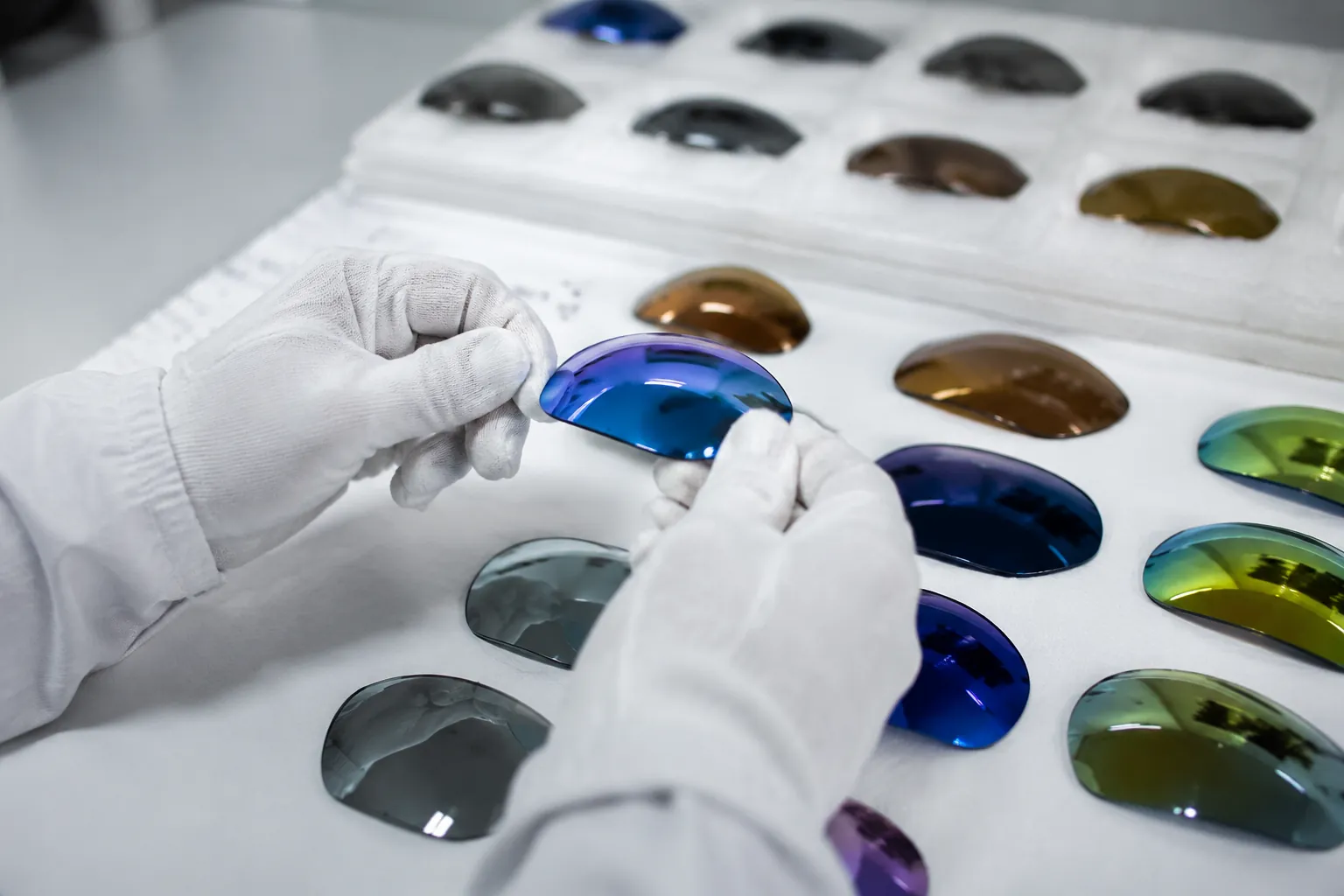
If you buy custom sunglasses for retail, do not spec coatings by preference. Spec them by channel, price band, complaint rate, and how the frame will actually be used. This guide ranks five coatings and finishes for sports, fashion, and outdoor programs, with practical guidance on material behavior, QC thresholds, MOQ logic, lead times, and how production setup, from tinting and decoration to compliance, affects the job.
How to choose coatings by channel, not by catalog
The wrong coating choice usually shows up after shipment. Scratched demo pairs. Mirror peel complaints. Glare in outdoor use. A fashion line that looks sharp on day one and worn out by week three.
The practical way to spec coatings is to start with the retail channel and the wear pattern, then work backward into lens material, decoration method, and packing.
For sports, buyers usually care about glare control, sweat, salt, and repeated cleaning. For fashion, appearance and perceived value matter more, but abrasion resistance still matters because stores handle samples hard and consumers wipe lenses with whatever is nearby. For outdoor and travel programs, water behavior, fingerprint resistance, and visibility after repeated wiping matter more than a shiny finish.
Use this rule: choose the coating for the customer's environment first, then adjust the frame, lens color, and decoration around it. Set the lens substrate, target darkness, and finish stack before the sales team starts asking for visual extras.
One point buyers often miss: the lens base material sets the ceiling for the coating stack. Polycarbonate is common for impact resistance and lower weight, but it is more sensitive to surface preparation and hard-coat quality than higher-grade optical resins. If the lens is going into a sport program, ask how the factory cleans the substrate before coating, what cure cycle it uses, and what acceptance test defines a good surface. Those details matter more than marketing language on a catalog sheet.
Ranked: the five coatings that actually move the needle
| Rank | Coating / finish | Best use case | Main upside | Main drawback |
|---|---|---|---|---|
| 1 | Anti-scratch hard coat | Everyday retail, travel, mass fashion | Reduces visible wear and claims from handling | Does not solve glare or water spotting |
| 2 | Hydrophobic coat | Outdoor, sport, fishing, travel | Water beads off fast; easier to wipe clean | Needs good base finishing or it looks patchy |
| 3 | Anti-reflective coat | Premium outdoor, optical-style sunglass programs | Reduces backside reflections and improves clarity | Higher cost; shows contamination if QC is weak |
| 4 | Oleophobic coat | Premium fashion and high-touch retail | Resists fingerprints and skin oils | Not a substitute for hard coat or AR |
| 5 | Mirror finish | Sports fashion, ski-inspired, outdoor statement styles | Strong visual sell-through on shelf | More sensitive to handling and process variation |
Anti-scratch comes first because it protects the unit economics. If a retailer opens samples, repacks them, and the lens face is already marked, the product looks cheap even if the frame is fine. In volume programs, that shows up fast in returns, remakes, and replacement requests.
Hydrophobic ranks higher than many buyers expect. It is not a vanity feature. It changes how the lens behaves when the wearer gets caught in rain, spray, sweat, or repeated cleaning. On outdoor and sport SKUs, that is a functional benefit the customer notices immediately. If you spec hydrophobic, ask for a bead test and a wipe test against a confirmed sample, not just a promise on a quotation.
Anti-reflective is important, but not for every program. It matters when the buyer wants a cleaner, less plastic-looking view and can support the extra cost and process control. Oleophobic is a useful add-on for premium retail and dark fashion lenses, but on its own it will not rescue a poor base finish. Mirror is the most commercially obvious and the easiest to misuse. It sells from a display stand. It also exposes dust, edge defects, and handling damage quickly.
The ranking is not about which coating sounds best in a pitch deck. It is about which layer most reliably reduces complaints while preserving margin at the intended price point.
What each coating does in production
Anti-scratch hard coat. This is the baseline protection layer for most polycarbonate and resin sunglass lenses. It reduces visible abrasion from case contact, cloth wiping, and retail handling. Buyers should ask how the coating is cured and how it is checked for haze, adhesion, and surface defects. A common expectation on a production spec sheet is a clear finish with no visible orange peel, no obvious haze, and no edge lift after curing. A hard coat is not indestructible. It slows wear. That is the point.
Anti-reflective coating. AR reduces reflections from the lens surface, especially backside reflection that can show up in bright light or flash photography. It is used more carefully in sunglasses than in clear optical lenses because the value depends on the lens tint and the selling channel. Poor AR application can create color shift, edge mismatch, or a bluish cast that looks wrong on a fashion wall. For premium programs, ask whether the factory applies AR before or after tinting, and whether the coating is compatible with the tint target.
Hydrophobic coating. This changes surface energy so water beads and sheds more readily. It helps in rain, sweat, spray, and frequent wipe-downs. It does not make a lens self-cleaning. Oil and fine dust can still stick. On a wet-test QC check, a properly coated lens should shed water faster than an uncoated one, and should not leave large irregular sheets after a rinse. The practical buyer question is whether the coating survives several wipe cycles without losing its beading behavior.
Oleophobic coating. This is the fingerprint control layer. It is useful where customers handle glasses often, especially dark lenses and glossy fashion styles. It improves wipeability and reduces the obvious smudge pattern that makes display pairs look tired. It does not prevent scratching, and repeated aggressive cleaning can wear it down. For that reason, oleophobic is usually a premium comfort layer, not a structural one.
Mirror finish. This is a reflective top layer, usually used for visual impact and sun glare reduction on the wearer side. Treat it as a finish with process sensitivity, not a decorative afterthought. Dust control, masking, adhesion checks, and stable humidity during application matter. Mirror defects are obvious. There is no hiding them. If the line cannot maintain consistent cleaning and cure conditions, mirror is the first finish that will expose the problem.
As a working spec, buyers should ask for the base lens material, the coating stack order, cure temperature range, and the visual acceptance standard in writing. If a supplier cannot state those clearly, the quote is not fully engineered.
Best coating by retail channel
The right stack depends on where the product will be handled, how often it will be cleaned, and how much premium the shelf can support.
- Sports. Start with anti-scratch plus hydrophobic. Add AR only if the SKU is positioned above entry-level and the optics justify it. Mirror is a niche add-on for aggressive sport fashion, not the default. For faster-moving sport programs, buyers often keep the lens spec simple because returns are driven more by durability than by visual novelty.
- Fashion. Start with anti-scratch plus oleophobic. Mirror is often the visual driver in this channel. If you use mirror, keep QC tight and accept a higher defect risk than with plain tint. Fashion programs also need better attention to color matching, because a small mismatch between frame finish and lens tone can hurt perceived quality immediately.
- Outdoor. Start with anti-scratch plus hydrophobic. Add AR for premium travel, driving, or all-day wear. Mirror can work on statement SKUs, but function should still come first. Outdoor buyers should also think about repeated wipe cycles, because those are what wear down weak coatings in real use.
- Retail multipacks / value programs. Anti-scratch only is often the sensible floor. Every added layer increases cost and process control requirements. Do not over-spec a low-ticket product. In value programs, a cleaner base lens with stable tint often delivers more sell-through than a bloated coating stack.
Here is the blunt version: if the channel does not pay for the coating, do not add it. Buyers often ask for three or four coatings on a low-cost target lens. That stack can make sense on paper and fail in margin reality. The better move is to spec one primary benefit, hold the process tight, and use packaging and presentation to support perceived value.
A simple way to pressure test the choice is to ask three questions: will the shopper notice it at shelf, will the wearer notice it in use, and will the coating survive the way the product is cleaned and handled? If the answer is no on two of the three, it is probably not worth adding.
Cost and lead-time logic buyers should expect
| Order tier | Typical unit price behavior | Lead time impact | Buying note |
|---|---|---|---|
| 50 pairs/design MOQ | Highest unit price; setup cost dominates | Samples in 7-10 days, bulk after approval | Good for testing a coating stack before scale |
| 300 pairs/design | Price starts improving | Bulk lead time usually still within 25-35 days | Enough volume to validate demand without overcommitting |
| 1000 pairs/design | Meaningful unit cost drop | Better scheduling priority, fewer changeovers | Best point for adding a premium coating with less pain |
| 5000+ pairs/design | Lowest pricing; unit cost can approach $2.10/pair on volume in the right spec | Most stable production and packing flow | Use when coating, color, and frame spec are locked |
Coatings affect cost in two ways: material cost and yield loss. Mirror, AR, and multi-layer surface treatments generally raise both. Hydrophobic and oleophobic are less visible on the price sheet than mirror, but they still require process control and testing. The real cost is not only the coating itself. It is the extra QC, the rework risk, and the yield hit if the line is dirty, rushed, or switching between finishes too often.
MOQ logic matters because coatings are often batch-sensitive. A 50-pair test run is useful for color approval and surface evaluation, but it is expensive per pair because setup, cleaning, and changeover are spread over a tiny lot. By 300 pairs, the price usually starts to normalize. At 1000 pairs, the factory can often run a more stable cycle and hold tighter color and coating consistency. At 5000+ pairs, the line can be tuned for one spec, which lowers waste and improves packing flow.
Lead time should be read the same way. Sampling at 7 to 10 days is realistic for a straightforward build. Bulk production at 25 to 35 days is typical when the spec is established and materials are in stock. Premium stacks, custom mirror colors, or unusual tint targets can extend that window because the factory may need extra curing, inspection, or rerun capacity. If a buyer wants a fast turnaround, the right lever is usually simplification, not squeezing the factory harder.
For buyers, the practical question is whether the premium coating changes sell-through enough to justify the added cost. If the answer is yes, move up a tier and protect the margin with higher order volume. If the answer is no, keep the stack simple and spend the money on frame finish, lens color consistency, or packaging. Quotes should be evaluated with the full stack in mind: frame material, lens base, coating layers, decoration method, and pack-out. That is how you compare real landed cost, not just the headline pair price.
As a rough sourcing rule, every additional coating layer should earn its place either by reducing returns, lifting shelf appeal, or extending usable life in the target channel. If it does none of those, it is just cost.
Quality checks that prevent coating complaints
Coatings fail in ways buyers can usually catch before shipment. The mistake is not having a clear checklist. A serious order should include visual and functional inspection against agreed samples, with pass-fail criteria that do not rely on subjective language like "looks good enough."
- Check for haze, rainbowing, or uneven reflection on AR and mirror lenses under strong white light.
- Rub-test the lens surface under controlled wiping to catch weak hard coat adhesion.
- Run water-beading checks for hydrophobic performance after rinse and after wipe cycles.
- Inspect for fingerprints, smudges, and wipe marks on oleophobic finishes.
- Look at edge consistency, especially on mirror and multi-layer lens builds.
- Confirm that lens color and coating do not shift the product away from the approved master sample.
- Check for dust inclusion, pinholes, and perimeter lift on mirrored surfaces before pack-out.
For overseas buyers, ask for pre-production samples and then a bulk golden sample before mass run. If you are ordering across multiple SKUs, do not approve one coating stack and assume the others will behave the same. That is how teams get surprised. A black mirror lens, for example, may pass visual approval while a light blue mirrored lens shows every contaminant. Treat each finish family as its own approval.
In factory terms, the best controls are basic but strict: clean handling gloves, segregated work areas for mirror and non-mirror jobs, written cure times, and a final visual bench under consistent lighting. If the supplier cannot explain those steps, they probably do not control them tightly enough.
On compliance, keep the paperwork aligned with the market. For sunglass programs, applicable certifications include CE EN ISO 12312-1, FDA registration, ANSI Z80.3, AS/NZS 1067, REACH, ISO 9001, and BSCI. The market you ship to determines which standard matters, and the coating spec should not be separated from that compliance plan.
A simple spec recipe that works
Use the following starting point if you need to brief a factory quickly:
- Choose the retail channel and target price band.
- Select the primary coating based on use case: hard coat first, then hydrophobic, AR, oleophobic, or mirror as needed.
- Define lens base material, target tint density, and surface gloss before discussing decorative layers.
- Approve one physical sample for color, reflection, wipeability, and scratch resistance.
- Lock packaging and handling rules so coatings are not damaged in transit or on the line.
- Ask for bulk scheduling against the target order tier: 50, 300, 1000, or 5000+ pairs per design.
- Write the acceptance standard into the PO, including any special tests for haze, bead performance, or mirror consistency.
If you are building a sports line, start with anti-scratch plus hydrophobic. If you are building a fashion line, start with anti-scratch plus oleophobic, then add mirror only where the design supports it. If you are building an outdoor line with a premium ticket, consider AR as a functional upgrade rather than a decoration. When the product has to look premium in the hand and work well in the sun, the best result is usually a simple stack executed cleanly.
That is the real job of coating selection: reduce complaints, fit the channel, and protect margin. Anything else is noise.
Decoration and finish details buyers should not overlook
Coatings do not sit alone. They interact with decoration, frame geometry, and pack-out, which is why two lenses with the same coating can behave differently on the shelf. If the design includes hot stamping, laser marking, printed logos, or metallic accents, those choices can affect how the lens edge and surface are perceived even when the coating itself is fine.
For acetate frames, a clean cut edge and stable polishing sequence matter because lens-to-frame fit affects how the lens is handled during assembly. For injection-molded frames, gate marks, sink risk, and surface gloss can change the way a mirrored lens reads in store lighting. On decorated products, buyers should ask whether the factory uses pad printing, UV printing, laser engraving, or hot stamping, and whether those steps happen before or after final lens coating inspection.
Keep the order of operations simple: build the base lens correctly, apply the coating stack, verify finish, then decorate and pack. If a supplier cannot explain that sequence, the risk is not just cosmetic. It usually means the line is making process decisions on the fly, which is where coating complaints come from.
Have a custom sunglasses project in mind?
Send us your styles, target market and quantities and we will return a detailed quote with MOQ, lead time and a sample plan.
Get a QuoteWhy source this from Wenzhou with LumiShades
Wenzhou in Zhejiang Province is widely regarded as China’s eyewear manufacturing capital, producing a large share of the world’s sunglasses. That concentration matters to buyers: a deep local supply chain for acetate sheet, hinges, lens blanks, plating and packaging means shorter component lead times, easier color and material matching, and a workforce with decades of eyewear-specific skill. LumiShades has manufactured in this ecosystem since 2009, and our vertical integration — in-house injection molding, acetate cutting, CNC milling, lens tinting, decoration and quality control — means no part of your order is quietly subcontracted to a workshop you cannot audit.
For international buyers, that vertical control translates into accountability. When a single factory owns every step, defects are traced and fixed at source rather than bounced between vendors, and your specifications survive intact from first sample to bulk. We back this with 15+ years of experience, shipments to 60+ countries, more than 5 million pairs produced per year and a 98.5% on-time delivery rate. Our certifications — CE EN ISO 12312-1, FDA registration, ANSI Z80.3, AS/NZS 1067, REACH, ISO 9001 and BSCI audit — mean the compliance documentation your market requires already exists. Explore our manufacturing capabilities and quality control process to see how this works in practice.
Frequently asked questions
Which coating should I spec first for a new sunglass line? Start with anti-scratch hard coat. It protects the product during retail handling and daily use. Then add hydrophobic, AR, oleophobic, or mirror only if the channel and price point justify it. The hard coat is the foundation; skipping it to save a few cents per pair often leads to higher return rates from scratched demo units and customer complaints.
Is anti-reflective worth it on sunglasses? Yes in premium outdoor or optical-style programs, less so in low-price fashion. AR helps reduce distracting reflections that can fatigue the wearer in bright conditions, but it adds cost and requires clean process control. It is most useful when the lens tint and visual finish are already well engineered and the target customer will pay a premium for clearer vision.
Can mirror coating replace UV protection or tint? No. Mirror is a surface finish that reflects light; it does not inherently provide UV absorption or control base lens darkness. UV protection and lens tint are separate requirements defined by the lens substrate and any added UV-absorbing layers. A mirror lens can still be a bad lens if the base spec is wrong, the tint is inconsistent, or the substrate lacks proper UV blocking. Always verify the lens meets the relevant standard, such as CE EN ISO 12312-1, ANSI Z80.3, or AS/NZS 1067, regardless of mirror finish.
What is the cheapest coating stack that still makes sense? For value programs, anti-scratch hard coat alone is usually the minimum sensible stack. It gives the best cost-to-benefit ratio by reducing handling damage and returns without adding much process risk. If you need a second layer, hydrophobic is usually the next most practical choice for outdoor use because it improves the user experience noticeably for a modest cost increase. Avoid layering multiple premium coatings on a low-ticket product; the margin impact rarely justifies the shelf benefit.
How do I avoid coating defects in bulk production? Approve a golden sample, then test production against it for haze, adhesion, water beading, wipeability, and color consistency before the mass run. Keep the production line clean: use dedicated handling gloves, separate mirror work areas from standard coating areas, enforce written cure times and temperatures, and conduct final visual inspection under consistent lighting. For overseas orders, require pre-production samples followed by a bulk golden sample; treat each finish family, such as black mirror vs. light blue mirror, as its own approval because they behave differently under the same process.
What order size starts to improve pricing meaningfully? Pricing usually improves at 300 pairs per design, then again at 1,000 and 5,000+ pairs per design. At 5,000+ pairs, volume pricing can approach approximately $2.10 per pair depending on the exact spec, coating stack, and decoration method. Below 300 pairs, setup and changeover costs dominate, so test runs are best used for validation, not for landed cost comparison.
Ready to start?
Explore our shield & oversized sunglasses or request a quote — our sales team replies within 12 hours.
Request a Quote