
5 lens tint processes for bulk sunglasses compared
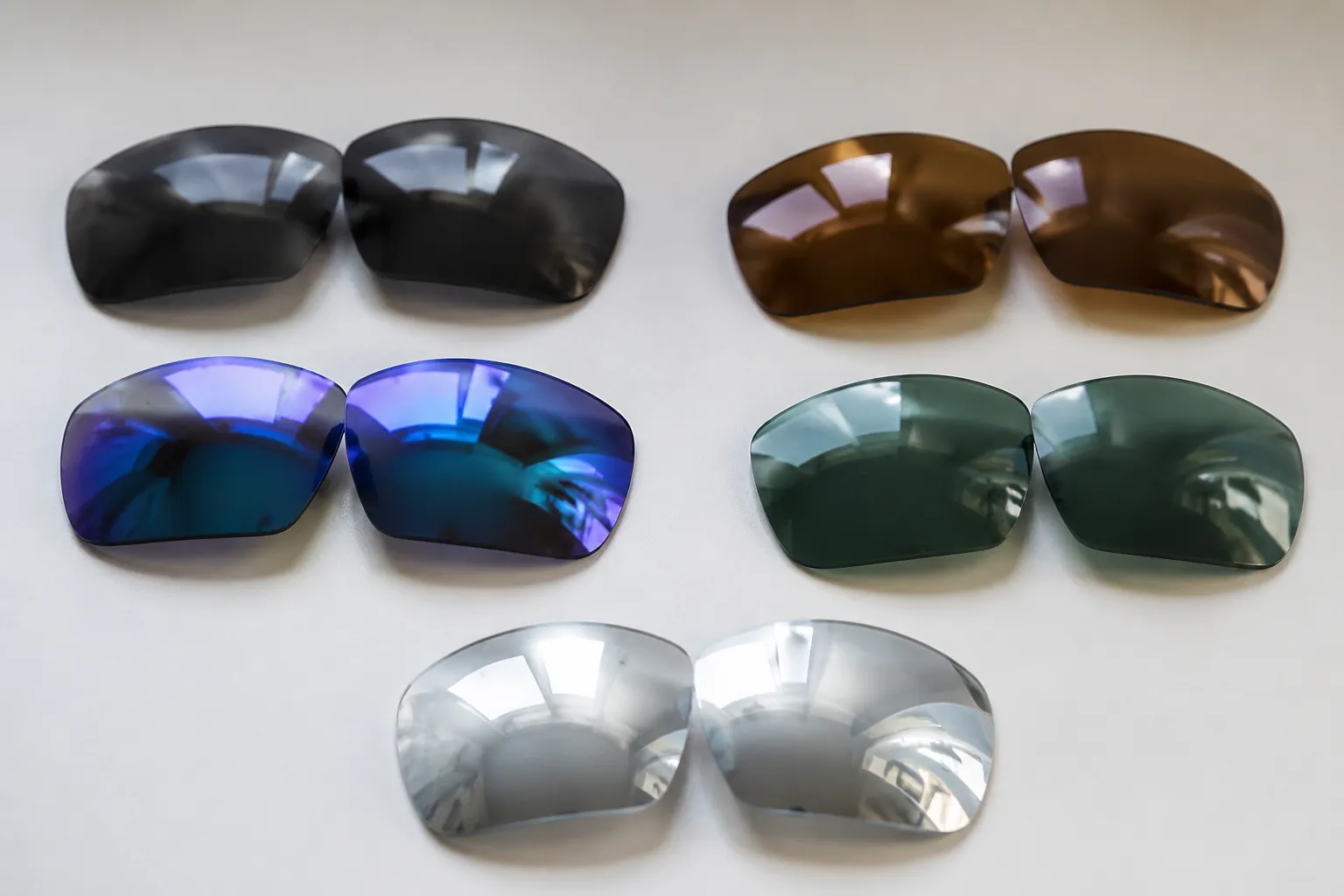
If you buy custom sunglasses in volume, the tint process affects unit cost, reject rates, color consistency, and how the finished product holds up in use. This article compares five common methods-dyed, vacuum-coated, dip-coated, gradient, and mirrored-across durability, consistency, cost drivers, and the buyer use cases each one usually serves. The aim is practical: ask better questions, compare supplier quotes on the same basis, and verify compliance documents before you place an order.
How lens tint is applied: absorption versus coating
Lens tinting usually falls into two groups: absorption tints and surface coatings. Dyed and gradient lenses rely on color absorbed into the lens material or into a dyed zone of the lens. Vacuum-coated and mirrored lenses use a thin reflective or interference film on the surface. Dip-coated lenses are also surface-applied, but they behave differently from both dyed and vacuum-coated lenses.
Absorption-based tinting is usually more stable for everyday wear because the color is part of the lens material or the dyed region. Surface coatings can create reflective, mirrored, or specialty finishes, but they depend more heavily on base prep, hard coat quality, and handling after coating. Simple rule: appearance is not enough.
Ask for the exact process, the base lens material, the hard coat system, the measured visible light transmission (VLT), and the test standard used. For regulated markets, the usual references are CE EN ISO 12312-1, ANSI Z80.3, or AS/NZS 1067, depending on the destination market.
Dyed lenses: the standard choice for solid tints
Dyed lenses are common for polycarbonate and CR-39 because they are straightforward to produce and usually cost-effective at scale. In a typical process, the lens sits in a heated dye bath until it reaches the target tint depth. Final color density depends on the lens material, dye chemistry, bath temperature, immersion time, and the starting color of the lens.
Key buyer considerations:
- Dyed lenses fit solid, non-reflective tints.
- Color repeatability depends on bath control and lot consistency in the base lens material.
- Scratch resistance depends mainly on the hard coat, not the dye itself.
- UV protection should be verified separately through the lens specification and compliance test report.
Typical cost drivers: dye chemistry, cycle time, rework rate, and whether the lens requires a hard coat before or after tinting. Per-pair pricing varies with lens material, tint depth, order size, and finishing requirements, so suppliers should quote against the same specification set.
Best for: safety sunglasses, promotional programs, prescription sunwear components, and basic retail channels that need a stable solid tint without a reflective finish.
Compliance notes: Ask the supplier for batch-level VLT results and the standard used for testing. A valid report should identify the lens model, tint specification, batch or lot number, measured VLT, and pass/fail outcome against the applicable standard. Do not assume UV protection from the dye alone.
Vacuum-coated lenses: reflective finishes with tighter control needs
Vacuum coating deposits a thin film on the lens surface inside a vacuum chamber. The coating may be applied as a single layer or a multilayer stack, depending on the visual effect and performance target. This process is used for reflective colors, interference effects, and some heat-reduction or glare-control finishes.
What it does well:
- Produces reflective or iridescent appearances that dye cannot create
- Allows controlled optical effects through film thickness and stack design
- Can be combined with additional top layers, depending on the coating line
What buyers should watch:
- Surface prep and hard coat quality matter because the coating sits on top of the lens
- Color and reflectance can vary by chamber loading, fixture layout, and batch setup
- Handling, packaging, and post-coating abrasion resistance must be specified up front
Vacuum-coated lenses are usually chosen when visual effect is a core product requirement. They are less forgiving than dyed lenses because the final appearance depends on both the coating stack and the underlying lens surface quality. Ask for sample approval against a retained master reference. Also confirm the acceptable variation in color, reflectance, and haze before production starts.
Best for: fashion sunglasses, sport sunglasses with reflective styling, and products where the lens finish is part of the product identity.
Dip-coated lenses: lower cost, higher variability
Dip coating applies a liquid coating containing colorant or pigment to the lens surface, then removes the lens at a controlled speed before curing. It is usually cheaper than vacuum coating, but the result depends heavily on coating viscosity, withdrawal speed, drainage, curing conditions, and surface cleanliness.
Pros:
- Low equipment and process cost relative to more complex coating systems
- Fast production in straightforward color programs
- Useful when price pressure matters more than long service life
Cons:
- Coating thickness can vary more than with dyed lenses or vacuum-applied films
- Surface durability is limited unless the coating system is well matched to the base lens and top coat
- Streaking, pooling, and edge buildup are common rejection reasons if process control is weak
For buyers, dip coating should be treated as a budget process, not a premium one. It can work for short-life retail or promotional programs, but it is usually a poor choice when you need long wear, tight color matching, or a high cosmetic standard.
Best for: short-life promotional sunglasses, low-cost private-label programs, and orders where unit price matters more than finish durability.
Compliance notes: Because this is a surface-applied tint, ask how the supplier controls coating uniformity and how VLT is verified across the lens area. For any regulated market, request the actual test report rather than a general compliance statement.
Gradient lenses: dark to light by design
Gradient tint is usually produced by varying exposure to dye so the lens is darker in one region and lighter in another. In practice, the lens is immersed or moved through the dye bath in a controlled way to create the fade. Gradient lenses are common in eyewear where the upper area needs more glare control than the lower area.
What matters most is repeatability. Buyers should specify the dark zone, the light zone, and the transition band, not just describe the look loosely. Otherwise, one supplier may quote a different fade profile than another and both may claim to be correct.
Specify these three items in the PO:
- Target VLT at the upper zone
- Target VLT at the lower zone
- Transition width in millimeters
Gradient lenses are usually chosen when the product needs sun protection above the line of sight but clearer visibility below it. That makes them useful for driving-oriented styles and some aviation-inspired designs, provided the finished lens meets the applicable standard in the destination market.
Best for: driving sunglasses, fashion sunwear with a fade aesthetic, and use cases where the wearer wants a darker top and a clearer lower field of view.
Mirrored lenses: a reflective layer over a base tint
Mirrored lenses are not a separate base tint family. They are usually a reflective surface layer applied over a dyed, clear, or otherwise tinted lens. The visible mirror effect comes from the coating stack, not from pigment in the lens material.
Key points buyers should know:
- A mirror finish depends on the quality of the base lens and the coating system
- The underlying lens still determines the actual VLT and UV performance
- The mirror layer can improve appearance and reduce visible glare, but it does not replace proper lens specification
Mirror finishes are more sensitive to abrasion than a plain dyed lens, so packaging, handling instructions, and coating hardness should be documented. If the lens will be sold through channels where end users are likely to clean it aggressively or carry it loose, the supplier should be able to explain the coating stack and the expected wear profile.
Best for: fashion sunglasses, premium sport sunglasses, and products that rely on a distinctive reflective finish to justify the price point.
Compliance notes: The mirror layer itself does not determine compliance. The finished lens still needs to meet the applicable optical and safety requirements for the target market, including VLT and impact or material requirements where relevant.
Cost, lead time, and rejection rate comparison
| Method | Cost driver | Typical lead time impact | Typical rejection risk | Best for channel |
|---|---|---|---|---|
| Dyed | Bath control, tint depth, hard coat handling | Moderate | Low when process is stable | Safety, promo, prescription |
| Vacuum-coated | Chamber setup, coating stack, fixture loading | Moderate to high | Moderate if process control is weak | Fashion, sport, reflective styles |
| Dip-coated | Surface prep, coating viscosity, curing | Low to moderate | Higher than dyed or vacuum-coated in many programs | Low-cost promo, short-life |
| Gradient | Immersion control, zone definition, repeatability | Moderate | Low to moderate | Driving, fashion, lifestyle |
| Mirrored | Base tint plus reflective coating stack | Moderate to high | Moderate | Fashion, sport, premium |
Lead time depends on more than the tint method alone. Final timing is affected by lens material availability, tooling, sample approvals, color matching, coating capacity, inspection requirements, and packaging. Ask suppliers to separate sample lead time from bulk lead time. Also ask which steps sit on the critical path.
For quality comparison, ask for the supplier's definition of rejection. Some factories count only visual tint failures. Others include optical, surface, and cosmetic rejects. Those are different numbers and should not be compared without context.
How to choose the right tint process for your order
Use the decision flow below to narrow the process before you request samples:
- What is the target retail position? Lower-price retail and promo programs usually fit dyed or dip-coated lenses. Higher-price or style-led products usually need vacuum-coated or mirrored finishes.
- How durable does the finish need to be? For everyday wear, dyed or a well-specified gradient is usually more durable than a surface coating. Dip-coated lenses are the least forgiving when durability matters.
- What visual effect do you need? Solid color points to dyed or dip-coated. Fade effect points to gradient. Reflective or iridescent appearance points to vacuum-coated or mirrored.
- Which market standard applies? Confirm the destination market first, then ask for the relevant test report: CE EN ISO 12312-1, ANSI Z80.3, or AS/NZS 1067, as applicable. If the lens is sold as a protective product, request the full compliance file rather than a statement of conformity.
- How much variation can you tolerate? If your channel demands tight color matching, request a master sample, a written tolerance band, and lot-based inspection criteria before production starts.
The right process follows the end use. Do not buy a reflective finish just because it looks premium if the target channel is low-price. Do not buy a budget surface tint if the product needs long wear or low return rates.
What buyers should verify before placing a bulk order
Before approving production, ask the supplier for the following documents and confirmations:
- The exact lens material and base color
- The tint process used and whether any coating is applied before or after tinting
- The target VLT range and the test method used to verify it
- The applicable compliance standard for the target market
- The batch or lot identification system used on the production run
- The supplier's quality management certification, if relevant, such as ISO 9001
- Any factory social compliance documentation, such as BSCI, if required by your sourcing policy
- Material compliance confirmation for restricted substances, such as REACH, when selling into markets that require it
For FDA-related orders, remember that FDA registration is not the same thing as product approval. Registration may be part of a supplier's U.S. market readiness, but the finished product still needs to meet the applicable eyewear requirements. Ask for the exact documentation tied to the specific SKU you are buying.
Good suppliers can answer these questions without improvising. If they cannot, the risk usually shows up later as color drift, mixed lots, inspection delays, or avoidable claims from distributors.
FAQ: buying and verifying tinted lenses at scale
For bulk eyewear buyers, the real question is not whether a tint method sounds advanced. It is whether the supplier can repeat it, document it, and test it against the standard you need.
Have a custom sunglasses project in mind?
Send us your styles, target market and quantities and we will return a detailed quote with MOQ, lead time and a sample plan.
Get a QuoteWhy source this from Wenzhou with LumiShades
Wenzhou in Zhejiang Province is widely regarded as China’s eyewear manufacturing capital, producing a large share of the world’s sunglasses. That concentration matters to buyers: a deep local supply chain for acetate sheet, hinges, lens blanks, plating and packaging means shorter component lead times, easier color and material matching, and a workforce with decades of eyewear-specific skill. LumiShades has manufactured in this ecosystem since 2009, and our vertical integration — in-house injection molding, acetate cutting, CNC milling, lens tinting, decoration and quality control — means no part of your order is quietly subcontracted to a workshop you cannot audit.
For international buyers, that vertical control translates into accountability. When a single factory owns every step, defects are traced and fixed at source rather than bounced between vendors, and your specifications survive intact from first sample to bulk. We back this with 15+ years of experience, shipments to 60+ countries, more than 5 million pairs produced per year and a 98.5% on-time delivery rate. Our certifications — CE EN ISO 12312-1, FDA registration, ANSI Z80.3, AS/NZS 1067, REACH, ISO 9001 and BSCI audit — mean the compliance documentation your market requires already exists. Explore our manufacturing capabilities and quality control process to see how this works in practice.
Frequently asked questions
What should I ask a supplier to prove a tint process is consistent? Ask for three things: the master sample used for approval, the batch-level VLT report for the exact SKU, and the supplier's written tolerance for color variation. If the product is reflective or mirrored, also ask how the coating is controlled and what happens when a batch drifts outside the approved visual range. Consistency claims matter only when they are tied to a sample, a measured result, and a lot number.
Which tint method is usually best for long-term everyday wear? Dyed lenses are usually the safest starting point for long-term everyday wear because the color is integrated into the lens material or dyed region rather than sitting as a fragile surface film. A well-made gradient lens can also be durable if the process is controlled. Dip-coated lenses are generally the weakest option for long-term wear, and mirrored lenses need better handling because the surface layer is more exposed.
How do I compare quoted prices from different suppliers? Compare like for like. Make sure the quote covers the same lens material, same base color, same hard coat, same tint process, same compliance standard, same packaging, and the same order quantity. A lower quote can be meaningless if one supplier is quoting a dyed lens and another is quoting a dye-plus-mirror stack. Ask for an itemized quote so the process cost is visible.
Can mirrored lenses meet CE EN ISO 12312-1, ANSI Z80.3, or AS/NZS 1067? Yes, if the finished lens meets the optical and safety requirements of the target standard. The mirror layer is only one part of the finished product. The supplier still needs to control the base lens, VLT, impact or material performance, and any other required measurements. Ask for the batch test report for the exact SKU you plan to ship.
How should I specify a gradient lens so the supplier makes the fade I want? Specify the target VLT at the top, the target VLT at the bottom, and the transition width in millimeters. If you only say 'dark top, light bottom,' suppliers may interpret the design differently. You should also approve a retained sample before mass production so the fade profile is locked in.
What documents should I request for compliance and sourcing checks? Request the batch test report for the applicable eyewear standard, the material declaration or REACH confirmation where relevant, and the supplier's quality certifications if they matter to your sourcing policy. ISO 9001 is a quality management certification, not a product approval. BSCI is a social compliance audit framework, not an eyewear performance standard. FDA registration may be relevant for U.S. market readiness, but it does not replace product testing.
What is the main risk with dip-coated lenses? The main risk is variability in coating thickness and surface finish. That can create streaks, pooling, edge buildup, and a weaker cosmetic result than other tint methods. Dip coating can be useful for low-cost programs, but buyers should treat it as a short-life or price-sensitive option and should require sample approval before production.
How do I know whether a supplier's certification claims are real? Ask for the certificate number, issuing body, validity dates, and the exact factory name and address shown on the document. For product compliance, ask for the actual batch test report, not just a logo or a general statement. If the supplier says they have ISO 9001, BSCI, FDA registration, REACH compliance, or CE-related testing, those claims should be supported by documents that match the product and the factory you are buying from.
Ready to start?
Explore our round sunglasses or request a quote — our sales team replies within 12 hours.
Request a Quote