
Polarized Sunglasses Specs Retail Buyers Should Request
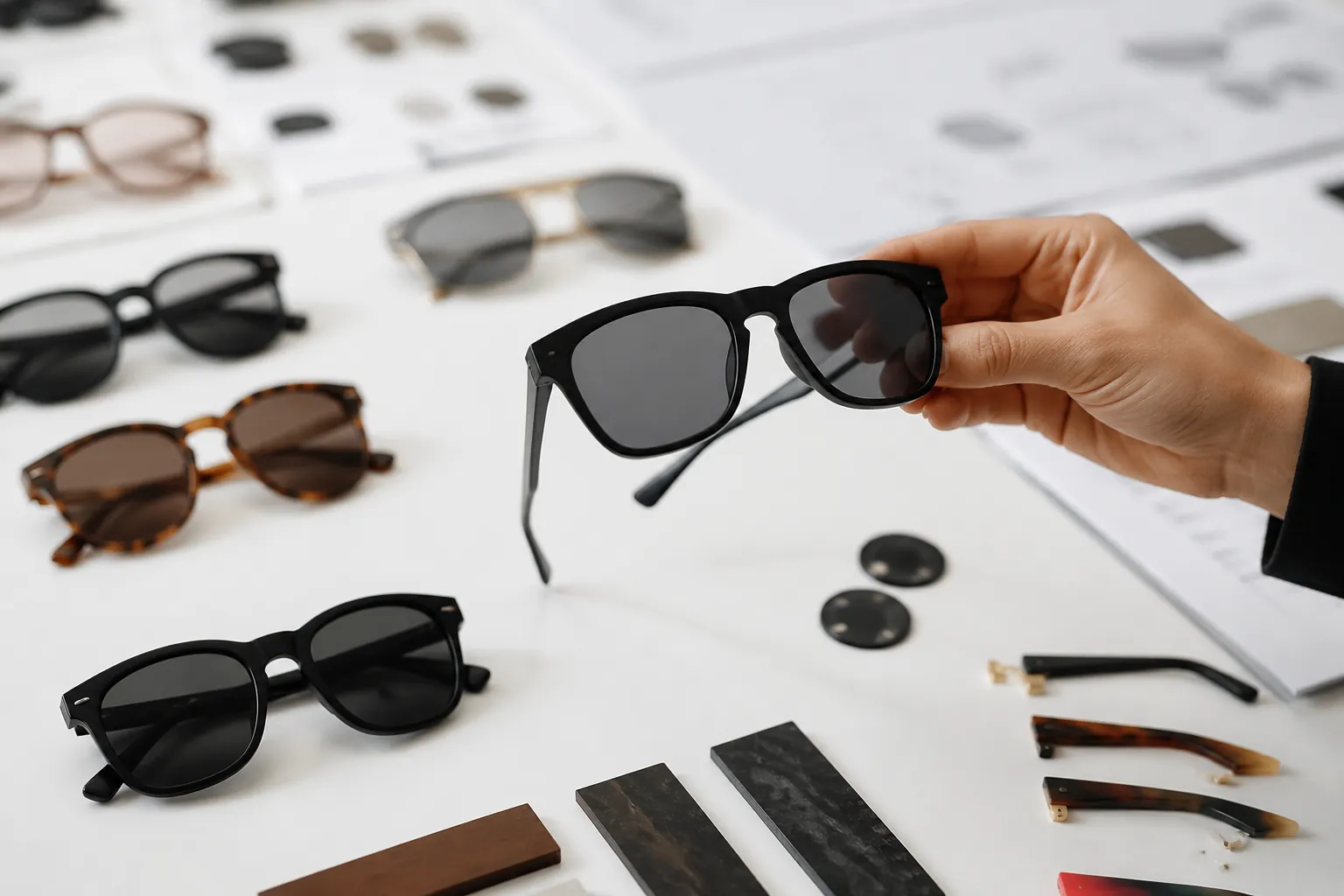
For retail, promo, and private-label sunglasses, "polarized" is not a complete spec. Buyers need the lens to perform in use: glare reduction, visible light transmission, color shift, optical clarity, UV protection, decoration compatibility, and compliance for the destination market. This guide shows what to request, what to reject, and how to brief a factory so polarization improves sell-through instead of just adding cost.
Start with the use case
Polarization only matters if it solves a real problem. For fishing, boating, driving, snow, beach retail, travel, and higher-ticket lifestyle frames, it can be a strong selling point. For event giveaways, festival merch, and very low-price promo programs, the added cost may not pay back.
So do not start with "polarized or not." Start with the end user. Will they notice glare reduction? Will they pay for it? If the answer is no, a clean UV-protected non-polarized lens may be the better buy.
A bad polarized lens can also hurt the product. Uneven tint, haze, weak lamination, or the wrong base curve can make the lens look dark but perform poorly. That is a return risk. It is also a display problem. If the lens looks muddy in the tray, it can sit.
Use polarized lenses when the product needs to justify a higher price or serve glare-heavy use. Use non-polarized UV lenses when the order is driven by logo exposure, unit price, or speed.
What polarization changes in the lens
Polarization reduces reflected horizontal light from water, roads, glass, snow, car hoods, and other shiny surfaces. The effect is simple: less glare, better contrast. It does not automatically mean better UV protection. UV protection comes from the material, absorbers, and coating system.
A polarized lens is a stack, not just tinted plastic. In common production, a polarizing film is laminated between layers or built into an injected or pressed lens. The factory has to control film orientation, bonding temperature, pressure, tint consistency, and cutting. If those controls slip, the lens can show uneven extinction, rainbow stress marks, or patchy glare reduction.
Ask for numbers, not claims. The useful items are:
- Polarization efficiency: ask for the test method and the acceptance level. Many commercial programs target 90% or higher, but the spec should match the brief.
- Visible light transmission, or VLT: the percentage of visible light passing through the lens. Lower VLT means a darker lens, but the right level depends on use and market.
- UV protection: often stated as UV400 or protection up to 400 nm, but it must be backed by testing for the destination market.
- Haze and clarity: low haze matters. Cloudiness, waviness, or edge distortion should fail sample approval.
- Color neutrality: gray is usually the most neutral; brown can raise contrast; green can look premium but can shift color more.
If a supplier cannot explain polarization efficiency, VLT, UV performance, and inspection method in plain language, the quote is incomplete.
The spec sheet items that move sales
Many catalogs stop at "polarized, UV400." That is not enough for a retail or distributor order. The lens spec should match the channel, shelf price, compliance route, and use case. A convenience-store promo pair, a beach-shop retail style, and a driving model should not use the same lens by default.
| Spec item | Typical range or checkpoint | Buyer impact | Good practice |
|---|---|---|---|
| Polarization efficiency | Supplier should state the test method and agreed acceptance level | Determines real glare reduction and user satisfaction | Ask for measured samples and verify with a polarization tester or crossed-lens check |
| Visible light transmission | Set by use case and market requirements | Controls darkness, comfort, and shelf appearance | Match VLT to climate, channel, and legal category requirements |
| UV protection | UV400 or protection up to 400 nm, confirmed by testing | Required for safety, labeling, and customer trust | Confirm to CE EN ISO 12312-1, ANSI Z80.3, AS/NZS 1067, or the relevant destination standard |
| Lens matching | Left/right lenses should match in color and darkness | Prevents cheap appearance and customer returns | Check paired lenses under daylight and white LED inspection |
| Haze and surface quality | No visible cloudiness, bubbles, scratches, waves, or film edge exposure | Impacts perceived quality and eye fatigue | Reject lenses with obvious distortion in the central viewing zone |
| Base curve and fit | Common fashion curves include 4-base and 6-base; sport wrap may use 8-base | Affects comfort, reflection, and optical distortion | Approve lens curve with the actual frame, not as a loose lens only |
A very dark lens can sound premium on paper and still feel bad in mixed light. A lighter smoke lens can be the better retail choice. Do not chase the highest number. Match the lens to the selling environment.
Lens material changes the result
Material choice affects cost, optical feel, impact behavior, tint stability, and decoration risk. Buyers often focus on polarization and ignore the base material. That is a mistake. The material can make the product feel premium or cheap fast.
| Lens material | Strengths | Limitations | Best fit |
|---|---|---|---|
| TAC polarized sheet | Cost-effective, light, widely used for polarized sunglasses | Can be more sensitive to heat, edge delamination, and aggressive chemicals | Retail lifestyle, promo-plus, beach, travel, and general polarized programs |
| Polycarbonate, or PC | High impact resistance, light weight, good for sport and kids programs | Can show more internal stress if molding and coating are not controlled | Sport, safety-adjacent fashion, active outdoor styles |
| CR-39 | Good optical clarity and scratch resistance compared with basic plastics | Heavier and less impact resistant than PC | Higher-perceived-value lifestyle and optical-style sun frames |
| Nylon or polyamide | Flexible, strong, good for curved sport lenses | Higher cost and more demanding process control | Performance wrap frames and premium outdoor models |
For many private-label polarized orders, TAC is the practical starting point because it balances cost and performance. For sport frames or children's sunglasses, PC may be better because impact resistance matters more. For premium lifestyle programs, CR-39 or higher-grade nylon can support a better selling story, but MOQ and price usually rise.
Material also affects decoration. Heat-transfer logos, pad printing near the lens edge, laser markings, and mirror coatings all need compatibility checks. Solvents in ink, too much curing heat, or rough handling during assembly can damage coatings or expose lamination weakness. Small detail. Big consequence.
Different use cases need different specs
Use case should drive polarization level, tint, curve, and finish. A fishing buyer wants strong glare reduction on water. A driving customer wants stable contrast without too much darkness. A fashion retailer wants a clean front view, attractive lens color, and low distortion. A promotional buyer usually wants acceptable comfort without wrecking margin.
- Driving: Use moderate darkness and neutral contrast. Avoid lenses that are too dark for tunnels, rain, dusk, or shaded roads. Gray or brown is usually easier to position than strong fashion colors.
- Water and snow: Prioritize strong polarization performance and comfortable VLT. Brown, copper, or gray lenses with a controlled mirror can work well, but check color shift carefully.
- Outdoor retail: Balance clarity, display appeal, and perceived value. A lens must look good in a tray, on a face, and outdoors.
- Fashion retail: Polarization may be secondary to lens color, gradient effect, frame shape, and mirror quality. Check whether the film limits the desired gradient or translucent look.
- Promotional giveaways: Keep the spec simple. A non-polarized UV-protected lens may be the smarter option if the order is price-led and the message is logo exposure.
The common mistake is buying one lens spec for every channel. That creates either a utility product that looks too technical for fashion or a cheap-looking promo item that cannot justify a polarized claim. Ask for two or three samples with different VLT levels. Often the decision is obvious once you compare them outdoors.
How polarized lenses are made, and where defects show up
In a controlled factory flow, polarized lens production starts with material selection and film inspection, then moves through lamination or integration, cutting or injection, tinting, coating, edging, frame assembly, and final QC. Each step can change the optical result.
For sheet-based polarized lenses, the film stack is laminated under heat and pressure, then cut to lens blanks. Blanks are edged to the frame shape by CNC or pattern cutting. For injected lens systems, resin flow, mold temperature, and cooling must be controlled to avoid stress. After that, lenses may receive tint, mirror coating, hard coating, or hydrophobic coating depending on the order.
Predictable failure points include:
- Film axis misalignment: glare reduction differs between left and right lenses or across the viewing zone.
- Bubbles and edge lift: caused by poor lamination pressure, contamination, or heat exposure.
- Color mismatch: left and right lenses do not match because tint time, bath concentration, or coating thickness varies.
- Stress marks: visible rainbow patterns under polarized light, often caused by aggressive assembly pressure or poor molding control.
- Edge exposure: rough cutting or poor finishing reveals lens layers and increases delamination risk.
- Mirror inconsistency: coating appears patchy, cloudy, or different between lenses.
Sample approval should include actual wear, not just a product photo. Check the frame outdoors, through a car windshield, near water or glossy surfaces, under white store lighting, and against a clean white card. A solid QC plan should include incoming material checks, first-article inspection, in-process lens matching, final visual inspection, and AQL-based packed-goods inspection before shipment.
Compliance, decoration, MOQ, and lead time
If you ship to Europe, the U.S., Australia, New Zealand, or mixed-channel accounts, the lens spec must be tied to the correct compliance route. Polarization does not replace safety, UV, labeling, or restricted-substance requirements. It sits inside them.
The certifications and registrations that may apply, depending on the product and market, include CE EN ISO 12312-1, ANSI Z80.3, AS/NZS 1067, REACH, FDA registration, ISO 9001, and BSCI. Use the standard that matches the destination market and channel. Do not assume one test covers another market.
Decoration also affects planning. Pad printing is common for temple logos and works well for many promo orders. Laser engraving can provide a permanent mark on suitable frame materials but must be tested on coated or translucent surfaces. Metal logo plates add perceived value but require tooling, placement checks, and extra assembly control. Lens logos should be used carefully because printing solvents, curing temperature, or placement in the visual zone can create complaints.
| Order band | Typical sourcing effect | Lead-time logic | Buyer takeaway |
|---|---|---|---|
| 50 pairs/design | Useful for sampling, pilot launches, influencer kits, or buyer approval | Often possible within 7-10 days if materials are available; unit cost is high | Keep the spec simple and avoid custom lens tooling |
| 300 pairs/design | Better setup absorption and material buying | Common starting point for small retail or regional replenishment | Good level for first commercial test orders |
| 1,000 pairs/design | More stable production flow and better QC consistency | Bulk production often takes several weeks after approval, depending on materials and decoration | Use for repeatable retail programs and margin control |
| 5,000+ pairs/design | Volume pricing improves and can reduce unit cost depending on frame, lens, and decoration | Requires earlier material booking, packaging confirmation, and inspection scheduling | Best for chains, distributors, and large promo campaigns |
Polarized lenses add cost because of film, lamination, scrap risk, coating control, and extra inspection. Mirrors, gradient tints, custom packaging, metal logos, and multiple colorways add review time. If the buyer changes lens color, logo position, or compliance labeling after sample approval, the schedule has to be reworked.
How to brief the supplier
The best supplier brief is short, specific, and tied to the selling channel. Give the factory the market, target customer, required standard, desired retail appearance, target price, and launch date. Then say what matters most: glare reduction, color neutrality, fashion look, sport performance, lowest cost, or fastest delivery.
A practical polarized sunglasses brief should include:
- destination market and required standard, such as CE EN ISO 12312-1, ANSI Z80.3, AS/NZS 1067, or REACH requirements
- frame material, target shape, base curve, and size range
- lens material preference, such as TAC, PC, CR-39, or nylon
- polarized or non-polarized requirement, plus the target performance level if available
- target VLT range, lens color, mirror color, gradient requirement, and UV claim
- decoration method, including pad print, laser engraving, metal logo plate, hot stamping, or lens mark
- packaging, barcode, warning label, user leaflet, and country-specific labeling needs
- target MOQ, target price band, inspection requirement, and required ship date
For a retail-ready polarized style, ask for at least two samples: one darker and one lighter. Test them outdoors, in a car, near water or reflective glass, and under store lighting. Check color shift against white paper, skin tones, road markings, and packaging. The better lens usually shows itself quickly.
Do not buy polarization as a label. Buy the visual result, the compliance path, the QC tolerance, and the landed cost.
That is what separates a lens that helps sell the frame from one that only adds cost to the order.
Have a custom sunglasses project in mind?
Send us your styles, target market and quantities and we will return a detailed quote with MOQ, lead time and a sample plan.
Get a QuoteWhy source this from Wenzhou with LumiShades
Wenzhou in Zhejiang Province is widely regarded as China’s eyewear manufacturing capital, producing a large share of the world’s sunglasses. That concentration matters to buyers: a deep local supply chain for acetate sheet, hinges, lens blanks, plating and packaging means shorter component lead times, easier color and material matching, and a workforce with decades of eyewear-specific skill. LumiShades has manufactured in this ecosystem since 2009, and our vertical integration — in-house injection molding, acetate cutting, CNC milling, lens tinting, decoration and quality control — means no part of your order is quietly subcontracted to a workshop you cannot audit.
For international buyers, that vertical control translates into accountability. When a single factory owns every step, defects are traced and fixed at source rather than bounced between vendors, and your specifications survive intact from first sample to bulk. We back this with 15+ years of experience, shipments to 60+ countries, more than 5 million pairs produced per year and a 98.5% on-time delivery rate. Our certifications — CE EN ISO 12312-1, FDA registration, ANSI Z80.3, AS/NZS 1067, REACH, ISO 9001 and BSCI audit — mean the compliance documentation your market requires already exists. Explore our manufacturing capabilities and quality control process to see how this works in practice.
Frequently asked questions
Is polarized always better for retail sunglasses? No. Polarized is better when the customer uses the sunglasses in glare-heavy conditions such as driving, beach, fishing, boating, or snow. For fashion, event, and low-cost promo programs, a clean non-polarized UV-protected lens can be the smarter buy. Use the channel, price point, and end use to decide, not the buzzword.
Does polarization mean UV protection? No. Polarization reduces reflected glare. UV protection comes from the lens material, additives, absorbers, and coating system. Always confirm UV performance against the required destination-market standard, and ask the supplier for the test report or compliance documentation used for that market.
What polarization efficiency should I request? Ask the supplier to state the measured polarization efficiency and test method, then set an acceptance level for the program. For many commercial orders, buyers commonly target 90% or higher, but the real priority is whether the sample meets your visual and compliance requirements in actual use. Verify with a polarization tester or a crossed-lens check before approval.
What VLT is typical for polarized sunglasses? There is no single correct VLT value. Dark general-purpose sunglasses usually use a lower VLT than fashion or promotional styles, while lighter lenses allow more visible light and can be easier to wear in mixed conditions. Set the VLT based on the channel, climate, and intended use, then approve samples outdoors and in store lighting.
Which standards should I ask for? Match the target market. Common references include CE EN ISO 12312-1 for Europe, ANSI Z80.3 for the U.S., and AS/NZS 1067 for Australia and New Zealand. For restricted substances, ask about REACH where relevant. Also confirm whether the supplier can support FDA registration for the relevant U.S. supply chain step, and request the actual reports or declarations used for the order.
How does polarization affect MOQ, price, and lead time? Polarization usually increases cost because of film, bonding, scrap risk, coating control, and extra QC. Small runs such as 50 pairs per design usually have higher unit cost than larger runs. Pricing typically improves as volume increases, but the exact breakpoints depend on frame material, lens type, decoration, and packaging. Lead time is usually shorter for samples and longer for bulk orders after sample approval and material confirmation.
Can logos and decorations be used on polarized sunglasses? Yes. Common options include pad printing, laser engraving, hot stamping, metal logo plates, and selected lens marks. The decoration must be tested so it does not damage coatings, create solvent marks, interfere with the viewing zone, or slow compliance approval. Always approve decoration on the actual lens material and finish before mass production.
Ready to start?
Explore our sport wrap sunglasses or request a quote — our sales team replies within 12 hours.
Request a Quote