
Stock Frames vs Custom Molds for Sunglasses
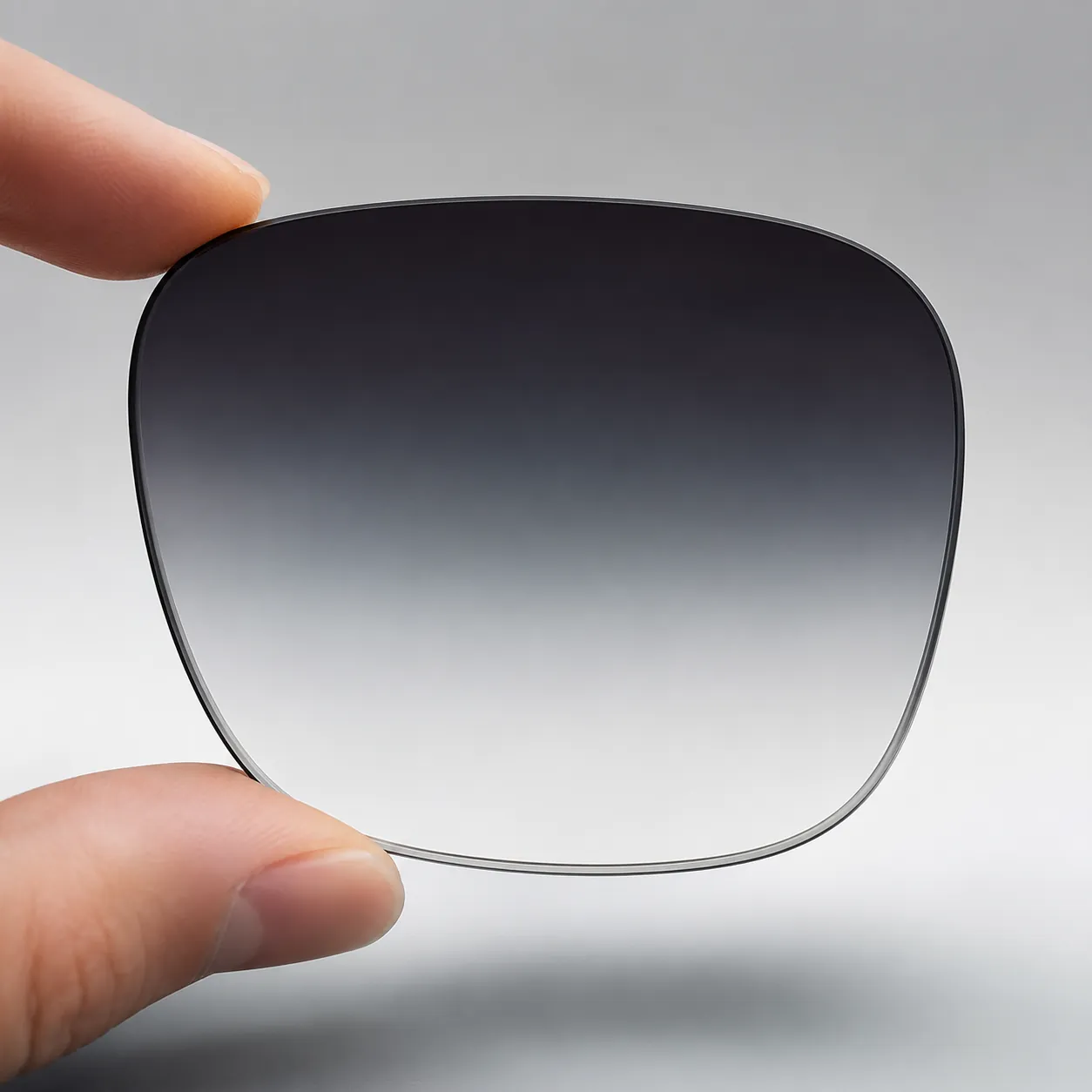
This guide is for brand owners, importers, distributors, and retailers sourcing custom sunglasses at volume. The key choice is simple: use an existing factory frame to move faster and limit development risk, or fund new tooling to create a shape that better supports long-term brand positioning. The right route depends on expected reorder volume, launch timing, target margin, compliance needs, and how much differentiation must come from frame geometry rather than color or branding. Decide this early. It saves time, protects cash, and cuts avoidable sample and pre-production revisions.
Start with the business case, not the sketch
Many buyers start with a rendering or inspiration photo. That is normal. It is also usually the wrong starting point.
Start with the business case. Does this program need speed, lower commitment, and quick market feedback? Or does it need a frame shape that can justify tooling cost, engineering time, and a longer development cycle?
Stock frames are existing factory models. The mold, machining program, or production method already exists. Dimensions are already set. Hinge seats and lens grooves have already been used in production. In most cases, the supplier mainly changes color, lenses, logos, and packaging.
New molds are different. The frame front, temples, or both are developed for your design. That gives you more freedom, but it also adds more engineering variables: wall thickness, draft angle on injection parts, shrinkage allowance, temple closing angle, polishing allowance, and left-right fit tolerance.
In sourcing terms, stock frames usually make sense when MOQ flexibility and speed matter most. Many factories are more open to smaller trial quantities on existing styles than on new tooling projects, though the exact MOQ still depends on material, decoration, packaging, and factory policy. New molds make more sense when you expect repeat orders over several purchase cycles. If the shape is likely to stay in line beyond one season, tooling can be spread across enough volume to make the extra cost reasonable.
If reorder probability is still unclear, tooling is often a design-led decision, not a demand-led one. That is risky.
A practical rule: if you are not yet confident the frame will reorder, validate the market first. Pay for uniqueness later.
A comparison buyers can actually use
The table below reflects the tradeoffs buyers face most often. Exact numbers vary by material, complexity, and supplier. The decision logic does not.
| Decision factor | Stock frame | New mold |
|---|---|---|
| Best fit | Market test, retailer program, fast private label launch | Signature brand shape, repeat core line, harder-to-copy design |
| MOQ logic | Often lower than custom tooling because the base style already exists | Usually higher because tooling and development cost must be absorbed sensibly |
| Sample timeline | Usually shorter because the base frame is already in production | Usually longer because drawings, tooling, trials, and corrections are required |
| Bulk lead time | Usually shorter after sample approval | Usually longer because bulk production follows tooling approval and pre-production confirmation |
| Upfront cost | Low; mainly sample fee, logo setup, and packaging cost | Higher; tooling cost, development review, and more sample rounds |
| Design freedom | Moderate; color and trim are flexible but geometry is mostly fixed | High; front curve, temple section, bevel, logo placement, and fit can be engineered |
| Technical risk | Lower; frame geometry is already proven in production | Higher; shrinkage, warpage, hinge alignment, and lens fit may need revision |
| Typical tolerance risk | Lower variation because the process is established | Higher at first run until the mold and assembly process are tuned |
Price-sensitive distributor programs often benefit from stock because cash stays focused on inventory and sell-through, not tooling. Brands that rely on a recognizable silhouette, stronger copy resistance, or premium positioning usually reach the custom-mold threshold sooner.
When stock frames are the better buy
Stock does not automatically mean generic. A capable supplier can customize an existing style through lens tinting, mirror coating, surface finish, logo application, and packaging while keeping a production-proven frame geometry. For many importers, distributors, and retailers, that is the smarter route.
- Use stock when timing is tight. Missing a selling season can cost more than the design value gained from custom tooling.
- Use stock for demand testing. Existing styles let buyers test whether a shape, fit, or colorway actually sells before committing more capital.
- Use stock when compliance timing matters. Existing constructions are usually easier to align with a testing plan because the lens groove, frame curvature, and assembly method are already known.
- Use stock when differentiation is mostly cosmetic. Custom tints, mirrored lenses, laser engraving, pad printing, metal logo plates, and upgraded packaging are often enough for a distinct mid-market retail offer.
The limits are clear too. Bridge shape, wrap, temple thickness, hinge position, and overall front proportion are mostly fixed. You can often change the finish, logo treatment, or lens category. You cannot easily turn one frame architecture into a very different fit or use case without changing the base construction.
Also, do not assume similar-looking stock styles are interchangeable. A frame may be offered in PC, TR90, or acetate-based construction, and those materials do not behave the same in production or in use. Material choice affects flexibility, weight, finish, durability, and process control. Confirm it in writing.
When a new mold earns the cost
New molds make sense when the frame itself carries product value, not just the logo. In eyewear, small geometry changes are easy to see because the product sits on the face and left-right balance is obvious. That makes custom tooling powerful. It also makes mistakes obvious.
- You need a shape competitors cannot copy easily. A custom bevel line, temple section, oversized front proportion, or sculpted end piece is harder to match when it does not start from a common stock chassis.
- You expect repeat volume. If a frame is likely to reorder across multiple purchase cycles, tooling cost per unit becomes easier to justify.
- You need technical changes stock cannot deliver. Examples include a different bridge fit, a custom base-curve relationship, a modified lens retention structure, or dimensional changes for a target fit.
- You are building a higher-margin brand. If wholesale and retail pricing can absorb development cost, the upfront spend can protect margin over time through stronger differentiation.
But custom molds only work if engineering is taken seriously. A rendering is not a production file. Injection frames require review of part geometry, wall thickness, shrinkage behavior, ejection points, and sink-mark risk. Acetate development requires CNC path accuracy, cutting allowance, polishing loss, hinge insertion depth, and hand-finishing consistency.
Tolerances also need to be defined before approval. If a temple angle is slightly off or a lens groove is too shallow, a sample may look fine on the table and still create low yield or inconsistent assembly in bulk.
Factories also need to control fit details such as temple opening resistance, lens seating pressure, pantoscopic balance, and left-right symmetry. Ignore those early and the problems show up later.
The cost drivers quotes often hide
Many buyers compare only unit price. That is where weak decisions start.
On stock frames, the main cost variables are frame material, lens specification, decoration method, and packaging. Standard non-polarized UV400 lenses are often the baseline. Polarized lenses usually cost more because of material and lamination structure. Gradient tint, mirror coating, and other specialty finishes can add process steps and increase rejection risk if color consistency requirements are tight.
Decoration changes the economics too. A one-color pad print is usually simple. Laser engraving is more durable but process-dependent. A metal logo plate adds hardware, placement labor, and more cosmetic rejection exposure.
On custom molds, tooling is only the visible cost. Additional sample rounds, engineering review, trial correction, and first-run yield loss can matter just as much. A temple that looks sharp in CAD may prove too thin near the hinge. A deep bevel may polish inconsistently. A lens groove that is slightly off spec can reduce assembly yield. These are not edge cases. They affect labor time, scrap rate, and delivery reliability.
| Cost driver | Lower-cost route | Higher-cost route |
|---|---|---|
| Frame material | PC or basic injection material | TR90, premium acetate, or mixed-material construction |
| Lens program | Standard UV400 solid tint | Polarized, mirrored, gradient, or specialty coatings |
| Branding method | Pad print or simple laser mark | Metal logo plate, insert trim, multilayer decoration |
| Packaging | PE bag, pouch, standard carton | Rigid box, custom case, printed accessories set |
Ask suppliers to break quotes out clearly: frame cost, lens cost, decoration cost, packaging cost, sample cost, and tooling or setup charges. Then compare landed cost at several realistic volume levels. A design that looks expensive at low volume can look much better after repeat orders spread setup cost and process stability improves.
Lead time is a process, not a promise
Lead-time problems usually come from approvals and corrections, not machine hours alone.
For stock frames, the path is fairly direct: choose the base model, confirm dimensions and material, approve the logo method, approve lens color and category, review packaging artwork, approve the sample, then move to bulk production. If the program includes custom retail packaging, barcode labels, or multilingual warnings, add time for artwork confirmation and print proofing.
New molds need a stricter sequence.
- Design review: the buyer provides a sketch, reference sample, or technical drawing with target dimensions.
- Engineering check: the factory reviews wall thickness, bridge geometry, hinge area, lens retention, draft, and feasibility.
- Tooling build: the mold is cut, or acetate machining programs and fixtures are created.
- Trial sample: first shots or first machined pieces reveal shrinkage, surface marks, fit imbalance, or assembly issues.
- Correction round: temple closing angle, hinge alignment, lens seating, polishing, and cosmetic details are adjusted.
- Pre-production approval: the final build is signed off before mass production starts.
The exact timetable depends on material, design complexity, sampling efficiency, and whether corrections are needed. What matters is the order. Build the process correctly and leave time for approvals, testing, and corrective action.
Complex acetate styles, mixed materials, or multi-part branding details usually take longer than straightforward stock customizations. In-house capability can help because communication loops are shorter and corrective action is easier to manage. That does not remove risk. It just reduces delays caused by handoffs between subcontractors. Buyers should also put compliance testing on the calendar if the final production specification needs third-party verification before shipment.
Compliance and quality change when you customize
Customization affects compliance more than many buyers expect. Sunglasses are not just fashion accessories. If you change lens tint, material, thickness, polarization, or coating, you may change the test result.
Depending on the destination market, relevant standards can include CE EN ISO 12312-1, ANSI Z80.3, and AS/NZS 1067. Chemical compliance such as REACH may also matter for frame materials, coatings, paints, nose pads, and metal trims. FDA registration may matter for supplier documentation in some cases, but it does not replace testing against the final build. ISO 9001 and BSCI can support confidence in process controls and social compliance systems, but they do not prove that a finished sunglass model meets product-performance requirements.
The practical rule is simple: do not assume a previously compliant stock frame stays compliant after every custom change. A darker tint may shift lens category. A mirror coating may alter transmittance. A different lens thickness or curvature may change assembly stress. Added trims or paints can create new REACH questions.
- Ask for the exact material stack. Confirm frame resin or acetate type, lens material, coating structure, hinge material, and decoration inputs.
- Match test samples to production samples. The tested build should reflect the real lens color, thickness, base curve, and assembly method.
- Check assembly controls. Lens fitting stress, hinge alignment, opening balance, and cosmetic inspection should be built into QC checkpoints.
- Separate system certification from product compliance. ISO 9001 or BSCI can indicate process discipline, but they do not prove optical performance under CE EN ISO 12312-1, ANSI Z80.3, or AS/NZS 1067.
Quality control should be specific too. Good factories inspect lens scratches, logo position, opening and closing feel, left-right temple balance, and visible frame warpage before packing. On higher-volume orders, ask about in-line QC, final AQL practice, and whether pre-shipment inspection checks packed goods against the approved golden sample.
A practical decision framework by buyer stage
If you need a short rule, use business stage and expected reorder volume, not design enthusiasm.
| Buyer stage | Recommended route | Why |
|---|---|---|
| New brand testing first styles | Stock frame | Lower commitment, faster sample cycle, easier learning before scaling |
| Retailer seasonal capsule | Stock frame with custom colors and branding | Launch speed and calendar reliability matter more than custom tooling |
| Importer building repeat core line | Start with stock, move winners to custom tooling | Sell-through and reorder data reduce mold risk |
| Established brand with signature shape | New mold | Differentiation and repeat volume justify the extra development spend |
For many buyers, the best path is staged. Launch with stock frames, track sell-through, margin, claims rate, and reorder speed, then move proven winners into custom molds once demand is clear. That keeps cash available early and directs tooling spend toward products with real traction.
If annual volume per shape is still uncertain, keep more capital in inventory, sales support, and replenishment. If the shape is validated and brand identity depends on it, invest in tooling. That is usually the line between disciplined product development and expensive experimentation.
Have a custom sunglasses project in mind?
Send us your styles, target market and quantities and we will return a detailed quote with MOQ, lead time and a sample plan.
Get a QuoteWhy source this from Wenzhou with LumiShades
Wenzhou in Zhejiang Province is widely regarded as China’s eyewear manufacturing capital, producing a large share of the world’s sunglasses. That concentration matters to buyers: a deep local supply chain for acetate sheet, hinges, lens blanks, plating and packaging means shorter component lead times, easier color and material matching, and a workforce with decades of eyewear-specific skill. LumiShades has manufactured in this ecosystem since 2009, and our vertical integration — in-house injection molding, acetate cutting, CNC milling, lens tinting, decoration and quality control — means no part of your order is quietly subcontracted to a workshop you cannot audit.
For international buyers, that vertical control translates into accountability. When a single factory owns every step, defects are traced and fixed at source rather than bounced between vendors, and your specifications survive intact from first sample to bulk. We back this with 15+ years of experience, shipments to 60+ countries, more than 5 million pairs produced per year and a 98.5% on-time delivery rate. Our certifications — CE EN ISO 12312-1, FDA registration, ANSI Z80.3, AS/NZS 1067, REACH, ISO 9001 and BSCI audit — mean the compliance documentation your market requires already exists. Explore our manufacturing capabilities and quality control process to see how this works in practice.
Frequently asked questions
At what volume does a new mold usually make sense? There is no single threshold because tooling cost, frame material, complexity, and target margin vary by project. In practice, a new mold makes more sense when three things are true at the same time: you expect repeat orders for the same shape, the frame geometry itself creates brand value, and your margin can absorb development cost. Ask the supplier for a clear tooling quote, then compare projected landed cost across at least two scenarios: the initial run and one or more repeat runs. If the design only works on a one-time order, stock is usually the safer choice.
Can I still make a stock frame look branded enough for retail? Yes, often you can. Ask the factory which elements can be changed without altering the base construction: frame color, finish, lens tint, mirror effect, logo application, temple decoration, pouch, carton, and retail box. Then request a physical sample that combines the exact branding method and packaging you plan to sell. That gives you a real retail read before you spend on custom tooling.
Does changing lens color affect compliance? It can. Lens compliance depends on the final specification, not just the frame. A change in tint, transmittance category, material, thickness, polarization, or coating can affect whether the product still aligns with CE EN ISO 12312-1, ANSI Z80.3, or AS/NZS 1067 for the destination market. The practical step is to confirm the exact final lens build in writing and test a production-representative sample rather than relying on an old report for a different lens.
How fast can a stock-frame project move compared with a new mold? A stock-frame project is usually faster because the base style already exists and the sampling work is limited to customization and approval. A new-mold project takes longer because design review, engineering checks, tooling, trial samples, corrections, and pre-production approval all happen before bulk production starts. Do not rely on generic lead-time claims. Ask the supplier for a process map with milestones for sample completion, artwork approval, tooling, corrections, testing, and shipment so you can see where delays are most likely.
What should I ask for before approving a custom mold? Ask for a pre-production package, not just a photo sample. At minimum, confirm final dimensions, material specification, lens material, base curve, hinge construction, logo method, color references, tolerance expectations, and packaging details in writing. Also ask how the factory checked lens fit, left-right symmetry, temple opening balance, and any corrections made after the trial sample. If compliance applies, make sure the test sample matches the final production build before you release bulk production.
Ready to start?
Explore our shield & oversized sunglasses or request a quote — our sales team replies within 12 hours.
Request a Quote