
OEM vs ODM Sunglasses: Cost, Speed, Control
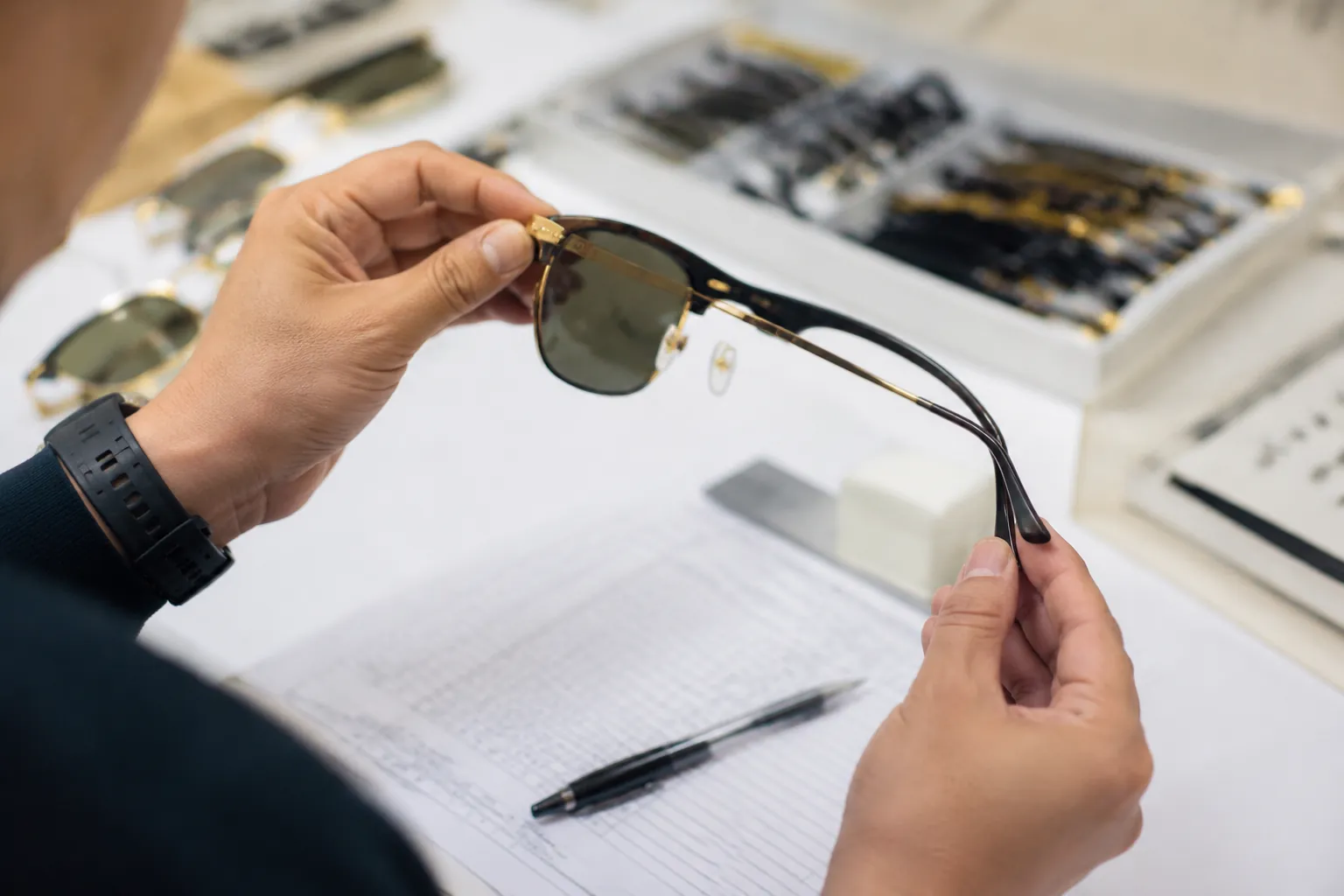
This guide is for brands, importers, distributors, and retailers sourcing sunglasses at volume and deciding between OEM and ODM. The choice is not just about styling. It affects upfront cash, sample rounds, compliance work, and how cleanly you can reorder later. If you need to balance margin, speed, and control with fewer surprises, start here.
Start with the business model, not the sketch
Buyers often frame OEM versus ODM as a design decision. It is not. It is a commercial model decision first.
ODM means you start with a frame platform the factory already produces or has already developed, then modify it within an existing process. Common changes include lens color, frame color, logo printing, laser marking, packaging, and sometimes temple shape or hardware finish. OEM means the product is built to your specification, usually from a tech pack, reference sample, or CAD file, with new dimensions, new component choices, and sometimes new tooling.
For sunglasses, the choice usually turns on four variables:
- Margin target: Can your retail price absorb development cost, sample iterations, and tooling if needed?
- Launch speed: Do you need approval samples fast, or can you allow more time for engineering and corrections?
- Exclusivity: Is the frame silhouette part of your brand value, or is the value mainly in merchandising, packaging, and channel control?
- Reorder stability: Do you need a style you can buy again with low documentation risk, or can you manage custom parts, revision control, and tighter QC files?
In simple terms, ODM is strongest when you need speed, lower opening spend, and easier repeat orders. OEM is stronger when shape, fit, hardware, or brand-specific details matter enough to justify extra development work.
This matters more in sunglasses than in simpler accessories. Lens fit, tint, curvature, coverage, and compliance all interact. A frame that looks only slightly different on paper can create production risk in the groove, hinge, or optical performance of the finished SKU.
Head-to-head: how OEM and ODM differ in practice
The gap becomes obvious after the PO is placed. That is when timing, engineering effort, and reorder discipline start to matter.
| Factor | ODM sunglasses | OEM sunglasses |
|---|---|---|
| Starting point | Existing frame architecture with limited modifications | New design from sample, drawing, or CAD |
| Typical MOQ | Often lower than custom programs; exact MOQ depends on factory, material, and decoration | Usually higher than ODM, especially if new tooling or custom parts are required |
| Sample timing | Often faster for standard logo, color, and lens changes | Usually longer if CAD approval, tooling, or fit correction is involved |
| Bulk lead time | Typically shorter once materials are confirmed | Usually longer for first runs because setup, pilot checks, and corrections take more time |
| Development cost | Lower; mostly sample charge, decoration setup, and packaging changes | Higher; can include CAD work, molds, fixtures, multiple samples, and test repeats |
| Exclusivity | Limited unless shape or hardware changes are substantial | Higher, especially with proprietary geometry or custom trim parts |
| Compliance friction | Lower if based on an already-tested construction | Higher because tint, coverage, lens retention, and mounting changes may require fresh review |
| Reorder risk | Usually lower because parts and process are standardized | Depends heavily on revision control, color masters, approved samples, and BOM accuracy |
Short version: ODM buys speed and lowers execution risk. OEM buys control. You pay for that control in time, cash, and attention.
Cost logic: unit price is only one line on the sheet
Many buyers compare quotes line by line and miss the real cost structure behind them.
On straightforward private-label programs, pricing often improves at visible breaks such as 300, 1,000, and 5,000+ pairs. If a program can scale, ex-factory pricing usually improves because setup time, material purchasing, and QC overhead are spread across more units. That logic generally favors ODM at the start.
OEM adds cost in layers:
- Engineering: CAD refinement, lens-seat checks, hinge positioning, wrap angle review, and assembly feasibility.
- Tooling or fixtures: New injection molds, polishing jigs, drilling guides, logo insert fixtures, or bending aids for metal parts.
- Sampling rounds: Prototype sample, corrected fit sample, color standard sample, and pre-production sample.
- Compliance review: New tints, coatings, lens categories, or frame coverage may require fresh validation.
- Lower first-run efficiency: New products can mean more setup loss, slower line speed, and more QC interventions.
The second-order cost is where projects go off track. If a custom frame comes back with a lens groove that is too tight, a hinge angle that opens unevenly, or logo plates that sit proud of the surface, the damage is not just another sample fee. It can delay shipment, push delivery into the wrong season, and force expensive freight changes.
Separate visible cost from failure cost. Visible cost is sample fees, tooling, and unit price. Failure cost is missed launch timing, unusable packaging, retesting, and excess stock caused by delayed approval. In seasonal sunglasses, failure cost often hurts margin more than a slightly higher ex-factory price.
Lead time: break it into stages or expect surprises
A single lead-time number tells you very little. Break the schedule into stages and ask what can slip at each one.
- Design confirmation: For ODM, this usually means choosing an existing style and locking color, lens, logo, and packaging. For OEM, it includes tech pack review, CAD confirmation, and feasibility checks on structure and materials.
- Sampling: A short sample window is possible for many ODM programs and simple adaptations. OEM usually takes longer, especially if a new mold, new temple core, custom metal badge, or unusual finish is involved.
- Material preparation: Resin, acetate sheet, lenses, hinges, screws, nose pad parts, and cartons all have different readiness clocks. A stock black injection frame may move quickly. Custom laminated acetate or branded hard cases may not.
- Production: Standard bulk timing is usually shorter for ODM than for first-run OEM. New products need more verification of fit, assembly sequence, and finish quality.
- QC and packing: This is where rushed orders fail. Lens tint consistency, logo position, hinge torque, carton assortment, barcode accuracy, and packing checks all need final confirmation before shipment booking.
Material choice changes the calendar. Injection is typically faster and more repeatable at volume. It suits lower cost, shorter cycle time, and consistent dimensions if the mold is stable. Acetate often gives a more premium feel and richer color effects, but the process is slower: sheet cutting, CNC shaping, tumbling, manual polishing, core insertion, heating, and final hand finishing all add labor and variation.
One blunt rule helps: if your sales window is fixed, do not choose a complex acetate OEM program with custom hardware unless the margin clearly justifies the longer, less forgiving path.
Control points that decide whether OEM pays off
OEM only pays back if the buyer controls the right specifications. Many projects customize the visible details and leave the critical dimensions vague. That is a mistake.
For sunglasses, these specs usually matter most:
- Lens base curve and fit: The groove must hold the lens without stress whitening, gaps, or distortion. Small errors in lens outline or front curvature can create cracking risk during assembly.
- Bridge geometry: A small change in bridge shape can affect comfort, slippage, and return rate across face shapes.
- Temple angle and opening force: If one side opens looser than the other or inward pressure is inconsistent, the product feels cheap immediately.
- Hinge construction: Standard hinges are easier to source and replace. Custom hinges or decorative hardware add visual distinctiveness but complicate service and reorder consistency.
- Decoration method: Pad print is economical but can wear faster. Laser marking is crisp and durable on suitable substrates but has color limits. Metal logo plates look premium but add assembly steps and tolerance risk.
- Color approval: Acetate, painted surfaces, and tinted lenses should be approved against physical masters, not only screen images or Pantone references.
Where possible, define measurable tolerances. On mass-market sunglasses, buyers often control key dimensions such as overall width, temple length, bridge opening, and logo position within agreed tolerances. The exact tolerance should be written into the tech pack because it depends on the feature and process.
The best OEM files include a revision-controlled tech pack with:
- Front, temple, and lens dimensions
- Material callouts for frame, lens, hardware, and coating
- Approved color master or physical swatch reference
- Logo artwork, size, and placement dimension
- Packaging BOM and carton assortment plan
- Critical-to-quality points and reject criteria
Without that level of control, OEM often creates more variation than value.
Compliance can change the sourcing model
Sunglasses are not just fashion goods. They are regulated consumer products. That changes the OEM-ODM decision more than many buyers expect.
Factories may list credentials such as CE EN ISO 12312-1, FDA registration, ANSI Z80.3, AS/NZS 1067, REACH, ISO 9001, and BSCI. Useful, yes. Sufficient, no. Those credentials do not replace matching the exact product to the destination market, lens category, and product claim.
ODM often has lower compliance friction because the underlying frame-and-lens construction may already have test history. OEM changes that equation fast. A different lens tint, visible light transmission target, coverage area, lens thickness, or mounting method can trigger fresh review or retesting.
Ask these questions before sample sign-off:
- Which standard applies in the actual destination market?
- What lens category and VLT target does the product need to meet?
- Does the final branded SKU require retesting because structure, tint, or claim changed?
- Are substrate materials, coatings, inks, and metal finishes aligned with REACH or other chemical restrictions?
Also check claim discipline. A fashion sunglass, a driving lens, and a category-specific tint can carry different documentation expectations. If the sales team writes packaging claims before the technical team locks the lens spec, you create avoidable compliance risk late in the process.
The practical lesson is simple: treat compliance as a design input from day one, not as paperwork to chase after production is planned.
Lock material, decoration, and reorder details early
Many sourcing problems show up after the first shipment, not before it. The buyer tries to repeat the order and finds that the product was never documented tightly enough.
Start with material behavior. Injection frames are generally more consistent lot to lot and easier to scale for promotional or chain-retail programs. Acetate frames can deliver better depth, polish, and color character, but sheet variation means two batches may not look identical unless a physical color-control process is enforced.
Decoration should be chosen for both appearance and durability:
| Method | Best use | Strengths | Risk points |
|---|---|---|---|
| Pad printing | Temple logos, inside marks | Low cost, fast setup, good for small runs | Can wear with abrasion; alignment must be controlled |
| Laser engraving | Metal parts, coated temples, subtle branding | Sharp detail, strong permanence | Color contrast depends on substrate and finish |
| Metal logo plate/inlay | Premium branding | High perceived value, strong visual identity | Adds assembly steps, adhesive or seating tolerance risk |
| Hot foil/stamping | Cases, pouches, some temple applications | Premium effect, useful on packaging | Heat and pressure variation can affect consistency |
For reorders, ask the factory what is truly standard and what is custom. Standard hinges, screws, demo packaging, and stock lens colors are easier to repeat. Custom core wire shapes, proprietary badge parts, unusual mirror coatings, and special laminated acetate are not.
A disciplined reorder file should include the approved sample date, BOM version, lens code, color reference, packaging spec, and photos of critical details. If that information is missing, the reorder is not really controlled, even if the first shipment looked good.
Three buyer scenarios and a short checklist before you choose
Scenario 1: Retail chain seasonal program. You need speed, moderate differentiation, and tight landed cost. ODM is usually the right fit. Start from proven frames, use standard hinges and lenses, apply private-label packaging, and place volume where pricing improves at scale.
Scenario 2: Brand building a signature shape. Your silhouette is part of the brand. OEM can make sense, but only with discipline. Freeze the tech pack early, budget for more than one sample round, and avoid loading the first run with too many custom hardware elements.
Scenario 3: Distributor testing a new market. Demand is uncertain and MOQ exposure matters. Start with ODM to test sell-through. If one style proves itself, move the winner into deeper customization later.
Good buyers do not ask which model is better. They ask which risk they can afford: slower development or weaker exclusivity.
Use this checklist before placing a PO:
- Set your target ex-factory price, retail price, and expected reorder volume.
- Decide whether frame-shape exclusivity truly affects sell-through or whether branding and packaging are enough.
- Choose material based on launch calendar and repeatability, not only appearance.
- Confirm whether a quick sample promise is realistic for your exact spec.
- Identify which decorations are cosmetic and which add tooling or assembly risk.
- Map compliance requirements by market before approving lens tint and claims.
- For OEM, lock a revision-controlled tech pack before paying the bulk deposit.
- For ODM, ask which changes trigger a new sample cycle or higher MOQ.
If your priority is speed, lower opening spend, and easier reorders, ODM usually wins. If your priority is product ownership and long-term differentiation, OEM can justify itself, but only when expected volume and process control are strong enough to support it.
Have a custom sunglasses project in mind?
Send us your styles, target market and quantities and we will return a detailed quote with MOQ, lead time and a sample plan.
Get a QuoteWhy source this from Wenzhou with LumiShades
Wenzhou in Zhejiang Province is widely regarded as China’s eyewear manufacturing capital, producing a large share of the world’s sunglasses. That concentration matters to buyers: a deep local supply chain for acetate sheet, hinges, lens blanks, plating and packaging means shorter component lead times, easier color and material matching, and a workforce with decades of eyewear-specific skill. LumiShades has manufactured in this ecosystem since 2009, and our vertical integration — in-house injection molding, acetate cutting, CNC milling, lens tinting, decoration and quality control — means no part of your order is quietly subcontracted to a workshop you cannot audit.
For international buyers, that vertical control translates into accountability. When a single factory owns every step, defects are traced and fixed at source rather than bounced between vendors, and your specifications survive intact from first sample to bulk. We back this with 15+ years of experience, shipments to 60+ countries, more than 5 million pairs produced per year and a 98.5% on-time delivery rate. Our certifications — CE EN ISO 12312-1, FDA registration, ANSI Z80.3, AS/NZS 1067, REACH, ISO 9001 and BSCI audit — mean the compliance documentation your market requires already exists. Explore our manufacturing capabilities and quality control process to see how this works in practice.
Frequently asked questions
Can I start with ODM and later convert a successful style into OEM? Yes. Many buyers test demand with an ODM frame first, then invest in custom geometry, hardware, fit changes, or upgraded materials after sell-through is proven. To make that shift work, keep the approved sample, BOM, lens code, and packaging spec from the first run so the OEM brief is based on real sales data, not memory.
Is 50 pairs enough for a truly custom OEM sunglasses design? Usually not if new tooling, custom metal parts, or unique lens specifications are involved. A 50-pair order is more realistic for ODM or light modifications. For OEM, ask the factory to itemize what is standard, what requires new tooling, and what minimum quantity is needed to cover setup and QC.
Which is easier to reorder: OEM or ODM? ODM is usually easier because components, molds, and processes are already standardized. OEM can be reliable too, but only if drawings, BOMs, color standards, hardware specs, and approved reference samples are tightly controlled. Before reordering, request a revision check so the factory confirms that nothing changed in materials, lens code, or decoration method.
How do I keep an OEM project from drifting on lead time? Freeze the tech pack early, limit custom features on the first run, approve the lens and color standard before paying the bulk deposit, confirm material readiness in writing, and require a pre-production sample before mass production starts. Also agree on who can approve changes. Uncontrolled changes are a common cause of delay.
Do existing certifications mean my exact private-label SKU is automatically covered? No. Existing test history and factory credentials are useful, but the final product still has to match the relevant market standard and the approved specification. If you change lens tint, coverage, structure, coating, or claims, ask whether the SKU needs new review or retesting for the destination market. The safest approach is to match the final sample to the test plan before production.
Ready to start?
Explore our cat-eye sunglasses or request a quote — our sales team replies within 12 hours.
Request a Quote