
Private-Label Sunglasses Fast Using Stock Parts
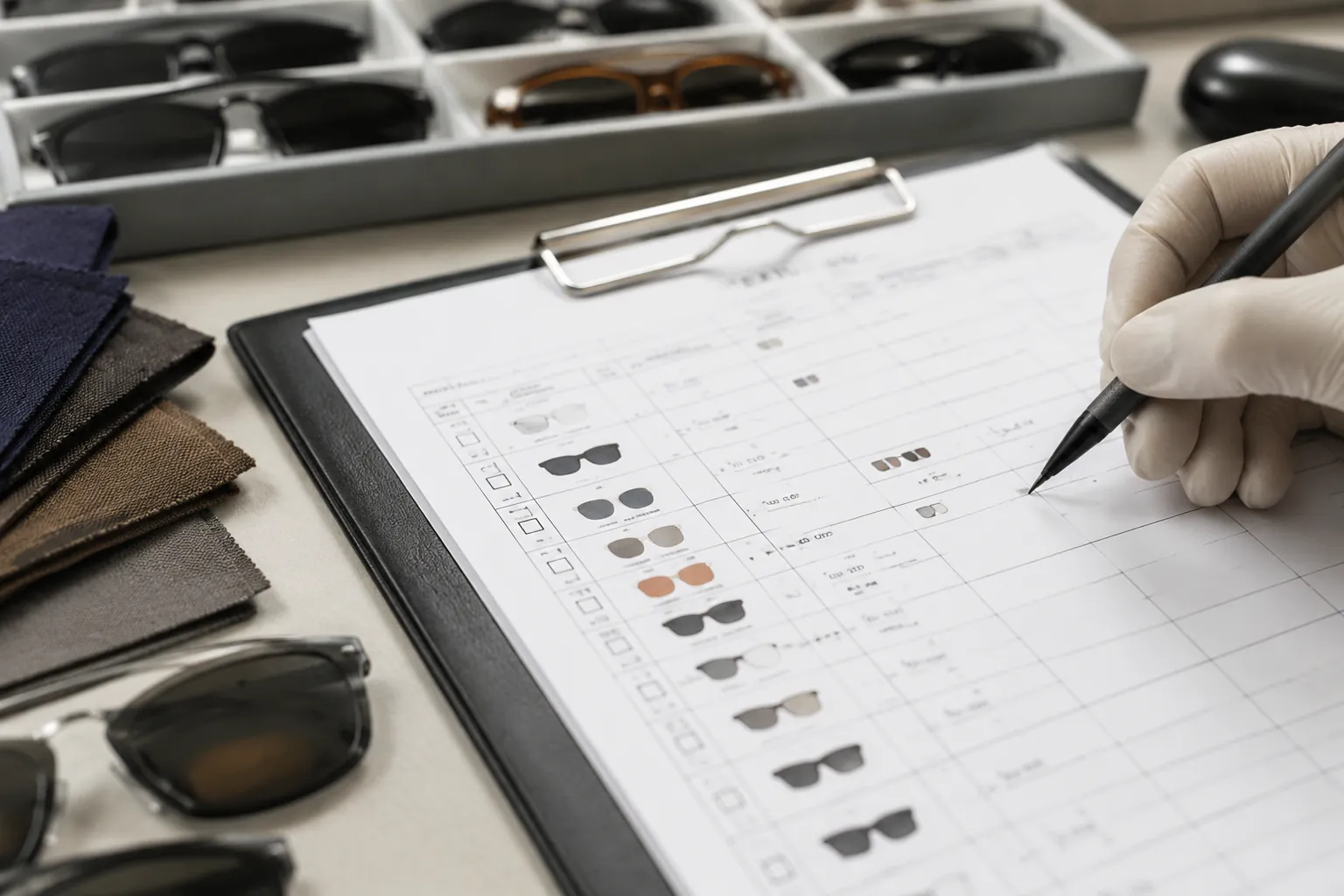
If you need to launch a private-label sunglasses line fast, skip new tooling at the start. The practical route is to use an existing frame platform and lens size, then customize the parts customers actually see: color, logo treatment, lens tint, and packaging. Done well, this cuts development risk, keeps MOQ more manageable, and still gives you a line that looks brand-specific instead of generic. The trade-off is simple. You gain speed and reduce complexity, but you give up some freedom in frame architecture and exclusive shape ownership.
Why stock-plus-branding is usually the fastest route
For a first launch, delays rarely start with the logo file. They start with product development: new molds, fit correction, lens-shape checks, hinge placement review, and repeated sample rounds on a frame that has not been proven in production. A fully custom frame can make sense later. For a first market test, it often adds too many variables.
Using a stock frame platform removes much of that loop. The front shape, temple pattern, lens size, and assembly method already exist. That does not guarantee quality. It does mean the supplier is not solving every engineering issue for the first time.
That matters if you are working toward a seasonal deadline, retailer intake date, campaign launch, or test-order window. Time gets lost in revisions. Proven platforms cut some of that risk.
The private-label effect usually comes from visible details: frame color, lens color, logo application, inside-temple print, pouch, box, barcode label, and finish consistency. Most end buyers will not know whether the mold is stock. They will notice defects, uneven lens color, weak print adhesion, or poor alignment. That is the point. The shortcut should be in development, not in QC.
This model works well for fashion retailers, e-commerce brands, distributors testing a new category, and buyers validating demand before paying for exclusive tooling. It works less well if the brand depends on a proprietary silhouette, performance wrap geometry, or a construction where the frame architecture itself is the main value driver.
What to keep stock and what to customize first
Fast launches follow a simple rule: keep the hidden structure stable and customize the visible brand signals. Put time and budget where it changes shelf appeal. Do not spend it on changes that create extra sample rounds without improving sell-through.
| Component | Best stock option | Custom options | Impact on lead time / MOQ |
|---|---|---|---|
| Frame front and temple shape | Existing mold or established acetate pattern | Minor size adjustment only if truly necessary | Fastest route; avoids new tooling and extra fit sampling |
| Frame color | Existing color chips or standard material options | Custom color match, crystal, tortoise, layered laminate | Standard colors are usually faster; special acetate patterns may require extra sourcing time |
| Lens | Existing cut shape and base curve | Solid tint, gradient, mirror coating, polarized, category selection | Basic tint changes are usually simpler than changing lens construction |
| Logo application | Inside temple print or laser mark | Pad print, laser engraving, metal logo plate | Print and laser are simpler entry points; metal parts add labor and inspection |
| Packaging | Standard pouch and box sizes | Custom print, insert card, barcode label, rigid box, care leaflet | Can move quickly if artwork and dielines are approved early |
In practice, the best stock candidates are styles with stable hinge action, acceptable balance, and lens coverage that fits your target customer. The frame should open and close smoothly, sit evenly, and hold the lenses without visible rim stress. If the base style is sound, branding and packaging can do most of the commercial work.
Use stock for: front mold, lens geometry, hinge platform, and baseline fit.
Customize first: temple branding, frame color, lens effect, packaging set, and required markings.
Save for later: exclusive mold, new hardware, new temple profile, or structural changes that affect fit.
What you can customize without turning it into product development
There is a clear line between decoration and re-engineering. Decoration changes appearance. Re-engineering changes the platform. The first usually fits a standard private-label workflow. The second triggers more sampling, more checks, and more production risk.
Injection styles. For injected frames, the most practical changes are color, logo treatment, and finish selection within the limits of the existing tool and material system. Standard colors are usually easier than highly specific custom shades. If you want matte or gloss, confirm whether the finish comes from the mold surface, the material, or a post-treatment. That affects consistency and wear.
Acetate styles. Acetate gives you more visual variation without changing the frame shape. You can often move from solid black to translucent brown, tortoise, crystal, or layered sheet effects while keeping the same pattern. But only if milling, polishing, and hinge fitting are under control. Acetate exposes sloppy workmanship fast. Rough bevels, poor lens seating, and uneven temples will ruin the effect.
Logo methods. Pad printing is usually the easiest starting point. It works well for inside-temple branding and small external logos, but ask for adhesion and abrasion checks suited to the material and logo position. Laser engraving is often more durable on the right substrate, though its appearance changes by material and color. Metal logo plates look more premium, but they add assembly steps, placement risk, and more inspection points.
Lenses. Many stock sunglass programs can accept different tint options while keeping the same lens shape. Common choices include solid tint, gradient, mirror coating, and polarized construction. Confirm that the lens spec matches your target market requirements, including category, transmittance, and labeling where needed. A lens change is not just cosmetic. It can change what needs to be verified.
As a working rule, the safest changes for a fast launch are easy to see but do not alter fit, optics, or assembly geometry. A stock frame with a new logo and lens tint is still a stock program. A stock frame with a revised bridge, different curvature, or new hardware is moving into development work.
Lead time breakdown: where the schedule really slips
Buyers often hear one headline lead time and assume the factory is manufacturing the whole time. Usually it is not. A large part of the schedule goes to approvals, material confirmation, decoration setup, and packaging decisions. Speed depends on buyer discipline as much as factory capacity.
- Style selection and quote: confirm the stock frame, lens option, decoration method, packaging scope, and shipping target.
- Artwork review: check logo file format, print size, print position, packaging text, care information, and barcode data.
- Sample build: timing depends on stock availability, decoration method, and whether packaging samples are included.
- Sample check and approval: review fit, hinge feel, logo placement, lens appearance, packaging accuracy, and required markings.
- Material allocation: reserve frame materials, lenses, packaging, labels, and any accessories.
- Bulk production: timing depends on order size, SKU complexity, material readiness, and factory schedule.
- Final QC and packing: complete lot inspection, packaging verification, carton count, and export documentation.
Schedules usually slip in three places: late artwork, repeated color revisions, and packaging changes after sample approval. Keep it simple. Lock the logo position early, simplify packaging, and avoid unnecessary color variation in the first order.
A standard frame with a simple logo treatment and standard pouch will usually move faster than a multi-color acetate program with specialized lenses and custom rigid packaging. No surprise there.
One useful way to keep the process moving is to approve in layers. First approve the base frame and lens construction. Then approve branding. Then approve packaging. That makes delays easier to trace and harder to argue about.
MOQ and price: what actually drives the numbers
MOQ is not random. It reflects setup economics. Each production changeover can require material loading, color confirmation, logo setup, packaging setup, and reference checks. The fewer pairs in the run, the more those fixed costs get loaded into each unit.
So do not compare MOQs or prices without context. A low-MOQ test order can still make sense, but the unit price will usually be higher than on a larger repeat order. The same design may price very differently depending on lens specification, packaging complexity, number of colorways, and whether branding uses print, laser, or applied hardware.
The cleanest way to compare offers is to ask for a breakdown by cost driver: frame, lens, logo method, packaging, and any testing or setup charge. Without that detail, you cannot tell whether one quote is better or simply missing items another supplier included.
Useful buying rule: if you are testing demand, spend on presentation, consistency, and market-ready compliance support before spending on new tooling. If one or two styles show real demand, put volume there first. Exclusive development usually makes more sense after the market has validated the design.
Assortment complexity matters too. Five colors at a small quantity each create more planning, more packing risk, and more room for shade variation than one or two colors at the same total volume. More SKUs usually mean more handling and a higher effective cost per pair.
Compliance and QC: do not cut these corners
Fast launch does not mean loose documentation. Sunglasses sold into regulated markets still need to meet the applicable requirements for that market and product type. The paperwork depends on destination, lens construction, and how the product is sold.
Examples commonly requested in the eyewear trade include CE EN ISO 12312-1, ANSI Z80.3, AS/NZS 1067, REACH, FDA registration, ISO 9001, and BSCI. Ask for what is relevant to the destination market and order specification. Do not ask for every document by default. Not every file applies the same way to every product or territory.
At sample stage, confirm the lens category, intended transmittance range, and any marking or labeling requirements tied to the chosen lens. A stock frame platform may work across several lens options, but a change in tint, mirror treatment, or polarization can still change what needs to be verified.
QC for stock-plus-branding should focus on repeatability and assembly discipline:
- Logo position consistency left to right and pair to pair.
- Print adhesion or engraving clarity after normal handling.
- Lens color matching within the same production lot.
- Hinge opening and closing feel, including left-right resistance consistency.
- Temple alignment, front symmetry, and proper lens seating.
- Surface finish, polish quality, and edge cleanliness.
- Packing accuracy by SKU, barcode, carton, and accessory set.
Many private-label claims come from routine errors, not dramatic defects: wrong barcode labels, mixed packaging components, visible shade drift between lots, or weak logo application. Small mistakes cause expensive problems. Check them hard.
A practical first-order plan and the mistakes that slow it down
If you want a first order to move with minimal friction, keep the spec narrow. The most common mistake is trying to make a low-volume stock program behave like a fully custom collection. That adds delay fast.
| Launch stage | Recommended choice | Why it works |
|---|---|---|
| Pilot order | 1-2 stock shapes, 2-3 colors each, printed or laser logo, standard pouch | Keeps approvals manageable and limits operational complexity |
| Second order | Add polarized option or upgraded packaging | Improves perceived value without changing the frame platform |
| Scale-up | Concentrate volume on best sellers and reduce weak SKUs | Improves buying efficiency and supports better consistency |
| Mature line | Develop exclusive mold only after repeat demand is proven | Reduces the risk of paying for uniqueness before demand is established |
A workable starter brief could be: one injected style and one acetate style, each in black plus one translucent or tortoise option, solid smoke or brown lenses, inside-temple branding, one small external logo treatment, a microfiber pouch, a folding box, and a barcode label. That is enough variation to test customer response without creating avoidable planning risk.
For a cleaner process, send complete artwork at the start, choose one packaging route, and limit the first launch to SKUs you can realistically forecast. Too many colorways, logo executions, or packaging variants do not buy speed. They add decision points and inspection points.
Common mistakes are predictable:
- Changing frame geometry mid-sample: adjusting bridge shape, temple dimensions, or lens size can push the project toward custom development.
- Approving color from screen images alone: physical chips or real samples are safer, especially for tortoise, translucent, crystal, or layered effects.
- Adding premium details to a very small run: metal logo plates, rigid boxes, and many colorways can erase the cost advantage quickly.
- Ignoring market requirements until late: confirm which compliance documents and markings are needed before bulk approval.
- Delaying packaging artwork: the product may be ready while boxes, inserts, or barcode labels still hold the shipment.
The buyers who move fastest are usually the most disciplined. They choose a proven frame, make visible branding changes, approve quickly, and save full customization for styles that already show demand. Not glamorous. Effective.
Have a custom sunglasses project in mind?
Send us your styles, target market and quantities and we will return a detailed quote with MOQ, lead time and a sample plan.
Get a QuoteWhy source this from Wenzhou with LumiShades
Wenzhou in Zhejiang Province is widely regarded as China’s eyewear manufacturing capital, producing a large share of the world’s sunglasses. That concentration matters to buyers: a deep local supply chain for acetate sheet, hinges, lens blanks, plating and packaging means shorter component lead times, easier color and material matching, and a workforce with decades of eyewear-specific skill. LumiShades has manufactured in this ecosystem since 2009, and our vertical integration — in-house injection molding, acetate cutting, CNC milling, lens tinting, decoration and quality control — means no part of your order is quietly subcontracted to a workshop you cannot audit.
For international buyers, that vertical control translates into accountability. When a single factory owns every step, defects are traced and fixed at source rather than bounced between vendors, and your specifications survive intact from first sample to bulk. We back this with 15+ years of experience, shipments to 60+ countries, more than 5 million pairs produced per year and a 98.5% on-time delivery rate. Our certifications — CE EN ISO 12312-1, FDA registration, ANSI Z80.3, AS/NZS 1067, REACH, ISO 9001 and BSCI audit — mean the compliance documentation your market requires already exists. Explore our manufacturing capabilities and quality control process to see how this works in practice.
Frequently asked questions
Can I make a stock frame look private label enough for retail shelves? Yes, if you focus on the details customers actually notice. Prioritize frame color, lens tint, logo execution, inside-temple print, pouch, box, and barcode labeling. To avoid a generic result, ask for a full sample set that shows the product, branding, and packaging together. Review logo placement, print quality, and how the packaging fits your target price point before approving bulk.
What is the lowest practical MOQ for a test order? There is no universal minimum because MOQ depends on the supplier, frame type, lens option, branding method, and packaging complexity. For a test order, ask for the minimum by SKU and by total order, then ask what changes if you reduce colors, simplify packaging, or switch from metal logos to print or laser. If budget is tight, it is usually smarter to reduce SKU count and keep quality consistent than to spread a very small order across too many variations.
Which logo method is best for a first launch? For most first orders, pad printing or laser engraving is the most practical choice. Pad printing is flexible and usually cost-effective, especially for inside-temple logos and small external marks, but you should ask how adhesion will be checked on the chosen material. Laser engraving is often more durable when the material and finish are suitable, though its appearance can vary on lighter or more reflective surfaces. If you want a premium look, request side-by-side samples before choosing metal logo plates, because they add labor, alignment risk, and cost.
How fast can I go from style selection to bulk shipment? It depends on how many variables you change and how quickly you approve them. A stock style with standard lenses, simple branding, and standard packaging will usually move much faster than a program with special colors, polarized or mirrored lenses, and custom boxes. For a realistic schedule, ask the supplier to break timing into stages: sample preparation, sample approval, material allocation, bulk production, and final packing. Then confirm which dates become fixed only after artwork and packaging are approved.
Do I need every certification for every order? No. Ask for the documents that matter for the destination market and the actual product specification. Depending on the market and order type, buyers commonly ask about CE EN ISO 12312-1, ANSI Z80.3, AS/NZS 1067, REACH, FDA registration, ISO 9001, and BSCI. The practical approach is to tell the supplier where the goods will be sold, what lens type you are using, and whether you need product-level test support, factory-system documents, or social-compliance documentation. That helps you avoid both missing paperwork and unnecessary requests.
Ready to start?
Explore our aviator sunglasses or request a quote — our sales team replies within 12 hours.
Request a Quote