
OEM vs ODM Sunglasses: Which Gets to Market Faster?
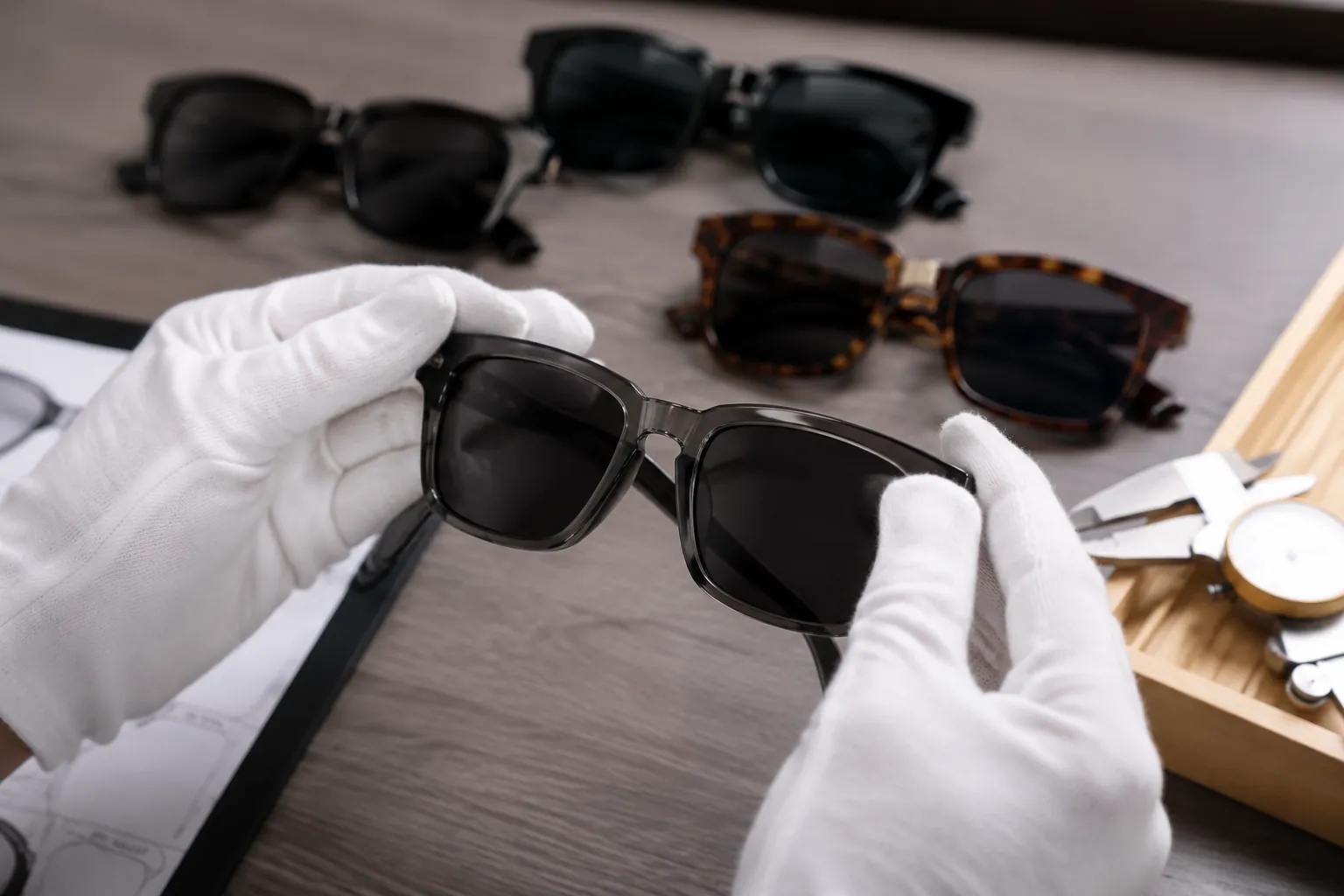
Brand owners, importers, distributors, and retailers ask the same question: should you private-label an existing sunglasses style or build your own? The better question is simpler. How much speed, design control, and product differentiation do you need for this order? An existing frame platform usually moves faster because the structure, fit, and assembly method already exist. A fully custom frame gives you more control, but it usually needs more engineering review, more sample rounds, and more compliance checks. This guide shows where OEM and ODM timelines diverge, what actually causes delays, and how to choose the route that fits your launch window and risk level.
Start with the real choice: stock ODM, modified ODM, or full OEM
Buyers often frame this too loosely: ODM is an existing style, OEM is a new style. In practice, there are three workable paths, and each has a different timeline, cost profile, and risk level.
- ODM private label: use an existing factory frame and lens configuration, then add your logo, packaging, and any standard options the factory already offers.
- Modified ODM: start from an existing style but request controlled changes such as color, lens tint, logo plate, temple detailing, or minor fit-related adjustments that the factory confirms it can execute.
- OEM development: create a new product from a sketch, sample, CAD file, or tech pack, which may require new tooling, new machining paths, or new part development.
If speed matters most, ODM is usually the shortest route. The frame geometry, hinge placement, lens fit, and assembly steps have already been tested in production. Modified ODM can still move quickly, but only if the requested changes stay within the factory's proven process limits.
This is where schedules slip. Fast. A change that looks minor to a buyer can affect construction. A temple-thickness change can alter hinge fit or closing angle. A lens-size or base-curve change can affect lens retention. A bridge adjustment can change fit and force the supplier to recheck front geometry.
OEM makes sense when the frame itself is the brand asset. If you need a proprietary silhouette, custom hardware layout, or a distinct acetate build, OEM may be the right route. But treat it like a development program, not a quick catalog order.
Head-to-head comparison: where ODM and OEM differ
| Factor | ODM private label | Modified ODM | OEM new design |
|---|---|---|---|
| Starting point | Existing frame, existing lens shape, established assembly route | Existing base style with approved edits | New drawing, CAD, or physical reference sample |
| Development complexity | Lowest | Moderate | Highest |
| Sample timeline | Usually shortest if using standard materials and decoration | Depends on whether changes stay within existing tooling and process limits | Usually longest because parts, fit, and appearance may need several review rounds |
| Bulk lead time after approval | Usually shortest on proven programs | Can be close to ODM or can extend if custom parts are added | Often longer because production stability must be confirmed |
| MOQ logic | Often lowest because the supplier is using existing components and processes | May increase if changes require custom parts, colors, or outsourced processes | Usually higher in practical terms because development cost needs volume to make sense |
| Upfront cost | Lowest | Mid-range | Highest |
| Design ownership | Low | Medium | High |
| Delay risk | Lowest if specification stays standard | Moderate | Highest |
On paper, ODM is usually fastest. In practice, only if the final specification stays close to what the factory already runs well. Add custom hardware, unusual lens effects, or structural changes, and the project can start behaving more like OEM.
That is why capable suppliers ask technical questions early. Does the existing lens shape still work? Does the change affect tooling? Does the material need to be re-sourced? Do the final product and packaging still match current compliance documents? These are not admin details. They set the real schedule.
Where the time really goes: development, approvals, and production gates
Lead time is not one number. It is a chain of approvals. If one stage is loose, the next stage slows down.
- Specification lock: confirm frame material, dimensions, hinge type, lens material, lens category, color, logo method, packaging, and destination market.
- Artwork approval: finalize logo files, placement, print size, finish, and any Pantone or physical color references.
- Sample build: existing-style samples are usually faster because the supplier is not developing the structure from zero. New designs need more review because fit, symmetry, assembly, and finish may all need adjustment.
- Sample review: inspect fit, alignment, lens appearance, surface quality, logo execution, and packaging details. If you revise a core product detail here, the sample cycle usually restarts.
- Compliance confirmation: make sure the sample configuration, labeling, and packaging match the target market requirements.
- Bulk production: once the specification is frozen and approved, manufacturing becomes more predictable. Custom parts, outsourced packaging, or special lens treatments can still add time.
- Final QC and shipment preparation: confirm assortment packing, carton marks, labels, and booking deadlines before the goods are released.
Most delays come from cumulative revisions. A logo move, a lens-color change, and a packaging update may each seem small, but together they touch different process checkpoints. Factories move faster when the specification is complete and stable.
Simple rule: if the deadline is tight, start from a proven frame platform and limit changes to branding, packaging, and standard options the supplier already controls.
Cost logic: compare total launch cost, not only ex-factory price
Unit price matters. It is not enough. To compare OEM and ODM properly, look at total launch cost: development charges, sample cost, packaging cost, testing cost, internal approval time, and the risk of rework.
ODM private label usually has the lowest entry cost because the supplier uses existing molds, existing processes, and known assembly methods. Modified ODM adds cost when the project introduces extra labor, custom parts, or separate procurement steps.
Typical cost drivers in modified ODM include:
- custom metal logo plates or inserts
- special lens tint matching or mirror effects
- multiple logo positions or decoration methods
- custom acetate colors or laminated patterns
- non-standard packaging components sourced outside the factory
OEM adds another cost layer because new designs often require engineering review, trial parts, fit correction, and more than one sample round. For injection styles, this may include tooling work. For acetate styles, it may include new machining programs and repeated manual adjustment during development.
Ask for a structured quotation rather than one headline price:
- frame material and manufacturing method
- lens material, coating, and category
- decoration method and number of positions
- packaging components and print finishes
- sample charge and sample-credit policy
- development or tooling charge, if applicable
- testing responsibility and document scope
If the quote looks unusually low, check what is missing. Common omissions include upgraded hinges, branded cases, special coatings, testing, barcode labels, and retail-ready packaging details.
Materials, tolerances, and process limits that affect speed
Material choice is one of the biggest hidden drivers of lead time and production risk.
Injection-molded frames are often the most efficient for repeatable volume once tooling and process settings are stable. But a genuinely new injection design is still a development project. Geometry changes may require tooling work and process adjustment before the style is ready for mass production.
Acetate frames usually involve more processing steps, including cutting, CNC machining, tumbling, polishing, bending, assembly, and manual adjustment. They can deliver a more premium look, but they are usually slower to develop and more sensitive to color variation between material lots.
Tolerances matter too. Small dimensional changes can affect lens fit, hinge position, front symmetry, or temple balance. In sunglasses, appearance and function are tightly linked. A frame can look nearly right and still create assembly stress or visible imbalance.
Lenses are another common delay point. Standard colors are usually easier to run than custom tones, mirrored finishes, gradients, or strict brand-matching requests. If color accuracy matters, approve against a physical standard under controlled lighting rather than relying only on digital images.
Decoration choices also affect speed:
- Pad printing: usually efficient for logos and basic branding, provided ink adhesion and curing are suitable for the substrate.
- Laser engraving: durable and precise, but the visual effect depends on the base material.
- Metal logo plate: adds perceived value but also adds hardware handling and insertion steps.
- Printed or foiled packaging: often outsourced or scheduled separately, which can become a hidden critical path.
Ask one direct question early: which requested features are standard for this factory, and which are custom operations? The answer usually tells you more about timeline risk than a generic lead-time promise.
Compliance and documentation: speed means nothing if the goods cannot ship
A project is not fast if the goods are delayed at import, rejected by a retailer, or relabeled after production. Compliance requirements should be defined at quotation stage and checked again before bulk production.
Depending on the destination market and sales channel, buyers may need to work with standards or documentation such as:
- CE EN ISO 12312-1 for sunglasses sold in applicable CE markets
- ANSI Z80.3 for non-prescription sunglasses referenced in the US market
- AS/NZS 1067 for Australia and New Zealand
- REACH for relevant chemical compliance controls
- FDA registration only where applicable to the supplier or product category, and not as a substitute for product-performance compliance
- ISO 9001 as a quality management system certification for the manufacturer, not a product certificate
- BSCI as a social compliance audit framework, not a product certificate
The key sourcing point is simple: compliance follows the actual sold configuration, not a general style family. If you change lens material, lens tint, transmittance category, coating, mirror effect, markings, or packaging statements, ask whether the existing reports and declarations still match the final product.
Also confirm exactly what must appear on the product and packaging: category markings, warnings, importer details, barcode labels, country-of-origin labeling where required, and any market-specific statements. These details are often left too late. Then they block shipment.
If you are comparing suppliers, ask each one to state clearly which documents they can provide, for which exact SKU configuration, and whether the reports are based on recent testing of equivalent construction and lens specification. That is far more useful than a broad claim that a style is "certified."
A practical route-selection framework for first orders and repeat programs
| Buyer situation | Best route | Why |
|---|---|---|
| Need launch-ready product on the shortest practical timeline | ODM private label | Lowest development load and fewest technical unknowns |
| Need a familiar market shape with stronger brand identity | Modified ODM | Visible differentiation without starting from zero |
| Testing demand with a smaller first order | ODM private label | Lower cash exposure and lower development risk |
| Building a long-term hero style with planned repeat volume | OEM new design | Higher design control can justify longer development |
| Need aggressive target pricing and predictable execution | ODM or simplified modified ODM | Existing tooling and known yield usually protect cost and timeline |
If you are unsure, a disciplined sequence is often:
- launch with ODM or light modified ODM
- collect actual sell-through and return data
- upgrade proven styles into stronger custom versions
- invest in full OEM once shape, price point, and demand are validated
This approach avoids a common first-order mistake: paying for originality before proving that the market values it enough to support the added development cost and time.
Short version: if speed is the first priority, start from an existing frame platform and keep changes controlled. If proprietary product identity is the first priority, plan for longer development and more internal decisions.
How to keep the project moving after you choose the route
Many preventable delays come from incomplete buyer input, not factory capacity. Once you choose ODM, modified ODM, or OEM, project discipline matters.
- Send one complete specification sheet covering size, material, lens, logo, packaging, and destination market.
- Nominate one final decision-maker for artwork and sample approval.
- Approve critical colors from physical references whenever possible, especially for acetate and lens tints.
- Ask the supplier which requested changes trigger tooling work, new machining, or renewed compliance review.
- Freeze the commercial and technical specification before bulk approval.
- Request pre-production confirmation for logo placement, packaging finish, and other appearance-critical details.
- Confirm carton marks, barcode labels, assortment ratios, and shipping marks before final inspection.
The most effective buyers do not maximize customization on the first order. They choose the minimum level of change needed to make the product look branded and commercially distinct while staying inside a process the factory can control. In most cases, that is the fastest route to market.
Have a custom sunglasses project in mind?
Send us your styles, target market and quantities and we will return a detailed quote with MOQ, lead time and a sample plan.
Get a QuoteWhy source this from Wenzhou with LumiShades
Wenzhou in Zhejiang Province is widely regarded as China’s eyewear manufacturing capital, producing a large share of the world’s sunglasses. That concentration matters to buyers: a deep local supply chain for acetate sheet, hinges, lens blanks, plating and packaging means shorter component lead times, easier color and material matching, and a workforce with decades of eyewear-specific skill. LumiShades has manufactured in this ecosystem since 2009, and our vertical integration — in-house injection molding, acetate cutting, CNC milling, lens tinting, decoration and quality control — means no part of your order is quietly subcontracted to a workshop you cannot audit.
For international buyers, that vertical control translates into accountability. When a single factory owns every step, defects are traced and fixed at source rather than bounced between vendors, and your specifications survive intact from first sample to bulk. We back this with 15+ years of experience, shipments to 60+ countries, more than 5 million pairs produced per year and a 98.5% on-time delivery rate. Our certifications — CE EN ISO 12312-1, FDA registration, ANSI Z80.3, AS/NZS 1067, REACH, ISO 9001 and BSCI audit — mean the compliance documentation your market requires already exists. Explore our manufacturing capabilities and quality control process to see how this works in practice.
Frequently asked questions
Is ODM always the fastest option? Usually, but only if the final specification stays close to an existing, proven configuration. Before you commit, ask the supplier to confirm in writing whether your logo method, lens color, hardware, dimensions, and packaging are all standard for that style. If any of those items require custom parts, tooling work, or a new testing review, the timeline may shift closer to modified ODM or OEM.
At what order size does OEM start making financial sense? There is no fixed volume threshold. It depends on tooling cost, sample rounds, target margin, and expected repeat volume. A practical way to judge it is to ask for two comparisons: first, the total landed and development cost of a modified ODM option; second, the total development and unit-cost structure for OEM across your expected 12-month volume. If you are still testing demand or placing a smaller first order, ODM is usually the lower-risk route.
Can I start from an existing style and still make it look like my brand? Yes. Many first collections use an existing frame platform and create distinction through controlled branding changes such as custom colors, lens tint selection, temple branding, laser marking, metal logo plates, branded pouches or cases, and upgraded packaging. Ask the factory which of these options are already part of its normal process, and request a pre-production sample that shows the exact branding combination you will sell.
What should I confirm before approving the sample? Use a written checklist, not a general impression. At minimum, confirm dimensions, face fit, temple opening and closing feel, left-right alignment, lens appearance, surface finish, logo position, print or engraving quality, packaging details, and compliance status for the target market. If color matters, compare against a physical reference under consistent lighting. Also ask the supplier to confirm that the approved sample matches the exact bulk specification, including lens category and packaging statements.
Do compliance documents transfer automatically from one style to another? No. Compliance documents should be checked against the exact sold configuration. If you change lens material, tint, transmittance category, coating, mirror effect, markings, or packaging statements, ask whether existing reports and declarations still apply. For actionability, request the document list by SKU, verify the destination market standard involved—such as CE EN ISO 12312-1, ANSI Z80.3, or AS/NZS 1067 where relevant—and confirm whether any additional REACH-related material declarations or importer labeling details are needed before shipment.
Ready to start?
Explore our wayfarer sunglasses or request a quote — our sales team replies within 12 hours.
Request a Quote