
Sourcing Matching Family Sunglasses: A B2B Guide
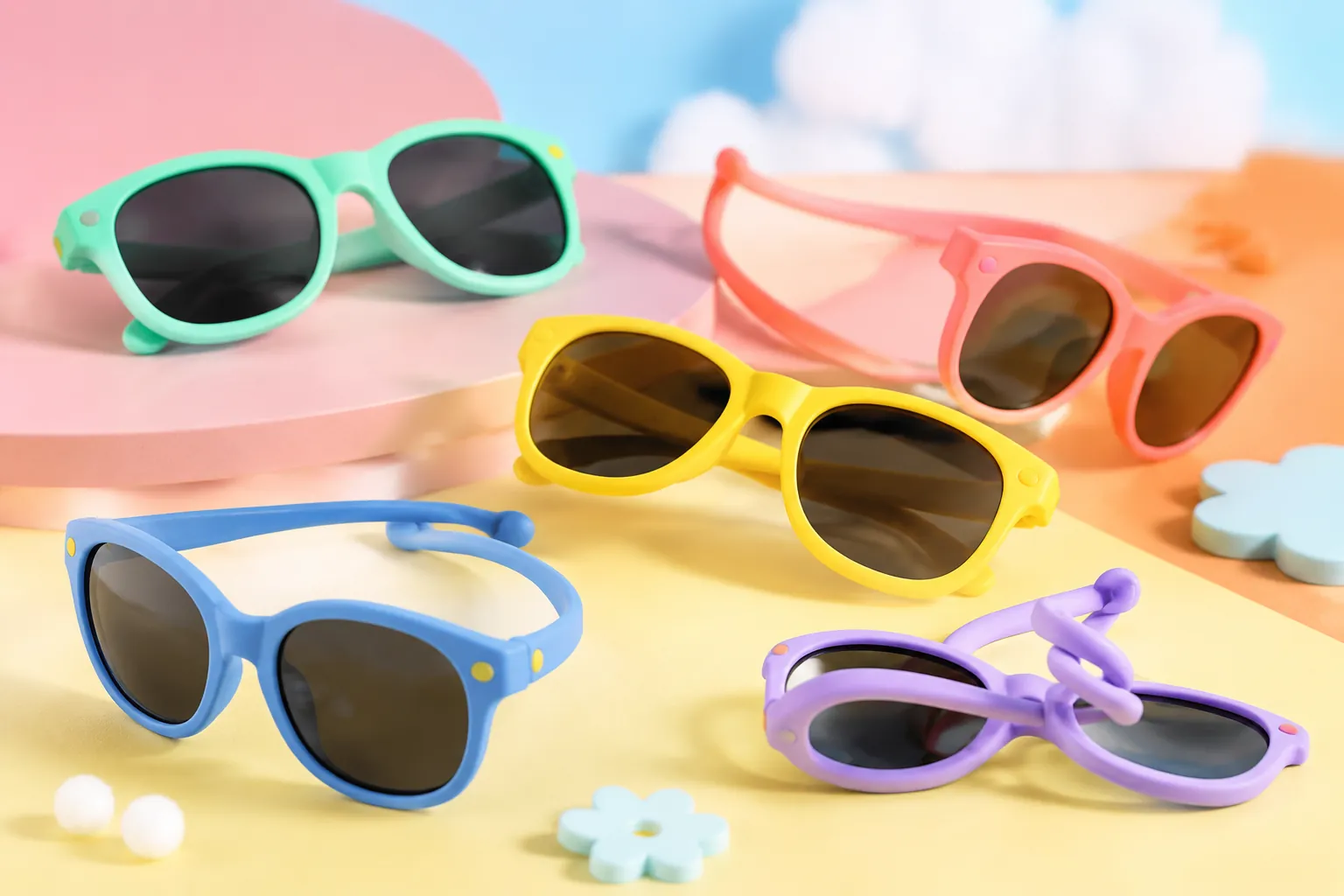
Matching family sunglasses look easy on a mood board. Production says otherwise. Adult, junior, and kids styles need to feel related without sharing the same fit, material spec, test file, or packaging logic. For B2B buyers, the task is bigger than styling a set. You need a program that holds its look across sizes, fits the destination market's compliance rules, uses MOQ efficiently, and ships without carton-level mistakes. This guide covers the checks worth making before you place a PO.
Set the program structure before you pick colors
Most family programs go off track early. The buyer starts with colorways, then works backward into SKU count, fit, and packaging. That is the wrong order.
In production terms, a matching family range is usually a coordinated group of two to four separate constructions tied together by design cues. Start by defining the commercial model:
- Matched adult + kids set: best for gift packs, DTC bundles, and seasonal promotions.
- Shared design language across separate SKUs: best for brands selling through retail, e-commerce, and chain stores that need channel flexibility.
- Scaled frame family: best for core programs where repeat orders justify stricter tooling and fit planning.
For most overseas buyers, a three-tier size ladder is the safest place to start: adult, junior/bridge, and kids. In practice, that often means one adult fit around 138 to 145 mm front width, one bridge size around 128 to 135 mm, and one kids size around 118 to 126 mm, depending on shape and material. That keeps the family look intact without forcing one geometry across every age group.
Keep each SKU separate on paper, even if the range sells as one set. Shared styling is fine. Shared assumptions are not. Measurements, lens specs, and packaging details all need written confirmation by SKU.
| Program type | Best for | Main risk | Operational note |
|---|---|---|---|
| Matched adult + kids set | Retail packs, gifting, seasonal drops | Size mismatch and packaging complexity | Requires tight SKU labeling and pack assembly control |
| Shared design language | Multi-channel brands | Too much interpretation between sizes | Needs a locked design brief with exact trim details |
| Scaled frame family | Core collections and repeat orders | Higher upfront tooling if proportions are improvised late | Best when reorder potential justifies development discipline |
| Adult hero + simplified kids version | Cost-controlled launches | Kids style can feel disconnected if over-simplified | Good when adult acetate is paired with kids injection |
Build the size ladder with real measurements
Fit cannot be managed by lens width alone. Buyers need to review front width, DBL or bridge distance, lens height, temple length, endpiece flare, and temple bend position as one system. A frame can look right on CAD and still fail on the face.
Ask the supplier for measured dimensions, not catalog estimates. Typical ranges for a mass-market family sunglasses program might look like this:
- Adult: front width 138-145 mm, temple length 145-150 mm, lens height 44-50 mm.
- Junior/bridge: front width 128-135 mm, temple length 135-140 mm, lens height 40-46 mm.
- Kids: front width 118-126 mm, temple length 125-135 mm, lens height 34-42 mm.
These numbers vary by shape, but they help expose bad scaling. If the kids version is only slightly narrower than the adult sample, it is probably not a true kids fit. If the bridge is reduced without changing contour, the frame may sit too high or slide forward on a smaller nose.
Sample all target sizes at the same time. Do not approve the adult frame first and assume the rest will scale cleanly. Side-by-side review catches proportion errors fast: a logo too close to the hinge on the smallest frame, a lens height that becomes too shallow after scaling, or temples that overpower a child size.
Get tolerances in writing. A practical tolerance on key frame dimensions is often around ±1.0 mm to ±1.5 mm, depending on part design and material shrinkage. Small variation is normal. Vague variation is not.
At sample review, buyers should confirm:
- Front width measured physically, not from drawings alone.
- Temple length and bend location from hinge center to ear hook.
- Bridge fit on the smallest size first, because comfort failures show up there earliest.
- Lens retention and groove alignment after assembly.
- Symmetry between left and right temples within agreed tolerance.
If the supplier can support grouped sampling, review the family together rather than as isolated styles. It makes proportion problems easier to spot before bulk approval.
Match materials to age, price point, and wear
Most family programs should not use one material across every size. Adults may support acetate or a heavier injected frame with more finish detail. Kids styles usually perform better in lighter, simpler constructions such as injected polycarbonate, polypropylene blends, or flexible injection materials, depending on target price and use.
Material choice affects more than cost. It changes weight, finish, color depth, decoration options, and how the frame handles daily wear.
| Material | Common use | Behavior | Buyer note |
|---|---|---|---|
| Acetate | Adult hero styles, premium private label | Dense feel, deep color layering, polished edge quality | Higher material and labor cost; good for retail positioning |
| Injected polycarbonate | Mass-market adult or kids programs | Lightweight, stable, efficient for volume color runs | Good unit economics; less visual depth than acetate |
| Polypropylene / flexible injection blends | Kids styles | Lower weight, better comfort, more forgiving under handling | Useful where durability matters more than heavy trim detail |
| Metal-trim mixed construction | Adult fashion sets | Premium look, added hardware detail | Avoid overusing on kids due to weight and assembly complexity |
Decoration also needs to match the substrate. Pad printing is efficient for logos and short-run color changes. Heat transfer can work for some graphics. Laser engraving can create a cleaner, more permanent mark on suitable surfaces, but not every finish responds well. Metal logo plates add value on adult frames, but they also add parts, labor, and weight.
On kids frames, extra ornaments often cause more trouble than value. They can affect balance and raise rejection risk if they loosen in transit or use.
Keep the kids SKU visually linked, but structurally simpler. That is usually the right tradeoff.
Treat compliance as a separate file by SKU and market
This is where expensive mistakes happen. Buyers often assume a family range can share one generic compliance file. It usually cannot.
Each frame and lens combination should map to the destination market and the exact SKU that will ship. Use only the regulatory framework that fits the market and the product specification. Common references include CE EN ISO 12312-1, ANSI Z80.3, AS/NZS 1067, REACH, FDA registration, ISO 9001, and BSCI. They are not interchangeable.
- CE EN ISO 12312-1: relevant for sunglasses sold into applicable CE markets.
- ANSI Z80.3: relevant for the U.S. market.
- AS/NZS 1067: relevant for Australia and New Zealand.
- REACH: chemical restriction framework for applicable products and materials in the EU context.
- FDA registration: part of the U.S. regulatory context, but not a substitute for product-specific testing or labeling review.
- ISO 9001: quality management system certification, not a product compliance test.
- BSCI: social compliance audit framework, not a product performance standard.
This gets more important when adult and child units are sold together in one pack. The outer pack may be one retail item, but the documents still need to point clearly to each SKU. Lens category, visible light transmission, warning text, and labeling should not blur across sizes.
| Market focus | Typical compliance check | What to verify | Buyer action |
|---|---|---|---|
| EU / CE markets | CE EN ISO 12312-1, REACH | Lens category, frame/lens match, chemical restrictions | Check that report details match the exact shipped SKU |
| USA | ANSI Z80.3, FDA registration context | Labeling, classification, market-specific documentation | Confirm requirements before artwork release and shipment |
| Australia / New Zealand | AS/NZS 1067 | Category designation, labeling, technical file linkage | Keep each size documented separately |
For children's eyewear, also confirm age positioning and any added market-specific labeling or performance expectations. If the supplier cannot tell you which report matches which temple code and lens spec, stop there and fix it before bulk release.
Plan MOQ and costing around the slowest size
Family programs get expensive fast when buyers confuse total order volume with useful volume per SKU. Adult, junior, and kids versions may each carry their own MOQ, setup cost, and packaging burden.
Ask the supplier to quote by SKU and by price tier, not just by total PO value. For a test launch, build volume around the likely sell-through driver first, usually the strongest size and color combination.
Pricing often improves at higher quantities, but the breakpoints depend on construction, decoration, packaging, and freight assumptions. Get written tier pricing. Then compare landed cost across the whole assortment instead of assuming one high-volume SKU will carry the others.
- Quote by SKU and tier, not only by total PO value.
- Ask whether mixed colors in one mold family affect setup cost.
- Use one lens tint across the family set where possible to simplify testing and purchasing.
- Reserve premium packaging for the top-selling set if budget is tight.
- Check whether the junior size is truly needed at launch or can wait for reorder data.
Watch the hidden cost drivers too: acetate scrap rates, extra polishing time, manual logo application, family-pack assembly labor, and carton inserts. A lower ex-factory price does not always mean a lower landed cost.
Ask the better question: which assortment gives the best replenishment flexibility and the cleanest margin?
Get packaging and carton logic right early
Packaging has two jobs here: sell the family story and protect separate units. It also has to stay readable in the warehouse. If any packaging layer loses SKU visibility, pick errors rise.
Common options include polybags, microfiber pouches, paper sleeves, rigid boxes, and master cartons with printed dividers or inserts. In most family programs, the strongest setup is one shared visual identity with SKU-specific labels that stay visible during picking. At minimum, put the SKU code, color code, and size code on the unit label, retail label, and carton mark.
Ask how mixed sets will actually be packed. Will adult and kids units be bundled at the factory, or shipped as separate SKUs for local kitting? Factory bundling gives a cleaner retail-ready result, but it can limit flexibility if one size sells faster. Local kitting adds control, but also more labor and more room for error.
Then check carton efficiency. A packaging upgrade that looks minor on unit cost can still change carton cube and freight cost. Before approval, request carton dimensions, units per carton, gross weight, and whether family bundles reduce packing efficiency compared with loose single-SKU packing.
Useful packaging checklist:
- SKU code visible without opening the retail pack.
- Contents list clearly states adult vs child unit count.
- Barcode placement consistent across all sizes.
- Carton assortment ratio confirmed in writing.
- Drop and scuff risk reviewed for premium outer boxes.
Run development and production in the right order
Family programs slip when approvals happen out of sequence. Decoration should not be finalized before lens tint is signed off. Bulk should not run from one unverified master sample. Order matters.
- Approve CAD or drawings with actual measured dimensions for each size.
- Lock materials by SKU, including frame, lens, and decoration method.
- Approve color chips, lens tint, logo position, and packaging artwork.
- Review pre-production samples as a coordinated family set.
- Confirm QC checkpoints and carton assortment before bulk release.
Bulk timing depends on the final spec, factory capacity, and whether tools already exist. Treat any lead time as a working plan until the sample set, artwork, packaging, and production schedule are approved in writing.
Ask exactly how QC will be handled. The answer should cover incoming material inspection, in-process checks during molding or polishing, lens and logo verification, hinge and symmetry checks, final appearance inspection, and carton audit. For family sets, QC also needs to verify assortment ratios so cartons do not leave with the wrong size mix.
Buyer discipline matters too. Late artwork changes and unstable approvals reset the clock. Simple as that.
Use a short buyer checklist before releasing the PO
Before you place the order, reduce the program to a short operating checklist. If the supplier cannot answer these points clearly, the range is not ready for bulk.
- What are the exact measured dimensions for adult, junior, and kids sizes?
- What tolerance applies to front width, temple length, and assembly alignment?
- Which material is used in each SKU, and why?
- Which compliance file applies to which market and SKU?
- What is the MOQ per design, per color, and per packaging format?
- How are price tiers structured by quantity?
- Will all sizes be sampled together before approval?
- How will unit labels, retail labels, and cartons identify each size and color?
- What is the bulk lead time after approval, and what events can reset that clock?
The best family sunglasses program is rarely the most complex. It is the one you can reorder with the same measurements, the same labeling logic, and the same document trail every time. Keep the design linked, the size ladder honest, the materials age-appropriate, and the paperwork separated by SKU. That is what turns a matching set into a repeatable business program.
Have a custom sunglasses project in mind?
Send us your styles, target market and quantities and we will return a detailed quote with MOQ, lead time and a sample plan.
Get a QuoteWhy source this from Wenzhou with LumiShades
Wenzhou in Zhejiang Province is widely regarded as China’s eyewear manufacturing capital, producing a large share of the world’s sunglasses. That concentration matters to buyers: a deep local supply chain for acetate sheet, hinges, lens blanks, plating and packaging means shorter component lead times, easier color and material matching, and a workforce with decades of eyewear-specific skill. LumiShades has manufactured in this ecosystem since 2009, and our vertical integration — in-house injection molding, acetate cutting, CNC milling, lens tinting, decoration and quality control — means no part of your order is quietly subcontracted to a workshop you cannot audit.
For international buyers, that vertical control translates into accountability. When a single factory owns every step, defects are traced and fixed at source rather than bounced between vendors, and your specifications survive intact from first sample to bulk. We back this with 15+ years of experience, shipments to 60+ countries, more than 5 million pairs produced per year and a 98.5% on-time delivery rate. Our certifications — CE EN ISO 12312-1, FDA registration, ANSI Z80.3, AS/NZS 1067, REACH, ISO 9001 and BSCI audit — mean the compliance documentation your market requires already exists. Explore our manufacturing capabilities and quality control process to see how this works in practice.
Frequently asked questions
Can I use one adult frame and just shrink it for kids? Usually not. A straight scale-down often fails at the bridge, lens height, temple bend position, and overall balance. Ask the supplier to create a separate kids size with its own measured dimensions, then compare it against the adult style to keep the family look consistent.
What MOQ should I expect for a family set? Confirm MOQ per SKU and per design, because adult, junior, and kids versions may each count as separate production items. Ask the factory to quote the minimum for each size, each color, and each packaging format so you can see the real launch requirement.
Which certifications matter most for export sunglasses? Match the regulatory framework to the destination market and the exact SKU: CE EN ISO 12312-1 for applicable CE markets, ANSI Z80.3 for the U.S., AS/NZS 1067 for Australia and New Zealand, and REACH where chemical restrictions apply. FDA registration, ISO 9001, and BSCI can provide supporting context, but they do not replace product-specific compliance review.
How should I manage pricing across multiple sizes? Request tier pricing by SKU and by quantity break, then put launch volume behind the strongest size and color first. Compare landed cost, not just ex-factory price, because packaging, assembly, and freight cube can change the real cost of a family assortment.
How long does sample and bulk production usually take? Timing depends on the final specification and the factory schedule, so treat every quote as project-specific. Get the sample lead time, bulk lead time, and approval milestones in writing, and confirm what happens if artwork, materials, or packaging change after sample sign-off.
Ready to start?
Explore our square sunglasses or request a quote — our sales team replies within 12 hours.
Request a Quote