
OEM vs ODM Sunglasses: Faster Launch or More Control?
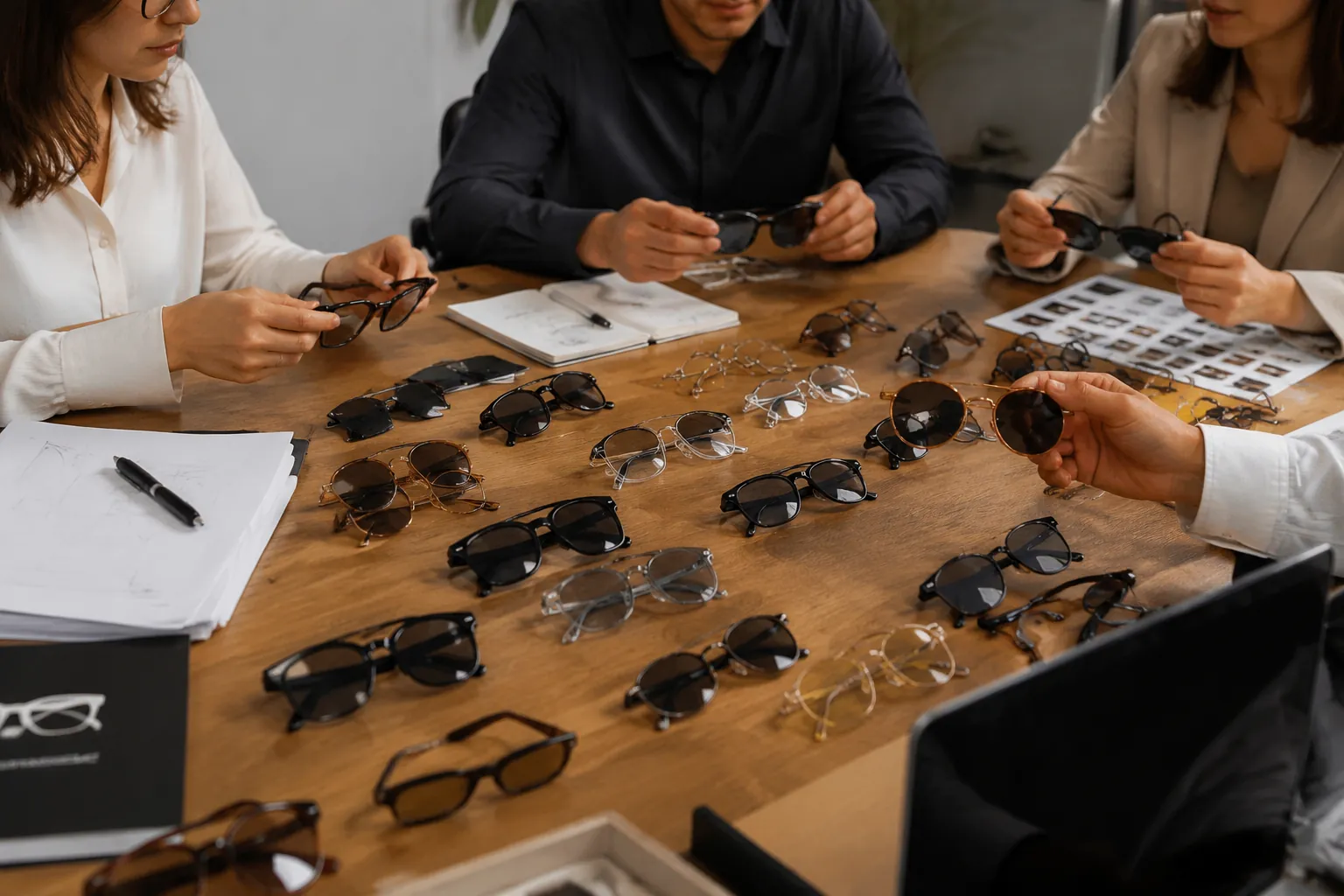
This guide is for brand owners, importers, distributors, and retailers buying sunglasses in volume. Choosing between OEM and ODM affects more than styling. It changes tooling cost, sample cycles, compliance work, unit economics, and speed to market. The real question is simple: which model fits your order size, retail position, product complexity, and tolerance for delay? Below is a buyer-side breakdown of where ODM saves time and cost, where OEM gives stronger control, and which technical checkpoints matter before you place a purchase order.
Start with the real choice: speed or geometry control?
OEM and ODM are often used loosely. In sunglasses sourcing, they solve different problems.
ODM starts with a factory's existing frame platform. The base mold, front curve, hinge layout, and core dimensions already exist. Your changes are usually limited to frame color, lens tint, logo application, and packaging, with minor trim changes in some cases. That lowers development risk.
OEM follows your design intent instead of a catalog platform. That may mean a heavily modified existing structure or a new mold based on CAD, a physical sample, or a technical drawing pack. OEM gives you more control over eye size, bridge width, temple section, hinge construction, bevel profile, acetate lamination, and fit balance. It also creates more ways for sampling to go wrong.
For most B2B buyers, the trade-off is direct:
- ODM buys speed, lower upfront cost, and fewer sample rounds.
- OEM buys differentiation, exclusivity, and tighter control over fit and brand identity.
Factory capability matters. A manufacturer that handles injection molding, acetate processing, CNC work, lens tinting, decoration, and QC in-house can usually move faster because fewer steps are outsourced. If logo application, tinting, and assembly happen under one roof, color matching, defect correction, and schedule recovery are easier to manage.
So start there. If you need to launch inside a season and the frame is not the main selling point, ODM usually makes more sense. If the frame itself is the asset and repeat orders are likely to cover development cost, OEM is often the better call.
Head-to-head: timing, MOQ, tooling, and margin
If you need a fast screen, use this first. These factors usually decide the project before aesthetics do.
| Factor | ODM | OEM |
|---|---|---|
| Starting point | Existing factory frame platform | Your design, a heavily modified platform, or a new mold |
| Typical sample timing | About 7-10 days for color, lens tint, logo, and packaging changes | Often 2-6 weeks depending on CAD, tooling, fit revisions, and hardware sourcing |
| Bulk lead time after approval | Usually 25-35 days | Usually 25-35 days once approved, but pre-approval development is longer |
| MOQ logic | Often workable from 50 pairs per design | Usually needs higher commitment to justify tooling and setup |
| Upfront cost | Lower because mold cost is already absorbed | Higher due to tooling, engineering, and extra sample rounds |
| Unit price trend | Best for low-volume tests and fast private label programs | Improves when volume spreads development cost across repeat orders |
| Brand differentiation | Limited by the shared base structure | High control over dimensions, trim, materials, and visual identity |
| Main risk points | Style overlap, weak exclusivity, limited fit changes | Tooling errors, tolerance drift, longer cash cycle, more revision risk |
MOQ and pricing breakpoints are not arbitrary. At low runs, setup waste and labor absorption matter more than raw material cost. A factory may start at 50 pairs per design for ODM, but pricing usually improves as volume rises because resin purchasing, lens production, decoration setup, and packing efficiency improve.
At higher volumes, unit pricing can become more competitive, but the exact figure still depends on frame construction, lens type, finish, and decoration. That is why ODM often fits test programs, while OEM fits carryover styles with stable demand.
Where ODM wins: faster launches, lower risk, simpler approvals
ODM is usually the smarter choice for chain retailers, distributors, promotional buyers, and newer brands that need speed more than originality.
The first advantage is obvious: no new mold development. That removes one of the biggest schedule risks in eyewear. If the frame platform is already in production, the factory already knows the cycle time, shrinkage behavior, hinge fitting, and common cosmetic defects. Quoting is usually more stable too.
The second advantage is fewer technical unknowns. With an existing structure, you are not defining front curve, bridge geometry, or temple balance from scratch. Buyers can review an existing fit, then focus on commercial details such as lens category, packaging, and branding.
Typical ODM customizations include:
- Frame color changes using existing master chips or approved references
- Lens tint changes, including smoke, brown, green, gradient, mirror, and polarized options where available
- Logo methods such as pad printing, laser engraving, hot stamping, and metal logo plates
- Retail packaging such as pouches, boxes, hangtags, barcode labels, and instruction leaflets
For many private-label programs, that is enough. If the product is a classic square injection frame or a sporty wrap, and your differentiation sits in branding, lens color, packaging, and price band, ODM usually covers the commercial need.
Lead time is often cleaner too. A cosmetic sample can often be prepared in about 7-10 days, with bulk production starting after sample approval and final artwork sign-off. The drawback is clear: another buyer may be using a similar base shape. If your margin depends on a distinctive silhouette, ODM may solve launch speed but weaken long-term defensibility.
Where OEM wins: custom fit, stronger identity, better margin protection
OEM becomes the better choice when the frame itself is part of the brand promise.
This is common for fashion labels, premium private-label collections, and importers building protected assortments for key accounts. If you need exact eye size, bridge geometry, temple taper, bevel shape, wire-core pattern, laminated acetate effect, or custom metal hardware, ODM reaches its limit quickly.
Small dimensional changes matter. A 1-2 mm bridge adjustment can change pressure points and slippage. A slight temple spread change can affect comfort and visual stance on the face. Lens depth, front curve, and end-piece thickness also influence wear and finish quality.
OEM is also the right path when catalog frames do not solve the fit problem. If your target market needs a lower bridge fit, a narrower temple wrap, or better front-weight balance, the geometry often has to be rebuilt, not just recolored.
Process detail matters here. In acetate programs, repeated sampling may be needed to correct:
- Groove depth for proper lens seating
- Hinge pocket alignment and screw retention
- Polish radius and edge consistency
- Lamination exposure and bevel cleanliness
In injection programs, attention usually goes to:
- Mold shrinkage and dimensional stability
- Gate marks and sink areas
- Parting line visibility
- Color consistency between resin lots
Done well, OEM can support stronger margin because buyers cannot compare your frame directly against open-market alternatives. But volume discipline matters. If you plan to buy only 50 or 100 pairs once, the economics usually do not work. If the style can run across multiple seasons at 1000+ units or scale further, the development cost is easier to justify.
The cost drivers buyers miss: materials, tolerances, decoration, and pack-out
Many sourcing decisions are made on unit price alone. That is a mistake. Real cost sits in process choice, reject rate, and how many manual steps your spec adds.
Material choice is the first lever. Injection frames usually run faster and more consistently at scale. Acetate carries a higher perceived value and richer finish, but it also adds labor through cutting, tumbling, polishing, fitting, and hand correction. A frame that looks simple on paper can become expensive fast if the material needs heavy finishing.
Lens specification is the second lever. Standard tinted lenses are usually simpler than polarized lenses or heavy mirror finishes. Tight color matching across lots can also add control work, especially if retail presentation depends on consistent visual appearance.
Decoration method changes both aesthetics and defect risk:
- Pad printing: economical and fast, but surface preparation and artwork placement matter; poor prep can reduce abrasion resistance
- Laser engraving: durable on suitable surfaces, but visual contrast depends on material color and finish
- Metal logo plates: more premium, but add parts, attachment labor, and alignment checks
- Hot stamping or foil: visually strong on some temples and cases, but can vary with heat and pressure control
Tolerance expectation is another hidden cost. Buyers asking for ultra-thin temples, sharp corners, heavy trim, or tightly nested parts should expect more rework. Eyewear is built in millimeters. Small deviation affects comfort, lens seating, and symmetry. The more demanding the geometry, the more likely extra sorting or adjustment will be needed.
Packaging count adds up too. A pouch, barcode sticker, hangtag, polybag, leaflet, and gift box may each look inexpensive alone. Together, they add handling time and packing errors. On low-MOQ orders, these labor layers can move the effective unit cost more than buyers expect.
Compliance and technical control: where delays really start
Sunglasses are regulated consumer products, not just fashion accessories. Your sourcing model should account for testing, documentation, and version control from the start.
Common references include CE EN ISO 12312-1 for non-prescription sunglasses in the EU, ANSI Z80.3 for the US market, AS/NZS 1067 for Australia and New Zealand, and REACH for applicable material compliance expectations. Some buyers may also request FDA registration or importer documentation depending on the supply chain setup and destination-market requirements.
The key point is not the certificate list by itself. It is whether the documentation applies to your exact version of the product. A report tied to one lens category, one transmittance range, or one frame material may not automatically cover a changed configuration.
OEM usually creates more compliance work because a new frame-lens combination may need fresh validation. ODM can move faster if the base construction already has a compliance history and your changes stay limited to non-critical cosmetic elements.
Ask the factory specific questions:
- What exact lens category and visible light transmission range does the report cover?
- Does the report apply to polarized, mirrored, or gradient versions?
- If frame material or coating changes, is retesting required?
- Which checks are performed in-house before shipment?
Late-stage changes are a common cause of delay. If you switch lens tint, category, coating, or decoration after sample approval, the schedule can slip even if production capacity is available. Simple rule: if compliance timing is tight, avoid changes that alter lens performance late in the process.
A buyer-side framework: choose in 5 steps and ask better questions
Use this framework before requesting samples. It helps you quote the right path and cut unnecessary rounds.
- Define the commercial job of the product. Is it a quick shelf-fill, an opening-price private-label style, or a signature frame expected to run for 12 months or longer?
- Set volume honestly. If the first run is 50-300 pairs and future demand is uncertain, ODM is usually safer. If you have account commitments or realistic carryover potential above 1000 units, OEM becomes more rational.
- Lock the non-negotiables early. Frame material, target retail price, lens category, logo method, packaging set, and destination-market compliance should be fixed before sampling starts.
- Separate cosmetic changes from structural changes. Colors, logo art, and packaging are usually easy. New front shape, hinge placement, temple cross-section, and custom hardware are not.
- Work backward from ship date. Cosmetic ODM samples may be ready in about 7-10 days, with bulk production after approval. OEM development may add multiple weeks before that production clock even starts.
Then ask narrow factory questions, not broad ones. For ODM, ask whether the frame is exclusive to your market, what can change without affecting lead time, and which logo methods perform best on that surface. For OEM, ask for the tool plan, expected number of sample rounds, and which dimensions are hardest to hold consistently. For both, ask what is included in the quoted price, whether decoration is done in-house, what the inspection points are, and where process handoffs occur.
One last rule. Do not buy complexity the consumer will never notice. Put budget into the details that improve sell-through, reduce returns, or protect margin.
What a good supplier should prove before you place the order
Whether you choose OEM or ODM, a serious supplier should be able to show process control, not just talk about it.
At minimum, ask for:
- Factory quality system evidence: ISO 9001 certification if available
- Social compliance evidence: BSCI audit status if required by your channel
- Product compliance documents: test reports or declarations relevant to your target market and exact SKU version
- Version control: clear sample sign-off, artwork approval, and packing specification documents
- Inspection points: what is checked before, during, and after assembly
Do not assume a certificate covers all variants. Ask the supplier to match the report to the exact frame material, lens type, coating, and decoration method you are ordering. If any of those change, confirm whether a new test is needed before production starts.
The best sourcing outcome is not the cheapest quote. It is a stable product, a clear compliance trail, and a repeatable order process that supports your margin without avoidable risk.
Have a custom sunglasses project in mind?
Send us your styles, target market and quantities and we will return a detailed quote with MOQ, lead time and a sample plan.
Get a QuoteWhy source this from Wenzhou with LumiShades
Wenzhou in Zhejiang Province is widely regarded as China’s eyewear manufacturing capital, producing a large share of the world’s sunglasses. That concentration matters to buyers: a deep local supply chain for acetate sheet, hinges, lens blanks, plating and packaging means shorter component lead times, easier color and material matching, and a workforce with decades of eyewear-specific skill. LumiShades has manufactured in this ecosystem since 2009, and our vertical integration — in-house injection molding, acetate cutting, CNC milling, lens tinting, decoration and quality control — means no part of your order is quietly subcontracted to a workshop you cannot audit.
For international buyers, that vertical control translates into accountability. When a single factory owns every step, defects are traced and fixed at source rather than bounced between vendors, and your specifications survive intact from first sample to bulk. We back this with 15+ years of experience, shipments to 60+ countries, more than 5 million pairs produced per year and a 98.5% on-time delivery rate. Our certifications — CE EN ISO 12312-1, FDA registration, ANSI Z80.3, AS/NZS 1067, REACH, ISO 9001 and BSCI audit — mean the compliance documentation your market requires already exists. Explore our manufacturing capabilities and quality control process to see how this works in practice.
Frequently asked questions
Can I start with ODM and later move to OEM if a style sells well? Yes. That is a common and practical path. Use ODM to test the market, then move to OEM once you have evidence of repeat demand. Before switching, keep the original sample, artwork, and packaging records so the new development starts from a defined benchmark. If you need stronger protection, discuss exclusivity, tooling ownership, and whether the new design will be unique to your account or market.
Is 50 pairs per design enough for private label sunglasses? For ODM, 50 pairs can be enough for a small test order if changes are limited to color, logo, and packaging. For OEM, 50 pairs is usually too low unless the project is a light modification of an existing base. If you are unsure, ask the factory to quote both paths so you can compare the development cost against your likely reorder volume.
How much faster is ODM than OEM in practice? ODM is usually faster because the frame structure already exists. A cosmetic sample can often be made in about 7-10 days, while OEM may require several weeks for drawing review, tooling, fit corrections, and hardware sourcing. The exact timeline depends on how much changes structurally, how many sample rounds you need, and whether the supplier handles key processes in-house.
Which compliance documents should I ask for first? Start with the standards relevant to your destination market and exact product version: CE EN ISO 12312-1, ANSI Z80.3, AS/NZS 1067, and REACH-related material documentation. If your supply chain or customer requires it, also ask about FDA registration or importer documentation. Then confirm whether your lens tint, transmittance, coating, or material changes require retesting before production.
What usually causes delays after sample approval? The most common causes are late artwork changes, packaging revisions, lens color changes, and decoration problems. On OEM programs, unresolved fit corrections, hinge alignment, hardware sourcing, and dimensional drift can also delay production if they were not fully closed during sampling. The best prevention is a locked specification sheet, approved artwork, and a pre-production sample that matches the final order exactly.
Ready to start?
Explore our shield & oversized sunglasses or request a quote — our sales team replies within 12 hours.
Request a Quote