
Source Family Sunglasses Without MOQ Mistakes
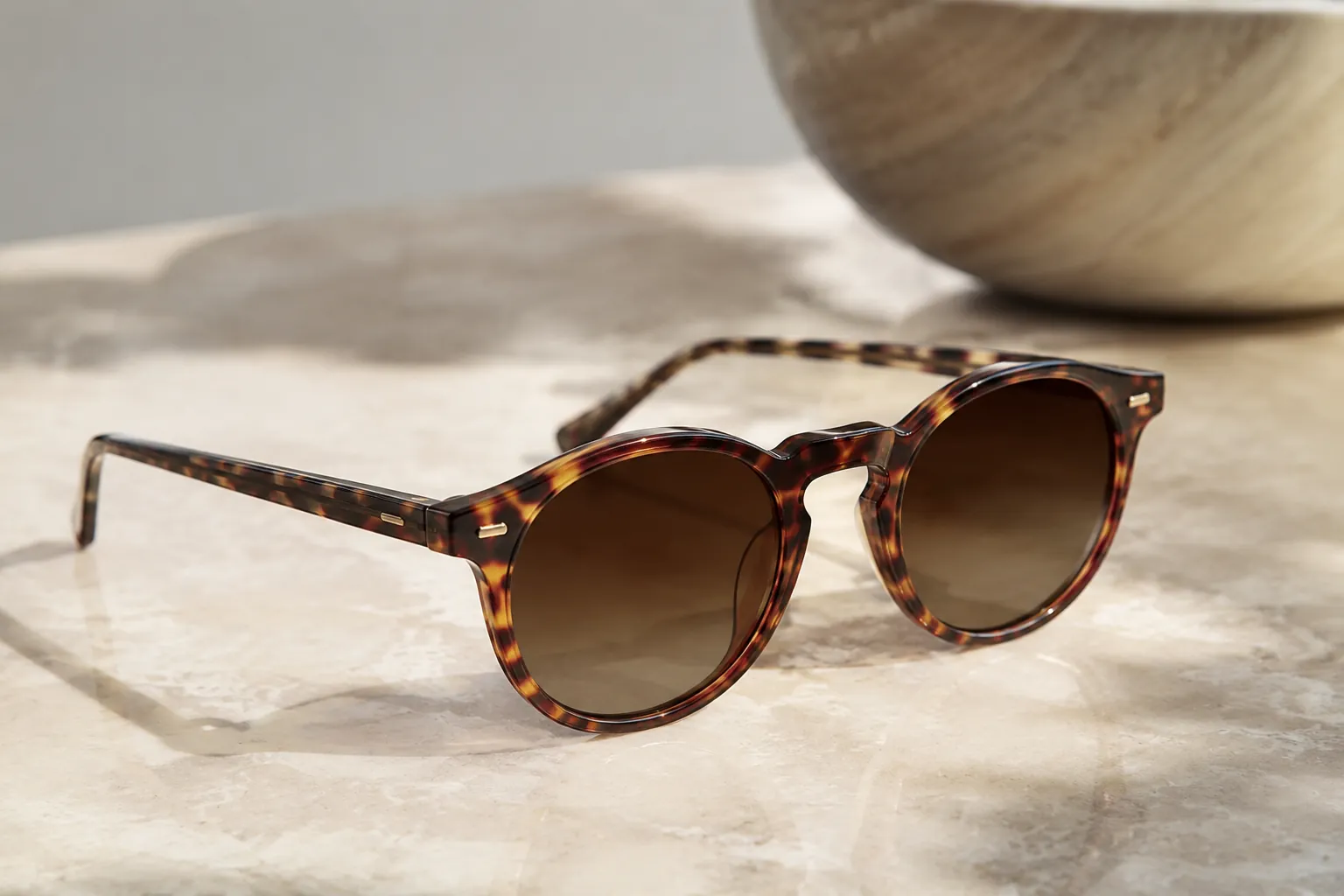
This guide is for brands, importers, distributors, and retailers building coordinated sunglasses lines across adult, youth, and kids segments. The hard part is not the look. It is keeping that look consistent while fit, comfort, durability, compliance, and MOQ economics change by age group. A family collection works when the buyer decides early what must stay visually consistent and what must change by size and wearer. Do that well and you cut overbuying, avoid child-fit mistakes, and reduce the usual failures: visible color variation, poor fit, inconsistent decoration, and wrong labeling.
Start with the sourcing structure, not the styling sketch
Many buyers start with mood boards, Pantone chips, and logo ideas. Too early. For a family sunglasses program, define the sourcing structure first. Are you building one visual language across multiple sizes, or one hero style with age-adjusted variants? Those are not the same project.
If you simply shrink an adult frame into a kids frame, it may look right in CAD and wear badly in real life. Bridge shape, temple length, wrap, weight distribution, hinge stress, and retention do not scale evenly. The better approach is simple: lock a few visual constants and allow fit-critical elements to change.
- Keep fixed across the family: silhouette family, key color palette, lens tint direction, branding position, hardware tone, and packaging logic.
- Adjust by age group: eye size, bridge width, temple length, front thickness, edge finishing, hinge reinforcement, and overall wearing comfort.
- Decide at the start: one unisex family story, or separate men's, women's, and kids expressions under one design theme.
For many buyers, the cleanest launch is a 3-part range: adult core style, youth adaptation, and small-child adaptation. That gives enough consistency for merchandising without pretending one proportion set fits every face or use case.
If one manufacturer handles frame production, lens processing, decoration, and final QC, cross-size consistency is usually easier to control. Split the work across several suppliers and variation risk goes up. So does the chance that a "matching set" no longer matches.
Build a fit matrix before sampling
The practical way to source matching styles is to build a fit matrix before the first sample. Do not send the factory a vague note that says, "Please make the same style for kids." That is how mistakes start. The supplier needs target measurements, tolerances, and a clear split between aesthetic dimensions and functional ones.
| Segment | Typical size target | Critical fit changes | Suggested tolerance guide |
|---|---|---|---|
| Adult | 50-54 eye / 18-22 bridge / 140-145 temple | Standard hinge strength, broader face-width tolerance | Front width ±1.5 mm; temple length ±1.0 mm |
| Youth | 47-50 eye / 16-18 bridge / 130-135 temple | Lighter front weight, shorter temple, lower nose pressure | Front width ±1.0 mm; temple length ±0.8 mm |
| Kids | 43-47 eye / 14-17 bridge / 120-130 temple | Safer edge finishing, stronger retention, reduced wrap feel | Front width ±1.0 mm; temple length ±0.5 mm |
| Family gift set | Mixed-size assortment | Barcode accuracy, ratio packing, size identification | 100% assortment check at packing stage |
Separate appearance specs from fit specs. Appearance specs cover front shape, visible thickness, finish level, lens color, branding, and hardware color. Fit specs cover eye size, bridge opening, temple spread, pantoscopic angle, total weight, and where the frame sits on the face.
Ask the supplier to document the measurement method in the tech pack. For example: front width measured hinge to hinge in flat position; temple length measured from hinge center to tip end along the temple line; lens width measured at the widest horizontal point. Small detail. Big effect. Different factories can read the same drawing in different ways.
Also ask for wear testing on representative users where possible. A frame can match the drawing and still feel unstable, heavy, or tight in use. For youth and kids styles especially, sample review should cover fit, comfort, edge finishing, and ease of opening and closing the temples.
Choose materials by age, handling risk, and finish
Matching collections do not need one material across all sizes. Often they should not use one. Material choice should reflect the wearer, expected handling, finish target, and how much assortment complexity the buyer can manage.
Injection-molded frames are common for kids, youth basics, promotional sets, and higher-volume family programs. They are often the practical choice when repeatability, color consistency, and lower production complexity matter.
Acetate frames are common for more premium adult styles and some youth fashion programs. They can deliver richer color depth and a more premium hand feel, but they usually require more manual processing and are less forgiving when revisions continue after sample approval.
- Injection: suitable for repeatable volume programs, straightforward color execution, and lighter-weight constructions.
- Acetate: suitable for premium positioning, deeper gloss, and laminated pattern effects.
- Mixed-material family program: adult in acetate, youth and kids in injection can work well if lens tint, hardware tone, logo method, and visible shape language are aligned.
Think about decoration too. Pad printing can work on both injection and acetate, but ink adhesion should be tested if coated or soft-touch surfaces are used. Laser marking can work on certain components, but line width and logo scale need close control on smaller temples. Metal logo plates can raise perceived value, but they also add parts, assembly steps, and new approval points.
For a first launch, keep the material story simple. If the buyer wants premium adult acetate and lower-cost kids injection, define the color target under a controlled light source and approve materials side by side. "Close enough" is usually not close enough once the products are sold as a coordinated line.
Control MOQ by cutting variables
The biggest commercial mistake in a family collection is too much choice before demand is proven. Buyers ask for multiple colors, multiple logo methods, and different gift packaging for each age group. It looks good in a presentation. It works badly in production.
The real cost driver is not just total pair count. It is the number of separate production lots the factory must run for fronts, lenses, logos, inserts, labels, and cartons. Add variables and you raise MOQ pressure fast.
- Launch with one shape family, not several unrelated shapes.
- Limit opening colors to 2 or 3 that work across all ages.
- Use one lens tint across most of the range where market positioning allows.
- Choose one branding method for the first run: pad print, laser, or metal plate.
- Keep packaging shared unless legal or retail requirements require differences.
A common SKU trap looks like this: 3 age groups × 4 colors × 2 logo treatments = 24 SKUs before retail packs or regional labels are added. Then packaging variants push the number even higher. Even if the project technically meets the factory's stated MOQ, one weak color or one retailer-specific set can distort the economics of the whole range.
Shared components usually solve the problem. Use the same lens tint across adult, youth, and kids where appropriate. Keep logo placement in one defined zone. Reuse care instructions, inner cards, and barcode logic wherever market rules allow.
When you request quotations, ask for clear pricing tiers based on a realistic assortment plan. For example: one shared lens, one logo method, two colors, and common packaging. Then ask separately what changes if a third color, second print location, or age-specific gift box is added. That makes the real MOQ pressure visible before approval.
Treat compliance as a development task, not a shipment task
In matching sunglasses programs, compliance planning should start before sample approval. Not before shipment. The design may be unified, but documentation, labeling, and risk review usually get more complex once the range clearly includes children's sizes or child-directed presentation.
Relevant standards and registrations may include CE EN ISO 12312-1, ANSI Z80.3, AS/NZS 1067, REACH, and FDA registration where applicable. At supplier level, buyers may also review management and social compliance credentials such as ISO 9001 and BSCI. The key point is straightforward: documents should match the real product construction, lens category, coatings, inks, and destination-market requirements.
Three issues cause repeat trouble in family programs:
- Lens category mismatch: the adult style may use one visible light transmission level while the kids style uses another. That can change labeling requirements and weaken the basis for selling them as a matched story.
- Chemical compliance detail: coatings, paints, printing inks, adhesives, and decorative parts may all need review against destination-market restrictions.
- Child-directed presentation: if packaging or branding is clearly aimed at children, the buyer should apply stricter internal review to edge finishing, decorative attachments, and durability.
Ask the supplier direct questions. Which reports are product-specific? Which are material-level only? Which tests were run on the same lens and frame construction? Which components changed since the last report? Are labeling files available for each destination market? Those answers matter more than a generic certificate pack sent at the end of development.
Also confirm who owns final market compliance: the factory, the importer, or both. In many markets, the importer or brand owner still carries final responsibility for the finished product, packaging, and documentation.
Use staged sampling and realistic lead-time gates
Strong family programs are approved in stages. Weak ones get approved from one attractive prototype. Use sampling to remove risk step by step, not to judge styling alone.
A practical approval flow looks like this:
- CAD/spec review: confirm frame measurements, hinge construction, lens category target, logo method, color references, and packaging assumptions.
- First prototype: review silhouette consistency across sizes, bridge comfort, temple length, overall balance, and wearability.
- Revised pre-production sample: verify color match, logo placement, hinge action, lens consistency, and surface finish.
- Golden sample sign-off: lock approved tolerances, assortment ratios, barcode list, master carton marks, and QC checklist.
For coordinated adult and kids launches, review all size variants together on the same table. This is where mismatch shows up fast: one brow line sits higher, one logo looks oversized, one lens tone reads differently, or one temple tip shape breaks the family look. Easy to miss when samples are reviewed one by one.
Also document decoration position in measurable terms. Define print or plate location from the hinge centerline and specify the acceptable tolerance. A family line is judged visually. Decoration drift is not a minor cosmetic issue.
Lead times should include buyer-side decision time too. Delays often come from waiting on color approval, packaging copy, barcode confirmation, or compliance review, not only from factory production. Build internal sign-off time into the launch calendar.
Set QC checkpoints around matching risk
Standard eyewear QC covers lens appearance, hinge function, assembly integrity, finish, and measurement. A family collection needs another layer. Buyers and end customers compare units directly. Variation that might pass unnoticed in a stand-alone style becomes obvious when products sit side by side.
In addition to standard checks, build family-program controls into the inspection plan.
- Cross-size color review: compare adult, youth, and kids fronts under the same controlled light source.
- Lens tint alignment: do not approve visibly different tint depth or mirror effect unless the variation is intentional and documented.
- Logo scale and placement: a logo that looks balanced on an adult temple may dominate a child-size temple.
- Weight consistency: compare production samples against the approved sample and investigate meaningful drift.
- Set-packing accuracy: if you sell family bundles, inspect by inner pack and carton configuration, not only by total quantity.
Request a pre-shipment QC report that includes measured dimensions by size group, defect photos by category, decoration placement checks, and a carton summary tied to SKU and barcode data. If one kids style is packed in the wrong sleeve or one youth size gets the wrong temple print, the outer carton can still look correct while the shipment is commercially wrong.
Buyer rule: if the range is sold as matching, approve it, inspect it, and pack it as a system rather than as unrelated sunglass SKUs.
Keep the first launch tight and expandable
If this is your first family assortment, do not launch broad. A reliable starting structure is one shape family, three sizes, two colors, and one lens tint. That gives useful market coverage without tying inventory up in low-probability combinations.
A sensible first order often means one adult style, one youth adaptation, and one kids adaptation sharing the same shape story, hardware tone, and packaging concept. Use one decoration method and one lens color where possible. This setup makes MOQ planning, QC, labeling, and reorders easier to control.
Expand based on sell-through, not enthusiasm. If one color performs well in adult and youth but not in kids, use that data. Deepen it, cut it, or redesign it. The second cycle can add seasonal colors, premium adult variants, or retailer-exclusive branding, but only after the base shape family proves itself.
Before the first PO, ask the supplier for a launch checklist covering: approved tech pack, golden samples, compliance file status, packaging file approval, barcode list, inspection standard, and carton assortment plan. If those items are not locked, the program is not ready for bulk production.
Keep it simple. Matching does not need to mean complicated.
Have a custom sunglasses project in mind?
Send us your styles, target market and quantities and we will return a detailed quote with MOQ, lead time and a sample plan.
Get a QuoteWhy source this from Wenzhou with LumiShades
Wenzhou in Zhejiang Province is widely regarded as China’s eyewear manufacturing capital, producing a large share of the world’s sunglasses. That concentration matters to buyers: a deep local supply chain for acetate sheet, hinges, lens blanks, plating and packaging means shorter component lead times, easier color and material matching, and a workforce with decades of eyewear-specific skill. LumiShades has manufactured in this ecosystem since 2009, and our vertical integration — in-house injection molding, acetate cutting, CNC milling, lens tinting, decoration and quality control — means no part of your order is quietly subcontracted to a workshop you cannot audit.
For international buyers, that vertical control translates into accountability. When a single factory owns every step, defects are traced and fixed at source rather than bounced between vendors, and your specifications survive intact from first sample to bulk. We back this with 15+ years of experience, shipments to 60+ countries, more than 5 million pairs produced per year and a 98.5% on-time delivery rate. Our certifications — CE EN ISO 12312-1, FDA registration, ANSI Z80.3, AS/NZS 1067, REACH, ISO 9001 and BSCI audit — mean the compliance documentation your market requires already exists. Explore our manufacturing capabilities and quality control process to see how this works in practice.
Frequently asked questions
Can I make adult and kids sunglasses look identical by just scaling the CAD down? Usually no. You can preserve the same visual language, but youth and kids versions normally need separate adjustment to bridge width, temple length, front curve, hinge resistance, edge finishing, and weight balance. Straight percentage scaling often creates poor fit and weak retention. A better process is to lock the non-negotiable visual elements first, then create age-specific fit specs and sample each size separately.
What is the safest MOQ strategy for a new family collection? Start with one shape family, three sizes, and two or three colors at most. Keep one lens tint and one logo method across the launch if possible. Ask the factory to quote the program in tiers based on shared components, then separately quote the cost impact of each added variable such as a second print position, extra color, or special box. That shows where MOQ pressure and dead-stock risk will actually come from.
Is it acceptable to use acetate for adults and injection for kids in the same collection? Yes. It is often a practical sourcing choice. Acetate can support a more premium adult position, while injection can simplify kids production and support lighter constructions. To keep the collection visually coherent, align the shape family, lens tone, hardware finish, branding placement, and color approval standard. Review adult and kids samples side by side before approving bulk production.
Which compliance documents should I ask for first? Start with the requirements for your destination market and your exact product configuration. Common requests include CE EN ISO 12312-1, ANSI Z80.3, AS/NZS 1067, REACH, and FDA registration where applicable. At supplier level, ISO 9001 and BSCI can help assess system and social compliance, but they do not replace product testing. Ask the supplier to identify which documents are specific to the exact frame material, lens construction, coating, and decoration used on your style, and confirm who is responsible for final market compliance.
How do I stop family set packing mistakes before shipment? Lock assortment ratios, SKU codes, barcode lists, packaging visuals, carton marks, and bundle configuration during pre-production approval. Then require pre-shipment verification by size, color, and set composition, not only by total pair count. For mixed-size packs, ask for a packing SOP, carton-level assortment summary, and photo confirmation from inspection. Packing errors in family programs usually happen at the assortment stage, not at the molding stage.
Ready to start?
Explore our round sunglasses or request a quote — our sales team replies within 12 hours.
Request a Quote