
Polarized Lenses for Bulk Sunglasses: When to Use Them
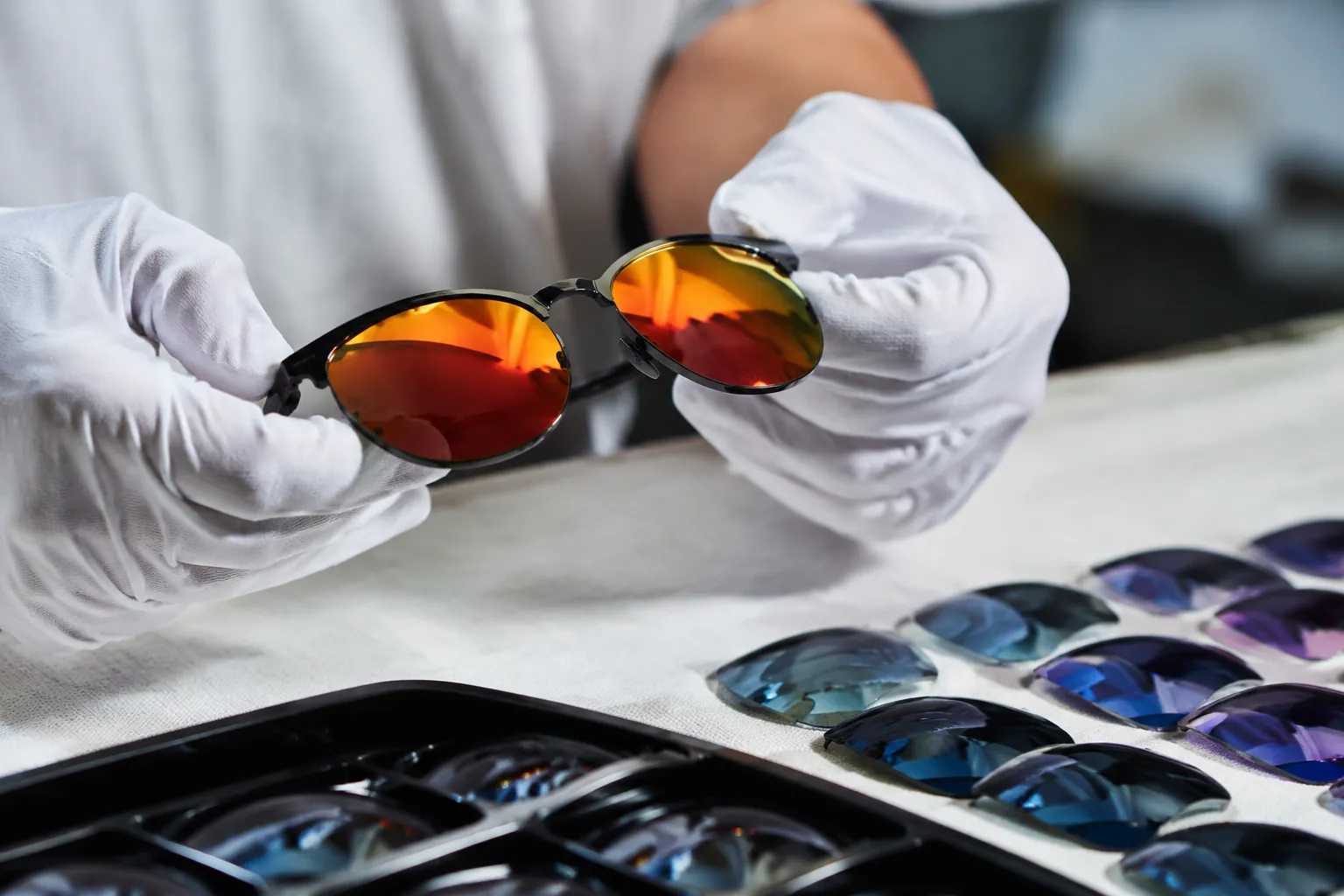
This guide is for brand owners, importers, distributors, and retailers deciding whether polarized lenses belong in a bulk sunglasses order. Polarization can be a real user benefit. It can also add lens cost, tighter specification control, and retail-price pressure that some markets will not accept. The useful question is not whether polarized lenses are better. It is whether the end customer will notice and pay for glare reduction after freight, duty, margin, and retail markup are included. Match the lens to the channel, end use, price band, and production controls. That is where the margin is protected.
Start with the channel, not the lens feature
Many buyers start with one question: Should this style be polarized? Start earlier. Who will buy it, where will it sell, what retail price must it hit, and what problem is the lens solving?
Polarization reduces glare from reflected light, especially from horizontal surfaces such as water, roads, car hoods, snow, and wet pavement. In the right use case, the wearer notices the benefit quickly. In the wrong use case, it becomes a cost increase the shopper may not understand.
For marine retail, fishing shops, driving-focused assortments, outdoor sport, travel retail, and optical or specialist stores with trained staff, polarization often deserves a place in the range. For discount retail, fast-fashion chains, event merchandise, kids' value programs, and promotional orders, the better move may be to protect landed cost and invest in fit, durability, decoration, or packaging.
Price thresholds matter. A small lens upcharge at factory level can become a much larger retail step after duty, freight, packaging, distributor margin, and retail markup. If the line is built around a firm shelf price, calculate the full impact before making polarization standard.
At production level, polarized programs also need clear control points. The polarizing axis should be consistent between left and right lenses. Tint should match the approved sample. Cosmetic inspection should reflect that the customer is buying both appearance and function. These controls are manageable, but they need to be written into the quote, sample approval, and QC plan.
Use a decision table before requesting a quote
Use this framework before pricing the order. It helps avoid two common mistakes: over-specifying fashion-led SKUs and under-specifying utility styles where glare reduction can help conversion.
| Channel / End Use | Polarized Fit | Typical Retail Sensitivity | Why it helps or hurts | Buying Advice |
|---|---|---|---|---|
| Fishing, boating, marine retail | Strong fit | Medium | Glare reduction on water is easy for the wearer to understand and demonstrate | Make polarization a core option; pair it with clear UV claims, correct lens category, and documented compliance for the destination market |
| Driving and general outdoor use | Usually good | Medium to high | Can reduce glare from roads, wet surfaces, and reflected daylight, but some displays may be harder to read | Start with one polarized hero SKU; check screen-visibility risks before converting the full line |
| Optical stores and specialist sport retailers | Good fit | Lower | Staff can explain the lens function and support a step-up price | Use polarization on stronger frames with consistent branding, packaging, and documented lens specifications |
| Fashion boutiques and chain apparel retail | Mixed to weak | High | Many shoppers buy shape, color, and brand first; lens function may be secondary at shelf | Keep core fashion styles non-polarized; test a limited polarized capsule only if the target price allows it |
| Promotional, event, giveaway | Poor fit | Very high | Short-use and price-led distribution rarely rewards a functional lens upgrade | Do not add polarization unless the client specifies it and approves the cost, claim wording, and compliance documents |
| Kids and teen value retail | Usually weak | Very high | Fit, durability, breakage risk, and safety documentation usually matter more than glare reduction | Prioritize frame strength, hinge stability, lens category, UV performance, labeling, and market compliance first |
Short version: use polarization where the wearer will notice glare reduction and the channel can explain it. Skip it where style, low price, and fast turnover drive the sale.
Where polarized lenses earn their keep
Polarization works best when glare is part of the customer problem and the buyer can make a clear product claim without a long explanation.
- Water-use categories: fishing, sailing, beach retail, resort stores, and marine dealers. Reflected glare from water is a direct match for polarized sunglasses.
- Driving programs: especially in bright climates or long-distance use. Polarized lenses can improve visual comfort by reducing reflected glare, although buyers should check compatibility with vehicle displays and instrument screens.
- Outdoor sport and travel: practical-use sunglasses sold as functional eyewear rather than pure impulse fashion accessories.
- Higher-trust retail: optical stores, specialist sporting goods, and trained distributors that can explain lens benefits and limits accurately.
In these segments, the rest of the product must support the lens story. A polarized lens on a weak frame sends the wrong signal. Loose hinges, unclear labels, poor decoration, and thin packaging can undercut the upgrade. Specify the whole product: lens, frame, hinge feel, branding, packaging, claim wording, and compliance documents.
Choose lens material by use case, required tests, and target price. TAC polarized lenses are common in many sunglasses programs because they offer a practical balance of cost, appearance, and function. Polycarbonate lenses may suit programs where impact resistance or light weight matters, but coating performance, optical expectations, and compliance requirements should be checked for the specific market and product category. For marine and driving programs, solid grey, smoke, green, or brown lenses are usually easier to position than decorative gradients.
Decide on polarization during sampling, before the non-polarized sample becomes the default. That gives the buyer time to confirm base curve, tint target, polarization function, logo visibility, fit, packaging language, and compliance requirements. If timing matters, request current sample lead time and bulk production lead time in writing. Schedules vary by material, decoration, order size, packaging, and testing.
Where polarization can slow sell-through
Polarization can hurt a program when it raises cost but the shopper either does not understand the benefit or notices a limitation first. That happens often.
- Retail price ladder breaks: a factory-level cost increase can push a SKU into a higher shelf-price band after landed-cost build-up. If the line must stay under a firm retail ceiling, polarization may weaken sell-through even if the product is technically upgraded.
- Screen visibility issues: polarized lenses can make some LCD, dashboard, navigation, marine, aviation, or instrument displays harder to read at certain angles. This is normal for polarized lenses and should be considered in driving, marine, aviation-adjacent, and equipment-use channels.
- Occasional-use purchases: if sunglasses are bought for holiday wear, festival use, short trips, or light lifestyle use, many customers will not pay more for a feature they use only now and then.
- Short trend cycles: if the frame shape or lens color is highly seasonal, the added lens cost can increase inventory risk before repeat-order data proves demand.
Use a blunt test. If the sales team, product page, or packaging cannot explain the benefit in one clear sentence, do not make polarization standard across the range. Then ask which complaint is more likely in that channel: not enough function or too expensive for what it looks like. In many fashion and promotional programs, price perception is the bigger risk.
Also remember the shelf. Polarization is not always obvious in a display. If the package, hang tag, PDP copy, or salesperson does not communicate the feature, the upgrade may stay invisible while still raising the cost base.
What changes in cost, MOQ, and production control
For bulk buyers, polarization is not just a lens option. It affects quoting, assortment planning, sample approval, QC checkpoints, and sometimes packaging claims.
Confirm MOQ and price breaks style by style. They can change with frame material, lens material, decoration method, packaging, component availability, testing requirements, and total order volume. For a new channel, a split program is often the safer structure: keep the core SKU non-polarized and test one polarized variant before converting the full line.
In practical quoting terms, the cost difference is not only the polarizing film or lens. Buyers may also be paying for:
- Left-right lens matching and consistent polarizing-axis orientation
- Tighter tolerance for tint variation, haze, scratches, or cosmetic defects
- Functional verification during QC, such as checking polarization with a suitable tester
- Packaging, hang tag, or product-page claim review to avoid inaccurate lens claims
- Rework risk if tint, base curve, lens category, or claim language was vague at approval stage
A standard production flow typically looks like this:
- Confirm frame material, hinge type, lens base curve, target market, and intended use.
- Approve lens type: non-polarized or polarized, plus lens color, lens category, visible light transmission target, and UV specification.
- Produce samples for visual approval, fit check, polarization check, decoration review, and packaging review.
- Run frame production through the selected process, such as injection molding, acetate cutting, or CNC machining, depending on the design.
- Prepare lenses to the approved specification and verify they match the approved sample and required category.
- Assemble, decorate, and inspect for fit, cosmetics, lens stress, left-right consistency, and packaging accuracy.
- Pack with the agreed labels, tags, barcode format, warnings, importer information, and outer-carton marks required for the destination market.
Process discipline matters. Polarized lenses should be assembled with consistent orientation between left and right sides. Frame groove pressure matters too. Excessive insertion stress can create visual distortion or poor fit. On acetate and thicker fashion frames, check lens fit tolerance before bulk approval. Good production control depends on approved samples, written specifications, and clear inspection standards before mass production starts.
Lock specification and compliance early
Polarized or not, sunglasses still need to meet the requirements of the destination market. Keep the categories separate. Polarization is a functional upgrade. It does not replace UV protection, optical performance requirements, labeling obligations, chemical compliance, or product documentation.
Relevant standards, registrations, and factory audit references may include CE EN ISO 12312-1, ANSI Z80.3, AS/NZS 1067, REACH, FDA registration, ISO 9001, and BSCI. The correct document set depends on destination market, customer requirements, frame and lens materials, age category, and distribution channel. Request current documents and confirm whether they apply to the specific product being ordered, not only to the factory profile.
Lock these specification points before bulk production starts:
- Lens category and visible light transmission: the lens must suit the intended use and the destination market's applicable standard.
- UV performance: confirm the actual UV claim and test basis rather than assuming polarization includes UV protection.
- Tint standard: approve a physical sample or defined lab reference instead of relying on a casual description such as "dark smoke."
- Color consistency tolerance: especially important for gradient, mirrored, or fashion tints where mismatch is visible across pairs.
- Frame fit tolerance: incorrect groove depth or rim tension can create lens stress, distortion, poor assembly, or rejection.
- Chemical compliance: coatings, paints, nose pads, temple tips, logo components, and packaging should be reviewed for market-specific requirements such as REACH where applicable.
- Decoration method: pad print, laser engraving, hot stamping, foil logo, and metal logo plate each behave differently on different frame materials.
Decoration is often under-managed in eyewear programs. Pad printing can be economical for temple logos, but abrasion performance and edge sharpness depend on ink system, surface treatment, and curing. Laser engraving can provide a durable mark on suitable materials, although it may be less visible on some finishes. Metal logo plates can create a stronger premium signal, but they add components and assembly steps. Approve them with the frame construction, not as a late add-on.
Most preventable bulk problems appear before production starts: unclear tint references, no approved golden sample, no agreed cosmetic tolerance, incomplete compliance review, and packaging claims that do not match the actual lens specification. Document these points before deposit, tooling, or bulk material purchase.
One frame, two channels, two decisions
Take a mid-sized unisex square frame with the same front shape, temple branding area, and packaging family. The right lens decision can change completely by channel.
Scenario A: coastal distributor supplying tackle shops. Polarization is likely a good fit. The end user spends time around water, glare is part of the use case, and the retailer can explain the value quickly. A sensible structure would be one main polarized colorway in grey, green, or brown, with a non-polarized opening-price option only if the distributor needs a lower price point. Here, the added lens cost supports a real functional story.
Scenario B: fashion retailer building a seasonal summer floor set. The same frame may perform better without polarization. The shopper may be buying silhouette, lens color, brand cue, and impulse price before lens function. In this case, the stronger move may be to keep the hero colors non-polarized, improve perceived value through finishing and decoration, and test only one polarized SKU before extending the feature.
A single sourcing rule will fail here. Same tooling. Same frame. Opposite decisions. The difference is shelf story, price point, and user need. Build a ladder:
- Core style, non-polarized, widest color range
- One polarized premium version for channels that can explain or demonstrate the benefit
- Expansion into more polarized SKUs only after repeat orders or sell-through data supports the price step
That structure protects inventory. If the polarized version underperforms, the frame development still supports the broader non-polarized line. If it performs well, the buyer has evidence for the next reorder instead of making a full-range assumption too early.
Checklist before placing a polarized order
Use this checklist before deposit payment. It reduces delays and helps prevent specification drift between sample approval and mass production.
- Define the channel clearly: specialist outdoor, optical, fashion, promotional, mass retail, online marketplace, or mixed distribution.
- Set the target retail price first: then back-calculate the allowable factory cost, freight, duty, packaging, margin, and markup.
- Choose a test structure: if demand is unproven, compare one non-polarized core SKU with one polarized premium SKU on the same frame.
- Approve a golden sample: frame, fit, tint, lens category, polarization function, UV claim, logo, and packaging should be approved as one complete product.
- Confirm the decoration method early: pad print, laser engraving, hot stamping, foil logo, or metal logo plate can affect cost, timing, appearance, and durability.
- Request the right compliance documents for the destination market: CE EN ISO 12312-1, ANSI Z80.3, AS/NZS 1067, REACH, FDA registration, ISO 9001, or BSCI where applicable to the product or customer requirement.
- Review MOQ and price-break logic: ask for written pricing by quantity and confirm what changes at each level, including packaging, testing, and decoration.
- Confirm timing realistically: request current sample lead time, bulk lead time after approval, and any added time for testing, custom packaging, or special decoration.
The final point is commercial, not technical. Measure margin together with sell-through speed. A cheaper non-polarized SKU that turns faster and reorders sooner can outperform a polarized SKU with a higher ticket but slower movement. Margin is not only in the invoice price. It is also in inventory velocity, reorder confidence, and how efficiently the channel turns the product story into sales.
Have a custom sunglasses project in mind?
Send us your styles, target market and quantities and we will return a detailed quote with MOQ, lead time and a sample plan.
Get a QuoteWhy source this from Wenzhou with LumiShades
Wenzhou in Zhejiang Province is widely regarded as China’s eyewear manufacturing capital, producing a large share of the world’s sunglasses. That concentration matters to buyers: a deep local supply chain for acetate sheet, hinges, lens blanks, plating and packaging means shorter component lead times, easier color and material matching, and a workforce with decades of eyewear-specific skill. LumiShades has manufactured in this ecosystem since 2009, and our vertical integration — in-house injection molding, acetate cutting, CNC milling, lens tinting, decoration and quality control — means no part of your order is quietly subcontracted to a workshop you cannot audit.
For international buyers, that vertical control translates into accountability. When a single factory owns every step, defects are traced and fixed at source rather than bounced between vendors, and your specifications survive intact from first sample to bulk. We back this with 15+ years of experience, shipments to 60+ countries, more than 5 million pairs produced per year and a 98.5% on-time delivery rate. Our certifications — CE EN ISO 12312-1, FDA registration, ANSI Z80.3, AS/NZS 1067, REACH, ISO 9001 and BSCI audit — mean the compliance documentation your market requires already exists. Explore our manufacturing capabilities and quality control process to see how this works in practice.
Frequently asked questions
Should I make every outdoor style polarized? No. Make polarization standard only where glare reduction is a clear and repeated customer need, such as fishing, boating, marine leisure, driving-focused use, or specialist outdoor retail. For general outdoor, travel, or fashion-crossover styles, start with one polarized SKU and one non-polarized core SKU on the same frame. Compare sell-through, returns, customer feedback, and reorder demand before expanding polarization across the range.
Does polarization automatically mean the sunglasses meet UV standards? No. Polarization and UV protection are separate lens properties. A polarized lens can reduce glare, but it still needs the correct UV specification, lens category, labeling, and market-specific compliance documentation. Before bulk production, request the applicable test basis for the destination market, such as CE EN ISO 12312-1, ANSI Z80.3, or AS/NZS 1067 where relevant, and confirm the documentation applies to the actual lens and frame combination being ordered.
What is the safest way to test polarized demand on a new style? Use a controlled split test: the same frame, same packaging family, and comparable branding, with one non-polarized core SKU and one polarized premium SKU. Keep color differences limited so the test measures lens value rather than only color preference. Before ordering, ask the supplier for MOQ, price breaks, sample timing, bulk timing, and any added testing or packaging requirements for both versions.
Can polarized lenses create customer complaints? Yes. The most common issue is reduced visibility on some LCD screens, dashboards, navigation units, marine electronics, aviation-related displays, or instrument panels at certain viewing angles. This is normal behavior for polarized lenses, not necessarily a defect. Buyers should evaluate the main use case, test likely screens during sampling when possible, and avoid making polarization standard in channels where screen readability is more important than glare reduction.
Will polarized orders take longer to produce? They can, depending on lens availability, tint requirements, sample approvals, decoration, packaging, compliance review, and order quantity. Polarization itself is usually manageable when the specification is clear, but delays often come from late changes, unclear tint references, missing golden samples, or packaging claims that need revision. Ask the supplier for written sample lead time, bulk production lead time after approval, and any added time for testing or custom packaging before confirming the order.
Ready to start?
Explore our wayfarer sunglasses or request a quote — our sales team replies within 12 hours.
Request a Quote