
TAC vs Nylon Polarized Lenses for B2B Channels
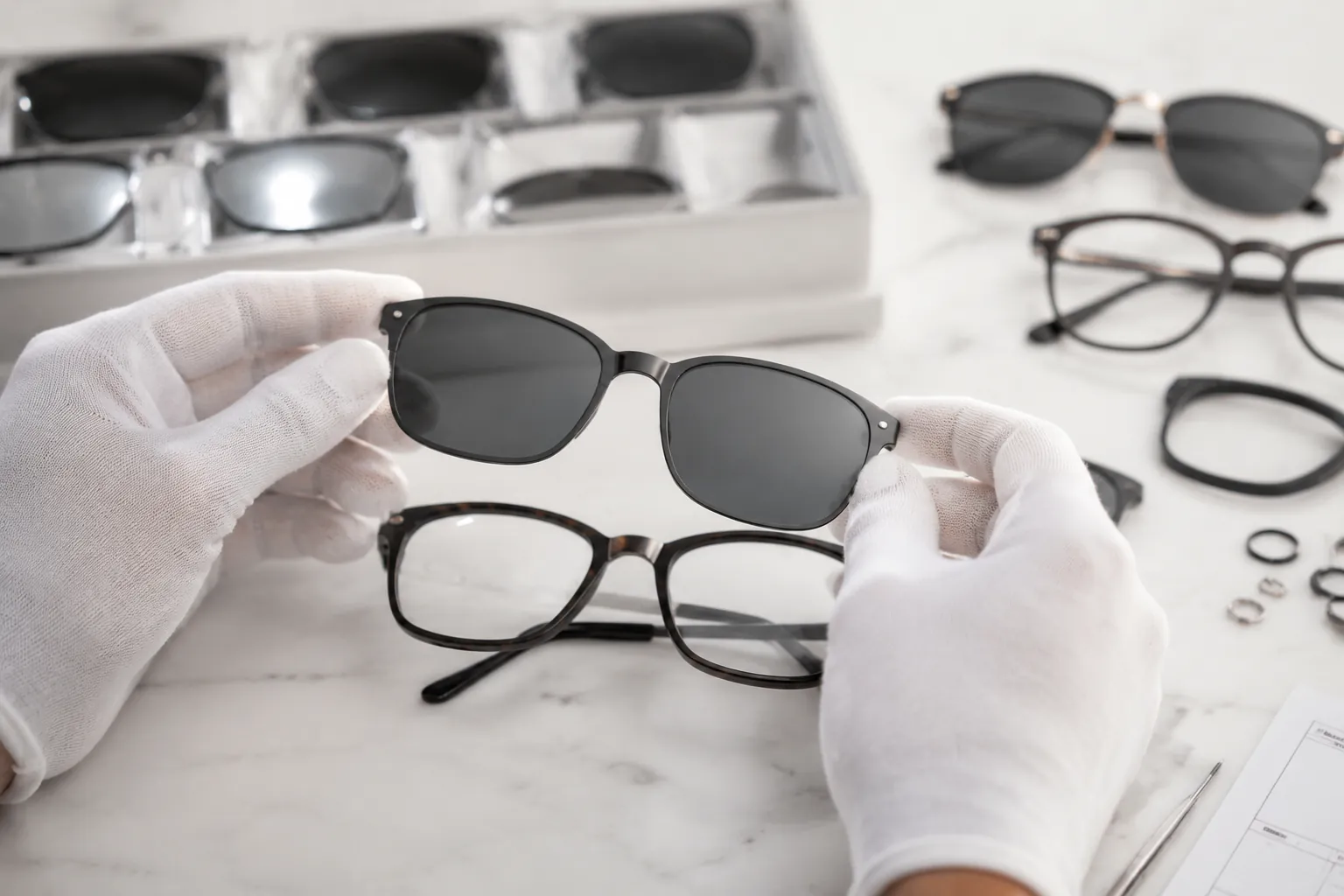
This guide is for buyers sourcing custom polarized sunglasses for retail, promotional, resort, or sports channels. TAC and nylon are both common in commercial programs, but they behave differently in design, assembly, testing, and use. The real sourcing question is not which material sounds better. It is which one fits the product claims, frame geometry, use conditions, compliance needs, and cost structure of the channel you are serving. Below is a practical B2B comparison of where each lens type fits, what can fail, and what buyers should lock down before approving production.
Start with channel economics, not material bias
Many buyers start with a lens preference. TAC for price. Nylon for performance. That is the wrong order.
Start with the channel, target retail price, product claims, expected wear conditions, acceptable return rate, and testing requirements. Then choose the lens material that fits that commercial reality.
In broad market use, TAC polarized lenses are common in fashion retail, gift shops, resort stores, chain accessory programs, and many promotional orders where price pressure is high and the product is meant for casual wear. Nylon polarized lenses are more often specified for performance sunglasses, especially when the frame has more wrap, the user will wear the product during movement, or the brand wants to make stronger durability and visual-performance claims.
That does not mean TAC is only for low-end goods. It also does not mean nylon belongs in every premium program. Buyers should ask a simpler question first: what is the customer paying for?
If the sale depends mainly on styling, branding, packaging, and entry-to-mid price positioning, TAC may be the right commercial choice. If the sale depends on active-use claims such as sport coverage, reduced visual discomfort during movement, or better durability in harder conditions, nylon should be reviewed early.
Short version: channel first, lens second. Ignore that, and you risk over-specifying a product the market will not pay for or under-specifying one that later generates complaints about haze, distortion, stress, or durability.
What changes between TAC and nylon
TAC usually refers to a laminated triacetate-based polarized lens construction. Nylon polarized lenses are typically molded as monolithic lenses and are widely used in sport and performance eyewear. For sourcing, that difference matters. It affects how the lens is formed, edged, mounted, coated, and judged in the finished frame.
TAC is used widely because it can deliver polarization at a competitive cost and can look clean in many lifestyle shapes. Nylon is often chosen because it is light, works well in wrapped geometries, and is commonly preferred where impact behavior and optical performance during active wear matter more.
| Factor | TAC polarized | Nylon polarized | Buyer impact |
|---|---|---|---|
| Construction | Laminated polarized lens structure | Typically molded monolithic lens | Construction affects edging, mounting stress, and failure modes |
| Best frame geometry | Lower to moderate curve, lifestyle shapes | Moderate to higher-wrap sport shapes | Important when specifying fashion versus active frames |
| Cost position | Usually lower first cost | Usually higher first cost | Material choice changes the commercial fit of the SKU |
| Impact behavior | Often suitable for casual wear, but less preferred for demanding active use | Commonly selected when stronger impact performance is required | Relevant for outdoor, sport, and uniform programs |
| Optical behavior in wrapped frames | Can be more sensitive in aggressive wrap designs | Often better suited to shaped and wrapped lenses | Critical when visual comfort during movement matters |
| Processing risk | Lamination quality, edge finishing, and mounting stress must be controlled | Molding consistency, tint control, and coating performance must be controlled | QC plans should differ by material |
Neither lens type will save a weak frame design, poor groove tolerance, inconsistent coating, or loose cosmetic standard. Buyers should specify the job the lens must do, then approve the material, frame curve, coating system, and inspection criteria as one package.
Where each lens fits by sales channel
The same sunglass shape can make sense with TAC in one channel and become risky in another. The choice depends on what the buyer is selling and what the end customer will expect.
- Fashion retail and private label lifestyle lines: TAC is often the practical starting point. It supports polarized lifestyle product where styling, brand presentation, and cost control matter more than high-wrap performance claims.
- Promotional and event programs: TAC is usually the simpler commercial option. In many promo projects, the buyer needs controlled cost, straightforward decoration, and predictable delivery more than advanced performance positioning.
- Sports and outdoor specialty: Nylon is often the better fit. If the product is sold on performance language such as active use, wider coverage, reduced visual discomfort during movement, or stronger durability expectations, nylon is easier to justify.
- Resort, marina, fishing, and boating retail: This channel can split. Style-led resort retail may work well with TAC. Dedicated fishing and boating programs more often justify nylon, especially where glare reduction and all-day outdoor wear are central to the sale.
- Corporate uniform or staff programs: Decide by use case, not the label. Casual hospitality staff may be fine with TAC. Outdoor crews, guides, or marine teams may need the extra performance margin of nylon.
A useful rule: if the sales copy is mainly about style, gifting, or branded accessories, start with TAC. If it leans on words like trail, offshore, course, ride, wrap, or active coverage, review nylon early and test for that use.
Control these process details before approval
Many lens failures are not caused by material alone. They come from loose tolerances, weak sample discipline, or a mismatch between frame geometry and lens construction. Buyers reduce risk by defining measurable standards before bulk production starts.
First, confirm the frame curve, intended lens geometry, groove profile, and mounting method together. A lens forced into the frame can develop visible edge stress or create optical distortion in wear. A lens that is too loose can rattle, shift, or pop out under torsion. This matters most when moving from low-wrap fashion frames into more wrapped sport shapes.
Second, approve lens appearance on a physical sample. Photos are not enough. Grey, brown, green, mirror, and gradient effects can look different under factory lighting, daylight, and e-commerce photography. The approval pack should identify the lens category, UV claim, tint appearance, mirror effect if any, and the polarization requirement.
Third, check decoration decisions against the channel and the lens specification. Temple printing, laser marking, hot stamping, metal logo applications, and custom packaging all add cost and lead-time pressure. In practice, many delays come not from TAC versus nylon, but from late changes to color, branding, packaging, or finish approvals.
Finally, ask for a written inspection standard. It should cover visible defects, left-right color consistency, lens seating, logo placement, hinge function, and packaging requirements. If the program is performance-led, add a specific review of wrapped-frame optical behavior and assembly stress.
Failure modes that drive returns and claims
Most lens problems do not show up in the showroom sample. They appear after edging, assembly, shipping, storage, heat exposure, or consumer use. Buyers should review likely failure modes before approving the lens material and build those risks into the QC plan.
- Delamination in TAC construction: Because TAC is laminated, weak process control or poor edge finishing can increase the risk of visible separation, haze, or edge issues over time. Watch this closely in curved shapes and mirrored styles.
- Warp and optical distortion: Wrapped sport frames put more stress on the lens. TAC can be less forgiving in aggressive wrap applications, which is one reason nylon is often preferred for performance eyewear.
- Scratch complaints: Scratch resistance depends heavily on the hard coat and handling, not just the substrate. Buyers should ask what coating system is used and inspect approved samples under the same cleaning and wear conditions expected in market.
- Polarization inconsistency: Inconsistent polarization performance, lens appearance, or left-right matching can trigger complaints even when the frame looks acceptable cosmetically.
- Lens seating stress: A poor groove fit can cause chipping, whitening, stress marks, or pop-out risk. This is a frame-lens integration problem, not only a lens-material problem.
- Heat deformation or appearance change: Sunglasses get left in cars, windows, beach bags, and hot retail environments. Buyers should consider whether the chosen lens and frame combination will stay stable under those conditions for that channel.
The lesson is simple. Judge the finished product, not the lens material in isolation. A good lens in the wrong frame can still turn into an expensive return problem.
Cost and lead time: quote the full picture
TAC often wins on first cost. Nylon often makes more sense when the SKU depends on performance positioning and lower risk in active-use conditions. The common mistake is comparing only the material upcharge and ignoring the wider cost of returns, claim limits, and fit-for-channel performance.
| Order factor | TAC polarized | Nylon polarized | What to budget for |
|---|---|---|---|
| Commercial fit for small runs | Often easier to justify in cost-sensitive programs | Can be harder to justify if retail price is constrained | Match material choice to target margin and channel expectations |
| Volume economics | Usually benefits strongly from scale | Also benefits from scale, but remains a higher-cost option | Quote annual or repeat volume where possible |
| Sampling complexity | Generally manageable when shape and tint are straightforward | May require closer review in wrapped or performance shapes | Color, coating, and branding approvals often drive delays |
| Bulk production planning | Requires control of lamination quality and lens fit | Requires control of molding consistency and performance QC | Lead time depends on specification clarity and approval discipline |
| Scrap sensitivity | Can increase in curved designs or with poor edge control | Higher material cost can make remakes more expensive | Material choice should be reviewed with frame geometry, not separately |
For many buyers, a two-tier range is the practical answer: TAC for the core lifestyle assortment and nylon for the performance tier. That gives the brand a clear good-better structure without overbuilding every SKU.
Compliance and testing to include in the approval pack
Polarized sunglasses are not compliant because a supplier says the lens material is compliant. Compliance applies to the finished product and the destination market. Buyers should request the right reports for the exact SKU and understand what each document does and does not cover.
- CE EN ISO 12312-1: A key sunglass safety and performance standard for applicable markets, covering factors such as transmittance classification and optical requirements.
- ANSI Z80.3: Relevant to U.S. non-prescription sunglass performance requirements.
- AS/NZS 1067: Relevant for Australia and New Zealand sunglass requirements.
- REACH: Relevant for chemical compliance of applicable materials and components placed on the EU market.
- FDA registration: Sometimes requested in U.S. sourcing discussions. Buyers should verify whether and how it applies to the specific product and import context rather than treating it as a stand-alone quality claim.
- ISO 9001 and BSCI: Useful indicators for process management and social compliance review, but they do not replace product-level testing for the finished SKU.
At minimum, the approval pack should identify the destination market, applicable standard, lens category, UV performance claim, polarization requirement, visible cosmetic standard, and any chemical compliance documents needed for the materials used. If the product is sold as a performance or outdoor SKU, add early review of frame stress, wrapped-lens optical behavior, and any impact-related expectations tied to the intended market and claim set.
Do not assume one general report covers every tint, mirror finish, coating combination, or lens category. If the specification changes, confirm whether the documentation still applies.
A simple decision framework for buyers
If the product is price-led and style-led, start with TAC. If it is claim-led and use-led, review nylon first.
Use TAC polarized lenses when the program depends on controlled unit cost, seasonal variety, branded presentation, and acceptable polarized performance for casual wear. That usually fits fashion retail, gift shops, resort accessories, chain programs, private label lifestyle lines, and many promotional projects.
Use nylon polarized lenses when customers are paying for active-use positioning, wrapped frame design, stronger durability expectations, and more demanding visual conditions. That usually fits cycling, fishing, golf, running, boating, driving, and outdoor specialty retail, provided the finished product is designed and tested to support those claims.
If the decision is not clear, split the range. Launch the style-led assortment in TAC and reserve nylon for premium or performance-focused styles. That gives the sales team a clearer good-better structure and lowers the risk of over-specifying the whole line before market feedback comes in.
The expensive mistake is rarely just choosing the higher-cost material. It is choosing a lens that does not match the frame geometry, claims, testing needs, or channel expectations, then discovering the mismatch through complaints, markdowns, or compliance problems after launch.
Have a custom sunglasses project in mind?
Send us your styles, target market and quantities and we will return a detailed quote with MOQ, lead time and a sample plan.
Get a QuoteWhy source this from Wenzhou with LumiShades
Wenzhou in Zhejiang Province is widely regarded as China’s eyewear manufacturing capital, producing a large share of the world’s sunglasses. That concentration matters to buyers: a deep local supply chain for acetate sheet, hinges, lens blanks, plating and packaging means shorter component lead times, easier color and material matching, and a workforce with decades of eyewear-specific skill. LumiShades has manufactured in this ecosystem since 2009, and our vertical integration — in-house injection molding, acetate cutting, CNC milling, lens tinting, decoration and quality control — means no part of your order is quietly subcontracted to a workshop you cannot audit.
For international buyers, that vertical control translates into accountability. When a single factory owns every step, defects are traced and fixed at source rather than bounced between vendors, and your specifications survive intact from first sample to bulk. We back this with 15+ years of experience, shipments to 60+ countries, more than 5 million pairs produced per year and a 98.5% on-time delivery rate. Our certifications — CE EN ISO 12312-1, FDA registration, ANSI Z80.3, AS/NZS 1067, REACH, ISO 9001 and BSCI audit — mean the compliance documentation your market requires already exists. Explore our manufacturing capabilities and quality control process to see how this works in practice.
Frequently asked questions
Is TAC polarized good enough for retail sunglasses? Yes, for many casual retail programs. TAC is widely used in fashion and lifestyle sunglasses where the product is sold on style, price, UV protection, and basic polarized performance rather than sport-level durability or aggressive wrap performance. To buy responsibly, confirm that the finished SKU is tested to the destination-market standard, review a physical sample for tint and cosmetics, and avoid using TAC in highly wrapped frames unless the supplier can show acceptable optical performance and assembly stability.
When should I pay extra for nylon lenses? Pay extra for nylon when the product will be sold on active-use or performance claims, especially in wrapped frames or outdoor channels where durability and visual comfort matter more. Examples include cycling, fishing, boating, golf, running, and driving-oriented products. Before approving the upgrade, ask the supplier to show why nylon is needed for that frame geometry and claim set, provide the applicable test documentation for the finished SKU, and review samples under the actual use conditions the product is meant to support.
Do TAC and nylon both support compliance testing? Yes. Either material can be used in compliant finished sunglasses if the full product is properly designed, manufactured, and tested for the target market. Buyers should request the relevant reports for CE EN ISO 12312-1, ANSI Z80.3, or AS/NZS 1067 as applicable, plus REACH documentation where relevant. The key point is simple: compliance is not proven by the raw lens material alone. It must relate to the finished sunglass configuration being sold.
Will nylon always have better scratch resistance than TAC? No. Scratch performance depends heavily on the hard-coat system, coating quality, handling, and storage conditions. Buyers should ask what hard coat is being used, whether mirrored finishes require extra handling precautions, and how the supplier defines acceptable abrasion performance. Compare TAC and nylon samples under the same cleaning cloth, packaging, and handling assumptions expected in real use instead of assuming the substrate alone decides scratch resistance.
Can I order low MOQs with either lens type? That depends on the supplier, but both TAC and nylon can be offered in lower-volume custom programs by some manufacturers. The better buying question is whether the economics still make sense at that volume. TAC is often easier to justify in small runs because its first cost is usually lower. For nylon, ask the supplier to quote the exact MOQ, sample cost, tooling or setup implications if any, and the unit-cost effect at higher reorder volumes so you can judge the material choice across the full program, not just the launch order.
What slows sampling more: TAC vs nylon, or color approval? In many programs, color and specification alignment slow sampling more than the base lens material. Delays often come from late changes to lens tint, mirror finish, logo method, frame color, packaging, or uncertainty about what standard the sample must meet. To move faster, send one written sample brief covering frame shape, lens material, lens color, polarization requirement, decoration method, packaging, destination market, and the exact approval criteria for cosmetics and testing.
Ready to start?
Explore our sport wrap sunglasses or request a quote — our sales team replies within 12 hours.
Request a Quote