
Polarized Lens Glare Tests for Wholesale Buyers
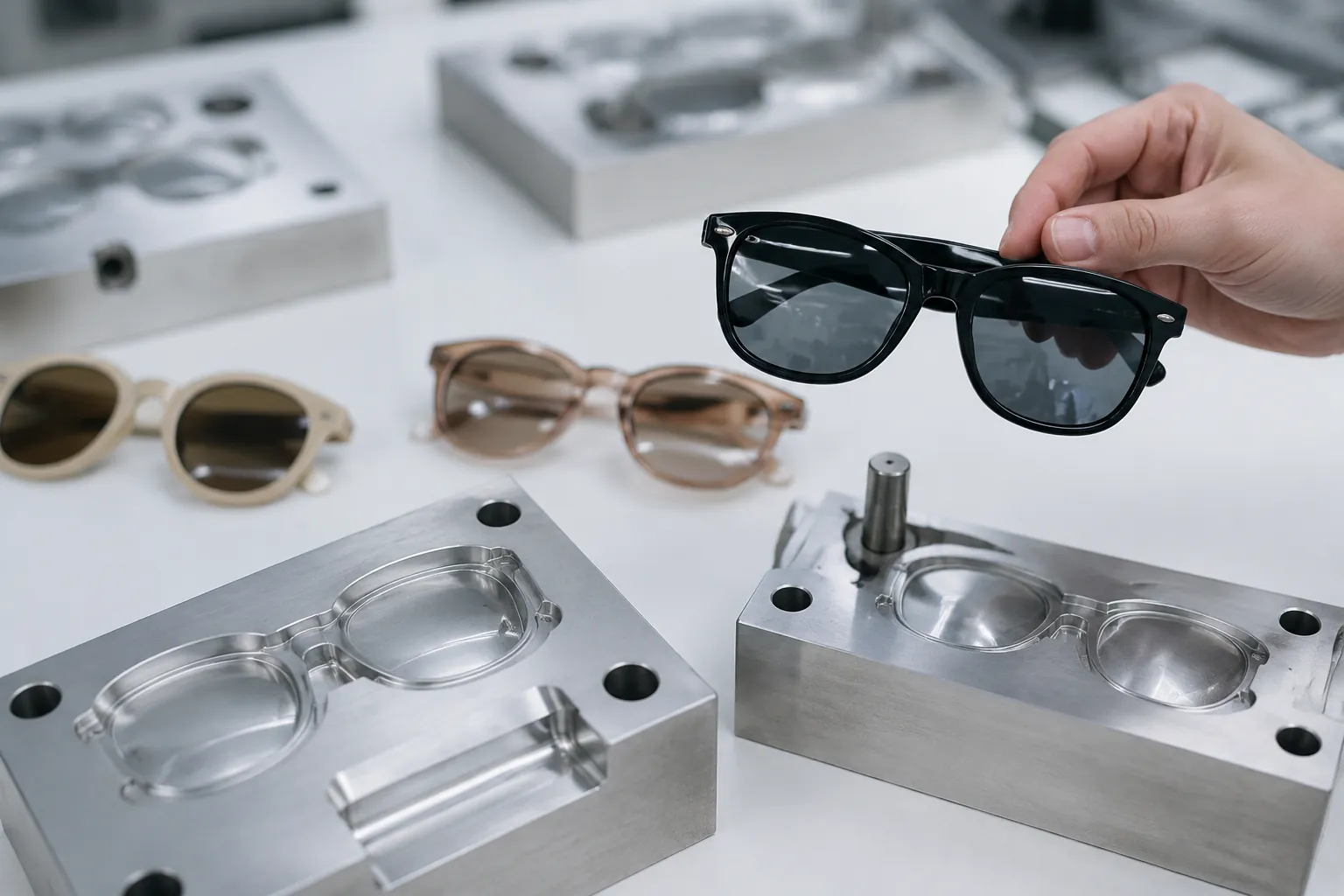
This is for brand owners, importers, distributors, and retailers buying polarized sunglasses in volume. A polarized claim is not enough. You need to know how the lens behaves under angle, heat, abrasion, and real field use before you place a bulk order. The goal is to catch weak polarization, poor lamination, color drift, and coating failure before you are stuck with 5,000 pairs that look fine on paper and fail in store.
Start With The Claim, Then Prove The Lens
Buyers often ask whether a lens is polarized. That is the wrong first question. Ask how much glare it blocks, how stable that performance stays across lens angles, and whether the polarizing film survives the rest of the build. A lens can pass a quick showroom demo and still fail in use if the film is weak, the lamination is uneven, the coating stack is poor, or the frame assembly adds stress.
For wholesale orders, ask for a defined test method, not a marketing line. You want the supplier to show the lens under a polarizing filter, then rotate it while checking the dark state. You also want consistent results across the same design, not one strong sample and a weaker production lot. In practice, compare at least three sample pairs from the same batch and confirm that left and right lenses behave within a narrow visual band. If one lens goes visibly darker at 90 degrees and the next pair never fully extinguishes, the process is unstable.
Ask the factory which construction you are buying. A polarized CR-39 lens, TAC lens, or PC lens will not behave the same way during cutting, edging, and heat exposure. CR-39 is generally easier to machine and often gives stable optics, but it is less impact resistant than polycarbonate. TAC can deliver strong polarization in a thin stack, but lamination quality matters more. Polycarbonate is impact-friendly, but heat control, coating adhesion, and warp management become more important. If the supplier cannot describe the base lens material, thickness, and polarizing film orientation, that is not a procurement-ready answer.
Buyer rule: treat "polarized" as a measurable performance claim, not a feature checkbox.
If you source from a factory like LumiShades, confirm that the sample set is built with the same lens material, tint recipe, and decoration process intended for bulk. An acetate frame with a polarized CR-39 lens behaves differently from an injection frame with a different lens stack. The frame process matters because heat, drilling, milling, and surface finishing can affect lens stress and alignment. The supplier should be able to tell you the lens thickness tolerance, the rim fit target, and whether the lens is cut before or after frame finishing.
Test The Extinction, Not Just The Look
The simplest field check is still useful. Hold the lens in front of an LCD screen or a second polarized lens and rotate it. At the correct angle, transmitted light should drop sharply. A weak lens usually never gets fully dark, or it only darkens in a narrow band. That points to poor polarizing efficiency, inconsistent film orientation, or contamination in the lamination stack.
For buyers, the useful metric is repeatability. Ask for multiple samples from the same production run and compare them side by side. If one pair blocks glare well and the next pair does not, you have a process problem. In production, you are looking for the same visual result across the lot, not lab-grade perfection. A practical acceptance rule is that both lenses in a pair should reach the same dark-state behavior by eye, with no obvious mismatch in density or rotational position. If one lens starts to gray out at 80 to 90 degrees and the other at 60 degrees, reject the pair.
Use a simple buyer-side test sequence:
- Check both lenses from each sample pair.
- Rotate each lens through 180 degrees in front of a polarized screen.
- Compare dark state, not just tint color.
- Note any lens that shows patchy darkening, visible banding, or a weak extinction point.
- Repeat after light finger pressure on the lens rim and after reinserting the lens into the frame if it is a removable sample. Movement can expose mounting stress.
In production, the issue is often film orientation, adhesive contamination, or heat distortion during lamination. Small dust inclusions can create local haze. A misaligned film makes one lens behave differently from its mate. That is a reject condition for volume buyers, even if a casual retail demo still looks fine. For a stable wholesale program, ask the factory what its internal reject threshold is for extinction mismatch, visible haze, and banding. If they do not have one, the process is not controlled.
Use A Simple Comparison Matrix Before Ordering
Different lens constructions behave differently in wholesale supply. If your customer base spans driving, fishing, sport, or general retail, compare the tradeoffs before you lock the spec. The table below is not optional. It is how you avoid ordering the wrong lens type for the channel.
| Lens type | Glare control | Clarity and color | Durability risk | Typical buyer fit |
|---|---|---|---|---|
| Standard polarized lens | Strong if film orientation is correct and lamination is clean | Stable tint, practical for most retail use | Moderate; depends on coating and rim fit | Core wholesale sunglasses, broad assortment programs |
| High-tint polarized lens | Strong, especially in bright sun | Darker view, can reduce low-light comfort and color discrimination | Similar to standard, but distortion must be checked more carefully | Outdoor, driving, and high-sun channels |
| Mirror-coated polarized lens | Strong, but coating adds a second performance layer | More reflective and can shift perceived color | Higher scratch, adhesion, and edge-chip risk | Fashion, sport, and premium retail collections |
| Polycarbonate polarized lens | Good if optical alignment is controlled | Lightweight, impact-oriented, can show more stress if overheated | Heat and coating process must be tightly managed | Active use, safety-minded assortments, youth lines |
On a procurement sheet, add lens type, base material, target visible light transmission, nominal thickness, and coating stack. A useful spec is not just "polarized brown lens," but "TAC polarized lens, 1.0 to 1.2 mm nominal thickness, brown tint, mirror topcoat, anti-scratch hard coat, target VLT 15 to 20 percent." That gives the supplier an actual build target instead of a loose style direction.
LumiShades offers in-house lens tinting, decoration, and QC. That matters because fewer outside handoffs usually means fewer chances for handling damage. It does not guarantee performance. It just reduces coordination risk and makes it easier to trace whether a defect started in tinting, coating, edging, or final assembly.
Check Angle Behavior And Side Glare
Polarization is angle-sensitive by design. That is useful. It also means the lens can look good head-on and fail when the wearer tilts, turns, or looks through the corner of the lens. Buyers should test side glare, not only straight-on glare. A lens with a clean center but weak edge performance creates complaints in driving, boating, and outdoor retail because the user sees glare returning as the frame shifts on the face.
Practical test: hold the lens in front of reflective metal, wet pavement, a glossy table, or a bright phone screen. Then tilt the lens and observe whether glare suppression remains usable across the wearing range. A good production lens should not show sudden edge flare or a pronounced color flip when the frame is rotated a few degrees. If the edge brightens sharply or the lens looks cloudy off-axis, that can point to film misalignment, stress from poor cutting, or coating warp.
Use a simple acceptance mindset. The wearer does not keep the frame perfectly centered all day. They look down, turn their head, and shift the glasses during movement. If the lens only performs in a narrow center zone, it may still pass a casual showroom check and then fail in the field. Write rejection criteria before the PO: obvious edge artifacts, visible haze after tilt, or side-view glare that breaks the intended use case.
- Check central view and edge view.
- Check the lens while rotating the frame, not only the lens alone.
- Look for color shift at the edge.
- Look for haze after tilt, which can point to stress in the lens or coating.
- Check both lenses under the same lighting so you can compare symmetry, not just absolute darkness.
In volume production, edge behavior is often affected by the cutting program, heat from finishing, and rim pressure after assembly. A lens can be optically fine as a blank and still fail once it is fitted into a tight acetate or metal rim. If the frame design requires aggressive insertion force, tell the supplier to verify the lens after final assembly and again after a short heat cycle, because heat can reveal stress that room-temperature inspection misses.
Inspect For Coating, Lamination, And Distortion Problems
Many polarization complaints are not really polarization problems. They are coating, lamination, or surfacing problems. A lens may pass the glare test and still fail because it has distortion, poor adhesion, or surface defects that show up after packaging, cleaning, or heat.
Ask for three checks on every sample lot: optical distortion, coating adhesion, and surface uniformity. Simple field methods are enough to catch most issues. View printed text through the lens. Watch for waviness, double lines, or image pull at the lens edge. Wipe the lens with a standard microfiber cloth and check whether the coating changes appearance or starts to haze. Then inspect under bright oblique light for pits, scratches, trapped dust, or uneven reflection. If the mirror layer is included, look closely at edge lift and corner wear, because those are common early failure points.
Heat exposure matters. Polarized lenses can be more sensitive during frame assembly, especially if the frame is acetate, or if the factory uses heat for temple shaping, polishing, or decoration. If the lens seat is too tight, the rim can introduce stress marks or subtle distortion. A practical buyer request is to inspect samples before and after a short heat cycle, then compare the same reference text or screen pattern. That comparison will catch problems that a one-time check misses.
Decoration method also matters. Laser engraving near the lens seat can create local heat if the process is poorly controlled. Pad printing is lower heat but can introduce solvent or adhesion issues if curing is rushed. Metal logo plates can affect assembly pressure and should be checked for interference at the temple and rim. If the product has surface printing, ask whether it is applied before or after lens insertion, because that can change the risk profile for contamination and scratch marks.
Factories with injection molding, acetate cutting, CNC milling, and in-house QC, such as LumiShades, can control more of those variables internally. That helps, but it does not replace buyer testing. It just means the supplier should be able to trace the issue faster when a sample fails and tell you which step created the defect.
Ask For Compliance Proof That Matches Your Market
Polarized performance is only one piece of the buy. Your compliance file needs to match the destination market and the intended product category. For the certifications and registrations already on record, ask for the exact scope and current documents for CE EN ISO 12312-1, FDA registration, ANSI Z80.3, AS/NZS 1067, REACH, ISO 9001, and BSCI. Do not accept a badge image in a catalog. Request the document number, issuing body, and the date range or renewal status.
CE EN ISO 12312-1 and ANSI Z80.3 are not interchangeable. A U.S. retail channel may want ANSI-aligned documentation. Australia and New Zealand buyers will care about AS/NZS 1067. REACH is relevant for material restrictions. If your product has tint, frame compound, coatings, and decoration, the whole stack matters. Ask whether the tested sample matches the commercial spec exactly, including lens color, mirror finish, temple print, and any anti-reflective or hard-coat layer.
Use the compliance request as a procurement checklist, not a logo hunt. The documents should answer three practical questions: was the same construction tested, is the scope current, and does it cover the market you are selling into?
| Buyer need | What to request | Why it matters |
|---|---|---|
| EU retail | CE EN ISO 12312-1 test support, REACH material information | Product safety and chemical compliance |
| U.S. market | FDA registration evidence, ANSI Z80.3 test support | Retailer and importer documentation |
| Australia/NZ | AS/NZS 1067 support | Market-specific eyewear requirements |
| Multi-market program | Same sample reference across all tests, with revision control | Prevents spec drift between approvals and production |
Do not confuse compliance with optical performance. A product can be documented and still have weak polarization. You need both. The supplier should be able to hand you compliance evidence and a sample reference that matches the approved build, not a similar-looking model from an old file.
Build A Sample Plan That Survives Real Production
Sample approval should not end with one pair. For polarized sunglasses, ask for several units from the same sample batch and, if possible, one follow-up set after any requested revisions. That gives you a cleaner read on repeatability. A good buyer is not looking for a pretty sample; they are looking for evidence that the same result can be built 500 or 5,000 times.
For volume planning, LumiShades' stated MOQ is 50 pairs per design. Price improves at 300, 1,000, and 5,000 plus, down to about $2.10 per pair at volume. Use that range to stage the buy. A smaller pilot lets you validate lens behavior before you commit to the larger order where one bad spec becomes expensive. A practical sequence is 50 to 100 pairs for design validation, then a larger run after the sample is proven under your own inspection method.
Lead time also matters in test planning. Samples are 7 to 10 days. Bulk is 25 to 35 days. Use that window. If your team needs extra lab review, factor it in before the production slot is fixed. A rushed approval is how buyers end up green-lighting a lens that has not been checked for edge glare, coating wear, or fit pressure.
Build the sample plan as a controlled comparison, not a one-off approval:
- Request at least three sample pairs for each polarized spec.
- Test against the final frame color and lens tint combination.
- Log failures by type: extinction, distortion, coating, fit, or decoration interference.
- Approve only after a repeat sample matches the first.
- Lock the spec sheet before the bulk run and keep one signed control sample at both buyer and supplier sides.
Use tolerances that are simple enough for factory execution. Define the target lens color, acceptable visual darkness range, maximum visible mismatch between left and right lens, and the allowed surface defect threshold under bright light. You do not need a theoretical paper. You need an inspection standard that the line can actually follow.
This is where price and performance meet. A cheap lens that fails review is not cheap. It is scrap with freight attached.
Put The QC Checklist In The PO
The cleanest way to avoid disputes is to put the polarized lens checks directly into the purchase order and pre-production confirmation. Write the inspection points in plain terms. State the acceptable lens type, the tint, the compliance documents required, the sample count, the decoration method, and the defect thresholds you will use at incoming inspection.
A workable buyer checklist looks like this:
- Polarization verified against a reference filter or screen.
- Same dark-state behavior across left and right lenses.
- No visible banding, haze, or edge degradation.
- No coating lift, scratches, lamination bubbles, or edge chips.
- Compliance documents match the target market and the exact sample build.
- Sample quality matches the bulk control sample.
- Decoration method and placement do not interfere with lens seating or inspection.
For private label programs, specify decoration method by process. Laser engraving is crisp but needs heat control and placement discipline. Pad printing is cost-effective for logos and color marks, but you should define curing time and abrasion expectations. Metal logo plates can look premium, but they add assembly pressure and can create fit issues if the temple or rim geometry is tight. If the logo is close to the lens seat, require a fit check after the decoration step and again after final assembly.
Also define the commercial terms that support quality. If a supplier quotes a strong price but does not separate sample cost, bulk cost, and rework cost, you will have trouble comparing offers. When a program drops from a higher unit price to around $2.10 per pair at 5,000 plus, the question is not only whether the price is lower. It is whether the line can hold the same lens spec at that scale and whether rework or rejects will erase the savings.
Buyers who do this well spend less time arguing after shipment. They have a spec, a reference sample, and a rejection standard. That is the difference between ordering sunglasses and managing an eyewear program.
Have a custom sunglasses project in mind?
Send us your styles, target market and quantities and we will return a detailed quote with MOQ, lead time and a sample plan.
Get a QuoteWhy source this from Wenzhou with LumiShades
Wenzhou in Zhejiang Province is widely regarded as China’s eyewear manufacturing capital, producing a large share of the world’s sunglasses. That concentration matters to buyers: a deep local supply chain for acetate sheet, hinges, lens blanks, plating and packaging means shorter component lead times, easier color and material matching, and a workforce with decades of eyewear-specific skill. LumiShades has manufactured in this ecosystem since 2009, and our vertical integration — in-house injection molding, acetate cutting, CNC milling, lens tinting, decoration and quality control — means no part of your order is quietly subcontracted to a workshop you cannot audit.
For international buyers, that vertical control translates into accountability. When a single factory owns every step, defects are traced and fixed at source rather than bounced between vendors, and your specifications survive intact from first sample to bulk. We back this with 15+ years of experience, shipments to 60+ countries, more than 5 million pairs produced per year and a 98.5% on-time delivery rate. Our certifications — CE EN ISO 12312-1, FDA registration, ANSI Z80.3, AS/NZS 1067, REACH, ISO 9001 and BSCI audit — mean the compliance documentation your market requires already exists. Explore our manufacturing capabilities and quality control process to see how this works in practice.
Frequently asked questions
What is the quickest buyer-side test for polarized lenses? Rotate the lens in front of a polarized screen or reference filter. A proper polarized lens should show a clear dark state at the correct angle. Check both lenses in the pair and repeat on multiple samples from the same lot.
What tolerance should I use for polarized sample approval? Use practical visual tolerances: both lenses in a pair should show the same dark-state behavior by eye, with no obvious mismatch in extinction angle, no visible banding, and no edge haze under normal inspection light. For procurement, define the numeric tolerance with the supplier's control sample and inspection method.
Can a lens pass a polarization test and still be a bad buy? Yes. It can still have distortion, coating failure, edge glare, haze, lamination bubbles, or assembly stress. Polarization is only one part of the quality check.
What should I ask the supplier for before bulk order approval? Ask for sample units from the same batch, the exact compliance documents for your market, the lens specification, the decoration method, and a QC reference sample. Confirm MOQ, sample lead time, and bulk lead time before you lock the PO.
Do CE EN ISO 12312-1, ANSI Z80.3, AS/NZS 1067, FDA registration, and REACH mean the lens is polarized? No. Those documents relate to safety, market compliance, or material control. They do not prove polarization performance by themselves.
How should I compare prices on polarized sunglasses? Compare on a full landed spec: lens material, coating stack, compliance scope, decoration method, MOQ, and lead time. A quote that drops to about $2.10 per pair at volume can still be expensive if the sample pass rate is poor or the rejection rate is high.
What failure shows up most often in polarized wholesale orders? Misaligned film, coating problems, and inconsistent performance between samples. Buyers usually notice it first as weak glare suppression, edge artifacts, visible haze, or coating wear under bright light.
Ready to start?
Explore our rimless sunglasses or request a quote — our sales team replies within 12 hours.
Request a Quote