
Polarized Lens Tests Before Bulk Approval
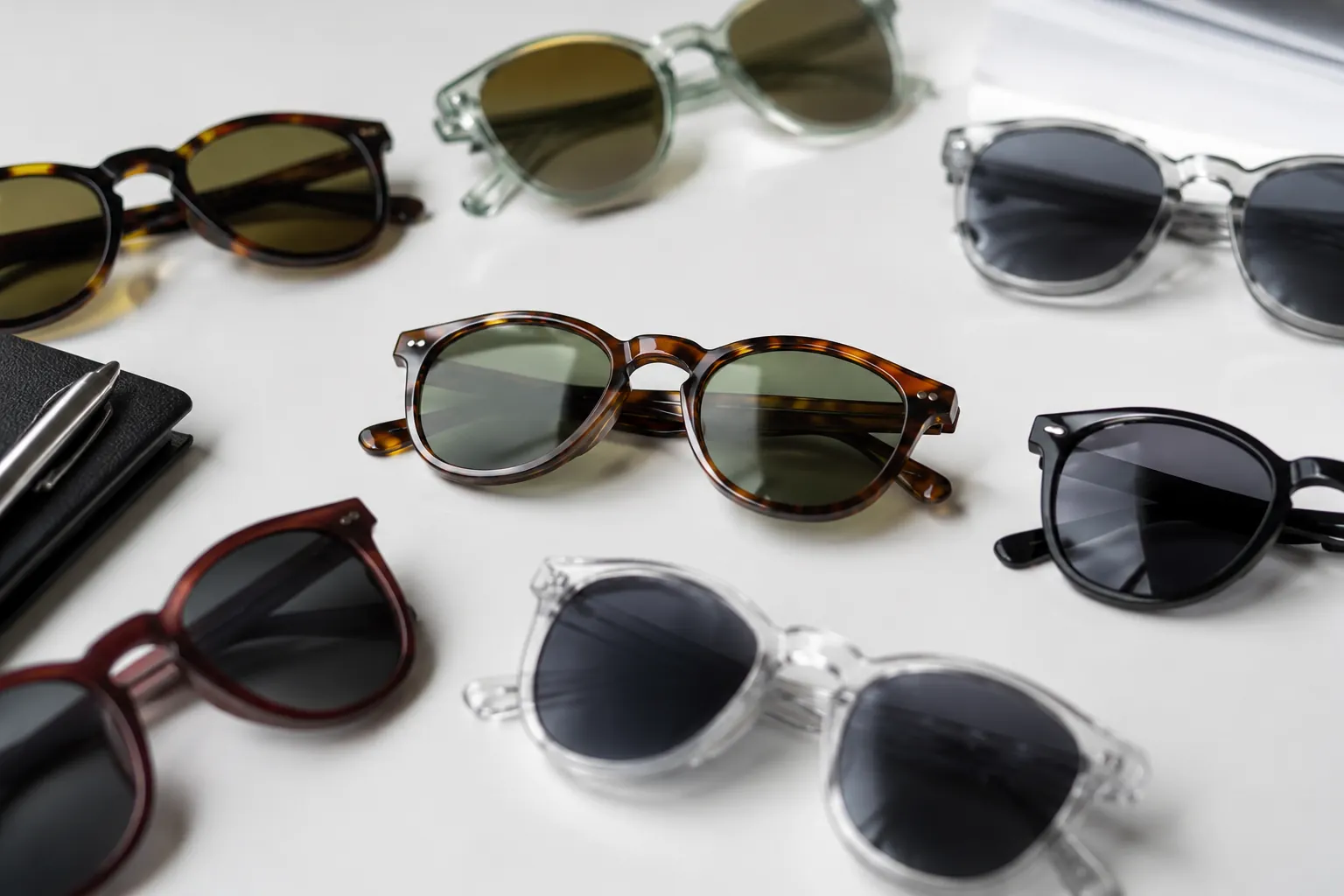
This guide is for brand owners, importers, distributors, and retail buyers approving custom polarized sunglasses before bulk production. The goal is to catch polarization failures, shade mismatch, assembly stress, and cosmetic defects before they become a bulk claim. A sales sample is not a control plan. You need a defined test pack, stage-by-stage checks, pass criteria, and a written approval gate tied to one signed golden sample.
Start with the failure modes, not the sales sample
Most polarized sunglass approvals fail for one simple reason: the buyer approves appearance, not process control. One showroom sample can look fine under office light and still hide the defects that show up in a 300-, 1,000-, or 5,000-pair run. A lens can pass a casual phone-screen check and still fail on axis consistency, shade matching, haze, edge quality, or coating cleanliness.
Before you approve bulk, treat the polarized lens as a controlled optical part. Check it at three points: before edging, after edging, and after frame assembly. That matters because lens performance can change after machining and mounting. A loose lens can look perfect. Press it into a tight groove and the problem appears.
Frame material changes the risk profile.
Injection-molded frames usually hold groove dimensions more consistently, but tool wear and cooling variation can still create pressure points. Acetate fronts allow premium finishing and richer color options, but fitting is more manual; heating, polishing, and hand insertion can change lens seating. TR90 and other sport-frame materials often have stronger wrap and higher retention force, which raises the risk of lens compression if the bevel or groove is off. Rimless and semi-rimless designs add drill or notch risk. They need their own approval criteria.
- Raw lens stage: confirm polarization effect, tint density, surface cleanliness, and that polarized and non-polarized stock are not mixed.
- After edging or beveling: confirm no edge chips, no unintended rotation, and acceptable bevel quality.
- After frame assembly: confirm left-right matching, no visible stress pattern under crossed filters, and no distortion from over-tight fit.
- Before packing: confirm lot consistency against the golden sample and verify decoration, labeling, and market paperwork.
If the factory only shows a quick polarized-card demo on one finished pair, that is not production approval. It is a demo. Nothing more.
The 5 tests buyers should request on every polarized order
You do not need a full outside laboratory program for every purchase order. You do need a repeatable in-process test set. These five checks catch most practical failures on standard B2B polarized sunglass programs.
- Cross-polarization verification. Ask for each lens to be checked against a polarized test card or crossed filter, rotated to show a clear light-to-dark change. Request left and right lenses separately, not only one finished pair held to a card. That reduces the chance of mixed lenses on the line.
- Polarization axis consistency. Ask the factory to confirm left and right lens orientation before and after edging. A small rotation error can create wearer discomfort even when both lenses are technically polarized. Set a numeric tolerance in the approval sheet. Put it in writing.
- Shade and color matching. Require left-right comparison in a light box or on a controlled white background. Check both visual density and color cast. This matters for smoke, brown, green, gradient, flash mirror, and fashion tints. Small variation is obvious on shelf.
- Stress and distortion inspection. Ask the assembled pair to be viewed between crossed polarizing filters. Over-tight mounting often appears as rainbow bands, concentrated stress at the groove, or bright local flare near the nasal or temporal edge. It may not be a formal compliance failure, but it will trigger complaints.
- Surface and edge cosmetic inspection. Require a written cosmetic standard for scratches, pits, coating voids, contamination points, edge chips, bevel drag, and decoration overspray or print contamination near the lens area.
These tests are practical because they can be done in production. Where required by the destination market, the factory should separately support the order with documentation relevant to CE EN ISO 12312-1, ANSI Z80.3, or AS/NZS 1067.
What each test actually catches
| Test method | Typical control point | What it confirms | Common defect caught | Buyer risk if skipped |
|---|---|---|---|---|
| Polarized card or crossed filter rotation | Incoming lens QC and final QC | Lens has a real polarization effect | Non-polarized substitution, weak or uneven effect | Bulk arrives labeled polarized but performs like a tinted lens |
| Axis orientation check on left and right lenses | After edging and after assembly | Both lenses are aligned consistently | One lens rotated during cutting or insertion | Visual imbalance, wearer discomfort, higher return rate |
| Light box shade comparison | Lens matching station | Tint density and color uniformity | Left-right mismatch, lot-to-lot variation | Pairs look uneven on shelf; private-label stock rejection |
| Cross-polarized stress inspection after assembly | Assembly line and final audit | Frame fit is not over-compressing the lens | Rainbow strain pattern, pressure at groove or corner | Visible optical complaints after fitting, shipping, or warm-weather storage |
| Surface and edge cosmetic inspection | Before assembly and before packing | Surface quality and finishing control | Scratches, pits, edge chips, coating marks, mirror pinholes | Immediate QC failure at destination warehouse |
Buyers often stop after the first row. That is the mistake. A lens can be genuinely polarized and still be a poor production lens. Bulk approval should confirm function, matching, and assembly quality together.
Set pass criteria before the factory starts bulk
A vague approval creates arguments later. Put measurable limits in the purchase order file, sample approval sheet, or QC appendix before production starts. The point is not to create a lab specification for a fashion order. The point is to remove ambiguity.
A practical buyer specification can include the following:
- Polarization verification: both left and right lenses checked during first article approval; ongoing production controlled by in-line sampling or 100% station check on new programs.
- Axis consistency: no visible left-right imbalance in finished assembly; where the factory can measure angle, define the allowed deviation in writing before production starts.
- Shade matching: no visible left-right tint difference under standard inspection light at a normal viewing distance.
- Cosmetic acceptance: no visible scratches, pits, bubbles, coating drag, mirror pinholes, or edge chips in the main field of view at normal inspection distance.
- Stress pattern: no pronounced rainbow concentration at mounting points when checked under crossed filters.
If your brand works to AQL, state it early. Many buyers use AQL 2.5 for major defects and 4.0 for minor defects, but internal standards vary. What matters is that the supplier knows whether a small edge chip hidden under the rim is acceptable, whether one tiny mirror pinhole is rejectable, and whether spare replacement pairs are required.
MOQ, price, and screening level are linked. At low MOQs such as 50 to 100 pairs per colorway, strict cosmetic screening can increase scrap, especially on mirrored or gradient polarized lenses. At larger volumes, unit pricing often improves because tinting and assembly stabilize, but only if the approval standard is frozen early. If a buyer changes lens color, logo print method, or mirror effect after pilot approval, yield and lead time usually change too.
Ask for checks at three production stages
The cheapest place to catch a lens problem is before assembly. The second cheapest is during assembly. After packing, every defect costs more. For new polarized programs, staged verification is standard buying practice.
- Pre-production sample stage: approve lens color, polarization effect, cosmetic level, and logo placement. If the frame is acetate, injected PC, TR90, or CNC-milled, ask for the same lens check in the real frame, not only as loose lenses. Decoration matters here too: pad print, silk screen, laser engraving, hot stamping, and metal logo application each create different handling and contamination risks around the lens area.
- Pilot run stage: request photos or short video showing cross-polarization, left-right shade match, and post-assembly stress check. This is usually where frame groove pressure, bevel mismatch, and lens rotation first appear.
- Pre-shipment stage: confirm batch consistency, packaging, barcode or carton labeling, and market-specific compliance documents. For mirrored lenses, add a final cleaning and wipe-mark review because mirror surfaces show handling defects more clearly than plain smoke lenses.
Material behavior changes the control plan. Acetate fronts may require heating and manual insertion, so stress checks after fitting are especially important. TR90 and injection-molded sports frames often have tighter wraps, making axis consistency and edge seating more sensitive. Rimless or semi-rimless designs need extra attention to drill position, notch quality, and crack risk.
Do not wait until the container booking date to ask for evidence. By then, the factory is managing output, not solving root causes.
How polarization testing connects to compliance and documentation
Polarization is only one part of product acceptance. Separate two questions clearly: first, is the lens actually polarized and stable in production; second, does the finished sunglass comply with the market standard it will be sold under.
Depending on the destination market and product category, the file may include references such as CE EN ISO 12312-1, ANSI Z80.3, or AS/NZS 1067. These standards cover broader issues such as luminous transmittance category, UV filtration, labeling, and general safety requirements. Chemical control may also matter for frame materials, coatings, inks, and soft components, so REACH or similar restricted-substance control can be relevant. Some buyers also request manufacturer information related to FDA registration for the US market, plus quality-system or social-compliance records such as ISO 9001 and BSCI.
None of those documents replaces in-line lens checks. A valid test report does not tell you whether one lot has a left-right tint mismatch, whether assembly staff rotated a lens during edging, or whether a sport frame is over-compressing the nasal corner. Keep both streams separate in your process: compliance paperwork for the product file, and production checks for the actual goods.
Keep one signed golden sample attached to the purchase order. Note the frame code, lens color code, polarization requirement, decoration method, logo location, hinge or hardware finish, and packaging version. That sample becomes the reference during final QC and cuts down argument when the bulk lot is compared against the approved standard.
The defects that show up most often in bulk
Most polarized sunglass claims come from a short list of predictable production failures:
- Weak incoming lens control: the assembler assumes the lens supplier is stable, but one lot has weak polarization effect or color drift.
- Lens mix-up on the line: polarized and non-polarized lenses look similar before testing, especially in smoke colors.
- Rotation introduced during edging: the lens is cut correctly by shape but loses orientation during handling or fitting.
- Frame groove too tight: the lens passes as a loose component but shows stress after insertion, especially in curved or fashion-wrapped fronts.
- Left-right tint mismatch: more visible on brown, green, gradient, flash mirror, and light-category lenses than on dark smoke.
- Mirror and decoration handling marks: wiping scratches, overspray, print contamination, or pinholes become visible only under clean inspection light.
- Hidden edge chips: concealed by the frame front at packing, then discovered by the customer after handling or after the lens loosens in transit.
These are process failures, not random surprises. That is why supplier capability matters. A factory that controls lens tinting, decoration, and final QC in-house can usually isolate root cause faster than an assembler buying mixed components from several outside workshops.
For a first order, keep the gate tight: sample approval, pilot confirmation, and pre-shipment verification. For repeat orders, require the supplier to retain the approved lens reference, repeat the same inspection method lot by lot, and flag any change in lens vendor, mirror recipe, frame material, or logo process before production starts. Repeatability is the real approval target.
A simple approval checklist buyers can send today
Polarized sunglass bulk approval checklist
- Confirm frame material, lens type, lens color, and whether mirror, flash mirror, or gradient finish is included.
- Request cross-polarization verification for left and right lenses separately, not one pair only.
- Require orientation control after edging and after assembly, especially on wrapped shapes.
- Require left-right shade matching under controlled inspection light or light box.
- Require post-assembly stress inspection, especially for acetate fronts, sports wraps, and tight grooves.
- Define cosmetic limits for scratches, pits, coating marks, mirror pinholes, and edge chips.
- Confirm decoration method near the lens area, such as pad print, silk screen, laser, hot stamp, or metal badge, and check for contamination risk.
- Tie the order to one signed golden sample with lens and packaging references.
- List required market documents: CE EN ISO 12312-1, ANSI Z80.3, AS/NZS 1067, REACH, FDA registration information where relevant, ISO 9001, BSCI, or other market-specific requests.
- Approve pilot-run evidence before full packing and fix the final inspection date inside the normal bulk schedule.
- For low MOQs, confirm whether spare replacement pairs will be packed to cover yield loss, transit damage, or final random inspection failures.
This is not a complicated system. It is a disciplined one. Buyers who define these points in writing usually avoid the most common polarized lens disputes, because the supplier knows exactly what must be controlled before goods leave the factory.
Have a custom sunglasses project in mind?
Send us your styles, target market and quantities and we will return a detailed quote with MOQ, lead time and a sample plan.
Get a QuoteWhy source this from Wenzhou with LumiShades
Wenzhou in Zhejiang Province is widely regarded as China’s eyewear manufacturing capital, producing a large share of the world’s sunglasses. That concentration matters to buyers: a deep local supply chain for acetate sheet, hinges, lens blanks, plating and packaging means shorter component lead times, easier color and material matching, and a workforce with decades of eyewear-specific skill. LumiShades has manufactured in this ecosystem since 2009, and our vertical integration — in-house injection molding, acetate cutting, CNC milling, lens tinting, decoration and quality control — means no part of your order is quietly subcontracted to a workshop you cannot audit.
For international buyers, that vertical control translates into accountability. When a single factory owns every step, defects are traced and fixed at source rather than bounced between vendors, and your specifications survive intact from first sample to bulk. We back this with 15+ years of experience, shipments to 60+ countries, more than 5 million pairs produced per year and a 98.5% on-time delivery rate. Our certifications — CE EN ISO 12312-1, FDA registration, ANSI Z80.3, AS/NZS 1067, REACH, ISO 9001 and BSCI audit — mean the compliance documentation your market requires already exists. Explore our manufacturing capabilities and quality control process to see how this works in practice.
Frequently asked questions
Is a phone screen test enough to confirm polarization? No. It is only a quick visual check. Request a polarized test card or crossed filter check, verify the left and right lenses separately, and repeat the check after edging and final assembly. A phone screen can catch a gross failure, but it does not replace a controlled production check.
Should I test loose lenses or finished sunglasses? Both, if possible. Loose-lens testing confirms the incoming lens itself. Finished-pair testing catches problems introduced during edging and assembly, including orientation loss, mounting stress, and left-right mismatch. If you only test one stage, you can miss the defect source.
What is the biggest production risk on polarized sunglasses? Inconsistency. The main issues are left-right orientation mismatch, shade mismatch, and frame-induced stress after assembly. Those are the defects that usually create complaints and returns.
Do polarized checks replace compliance testing? No. Polarization checks are production controls. Compliance still depends on the destination market and the finished product standard, such as CE EN ISO 12312-1, ANSI Z80.3, or AS/NZS 1067. A lens can pass a polarization check and still fail a compliance requirement.
How early should I request these checks from the factory? At the sample stage, before the factory makes the first production sample set. Put the inspection points into the sample request, then repeat them at pilot run and pre-shipment stages. Early written approval is the easiest way to prevent disputes later.
Ready to start?
Explore our round sunglasses or request a quote — our sales team replies within 12 hours.
Request a Quote