
Polarized Sunglasses Wholesale: Buyer Checks
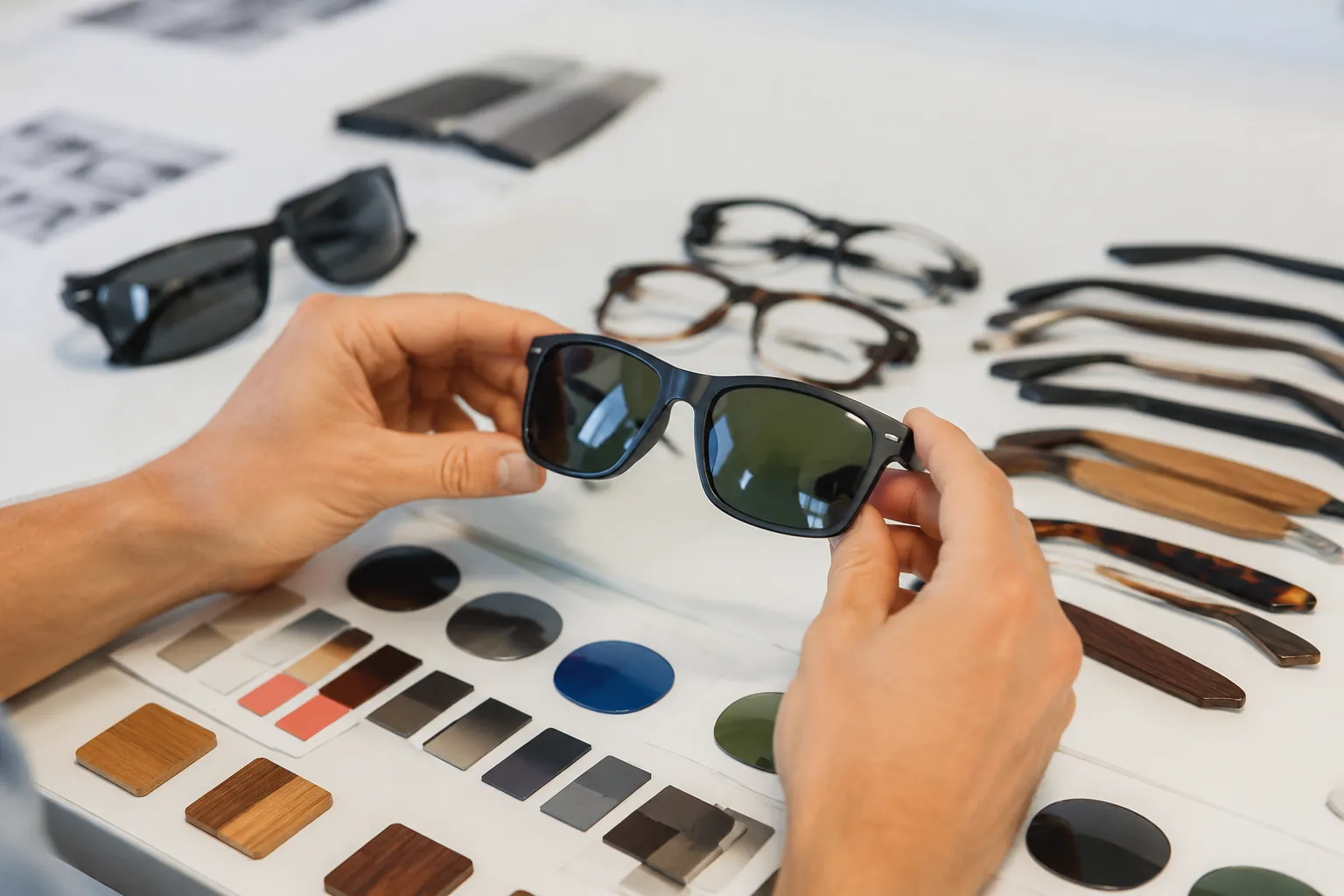
Buying sunglasses in volume? Polarized lenses are not a box to tick. You need to verify that the polarization is real, that the lenses sit correctly in the frame, and that the product meets the rules in the market you sell into. This guide is for brands, importers, distributors, and retailers who want a practical way to judge a supplier before placing a bulk order. It focuses on the checks that prevent bad batches, returns, and customs or compliance disputes.
Start with the market: not every polarized lens fits every channel
Polarized sunglasses sell well where glare control is the reason to buy: driving, fishing, boating, snow, golf, and outdoor retail. That changes the spec. A fashion account may only need polarization on part of the assortment, because some tints look too dark indoors and drive returns. A marine or driving program usually needs tighter optical control, stronger UV assurance, and stricter lot discipline.
Before you ask for a quote, define three things in writing: the use case, the target price band, and the test standard. Those three choices shape the lens construction, the acceptable tint density, and the QC method. Skip this step and you either overpay for performance the customer never notices, or you ship a lens that looks fine on a sample card and fails in real use.
| Channel | What buyers usually need | Common risk | Practical lens approach |
|---|---|---|---|
| Fashion retail | Good glare reduction, stable tint, clean appearance | Overly dark lens, color mismatch across pairs | TAC or PC polarized lens with controlled tint and lot-level color check |
| Driving / outdoor | High glare cut, low distortion, consistent polarization axis | Hot spots, poor road-sign readability, complaints on night use | Verify transmittance, axis alignment, and surface quality on random finished pairs |
| Sport / marine | Strong glare control, impact resistance, stable fit | Lens delamination, frame distortion, poor coverage | Match lens material and wrap geometry to activity; test in the actual frame |
| Value retail | Price control, acceptable performance, low defect rate | Cheap film failure, inconsistent darkness, high fallout rate | Keep the spec simple and require lot inspection records |
As a planning benchmark, polarized wholesale programs are easier to manage once the SKU set is narrowed to 2 to 4 lens tints and 1 to 2 frame platforms per market. That reduces sample approvals and keeps tint variation under control. LumiShades supports custom sunglasses programs from MOQ 50 pairs per design, with pricing improving at 300, 1000, and 5000+ pairs. Price matters. So does whether the supplier can hold the same optical behavior from sample to bulk.
What a real polarized lens is supposed to do
A polarized lens is not just a dark lens. It contains a polarizing filter that blocks horizontally reflected light. That reduces glare off water, asphalt, glass, and snow. A properly polarized lens should also noticeably dim a polarized LCD or phone screen when rotated to the blocking angle, usually about 90 degrees from the active axis.
For wholesale buyers, the real issue is repeatability. A sample can be correct because someone hand-picked it. Bulk production is different. Film orientation, lamination quality, lens thickness, and cutting accuracy all affect the final result. If the polarization axis is off, glare reduction drops. If the film is uneven, you get patchiness or visible haze. If the tint is not controlled, the line looks mixed. Retail presentation suffers.
Ask the supplier how the lens is built and how it is cut. Common options include TAC polarized lenses, PC polarized lenses, and glass in some niche applications. TAC is common because it balances cost, clarity, and weight. PC is used when impact resistance matters more. Glass is less common in modern wholesale sunglasses because it is heavier and breaks more easily. A practical lens spec should also state visible light transmission range, UV400 coverage, lens thickness, and acceptable surface defect level.
Useful buying detail: TAC polarized lenses often sit around 1.0-1.1 mm laminated thickness in finished sunglass applications, while PC polarized lenses are commonly thicker and more impact-oriented depending on the frame design. If you are buying wrap styles, ask whether the base curve and lens thickness were validated in the exact frame. Flat-lens approval is not enough for a 6-base or 8-base style.
Short version: if a factory cannot explain the lens stack, film source, lamination method, and test method in plain language, do not assume the lens is properly polarized. Assume nothing.
Five checks that tell you if polarization is real
You do not need a lab to catch basic failures. You do need a disciplined sample check and a repeatable lot audit. Use these five checks on pre-production samples and again on bulk cartons.
- Polarization screen test: Rotate the lens in front of a phone or LCD screen. The image should darken sharply at the correct angle. The blackout should be obvious, not subtle.
- Pair matching: Compare left and right lenses. They should look the same in tint, brightness, and viewing comfort. Mismatched pair appearance is a sign of inconsistent processing.
- Axis consistency: Check multiple pairs from the same lot. The blocking behavior should be consistent pair to pair, not dependent on which carton you opened.
- Edge and surface inspection: Look for bubbles, haze, scratches, chip-out, or cut marks from lamination and edging. On darker tints, even small flaws show up more easily under bright light.
- Frame-fit check: Insert the lens into the actual frame. A lens can pass alone and fail once mounted if the curve, cut line, or groove fit is off.
For a stronger field check, hold the finished sunglasses against a screen and rotate them 90 degrees. If the blackout effect is weak or uneven, put the lot on hold before approval. Write the acceptance threshold into the tech pack. Do not rely on "looks okay." A few practical internal rules help: no visible bubble larger than 0.5 mm in the viewing area, no lens-to-lens visible tint mismatch under standard daylight, and no noticeable axis error in wearing position. Agree the numbers with the supplier before production starts.
At LumiShades, lens QC is part of the in-house process, not an afterthought. That matters because polarization failures often appear after tinting, cutting, engraving, or assembly. A factory that handles injection molding, acetate cutting, CNC milling, lens tinting, decoration, and QC under one roof has fewer handoff points. Fewer handoffs mean fewer places for damage or axis drift to hide.
Alignment matters more than buyers think
Many first-time buyers focus on whether the lens is polarized and ignore orientation in the frame. That is a mistake. If the polarization axis is rotated incorrectly, the lens can look acceptable in the box and perform badly in use. The wearer may notice eye strain, uneven glare cut, ghosting around reflections, or a strange visual effect when turning the head.
Alignment problems usually come from three places: lens cutting, frame groove accuracy, or assembly handling. The lens must be cut to fit the frame curve cleanly. If the lens is forced in, stress marks or edge whitening can appear. If the frame groove is inconsistent by even a small amount, the lens can sit at a slight angle. If assembly staff mix left and right parts carelessly, pair-to-pair variation rises.
Buyers should ask for these controls:
- Lens orientation spec in the tech pack, not verbal instructions.
- Assembly reference points for left and right lens insertion.
- Mounted sample approval against the exact frame shape, not a loose lens sample.
- Random finished-pair inspection, not only loose lens inspection.
For wrapped sport frames, the tolerance stack matters. A small lens cut-angle error plus a slight groove deviation plus a press-fit issue can create a visibly wrong result. As a practical buying rule, ask the supplier what their internal fit tolerance is on the lens perimeter and whether they check lens seating after decoration. Good factories use a combination of go/no-go gauges, visual axis marks, and final hand inspection before packing.
If you are buying a 6-base or 8-base style, insist on mounted samples from the exact production line. Flat-lens approval is not enough. A 1-degree to 2-degree orientation drift sounds small, but in wrap eyewear it can affect comfort and perceived clarity.
Compliance: which documents actually matter
Polarized lenses do not get a free pass on compliance. If you sell into regulated markets, you need the right paperwork for the product category and destination. LumiShades holds certifications and registrations including CE EN ISO 12312-1, FDA registration, ANSI Z80.3, AS/NZS 1067, REACH, ISO 9001, and BSCI. That list matters because buyers often ask for certificates that do not match the actual product or region.
For sunglasses, the relevant checks usually include optical properties, UV protection, labeling, and material safety. CE EN ISO 12312-1 is the key European sunglasses standard. ANSI Z80.3 is relevant for the U.S. market. AS/NZS 1067 applies to Australia and New Zealand. REACH covers chemical substance restrictions, which matters for frames, coatings, lens inks, and decorative parts. FDA registration is part of U.S. regulatory handling, but it is not the same as a performance certificate.
| Document / standard | What it tells the buyer | Where it is most relevant | What it does not replace |
|---|---|---|---|
| CE EN ISO 12312-1 | Sunglasses optical and safety requirements for Europe | EU market | Buyer-side QC and carton labeling review |
| ANSI Z80.3 | U.S. sunglasses performance framework | U.S. market | Retail testing and final artwork approval |
| AS/NZS 1067 | Australian and New Zealand sunglasses requirements | AU/NZ market | Import documentation and market-specific labeling |
| REACH | Chemical restriction compliance for materials | EU supply chain | Performance testing |
Do not accept "certified polarized" as a vague phrase. Ask which standard applies, to which model, and which material set. A certificate for one style does not automatically cover every new frame, lens color, coating, or decoration method. If the supplier changes to a new lens ink, new logo plate adhesive, or a new hard-coat process, re-check compliance scope before shipping.
Price, MOQ, and lead time: what changes the lens cost
Polarized lens pricing is driven by material type, lens size, tint complexity, frame shape, decoration, and order volume. A simple black TAC polarized lens in a standard frame is cheaper than a gradient tint in a wrapped sport frame with metal logo plates, mirror coating, and tight assembly tolerances. That is normal. It should be in the quote.
For custom eyewear, MOQ and price usually move in tiers. LumiShades starts at 50 pairs per design, then pricing improves around 300, 1000, and 5000+ pairs. On larger runs, volume pricing can fall to about $2.10 per pair depending on lens material, frame construction, and decoration complexity. Samples typically take 7 to 10 days. Bulk production is usually 25 to 35 days. If a program needs extra decoration steps, add time for artwork proofing and pre-production confirmation.
The cost logic is straightforward. A polarized lens with a standard tint and no special surface treatment is easier to stabilize. Add mirrored coating, gradient tint, anti-scratch hard coat, or a custom logo engraving, and the risk rises. Add multiple colors in one order, and line changeovers become a factor. Change the lens tint, decoration, or frame material after sample approval, and the production clock resets because the supplier must reconfirm appearance and fit.
Here is the real decision point: do you want the lowest unit price, or fewer rejects? A slightly higher unit cost can be cheaper overall if it cuts rework, freight delays, and returns. One bad polarized lot can wipe out margin for an entire season.
Buyer rule: do not compare quotes only on lens price. Compare the full landed cost of a finished pair, including sample cycle, QC risk, rework risk, and delay risk.
How LumiShades handles polarization in production
Polarized sunglasses are only as good as the factory process behind them. LumiShades handles injection molding, acetate cutting, CNC milling, lens tinting, decoration, and QC in-house in Wenzhou. That setup reduces the number of outside vendors touching the lens and frame.
In a typical run, the process should move like this: sample confirmation, material and tint approval, pilot lot, inline QC, then final inspection before carton packing. The important control points are lens orientation, color consistency, fit after decoration, and carton-level quantity accuracy. Laser engraving, pad printing, heat-transfer graphics, and metal logo plates are all possible failure points if they are done before the final lens and frame check.
Decoration methods affect risk in different ways. Pad printing is flexible for logos but can wear if the cure is weak. Laser engraving is clean and durable on some materials, but it can mark the frame if depth is not controlled. Metal plates and glued emblems look premium, but adhesive bleed or edge lift can create reject issues in transit. For polarized programs, ask the factory to confirm that decoration does not touch the optical zone, lens seating path, or hinge area.
- Pre-production sample with the exact lens color and polarization spec.
- Bulk production reference sample retained by both sides.
- Inline QC notes for tint, surface defects, and lens fit.
- Final carton count check against purchase order quantities.
- Photos or records for any rework or replacement batch.
That sounds basic. It is. Basic controls are what keep a 5M+ pair annual operation at 98.5% on-time delivery from drifting into avoidable defects. If a supplier cannot show you how the line is controlled, the order size will not save you.
Approve the order only after these final checks
Before you release a bulk PO, close the loop on the details that get missed. This is the part that saves money.
- Confirm lens material: TAC, PC, or another specified construction.
- Confirm test standard: CE EN ISO 12312-1, ANSI Z80.3, or AS/NZS 1067 as relevant to market.
- Confirm polarization axis: written in the tech pack and checked on mounted samples.
- Confirm tint range: no surprise darkness shift between sample and bulk.
- Confirm decoration method: pad printing, laser engraving, metal plate, or no decoration.
- Confirm packaging count: pair count per carton, inner protection, and labeling.
- Confirm change control: no material substitution without written approval.
A solid pre-shipment checklist should also define rejection thresholds. For example: no cracked lens edges, no visible lamination bubbles in the viewing area, no left-right color mismatch that is noticeable at arm's length, and no unapproved artwork variation. If your program has different market versions, split them cleanly by region. Do not mix compliance assumptions. A lens that works for one channel can create trouble in another.
The best wholesale orders are boring. Same spec, same test method, same pack-out, same result. That is the job here: not buying "polarized sunglasses," but buying a repeatable product that stays polarized after assembly, passes the right market checks, and lands on time.
Have a custom sunglasses project in mind?
Send us your styles, target market and quantities and we will return a detailed quote with MOQ, lead time and a sample plan.
Get a QuoteWhy source this from Wenzhou with LumiShades
Wenzhou in Zhejiang Province is widely regarded as China’s eyewear manufacturing capital, producing a large share of the world’s sunglasses. That concentration matters to buyers: a deep local supply chain for acetate sheet, hinges, lens blanks, plating and packaging means shorter component lead times, easier color and material matching, and a workforce with decades of eyewear-specific skill. LumiShades has manufactured in this ecosystem since 2009, and our vertical integration — in-house injection molding, acetate cutting, CNC milling, lens tinting, decoration and quality control — means no part of your order is quietly subcontracted to a workshop you cannot audit.
For international buyers, that vertical control translates into accountability. When a single factory owns every step, defects are traced and fixed at source rather than bounced between vendors, and your specifications survive intact from first sample to bulk. We back this with 15+ years of experience, shipments to 60+ countries, more than 5 million pairs produced per year and a 98.5% on-time delivery rate. Our certifications — CE EN ISO 12312-1, FDA registration, ANSI Z80.3, AS/NZS 1067, REACH, ISO 9001 and BSCI audit — mean the compliance documentation your market requires already exists. Explore our manufacturing capabilities and quality control process to see how this works in practice.
Frequently asked questions
How can I tell if a polarized lens is real during sample approval? Use a polarized screen test and rotate the lens about 90 degrees. You should see a clear blackout effect, not just a slight dimming. Then check the same result on mounted samples, not only loose lenses. If the supplier can, ask for a photo or video of the test on the exact production sample.
Is TAC better than PC for polarized wholesale sunglasses? Not always. TAC is common for clarity, light weight, and cost balance, especially in fashion and general outdoor use. PC is usually chosen when impact resistance matters more, such as sport or active-use styles. The right choice depends on channel, target price, and expected wear conditions.
What certification should I ask for on polarized sunglasses? Match the market. Common references are CE EN ISO 12312-1 for Europe, ANSI Z80.3 for the U.S., and AS/NZS 1067 for Australia/New Zealand. Also ask for REACH where relevant. Make sure the certificate covers the exact model, material set, and decoration method you are buying.
What MOQ and lead time should I expect from a custom supplier? For LumiShades, MOQ starts at 50 pairs per design. Pricing improves around 300, 1000, and 5000+ pairs. Samples usually take 7 to 10 days, and bulk production is typically 25 to 35 days, depending on spec complexity, decoration, and order size. Any late change to lens tint or frame material can extend the schedule.
What causes polarization problems in bulk orders? The most common causes are wrong film orientation, poor lamination, lens cutting errors, frame groove mismatch, weak final inspection, and unapproved decoration changes. Most failures are process failures, not design failures. That is why mounted-sample approval and lot-level QC matter so much.
Ready to start?
Explore our square sunglasses or request a quote — our sales team replies within 12 hours.
Request a Quote