
Polarized Lens QC Checks That Reduce Claims
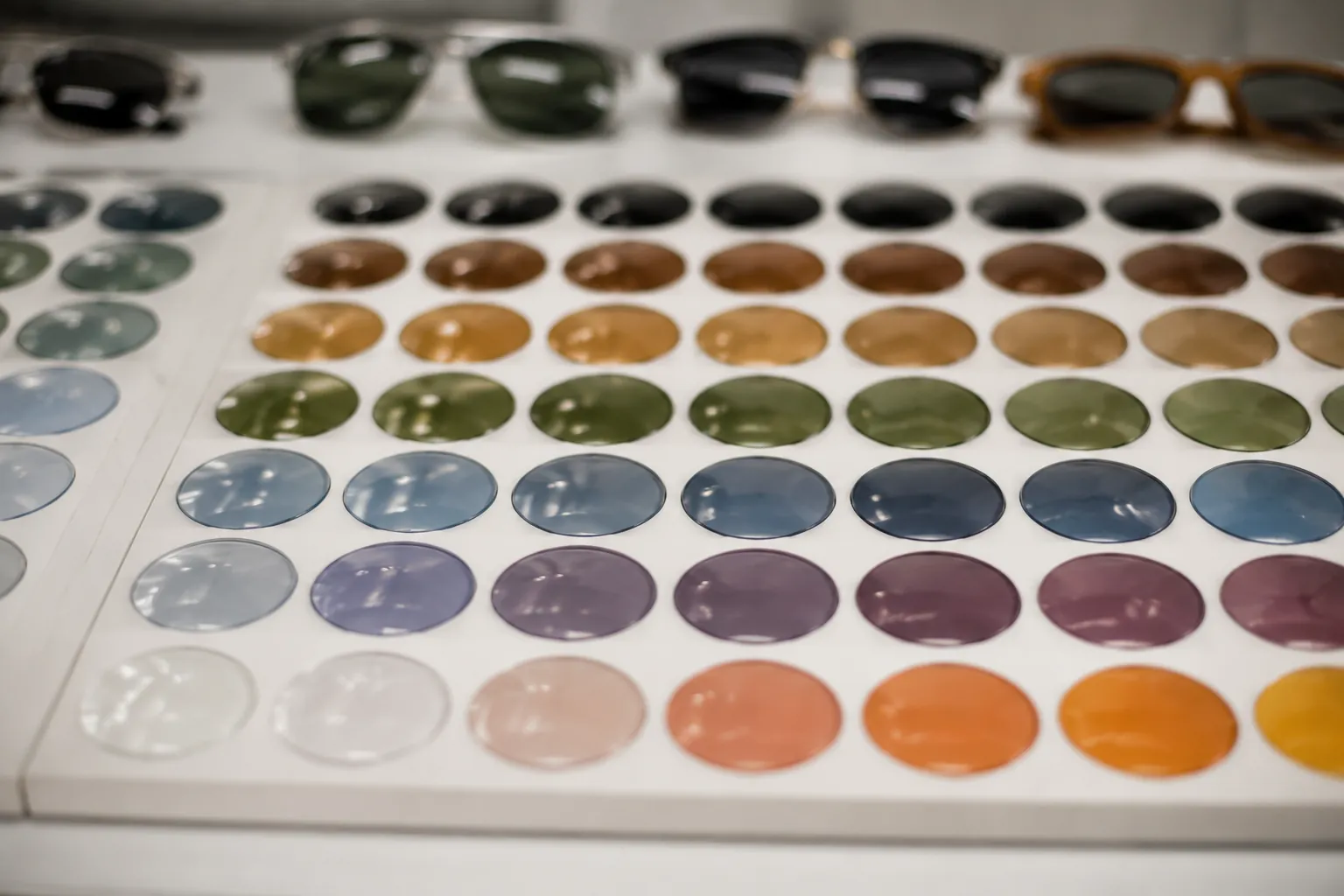
If you buy custom sunglasses in volume, polarized lens defects can turn into claims fast. This guide is for brand owners, importers, distributors, and retailers who need to know which factory checks matter before shipment. The goal is to catch polarization issues, optical distortion, lamination flaws, and logo misalignment before the order leaves the line. Do that well, and you reduce returns, rework, and avoidable disputes.
What a serious polarized lens QC plan should cover
Polarized lens QC is more than looking through two lenses under a light. A real plan breaks the lens into measurable risks: polarizing axis, transmission consistency, optical distortion, surface defects, lamination quality, and decoration placement. If a supplier cannot describe the inspection sequence, the checks are probably informal. That is a red flag.
A proper QC flow starts with incoming material, continues through in-process checks, and ends with final cosmetic and functional inspection. That matters because a problem introduced at tinting, cutting, or lamination may still look fine at first glance. A lens can pass a hand check and still fail once it is mounted in a frame and worn outdoors.
For buyers, the useful question is simple: can the factory show the same inspection method on every lot? A supplier may say "we check quality." Fine. Show the criteria. Show the sample size. Show the corrective action if a lot fails.
Buyer rule: ask for the inspection points, pass/fail criteria, sample size, and corrective action. "We check quality" is not a QC plan.
A practical polarized sunglasses QC plan should include:
- Incoming raw material check for lens blank clarity, thickness uniformity, and surface cleanliness
- Polarization axis verification on every production lot, usually with a rotating analyzer or polarizing filter
- Visual distortion check against a grid or ruled-line board at wearing distance
- Lamination bond inspection for haze, bubbles, edge lift, and trapped particles
- Logo, engraving, or plate placement check after decoration
- Final cosmetic inspection under controlled light before packing
Consistency is the point. A 50-pair launch, a 300-pair replenishment order, and a 1,000-pair program should not rely on the same loose handling if the defect risk is different. Bigger orders need proof that the process is stable, not just that the first sample looked good.
Polarization consistency is the first claim saver
Polarization consistency means the lens blocks reflected glare the same way from pair to pair. The main production risk is axis misalignment. If the polarizing film is not aligned correctly during lamination or assembly, one lens can perform correctly while another is rotated off the intended angle. Even a small deviation can create uneven darkness, weak glare reduction, or a complaint that one pair feels different from the next.
Factories should test with a reference light source and a rotating analyzer lens or polarizing filter. The operator rotates the analyzer until the reflected image dims to the expected level, then checks both left and right lenses for matching behavior. Ask for the target acceptance method in writing. If the supplier cannot explain it, the claim of "100% checked" does not mean much.
Buyers should define a clear acceptance method instead of relying on a vague pass/fail statement. The practical requirement is usually left/right symmetry, no obvious bright banding, and no visible mismatch in glare reduction across the lot. You do not need a lab report for every pair. You do need batch-level records showing how many samples were tested, how many failed, and what corrective action was taken.
| QC point | What to look for | Typical buyer risk if missed |
|---|---|---|
| Polarization axis | Uniform response under rotating analyzer | Uneven glare reduction, customer complaints |
| Left/right match | Both lenses behave the same at the same angle | One lens feels different, higher return rate |
| Batch consistency | Same result across sampled pairs in the same PO | Random failures inside the same shipment |
| Color plus polarization | Tint does not mask poor polarization performance | Looks right, performs wrong |
For a 300-pair order, a supplier may sample a limited number of pairs based on the agreed inspection level. For a larger run, expect documented lot sampling rather than a one-time first article check. The point is not the exact sample count. It is whether the factory can show a repeatable method and a record of what was inspected.
Optical distortion is the defect customers notice first
Distortion is one of the fastest ways to get a complaint because customers do not describe it in technical terms. They say the world looks warped, straight lines bend, or they feel visual strain after wearing the sunglasses. Underneath that complaint is usually a lens that was formed poorly, stressed during molding, cut unevenly, or distorted during heat exposure in tinting or coating.
The right check is simple but specific: view the lens against a grid, ruled-line board, or printed test pattern at a normal wearing distance, usually around 30 to 40 cm from the eye during inspection. The lens should not bend straight lines, create a wave pattern, or show edge wobble that would be obvious in daily use. Left and right lenses should also match each other in curvature and perceived strength.
Distortion matters especially for polycarbonate and injected lenses because heat can change lens behavior after shaping. A lens that looks acceptable before tinting may warp slightly after thermal exposure or coating cure. That is why the factory should inspect at more than one stage.
- Check blank clarity and stress marks before tinting or coating.
- Check lens shape and edge finish after cutting, molding, or CNC shaping.
- Check again after tinting, curing, or decoration.
- Confirm left/right symmetry in final assembly.
If you want a more precise answer from the supplier, ask what visual standard they use for distortion. Some factories compare against a flat pattern at a fixed distance; others use a magnified lens board. What matters is that the method is consistent and repeatable. A good supplier can show the inspection station and explain what causes a fail: visible wave, center deviation, or edge-induced bending beyond the acceptance threshold.
Keep one approved golden sample with QC and one with packing. If a retail complaint appears later, both sides can compare the disputed lot against the approved reference. That is a basic control. It saves arguments.
Lamination defects: bubbles, haze, and edge lift
Polarized lenses are often layered structures. In many builds, the polarizing film is laminated between lens layers or bonded into the substrate. If that bond is weak or uneven, defects show up as bubbles, haze, edge lift, peel lines, or particles trapped inside the lens. These are not minor cosmetic issues. They are the defects that trigger returns, negative reviews, and wholesale chargebacks.
The problem is that lamination defects do not always show up under normal overhead light. Factories should inspect under bright, angled light or a backlit station because haze and edge lift are often easier to see when the lens is tilted. Haze is important because it can reduce clarity without looking obviously broken. Edge lift matters because it can worsen during shipping heat, warehouse storage, or retail display.
Buyers should ask for clear acceptance limits. The factory should define what size bubble is acceptable, where it can appear, and whether it is allowed at all. The same applies to haze and edge lift. For a premium custom sunglasses program, the most practical standard is zero tolerance for visible bubbles in the viewing area and a strict limit on edge defects near the perimeter only.
A useful supplier question is this: show me your rejection photos for lamination defects. If the factory has a defect library, it usually means the standard is defined. If they do not, they may be relying on a final eye test alone. That is not enough on volume orders.
For most buyers, the practical acceptance questions are:
- Is haze visible at 30 cm under angled light?
- Are bubbles allowed only outside the viewing area?
- Is edge lift acceptable if it is below a stated width and outside the optical zone?
- Are foreign particles trapped between layers a hard reject?
- Does the factory recheck after heat cure and again before packing?
Logo alignment and decoration need their own QC
Logo placement looks minor until it is off by a few millimeters. Then it is obvious. Customers may not measure it, but they see it immediately, especially on custom sunglasses where the logo is part of the brand story. A slight tilt, low placement, or inconsistent position across pairs can make an otherwise good frame look sloppy.
Decoration QC should include three separate checks: position, angle, and repeatability. Position means the logo sits where the tech pack says it should. Angle means it follows the frame line without leaning. Repeatability means the placement stays consistent across the whole production lot, not just the first few pieces approved during setup.
The correct tolerance depends on the decoration method and the frame shape, but buyers should not accept "close enough" as a standard. On a flat temple, a small shift may be visible. On a curved surface, angle error can be more visible than distance error. That is why decoration needs its own QC sheet, separate from lens inspection.
| Decoration method | Common QC risk | What the buyer should ask for |
|---|---|---|
| Laser engraving | Depth inconsistency, burn marks, position drift | Location tolerance, depth standard, sample approval photo |
| Pad printing | Smear, misregistration, fade, poor adhesion | Ink adhesion check, alignment photo, rub test result |
| Metal logo plate | Tilt, glue bleed, lift, uneven spacing | Placement jig control, peel test, visual standard |
For small-launch quantities, decoration can be more variable because operators may switch between jobs and setup time matters more. Ask for first-article photos from several decorated pieces before approving the run. For larger orders, ask for a documented alignment jig or template.
If the buyer is ordering multiple SKUs, logo QC should be reviewed by SKU, not in one mixed approval. Different frame curves, temple widths, and surface finishes change how the decoration sits. A logo that looks correct on one SKU may be visibly off on another.
Factory checks to review before you release the PO
Do not wait for the shipment to leave the factory before asking about QC. Ask during quoting and sampling. A serious supplier can describe the process directly. A weak one hides behind phrases like "full inspection" or "standard checking."
Use this list in your supplier review:
- Incoming raw material inspection for lens blanks and polarized film
- First article approval against the master sample
- In-process checks after tinting, cutting, molding, and decoration
- Batch sampling for polarization, distortion, and cosmetic defects
- Final inspection under controlled light before packing
- Retained sample kept by production and QC for dispute handling
Process detail matters because order size changes the QC strategy. On a 50-pair launch, a factory may rely more on hand inspection and setup verification. On a 1,000-pair reorder, the buyer should expect documented lot sampling and more process control. On a larger run, the factory should be able to show how it keeps operators, jigs, and inspection criteria consistent across shifts.
For compliance, ask which market standard applies to your order. Common references for sunglasses and eyewear programs include CE EN ISO 12312-1, ANSI Z80.3, AS/NZS 1067, and REACH where applicable. FDA registration may be relevant for the supplier or the product program in the U.S. market, depending on how the item is positioned and sold. ISO 9001 and BSCI are management-system or social-compliance credentials. They support the file. They do not prove that a specific lens batch is acceptable.
Lead times and MOQ also affect QC pressure. If a factory quotes 7 to 10 days for samples and 25 to 35 days for bulk production, ask where the bottleneck is: lens making, decoration, or assembly. A supplier that can do 50 pairs per design but gives sharper pricing at 300, 1,000, and 5,000+ pairs is signaling that process efficiency improves with volume. That helps only if QC keeps pace.
What to request in your QC report and how to read it
A good QC report should not be a page of vague pass/fail boxes. It should tell you what was checked, how many samples were pulled, what defects were found, and what got rejected or reworked. If the report cannot be read in two minutes, it is probably not helping the buyer make a decision.
Ask for these fields at minimum:
- Purchase order number and style code
- Lens color, polarization type, and frame material
- Sample size and inspection date
- Defect categories found and their count
- Corrective action taken
- Final disposition: hold, rework, or ship
Look for patterns, not just totals. One scratched lens in a batch may be normal handling noise. Several lenses with the same edge haze point to a process problem. One misaligned logo can be a setup miss, but repeated misalignment usually means the jig is wrong or the operator was not trained on that SKU. The same logic applies to polarization failures: one fail can be random, but repeated axis issues point to a lamination problem.
When comparing factories, ask them to explain one rejected lot from start to finish. A strong supplier can tell you where the defect came from, which station caught it, how many units were affected, and what changed after that. That answer is worth more than a brochure or a price list.
If the supplier gives you batch photos, ask them to photograph the exact defect condition under the same lighting used in inspection. That makes the report useful in a real dispute. A clean process is not only about catching defects; it is about proving what happened.
A short buyer checklist before release
Use this before approval, not after the complaint.
- Approve one golden sample for lens color, polarization behavior, and logo placement.
- Ask the factory which inspection tools they use for polarization, distortion, and lamination.
- Confirm the QC checkpoints at raw material, tinting, cutting, decoration, and final packing.
- Require batch photos or a QC summary for the first production run.
- Define acceptable defect limits in writing for haze, bubbles, scratches, and logo tilt.
- Match the compliance standard to the target market: CE EN ISO 12312-1, ANSI Z80.3, AS/NZS 1067, REACH where relevant, and confirm any U.S. product or supplier documentation needed for your program.
- Keep one retained sample from the approved lot for future dispute handling.
For buyers sourcing from a factory such as LumiShades, the useful issue is not only price, but the process control behind it. In-house lens tinting, decoration, injection molding, acetate cutting, CNC milling, and QC reduce the number of handoffs where defects can hide. That helps, but only if the checks are documented and repeated on every lot.
Do not buy on price alone. Do not accept a supplier's assurance without a measurable inspection plan. If a supplier can show the checks before production starts, claim rates usually fall. If they cannot, the cost shows up later in returns, chargebacks, and lost reorder confidence. That is the real cost buyers are trying to cut.
Have a custom sunglasses project in mind?
Send us your styles, target market and quantities and we will return a detailed quote with MOQ, lead time and a sample plan.
Get a QuoteWhy source this from Wenzhou with LumiShades
Wenzhou in Zhejiang Province is widely regarded as China’s eyewear manufacturing capital, producing a large share of the world’s sunglasses. That concentration matters to buyers: a deep local supply chain for acetate sheet, hinges, lens blanks, plating and packaging means shorter component lead times, easier color and material matching, and a workforce with decades of eyewear-specific skill. LumiShades has manufactured in this ecosystem since 2009, and our vertical integration — in-house injection molding, acetate cutting, CNC milling, lens tinting, decoration and quality control — means no part of your order is quietly subcontracted to a workshop you cannot audit.
For international buyers, that vertical control translates into accountability. When a single factory owns every step, defects are traced and fixed at source rather than bounced between vendors, and your specifications survive intact from first sample to bulk. We back this with 15+ years of experience, shipments to 60+ countries, more than 5 million pairs produced per year and a 98.5% on-time delivery rate. Our certifications — CE EN ISO 12312-1, FDA registration, ANSI Z80.3, AS/NZS 1067, REACH, ISO 9001 and BSCI audit — mean the compliance documentation your market requires already exists. Explore our manufacturing capabilities and quality control process to see how this works in practice.
Frequently asked questions
What is the single most important QC check for polarized lenses? Polarization consistency. The lens should perform the same way across pairs and between left and right lenses. Ask the supplier to show the test method, the sampling plan, and the pass/fail criteria in writing.
How do factories usually miss lens distortion? They check only before tinting, coating, or assembly, or they rely only on a quick visual look at the end. Distortion should be checked after shaping and again after heat-related processes, because stress and temperature can change the lens.
What lens defects most often drive claims? Haze, bubbles, edge lift, scratches, uneven polarization, and off-center logos. Those defects are easy for buyers and end customers to notice, especially on custom or branded programs.
Should logo QC be treated separately from lens QC? Yes. Decoration has its own failure modes and its own inspection criteria. A lens can be acceptable while the logo is still rejected for tilt, misplacement, smear, or inconsistency across the lot.
How should I use compliance standards in a custom sunglasses order? Match the standard to the destination market and ask the supplier to confirm the documentation in writing. Common references are CE EN ISO 12312-1, ANSI Z80.3, AS/NZS 1067, REACH, ISO 9001, BSCI, and FDA registration where relevant to the supplier or product program. Ask for the specific documents that apply to your order, not a general claim that the factory is compliant.
Ready to start?
Explore our rimless sunglasses or request a quote — our sales team replies within 12 hours.
Request a Quote