
Reduce Tint Drift in Repeat Sunglass Orders
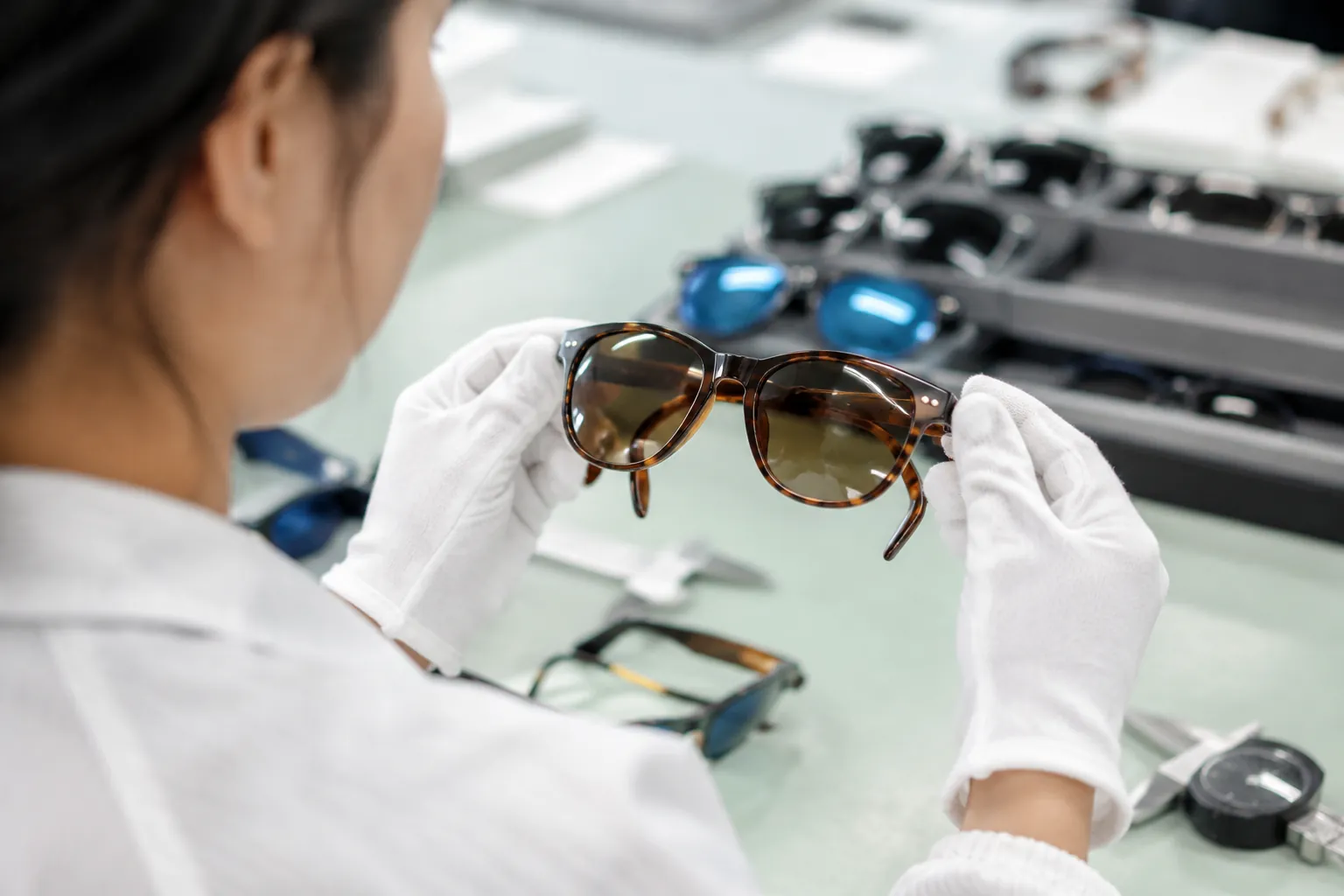
This guide is for brand owners, importers, distributors, and retailers placing repeat orders for custom sunglasses. If the first run looked right but the reorder comes back greener, lighter, warmer, darker, or with a different mirror flash, the problem is rarely one isolated defect. It is usually weak specification, weak retained-sample control, or an untracked process change. Fix that first. Define the lens with measurable targets, tie the approved look to a retained physical standard and factory process record, and add a pre-production or first-off approval step before bulk release. That gives both buyer and supplier a clear basis for acceptance and cuts avoidable disputes over cosmetic variance.
Start with failure modes, not the shade name
Buyers often approve lenses with loose descriptions such as smoke gradient, light tea, silver mirror, or ocean blue flash. Those names help merchandising. They do not control repeat production. Finished lens appearance comes from material, tinting, coating, thickness, lighting, and handling. If those variables drift, the same shade name can still produce a visibly different retail result.
Main technical drivers include base lens material, resin or sheet variation, dye formula, bath condition, immersion time, lens thickness, hard-coat condition, coating chamber setup, fixture loading, vacuum stability, deposition recipe, top-coat cure, and post-production handling. Storage matters too. A retained sample left under UV, heat, or display lighting for months may no longer represent the approved lot.
Fashion tints, gradients, and mirror coatings are less forgiving than standard solid smoke lenses. Small changes in visible light transmission, undertone, or mirror reflectance can be obvious on shelf. Side-by-side comparison makes it worse.
Ask the supplier to define the lens with measurable, repeatable control points. At minimum, the specification should lock these items:
- Base lens material: PC, nylon, TAC polarized, CR-39, or another stated material used for the approved sample.
- Base lens color before mirror: clear, smoke, brown, G-15 green, tea, or a custom dye formula identified by factory code or batch reference.
- Finished VLT target: a defined visible light transmission range for the finished lens, measured after tinting and coating.
- Mirror appearance standard: retained approved sample viewed under D65 daylight or a 6500K neutral light box at an agreed viewing angle.
- Coating stack: hard coat, front mirror, backside anti-reflective coating, hydrophobic or oleophobic top coat, or no additional coating.
- Thickness reference: center thickness and, where relevant, edge thickness of the approved sample, because lens thickness affects perceived color depth.
If the factory cannot tie the approved lens to a process sheet, retained sample, and internal lot record, the reorder depends too much on memory and visual judgment. That is where avoidable variance starts.
Build a lens spec sheet production can actually use
A good lens spec sheet is not long. It is specific. Purchasing, production, and QC should all be working from the same target.
- Lens construction: for example, PC base lens, stated base curve, stated thickness, hard coat, dip-dyed smoke, front silver mirror, and backside AR if used.
- Target transmittance: define the finished VLT range rather than a subjective description such as dark smoke or light brown.
- Color control method: retained approved sample, spectrophotometer reading where available, and finished-lens VLT record by lot for critical programs.
- Mirror control method: retained approved sample under D65 or 6500K light, coating recipe reference, and first-off signoff before bulk coating continues.
- Defect limits: pinholes, scratches, edge skip, haze, rainbow marks, coating spots, and rub marks, with stated inspection distance and lighting conditions.
- Packaging instruction: interleaving paper, PE bags, trays, or protective film so coated lens faces do not rub against hard surfaces during handling or transit.
Keep dependent processes inside a traceable workflow where possible. If lens molding, tinting, mirror coating, frame decoration, lens insertion, and final assembly are split across several vendors, each handoff adds handling risk and weakens lot traceability. An integrated workflow is not always better. It is simply easier to audit if one quality team controls the records and retained samples.
Retained standards are essential. The factory should hold at least one approved sample from the first accepted production lot, labeled with SKU, approval date, lens code, coating reference, and lot number. The buyer should hold the same. Store these samples away from heat, UV, and display lighting. A showroom piece is not a reliable reorder master.
Control the tinting, coating, and curing variables
Color consistency starts before mirror deposition. On dyed PC, nylon, CR-39, or other tinted lenses, the supplier should control and record dye formula, bath condition, immersion time, agitation, rinse process, and lot identity. The exact method will vary by material and factory. That is fine. What matters is documented control of the recipe used for the approved sample.
Thickness changes create a lot of disputes. If the approved sample used one lens thickness and the reorder uses another thickness or geometry, the finished lens may appear darker, lighter, or less even even if the same dye formula is used. Large fashion shapes, wrapped lenses, and edge-heavy designs often show deeper color at the edge than smaller or flatter lenses.
Mirror consistency depends on coating discipline. Key variables often include substrate cleaning, hard-coat cure, pre-bake, fixture loading, vacuum level, deposition recipe, chamber cleanliness, top-coat cure, and handling after coating. Mixed loads raise risk if different lens shapes, materials, base colors, or coating targets are processed together without strict separation.
| Process stage | What should be controlled | Typical drift risk | Buyer action |
|---|---|---|---|
| Dip tinting or dyeing | Dye formula, bath condition, immersion time, agitation, rinse process, lot identity | Lens runs lighter, darker, warmer, cooler, or less even than the approved sample | Request lot records and define a finished VLT range for the SKU |
| Hard coat and pre-bake | Substrate cleanliness, coating compatibility, cure time, bake stability | Poor mirror adhesion, haze, uneven coating, or surface marks | Approve the full finished coating stack, not tint color alone |
| Mirror deposition | Fixture load, chamber condition, vacuum stability, deposition recipe, approved coating reference | Warm silver instead of cool silver, weak flash, patchiness, or different reflectance | Ask for SKU-linked coating records and first-off comparison to the retained sample |
| Top-coat curing and handling | Cure condition, cool-down, clean handling, packing method | Rub marks, dull finish, premature wear, or visible handling damage | Define coated-lens protection during assembly, inspection, packing, and shipment |
For repeat programs, ask direct questions. Does the factory record tint and coating parameters by lot number? Are coating recipes tied to SKU, approval date, and retained sample? Is the first-off piece compared with the retained sample before the full batch proceeds? If a mirror run is visibly outside standard, is the batch stopped, reworked where possible, or segregated? Clear answers suggest a controllable process. Vague answers do not.
Set acceptance limits before you place the reorder
The biggest cause of repeat-order disputes is often not total production failure. It is undefined tolerance. If the purchase order says only silver mirror and the factory ships a warmer silver that still passes general inspection, both sides may think they are right.
Write acceptance limits into the order confirmation before production starts. Keep them usable. They do not need to be laboratory-level for every program, but they must be specific enough for QC to apply the same way every time.
| Control point | Recommended buyer requirement | Why it matters |
|---|---|---|
| Finished visible light transmission | State a target VLT range for the finished lens and identify the measurement method where available | Reduces disputes over whether a reorder is visibly lighter or darker |
| Mirror appearance | Match the retained approved sample under D65 daylight or 6500K neutral light at an agreed viewing angle | Controls warm/cool flash variation and weak or patchy mirror appearance |
| Lens thickness reference | State approved-sample center thickness and any critical edge-thickness requirement | Thickness and geometry affect perceived tint density and reflectance |
| Surface defects | Define limits for pinholes, haze, edge skip, coating spots, scratches, and rub marks under stated light and inspection distance | Mirror lenses reveal minor defects more clearly than many non-mirror lenses |
| Reorder approval step | Require factory photos plus a physical pre-production sample for brand-critical colors or high-visibility launches | Catches visible drift before full bulk production is coated, assembled, or packed |
Use instrument control where the supplier has suitable equipment, but do not write specs the production process cannot verify. For many commercial programs, a retained physical standard, finished VLT range, documented coating reference, and first-off signoff are more useful than a complex color formula nobody checks on the line.
Compliance is separate from cosmetic consistency. Finished sunglasses may need to meet market requirements such as CE EN ISO 12312-1, ANSI Z80.3, AS/NZS 1067, REACH, and applicable FDA registration requirements for the U.S. market. Factory certifications such as ISO 9001 or social compliance audits such as BSCI may support supplier evaluation, but they do not guarantee that a repeat order will visually match the original lot.
Know where MOQ and price pressure create variance
There is no free appearance control on mirrored lenses. Tighter consistency usually means better setup control, retained standards, documented process records, first-off checks, dedicated or well-separated coating runs, and extra sample approvals. That takes time. It can also affect cost.
MOQ and pricing logic matter. Low-volume lens programs are often harder to control because the factory may need to combine work, use short production windows, or run several SKUs through shared tinting or coating schedules. That may be commercially reasonable. It is still a consistency risk.
| Order setup | Typical consistency outcome | Commercial logic |
|---|---|---|
| Small trial order with multiple lens colors | Higher variance risk if tinting or coating is shared across several programs | Useful for market testing, but weaker for strict repeatability unless controls are specified |
| Moderate volume per lens color | More stable process control when the factory can run a clearer batch and retain records | Better balance between unit cost, setup discipline, and repeat-order control |
| Large volume on one lens program | Best opportunity for repeatability if the recipe, retained samples, and lot checks are managed correctly | Lower unit cost potential, but any specification error affects more inventory |
| Physical pre-production sample each reorder | Strong reduction in visible drift before bulk release | Adds time and sample cost, but can prevent a costly shipment dispute |
Do not assume a price quoted for a simple high-volume construction includes the same controls needed for a low-volume mirrored fashion style with custom tint, decoration, and tight visual matching. Ask what is included: retained sample comparison, VLT measurement, first-off approval, dedicated coating setup, packing protection, and shipping-sample retention.
Decoration adds risk too. Pad printing, screen printing, hot stamping, laser engraving, metal logo plate fitting, and foil details all add handling after frames or lenses are finished. If decoration happens after lenses are mounted, mirror faces must be protected from fixture contact, rubbing, dust, and cleaning damage. Ask whether decorated frames are processed before or after lens insertion and how coated lenses are protected at each step.
Use a reorder workflow that catches drift early
Most repeat-order color problems can be found before shipment if the buyer builds in one checkpoint. The goal is simple: catch visible drift before the supplier coats the full batch, completes assembly, or packs finished goods.
- Reference the original approval: state the exact lens code, material, VLT target, mirror finish, frame SKU, coating stack, approval date, and original lot number where available.
- Request pre-production confirmation: for standard lenses this may be limited to record confirmation; for mirrored, gradient, pink, tea, blue, or other fashion tints, request a physical sample when appearance is critical.
- Approve under controlled viewing: compare the sample to the retained standard under D65 daylight or a 6500K neutral light source, not under random warehouse light or phone photos alone.
- Require first-off QC: the factory should compare the first produced pieces with the retained sample before releasing the rest of the batch.
- Retain a shipping sample: one packed set should remain with the factory record and one should remain with the buyer record for every repeat order.
Lead time should match the controls you require. A pre-production sample, physical transit, buyer review, and a correction loop can add days or weeks depending on location, shipping method, and factory schedule. Put that into the purchase plan. Do not force a rushed approval after materials are already prepared.
For seasonal launches or retailer programs, place color-critical repeat orders early enough to allow one correction cycle. If old and new inventory will sit together at retail, photo-only approval or direct release to bulk carries more risk. Full stop.
Protect the approved look through packing and storage
Not every tint or mirror complaint starts in production. Coated lenses can be damaged after the approved appearance is achieved. Abrasion, fingerprints, cleaning residue, heat exposure, and poor packing can reduce mirror clarity or make the product look dull against the retained sample.
Ask how lenses are protected after final QC. Good practice may include individual PE bagging, protective film where appropriate, tray separation, clean gloves or finger cots for handling, and no hard contact points against the mirror face. If the product includes laser engraving, pad printing, metal logo assembly, or other downstream work, confirm the operation sequence and protection method before production starts.
Your own storage discipline matters too. Retained samples should be stored in a dark, stable environment and labeled by SKU, approval date, lens code, and lot number. A sample kept on a sales rack or used repeatedly in customer meetings is not a reliable master. Compare fresh production against a UV-aged or scratched sample and you may reject an acceptable lot or approve a drifting one for the wrong reason.
Before releasing bulk, use a short internal checklist:
- Confirm base lens material, lens geometry, and thickness against the approved sample.
- State the finished VLT target range on the PO or order confirmation.
- Use a retained golden sample stored away from light, heat, and frequent handling.
- Ask for tinting and coating process records tied to the SKU and lot number.
- Require first-off comparison before the batch continues.
- Specify protection for coated lenses during assembly, decoration, inspection, packing, and shipment.
- Retain one shipping sample from packed goods for every repeat order.
The practical fix is simple: a documented standard, a controlled process record, and one approval gate before the factory commits the full batch. Shade names alone do not control repeat orders.
Have a custom sunglasses project in mind?
Send us your styles, target market and quantities and we will return a detailed quote with MOQ, lead time and a sample plan.
Get a QuoteWhy source this from Wenzhou with LumiShades
Wenzhou in Zhejiang Province is widely regarded as China’s eyewear manufacturing capital, producing a large share of the world’s sunglasses. That concentration matters to buyers: a deep local supply chain for acetate sheet, hinges, lens blanks, plating and packaging means shorter component lead times, easier color and material matching, and a workforce with decades of eyewear-specific skill. LumiShades has manufactured in this ecosystem since 2009, and our vertical integration — in-house injection molding, acetate cutting, CNC milling, lens tinting, decoration and quality control — means no part of your order is quietly subcontracted to a workshop you cannot audit.
For international buyers, that vertical control translates into accountability. When a single factory owns every step, defects are traced and fixed at source rather than bounced between vendors, and your specifications survive intact from first sample to bulk. We back this with 15+ years of experience, shipments to 60+ countries, more than 5 million pairs produced per year and a 98.5% on-time delivery rate. Our certifications — CE EN ISO 12312-1, FDA registration, ANSI Z80.3, AS/NZS 1067, REACH, ISO 9001 and BSCI audit — mean the compliance documentation your market requires already exists. Explore our manufacturing capabilities and quality control process to see how this works in practice.
Frequently asked questions
Should I approve mirrored lenses by photo only? No, not for a brand-critical mirror finish. Phone cameras, white balance, angle, compression, and light temperature can all change the apparent flash. Use photos for quick screening, but approve final appearance against a retained physical sample or a mailed pre-production sample under D65 daylight or a 6500K neutral light source. If timing forces photo review, ask the factory to include the retained standard and the new sample in the same image, under the same light, from several angles, and still require first-off approval before bulk release.
Do safety certifications guarantee the reorder will match the original lens color? No. CE EN ISO 12312-1, ANSI Z80.3, and AS/NZS 1067 relate to sunglass performance and safety requirements. REACH addresses chemical compliance in relevant markets. FDA registration may apply to certain U.S. eyewear suppliers or devices, depending on product and role. ISO 9001 and BSCI can support supplier evaluation, but none of these certifications guarantee cosmetic matching between production lots. For repeat color control, you still need a retained sample, finished VLT target, coating reference, and approval checkpoint.
Is mirror variance more common on small orders? It can be. Small orders are more likely to be scheduled with shared tinting, shared coating setups, or mixed production loads, depending on the factory. That does not mean a small order cannot be controlled, but the buyer should ask what process controls are included. For a small mirrored reorder, request a retained-sample comparison, finished VLT check where available, first-off approval, clear defect limits, and protective packing for coated lenses.
What is the most useful single spec to add for fashion-tint reorders? Add a finished visible light transmission range for the completed lens, not just the base tint. VLT gives both factory and buyer a measurable control point for lightness and darkness after tinting and coating. Pair it with a retained physical sample, because VLT alone does not fully describe undertone, gradient balance, or mirror flash.
How should I write the PO wording for a repeat mirrored lens order? Use wording that ties the reorder to the approved standard. For example: finished lens must match retained approved sample for SKU, lens material, tint, mirror finish, coating stack, and appearance under D65 or 6500K neutral light; finished VLT target range to be recorded where equipment is available; first-off pieces to be compared with the retained sample before bulk production continues; coated lenses to be protected during assembly, decoration, packing, and shipment. Attach the spec sheet and identify the approval date and lot number if available.
How much lead time should I allow for a controlled reorder program? Allow enough time for sample production or retrieval, physical transit if needed, buyer review, and at least one correction loop. Exact timing depends on factory schedule, material availability, shipping route, and the complexity of the lens stack. For mirrored or fashion-tint reorders, do not place the order so late that the factory has to skip the pre-production sample or first-off approval step.
Ready to start?
Explore our square sunglasses or request a quote — our sales team replies within 12 hours.
Request a Quote