
How to Choose Category 1, 2, 3, or 4 Sunglass Lenses
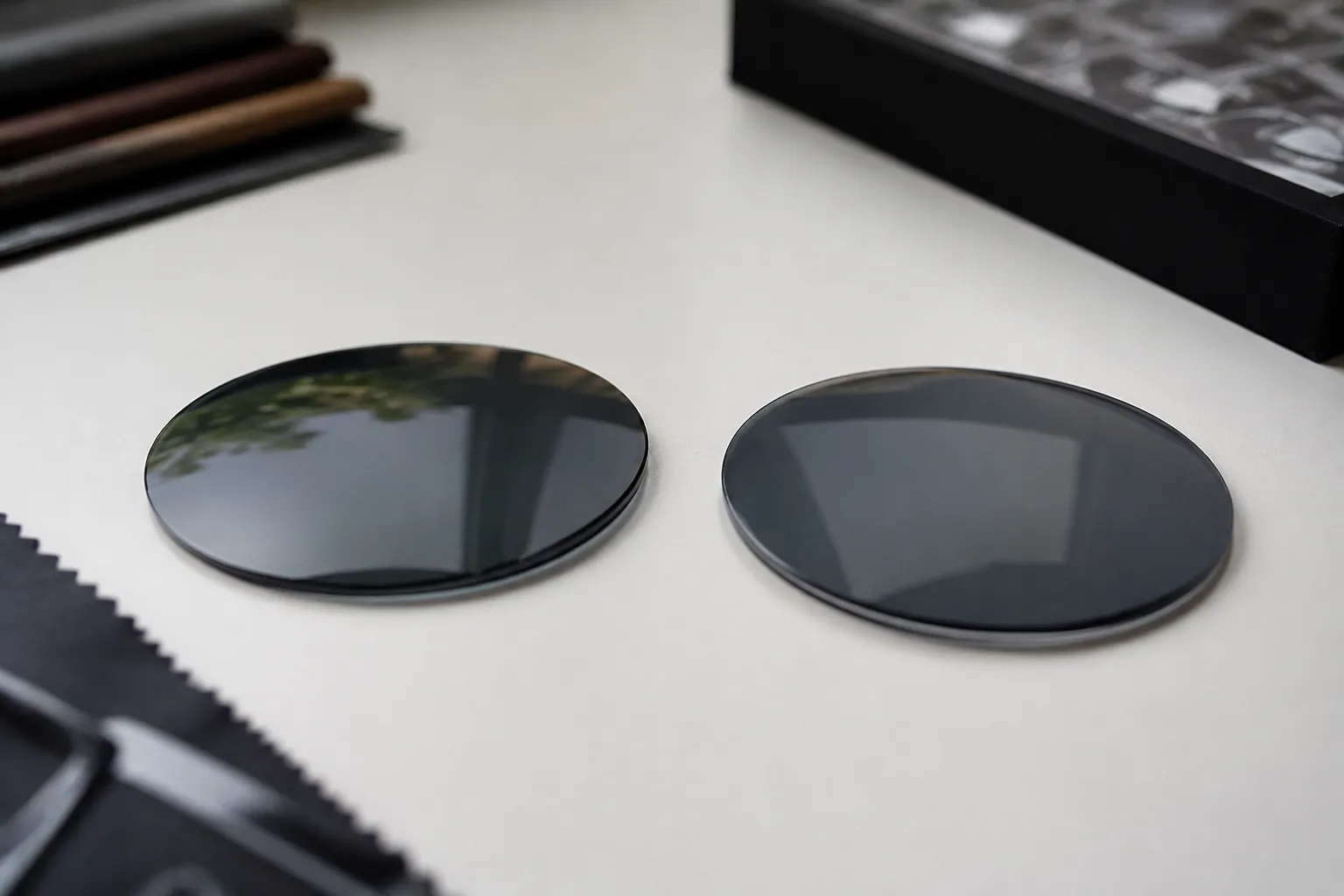
This guide is for brand owners, importers, distributors, and retailers building a private label sunglasses range. The main choice is not how dark a sample looks under showroom lights. It is how lens category shapes intended use, customer expectation, compliance, SKU count, production control, and reorder planning. Get the category mix wrong and the range gets messy fast. You add weak SKUs, create approval confusion, and increase the risk that bulk production will not match the approved sample. Get it right and the line stays focused, easier to manage, and easier to scale.
Start With a Four-Question Decision Framework
Most buyers do not need all four sunglass categories in one collection. They need a controlled range built around the target market, use case, intended appearance, and compliance route behind the shipment. That is the practical way to choose between Category 1, 2, 3, and 4.
- Where will the product be sold? EU programs commonly require alignment with CE EN ISO 12312-1. US buyers often ask for ANSI Z80.3 support. Australia and New Zealand programs may require AS/NZS 1067 alignment. The destination market affects labeling, warnings, and the test documents the buyer should review before production.
- What light conditions is the product designed for? City wear and fashion capsules do not serve the same conditions as beach retail, high-glare resort markets, or mountain use.
- What should the lens look like on face? A light tint or gradient may matter for styling, but it may not satisfy customers who expect stronger sun reduction.
- Does the category earn its place in the range? If an extra category adds a low-volume SKU without a clear sales role, it weakens MOQ efficiency, complicates replenishment, and creates avoidable inventory drag.
For many private label programs, Category 3 is the commercial base. Category 2 often supports lighter lifestyle use, fashion assortments, or mixed-light environments. Category 1 is usually a style-led extension. Category 4 is a specialty product. Treat it that way from product brief to packaging and warnings.
The key metric is visible light transmission, or VLT. In simple buying terms, Category 1 is a light tint, Category 2 a medium tint, Category 3 a dark sun lens, and Category 4 a very dark special-purpose lens. Category is tied to measured transmittance, not appearance alone. That matters. Buyers should confirm that the approved sample, test reference, and bulk production all describe the same lens specification.
What Each Lens Category Means in Commercial Terms
Category numbers are not style labels. They refer to visible light transmission bands and help define where the product is suitable for use. Buyers do not need to explain optical theory to end customers. They do need to build the assortment around real use conditions and accurate product claims.
| Lens category | Typical VLT range | Typical use | Commercial fit | Main caution |
|---|---|---|---|---|
| Category 1 | 43-80% | Light sun, fashion tint, low-glare conditions | Useful for image-led capsules, seasonal colors, and lighter urban styles | May feel too light for customers expecting strong sun protection |
| Category 2 | 18-43% | Moderate sunlight, general lifestyle use, city wear | Good support category for fashion and mixed climates | Can feel underpowered in beach, resort, or high-glare markets |
| Category 3 | 8-18% | Strong sunlight, beach, holiday, and everyday outdoor wear | Best core category for many private label sunglass lines | Needs consistent tint control across production lots |
| Category 4 | 3-8% | Very bright conditions such as mountain, glacier, and snow use | Specialty extension only | Not suitable for driving and requires clear warnings |
Start commercial planning here. Category 3 is often the default because it matches what many consumers expect from a standard sunglass lens in bright outdoor use. Category 2 works when the brand wants a lighter visual effect or sells into more moderate sunlight conditions. Category 1 is usually a design choice more than a protection-led choice. Category 4 belongs in a narrow use case, not as a darker-looking shortcut to a premium claim.
For many collections, two categories are enough: Category 3 as the main line and Category 2 on selected styles. That usually keeps forecasting and replenishment cleaner than spreading small volumes across too many category options.
Map Lens Category to Geography, Climate, and Channel
Geography changes what customers think is normal. A medium tint that feels acceptable in one market can look too light in another. Build around the selling environment, not the sample-room impression.
- Category 1: mainly fashion-led urban assortments, trend capsules, and lighter seasonal lenses where visible eyes are part of the look.
- Category 2: moderate sunlight, spring-summer city wear, transitional climates, and collections where style and wearability need to balance.
- Category 3: beach stores, travel retail, outdoor lifestyle, holiday programs, and many year-round sunglass assortments.
- Category 4: alpine, glacier, snow, or technical outdoor channels with clear user guidance and compliant packaging language.
Channel expectations matter just as much as climate. A fashion boutique may accept Category 1 or 2 when styling drives the purchase. A distributor supplying general retail or resort doors will often want Category 3 to dominate because the customer expects obvious sun-lens performance. Outdoor specialty buyers may use Category 3 as the baseline and reserve Category 4 for a narrow technical segment.
At sample stage, compare two or three tint levels on the same frame. It is a cleaner test. You isolate the lens decision and judge more accurately whether the lighter or darker option fits the line, the channel, and the end use.
Keep the Assortment Tight or You Create Slow SKUs
Every extra lens category adds complexity. Another inventory position. Another approval point. Another packaging check. Another reorder risk. A tighter range is usually easier to run.
A practical range plan for a new private label line is simple:
- Set Category 3 as the main line for the majority of styles.
- Add Category 2 on selected fashion shapes, translucent frames, lighter-color acetates, or city-focused product.
- Use Category 1 only when the lighter lens is part of the design brief and the sales story is clear.
- Add Category 4 only if there is a defined technical purpose and a channel that understands the product.
This matters even more when MOQs are low. A factory may accept a small opening quantity per design, but splitting one frame across too many categories fragments the order and reduces purchasing efficiency. A concentrated order is usually easier to inspect, label, replenish, and cost out than multiple low-volume category variants.
| Order structure | Pairs per variant | Commercial effect | Typical unit-price direction |
|---|---|---|---|
| 1 style / 1 category / 300 pairs | 300 | Cleaner MOQ concentration, simpler QC and replenishment | Lower |
| 1 style / 2 categories / 150 pairs each | 150 | Manageable when both categories have a defined role | Moderate |
| 1 style / 4 categories / 75 pairs each | 75 | Range looks broad but reorders can become uneven | Higher |
| 1 style / 4 categories / 50 pairs each | 50 | Maximum fragmentation and weakest scale efficiency | Highest |
Unit cost depends on volume concentration, frame material, lens material, coatings, branding, and packaging. Buyers should ask the supplier for price breaks by quantity and by lens specification, then weigh the commercial value of extra category variants against the extra complexity.
What Changes on the Factory Floor When You Add Categories
From the buyer side, moving from Category 2 to Category 3 can look like a simple tint change. On the factory floor, it is more than that. Lens production must hit the target transmittance. QC must verify the result. The final product must match both the approved sample and the compliance file.
Lens material also affects development and sourcing decisions. Polycarbonate is widely used in sunglasses and valued for impact resistance. CR-39 is known for good optical clarity and tintability, but it is less impact-resistant than polycarbonate. Nylon is often used in performance eyewear because of toughness and flexibility. TAC polarized lenses add another control point because the buyer is managing tint category and polarization performance together.
Decoration choices affect workflow too. A basic program may use pad printing on the temple. A more detailed program may add laser engraving on the lens, metal logo plates, hot foil details, or custom mold logos. Each added detail creates another approval point. If the lens category changes late, the supplier may need to remake or reconfirm the full decorated sample.
A controlled production sequence usually looks like this:
- Confirm frame material, lens material, target category, lens color, and selling market.
- Produce sample lenses to the requested tint and, if applicable, mirror, gradient, polarized, or anti-reflective specification.
- Measure appearance and transmittance, then confirm fit, edge finish, and color match against the design brief.
- Approve decoration methods such as pad print, laser mark, foil logo, or metal insert.
- Lock the golden sample and reference packaging.
- Run bulk production with in-line QC checks for tint consistency, cosmetic defects, and assembly quality.
This is why late category changes are expensive. A switch from Category 2 to Category 3 may require new lenses, new QC checks, revised warnings or labels, and confirmation that the test documents still apply to the final configuration.
Control Compliance, Tolerances, and Labeling
Lens category decisions must match the documentation route for the shipment. The approved lens, the test reference, the labels, and the warnings all need to describe the same product. Buyers do not need to run the lab process themselves. They do need to verify coverage before production starts.
Common buyer requests include support files linked to CE EN ISO 12312-1, ANSI Z80.3, AS/NZS 1067, REACH, FDA registration where relevant, and supplier-management credentials such as ISO 9001 or BSCI. These documents do different jobs. Product standards relate to product performance. REACH relates to chemical compliance expectations. ISO 9001 and BSCI help in vendor review, but they do not replace product-specific testing.
- CE EN ISO 12312-1: commonly referenced for sunglass compliance in many non-US programs.
- ANSI Z80.3: frequently requested by US buyers.
- AS/NZS 1067: relevant for Australia and New Zealand programs.
- REACH: important for chemical and material compliance expectations.
- FDA registration: may be requested in some US sourcing and importer due-diligence workflows.
- ISO 9001 and BSCI: useful in procurement review, though not a substitute for product testing.
Buyers should also ask how the factory controls tint consistency in production. The practical question is simple: can the supplier repeatedly match the approved reference and document how that match is checked? A process that includes transmittance measurement and retained golden samples is stronger than a process based only on visual comparison.
Category 4 needs extra attention. It is a legitimate product for very bright conditions, but it is not suitable for driving and should be labeled with the exact usage language supported by the compliance documentation. Buyers should also confirm that later changes to lens color, mirror coating, polarization, or material do not fall outside the tested configuration.
A Simple Buying Plan by Customer Type
Different channels need different category mixes. The goal is not maximum choice. It is the smallest category structure that still fits the market.
| Buyer type | Recommended category mix | Why it works | Watch-out |
|---|---|---|---|
| Fashion brand | Category 2 and 3, with limited Category 1 | Balances style, face appearance, and real-world wearability | Do not let light tints dominate if customers still expect a true sun lens |
| Importer supplying general retail | Mainly Category 3, selective Category 2 | Easier to explain, reorder, and forecast | Too many tint variants weaken MOQ efficiency |
| Resort or beach retailer | Mostly Category 3 | Matches bright conditions and mainstream tourist expectation | Category 2 can look too light at shelf level |
| Outdoor specialty distributor | Category 3 core, narrow Category 4 extension | Covers mainstream outdoor use plus technical demand | Category 4 needs very clear positioning and warning language |
If you are launching a new line, test one frame platform in two categories before expanding. For example, sample the same style in Category 2 and Category 3, then compare retailer feedback, customer reaction, and reorder confidence. That usually gives a cleaner commercial answer than launching every category at once and waiting for weak sellers to sit in inventory.
After the first sell-through cycle, review reorder data by category, by channel, and by region. Then cut the low-value variants that do not have a clear role.
Use Category Decisions to Reduce Cost, Delay, and Returns
The right lens category mix reduces approval loops, improves bulk planning, and lowers the risk of customer dissatisfaction. Many sourcing problems start when a lens is approved on appearance alone without locking the actual category and the production controls behind it.
Before placing the PO, buyers should confirm the following in writing:
- Target lens category by style and destination market
- Lens material, color, and any mirror, gradient, polarized, or anti-reflective treatment
- Approved sample reference or golden sample standard
- Applicable compliance documents and any required usage warnings
- Production quantity split by category so the price logic is clear
- Sample lead time, bulk lead time, and whether a late category change resets approval timing
Lead time varies by factory capacity, material readiness, decoration complexity, and the need for testing or re-approval. Buyers should ask for written lead times tied to the exact specification being ordered, then confirm what happens if the lens category changes after sample sign-off.
For most private label buyers, the best answer is not to carry all four categories. It is to choose the few categories that match the market, keep the specification stable, and put enough volume into each one to make pricing, compliance, and replenishment easier. That keeps the line clear, scalable, and commercially sensible.
Have a custom sunglasses project in mind?
Send us your styles, target market and quantities and we will return a detailed quote with MOQ, lead time and a sample plan.
Get a QuoteWhy source this from Wenzhou with LumiShades
Wenzhou in Zhejiang Province is widely regarded as China’s eyewear manufacturing capital, producing a large share of the world’s sunglasses. That concentration matters to buyers: a deep local supply chain for acetate sheet, hinges, lens blanks, plating and packaging means shorter component lead times, easier color and material matching, and a workforce with decades of eyewear-specific skill. LumiShades has manufactured in this ecosystem since 2009, and our vertical integration — in-house injection molding, acetate cutting, CNC milling, lens tinting, decoration and quality control — means no part of your order is quietly subcontracted to a workshop you cannot audit.
For international buyers, that vertical control translates into accountability. When a single factory owns every step, defects are traced and fixed at source rather than bounced between vendors, and your specifications survive intact from first sample to bulk. We back this with 15+ years of experience, shipments to 60+ countries, more than 5 million pairs produced per year and a 98.5% on-time delivery rate. Our certifications — CE EN ISO 12312-1, FDA registration, ANSI Z80.3, AS/NZS 1067, REACH, ISO 9001 and BSCI audit — mean the compliance documentation your market requires already exists. Explore our manufacturing capabilities and quality control process to see how this works in practice.
Frequently asked questions
Which lens category should be the default for a new private label sunglasses range? In many cases, start with Category 3. It is the category most often associated with bright outdoor wear and it suits a wide range of general retail, travel, beach, and lifestyle channels. Before locking it, confirm that the intended selling market, product positioning, and compliance documents all align with that specification. A practical buying approach is to build the core line in Category 3, then add Category 2 only where the styling or channel clearly requires a lighter lens.
Is Category 4 a good way to make a range feel more premium? No. Category 4 should be used only when the product is intended for very bright conditions such as mountain, glacier, or snow environments. It is not a general-purpose premium upgrade and it is not suitable for driving. If a buyer wants to add Category 4, they should confirm three things before approving it: the end use is genuine, the sales channel understands the limitation, and the packaging and warnings exactly match the supporting compliance file.
Can I mix Category 2 and Category 3 within one collection? Yes, and for many buyers that is the most practical structure. A common approach is to use Category 3 as the main sun lens and Category 2 on selected fashion styles, urban assortments, or lighter-look color programs. To keep the range disciplined, give each category a clear commercial role, review MOQ impact before placing the order, and avoid offering both categories on too many low-volume styles.
How early should I lock the lens category before bulk production? Lock it at sample approval stage, before bulk materials are committed. Once the approved sample, test reference, labels, and warnings are aligned, changing category can trigger lens remakes, new QC checks, revised packaging, and a review of whether the original compliance documents still apply. Buyers should ask the supplier to state in writing what changes require re-approval and whether those changes affect lead time or cost.
What factory capabilities matter most for controlling lens category consistency? Look for a supplier that can control and verify lens transmittance against the approved specification, retain a golden sample, and maintain documented QC through bulk production. It also helps when the supplier can coordinate lens production, fitting, decoration, and final inspection under one managed workflow. During supplier review, ask how category is checked, how references are retained, what records are kept for bulk lots, and how the factory handles a result that falls outside the approved target.
Ready to start?
Explore our rimless sunglasses or request a quote — our sales team replies within 12 hours.
Request a Quote