
Polarized Lens Delamination: Bubbles, Haze, and Root Causes
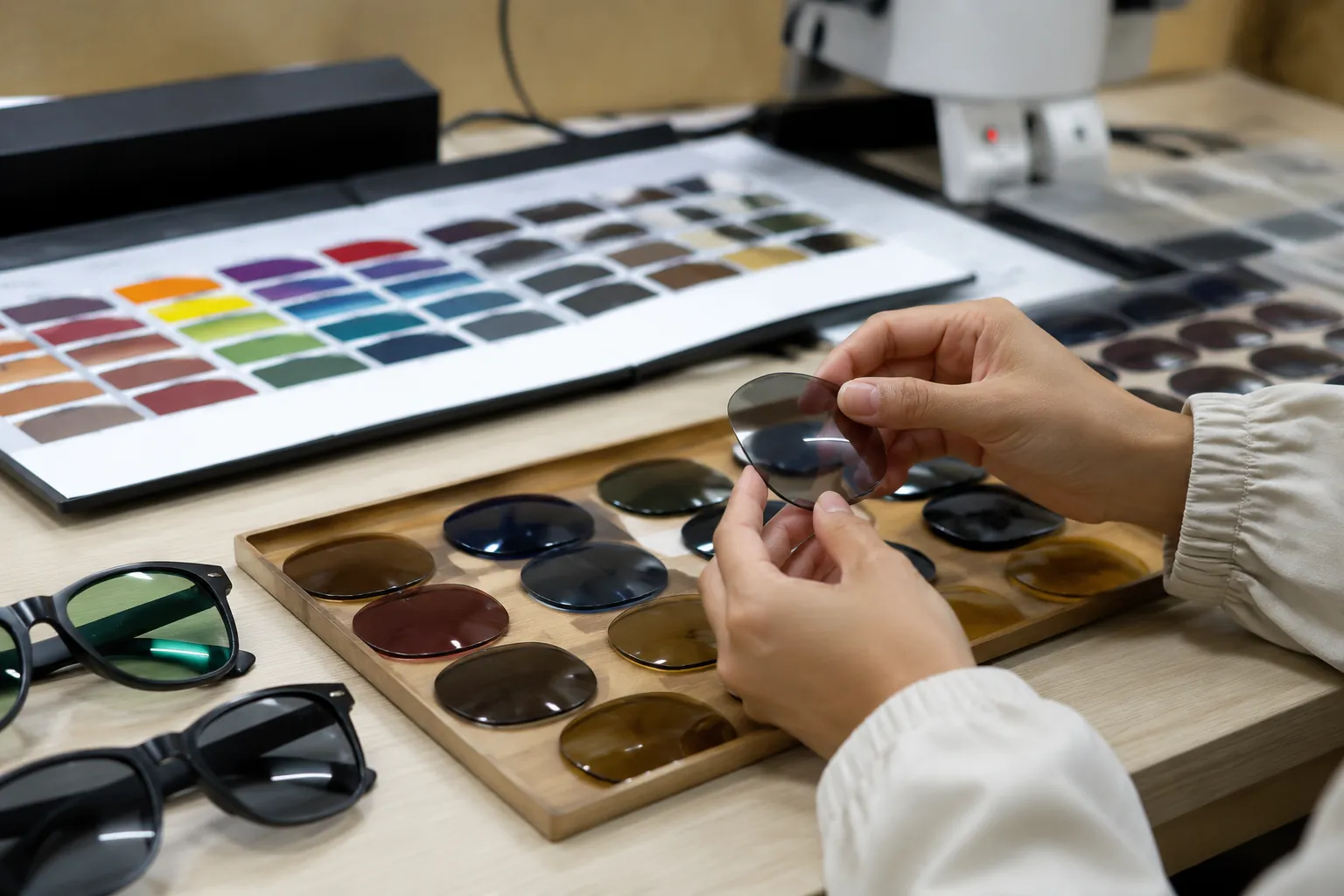
This guide is for brand owners, importers, distributors, and retail buyers sourcing polarized sunglasses at OEM or ODM scale. It explains where bubbles, haze, rainbow stress marks, and delamination usually start, which process variables matter most, and how to write a clearer lens specification before placing a purchase order. For buyers sourcing custom eyewear from China or other production hubs, the takeaway is simple: define the lens construction, inspection method, frame-fit condition, and target compliance standard in writing. Do that early. It cuts avoidable warranty claims, protects visual quality, and lowers the risk that an approved sample behaves differently once it goes through production, assembly, packing, and transport.
Where polarized lens failures start
Most polarized lens failures are not random field events. They usually start in one of three places: the lamination stack, the edge-finishing and fitting stage, or heat exposure after production. Buyers describe the symptom as bubbles, peeling, rainbow marks, haze, whitening at the rim, or a warped patch near the bevel. Those are the visible signs. The usual root causes are internal stress, contamination, moisture instability, or weak bonding within the lens structure.
A polarized lens is a layered product, not a single solid piece. In a common TAC build, the polarizing film is bonded between cellulose triacetate-based layers, sometimes with added hard-coat, tint, mirror, or protective layers depending on the program. In a PC polarized lens, the polarizing element is built into a polycarbonate-based structure that offers strong impact performance but can still react badly to stress from curvature, edging, coatings, and frame insertion. If heat, pressure, dwell time, adhesive application, material conditioning, or cooling drift outside the stable process window, the lens may pass initial visual inspection and still fail later during storage, transport, or retail display.
Delamination often starts at the perimeter. That makes sense. The edge is where the layered structure is most exposed. Bevel cutting, assembly pressure, and micro-damage at the edge can create a path for stress concentration and moisture ingress. Once the bond line weakens, separation may spread inward from the edge or stay localized around a pressure point.
The buyer lesson is blunt: a good sample does not prove a stable production process. A reliable lens program depends on repeatable manufacturing control, clear acceptance criteria, and proof that the lens still performs after fitting into the final frame.
The main failure modes and their causes
| Failure mode | Typical root cause | Where it appears | Buyer risk |
|---|---|---|---|
| Layer delamination | Weak bond strength, incomplete curing, incompatible material stack, or heat exposure beyond the stability of the lens build | Often begins at the lens edge and expands inward | Returns or claims after transport, storage, or retail use |
| Internal bubbles | Air entrapment, excess moisture, contamination, or uneven pressure during lamination | Center zone or edge zone depending on the layup defect | Immediate cosmetic rejection and visual complaints |
| Rainbow or oil-slick marks | Residual stress, uneven layer thickness, thermal distortion, or excessive frame-fit pressure | Visible under angled light or dark backgrounds | Perceived defect even when the lens remains intact |
| Haze or milky patches | Moisture instability, adhesive degradation, overheating, contamination, or coating incompatibility | Localized or scattered across the viewing area | Reduced clarity and weaker product perception |
| Edge cracking with film lift | Aggressive edging, poor bevel geometry, rough groove surfaces, or excessive insertion force | At bevel, groove edge, drill point, or rim pressure point | Claims after assembly or during early wear |
The most expensive claims often involve more than one cause. A common pattern is marginal bond strength plus an overly tight frame groove. The lens leaves the factory looking acceptable, then assembly stress gradually opens a weak bond line. Another pattern is contamination or excess moisture during lamination followed by later heat exposure, which turns a subtle defect into a visible one.
Contamination is often underestimated. Dust, polishing residue, coolant traces, mold-release contamination, or lint can create a local non-bonded zone that later appears as a bubble or hazy patch. Post-process heating also matters. Decoration curing, mirror-coating steps, or poor storage near heat sources can push a borderline lens into failure. Ask not only how the lenses are made, but also what happens to them after lamination and before packing.
Material and construction choices that shift the risk
Not all polarized lenses fail at the same rate because they are not built the same way. TAC polarized lenses are common in fashion and mid-priced private-label programs because they offer good optics, broad tint options, and competitive cost. Their long-term stability depends heavily on lamination quality, moisture control, and heat resistance across the full stack. PC polarized lenses are often used for sport, youth, and active outdoor products because of impact resistance and low weight, but they still demand tight control of curvature, coating adhesion, and frame-fit stress. Glass polarized lenses can deliver strong optical performance and scratch resistance, but they add weight and require tighter handling control during assembly and transport.
| Lens construction | Typical thickness | Strengths | Main risk points | Typical use case |
|---|---|---|---|---|
| TAC polarized | Project-specific, commonly used in relatively thin laminated constructions | Good optical clarity, wide color range, cost efficiency | Delamination or haze if lamination, moisture control, or heat stability is weak | Fashion sunglasses, promotional programs, private-label lines |
| PC polarized | Project-specific, often selected to support impact-focused designs | High impact resistance, low weight, sport positioning | Stress marks, coating sensitivity, edge-fit pressure issues | Sport, kids, cycling, outdoor active |
| Glass polarized | Project-specific, generally thicker and heavier than plastic options | Scratch resistance, premium optical feel | Weight, breakage risk, stricter handling and freight control | Premium classic or heritage styles |
Frame design can matter as much as lens material. A full-rim injection frame with an undersized groove can squeeze the lens edge and trigger whitening or edge lift. A metal frame with rough groove finishing can create localized pressure points. Semi-rimless and drill-mount designs need extra caution because the lens edge is more exposed structurally. On wrapped sport fronts, even a well-made lens can show stress patterns if the base curve, bevel design, or insertion method is too aggressive.
That is why cross-functional control matters. If the supplier can trace frame molding, acetate processing, CNC operations, lens processing, decoration, and final QC through one documented system, it becomes easier to isolate whether a claim comes from lamination, bevel geometry, groove tolerance, or final assembly stress. Buyers evaluating factories with ISO 9001 or social compliance programs such as BSCI should still verify the actual lens controls used on the floor. Certification helps. It does not guarantee lens stability.
What goes wrong on the factory floor
Buyers do not need every machine setting, but they should understand the process points that separate a stable lens from a risky one. Polarized lens failures often begin long before the finished pair reaches final inspection.
- Material conditioning: Lens substrates, TAC sheets, coatings, and polarizing films need controlled storage and clear lot identification. If materials absorb excess moisture or sit in unstable storage conditions before lamination, the risk of bubbles, haze, or weak bonding rises.
- Film layup: The polarizing film must sit flat, centered, and clean. Poor alignment can affect appearance and polarization consistency. Dust, wrinkles, edge curl, or handling contamination create weak zones.
- Lamination: Heat, pressure, and dwell time must stay inside a validated process window. Too little pressure or too short a dwell can reduce bond strength. Excess heat can distort the stack or introduce residual stress that appears later.
- Cooling: Uneven or overly rapid cooling can lock stress into the lens. That stress may later show up as rainbow marks, edge lift, or localized distortion after edging and fitting.
- Edging and fitting: Lens shape tolerance, bevel form, and frame groove dimensions must match the approved fit condition. Excess insertion force is a common trigger for edge damage and delayed delamination.
- Decoration and packing: Reheating during decoration, mirror processes, or packing lenses before they fully stabilize can worsen a marginal bond or mark a stressed lens.
Secondary decoration deserves more attention than it often gets. Spray coatings, mirror coatings, pad printing, laser marking, and heat-cured decoration near the lens area all add handling or thermal risk. A mirrored finish may be commercially important, but it also adds another layer that must stay optically uniform and compatible with the base lens system. Ask whether the final decorated lens is rechecked after the full process, not just after lamination.
Short runs are not automatically safer. In some cases, they are riskier. Setup discipline may weaken, line changeovers may be rushed, or inspection may narrow to protect yield. The key question is not order size alone. It is whether the factory applies the same documented controls to a small run that it applies to repeat production.
QC checkpoints that catch problems before shipment
The best QC plan is specific, not complicated. Many polarized lens defects show up only under the right light angle, after a short conditioning period, or once the lens is fitted into the frame.
- Incoming material check: Verify substrate condition, film appearance, coating status, storage records, and lot traceability before production starts.
- Backlit in-process lamination check: Inspect under a defined light source for trapped particles, edge silvering, tone inconsistency, and local bubbles above the agreed reject standard.
- Polarization axis check: Confirm axis consistency pair to pair so the finished product matches the approved sample and avoids visual discomfort or appearance inconsistency.
- Edge inspection after cutting: Review the full perimeter for whitening, lift, micro-cracks, chipped bevels, and pressure marks.
- Assembly stress check: Reinspect the fitted lens after a hold period, not only immediately after insertion, because stress-related defects may appear after the frame has settled.
- Short heat or humidity screening: Use a defined internal screening method on production-representative samples to reveal marginal bonding before shipment.
Buyers should define the inspection language in the purchase order or approved spec sheet. For example: no visible internal bubbles at the agreed inspection distance under the agreed white-light condition; no edge lift visible from front or rear under normal inspection angles; no localized haze within the primary viewing area; no rainbow stress marks beyond the approved appearance standard after assembly. Vague defect language creates vague disputes. Clear language shortens them.
Shipment-stage control matters too. Random carton opening, confirmation that goods were packed only after adequate stabilization, and review of storage conditions before release can catch problems that do not appear on the assembly line. A delivery date means little if the final QC gate has no real hold point for lens reinspection.
Spec sheet decisions that reduce claims
Good sourcing starts with a better spec sheet. If the document says only polarized lens, smoke tint, UV400, too much is left open to interpretation. The buyer should define the lens build, fit condition, visual standard, and compliance target in writing.
| Spec item | What to define | Why it matters |
|---|---|---|
| Lens construction | TAC polarized, PC polarized, glass polarized, or another approved build | Controls durability, optics, impact positioning, and failure risk |
| Nominal thickness and tolerance | Project-specific target and acceptable tolerance | Helps control fit stress, curvature stability, and optical consistency |
| Frame fit condition | Approved groove profile, bevel standard, insertion method, and post-assembly appearance standard | Reduces edge lift and stress-related claims |
| Heat-resistance screening | Define internal screening method, pass condition, and sample size | Helps identify marginal bonding before shipment |
| Visual defect criteria | Inspection distance, light source, viewing angle, and reject examples | Prevents disputes over bubbles, haze, and rainbow marks |
| Compliance target | Only the destination-market requirements actually needed | Keeps testing relevant and documentation accurate |
This is also where commercial discipline matters. If a buyer plans to reorder or scale volume later, the lens build should be frozen early so later cost negotiations do not introduce a quiet downgrade in adhesive system, substrate grade, coating stack, or inspection intensity. Any material substitution should require written approval and, where relevant, renewed sample confirmation.
Lead time decisions should reflect technical risk. Standard sample development may move quickly, but programs involving a new lamination stack, a difficult mirror finish, wrapped geometry, or a stricter internal screening plan usually need more technical review before approval. The safer path is simple: approve samples only after both appearance checks and stress-related checks are complete on the final assembled product.
Use conditions to plan for before launch
Not every field claim is a pure factory defect. Some failures are predictable because the product specification does not match real use. A disciplined buyer looks at the retail channel, climate, frame design, and handling conditions before locking the lens construction.
If the program is meant for beach retail, marine use, driving, fishing, desert tourism, or other high-heat environments, request a stronger internal heat-resistance review and make sure the factory understands the likely exposure pattern. If the line is for kids, cycling, or sports, prioritize an impact-suitable construction and stable frame fit. If the design uses a strongly wrapped front, confirm that the selected lens build can tolerate the curve without visible stress patterns, distortion, or edge instability.
Storage and logistics matter as well. Goods held near heat sources, packed before full stabilization, compressed in transit, or stored badly before retail display can trigger failure in marginal lenses. Ask how cartons are stacked, whether finished goods rest before final packing, and what protective separation is used to limit pressure and abrasion on the lens surface.
Claims data should be reviewed by channel. If one distributor reports recurring failures and another does not, compare climate, storage time, retail display conditions, and sell-through speed before assigning blame. At the same time, suppliers should not be allowed to dismiss a repeatable failure pattern as misuse when the evidence points to weak lamination, poor edge quality, or excessive assembly stress.
A practical checklist before you place the PO
Use this checklist when sourcing polarized sunglasses from any OEM or ODM supplier.
- Approve the exact lens construction: Do not approve only a tint chip, photo, or loose lens sample.
- Match the lens and frame together: Review curve, bevel, groove condition, insertion method, and the fitted result on the final assembly.
- Write the visual defect standard: Define bubble acceptance, haze limits, rainbow-mark rejection, edge-lift criteria, and inspection conditions.
- Request internal stress screening: Use a defined heat or humidity check on production-representative assembled samples before mass release.
- Confirm compliance only for the destination market: Common references include CE EN ISO 12312-1, ANSI Z80.3, AS/NZS 1067, REACH, and FDA registration where relevant.
- Verify process control, not only certificates: ISO 9001 and BSCI can support supplier evaluation, but buyers should still review traceability, in-process inspection, and corrective-action records.
- Control change management: Require written approval for any change in lens material, coating stack, adhesive system, or subcontracted process.
- Inspect the fitted lens, not only the loose lens: Many stress-related defects appear only after edging and frame assembly.
The practical point is straightforward: most polarized lens claims can be reduced before production starts. Good buyers do not wait for bubbles or delamination to show up in the market. They define the lens build clearly, inspect the final fitted condition, and check the product under the conditions most likely to expose weakness before approving shipment.
Have a custom sunglasses project in mind?
Send us your styles, target market and quantities and we will return a detailed quote with MOQ, lead time and a sample plan.
Get a QuoteWhy source this from Wenzhou with LumiShades
Wenzhou in Zhejiang Province is widely regarded as China’s eyewear manufacturing capital, producing a large share of the world’s sunglasses. That concentration matters to buyers: a deep local supply chain for acetate sheet, hinges, lens blanks, plating and packaging means shorter component lead times, easier color and material matching, and a workforce with decades of eyewear-specific skill. LumiShades has manufactured in this ecosystem since 2009, and our vertical integration — in-house injection molding, acetate cutting, CNC milling, lens tinting, decoration and quality control — means no part of your order is quietly subcontracted to a workshop you cannot audit.
For international buyers, that vertical control translates into accountability. When a single factory owns every step, defects are traced and fixed at source rather than bounced between vendors, and your specifications survive intact from first sample to bulk. We back this with 15+ years of experience, shipments to 60+ countries, more than 5 million pairs produced per year and a 98.5% on-time delivery rate. Our certifications — CE EN ISO 12312-1, FDA registration, ANSI Z80.3, AS/NZS 1067, REACH, ISO 9001 and BSCI audit — mean the compliance documentation your market requires already exists. Explore our manufacturing capabilities and quality control process to see how this works in practice.
Frequently asked questions
Can delamination show up after goods pass final inspection? Yes. A lens can look acceptable at final inspection and still fail later if the bond line is marginal or if the frame fit adds stress. Ask the supplier to run a defined internal heat or humidity screening on production-representative assembled samples, then reinspect for edge lift, haze, bubbles, and stress marks after exposure. Also require a post-assembly hold-and-recheck step, because some defects appear only after the lens has settled in the frame.
Are TAC polarized lenses always less reliable than PC polarized lenses? No. TAC and PC have different risk profiles, not a simple good-versus-bad ranking. TAC is widely used and can perform well when lamination, moisture control, and frame fit are stable. PC is often preferred where impact resistance matters, but it can still show stress marks, coating problems, or edge-related defects if the curve or assembly pressure is wrong. Buyers should choose the lens type based on end use, then validate the exact construction in the final frame rather than relying on the material name alone.
What is the first QC checkpoint that catches most bubble problems? Backlit in-process inspection immediately after lamination is one of the most effective checkpoints. It helps reveal trapped particles, small air pockets, tone inconsistency, and local non-bonded areas before the lens moves into edging and assembly. To make this useful, define the light condition, inspection distance, and reject examples in the spec sheet so the factory and buyer are judging the same standard.
Which compliance standards matter for polarized sunglasses? That depends on the destination market and the product claim. Buyers commonly review programs against CE EN ISO 12312-1, ANSI Z80.3, AS/NZS 1067, REACH, and FDA registration where relevant. The practical step is to list the exact target market and required documents in the purchase order, then confirm that the tested sample matches the final lens and frame construction. Avoid asking for extra certificates that do not apply, because irrelevant paperwork can distract from the tests that actually matter.
Does low MOQ increase the risk of lens defects? It can, but the real issue is process discipline, not order quantity by itself. Small runs may be more exposed to rushed setup, unstable machine conditions, or reduced inspection if the supplier is trying to protect margin. Buyers can reduce that risk by requiring the same material traceability, in-process lamination checks, post-assembly inspection, and change-control rules used on larger orders. For a small order, it is especially important to approve the exact final build and ask whether any step will be subcontracted or handled differently from repeat bulk production.
Ready to start?
Explore our round sunglasses or request a quote — our sales team replies within 12 hours.
Request a Quote