
Polarized Lens Film QC Checks for Bulk Buyers
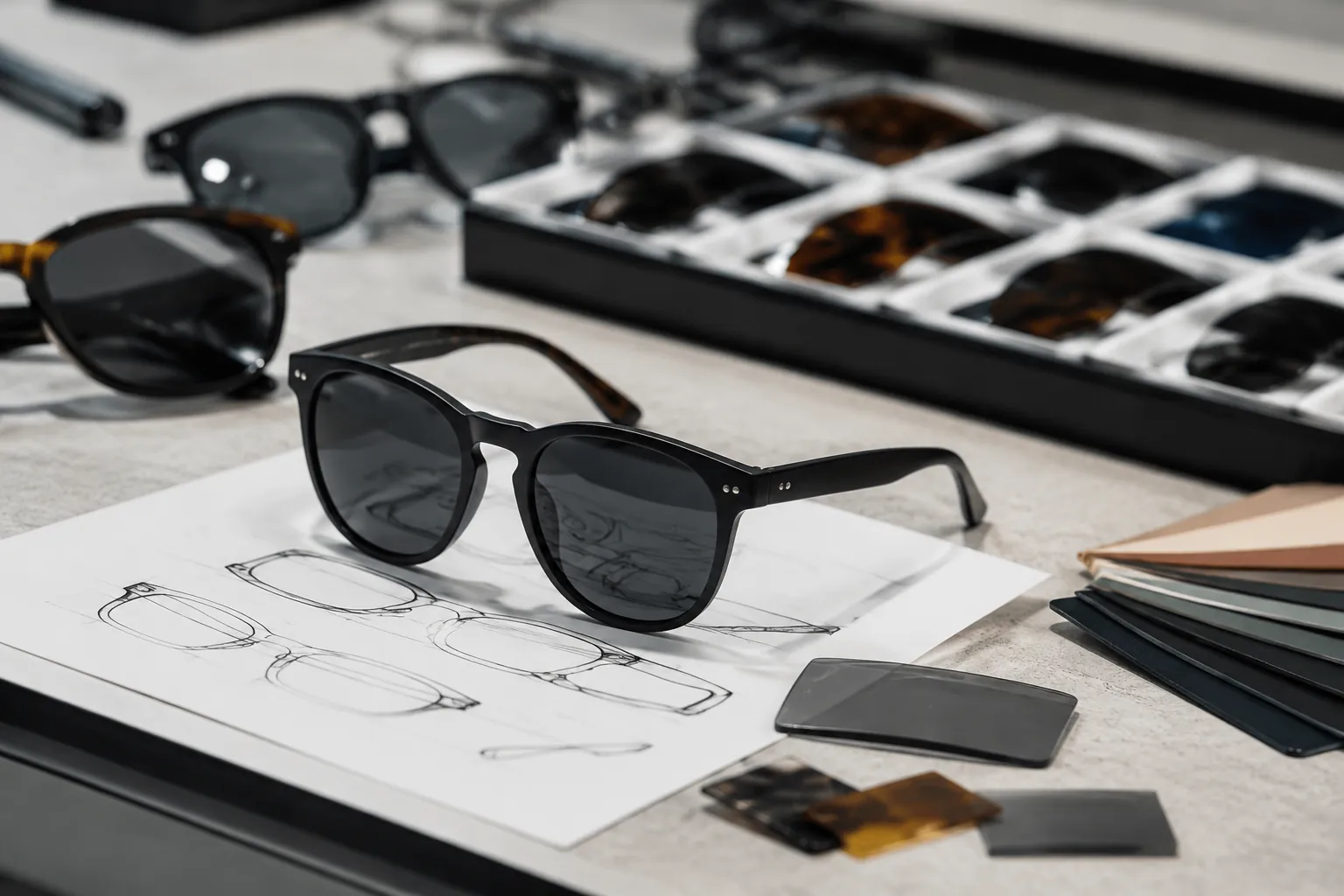
This guide is for brand owners, importers, distributors, and retail buyers sourcing polarized sunglasses in volume. The goal is simple: catch weak lens construction before bulk production ships. Not after returns hit. A lens can be genuinely polarized and still perform badly if film quality, lamination control, edging, or inspection standards are weak. The checks below target the failures buyers can actually screen during sampling and production review: left-right mismatch, optical distortion, edge delamination, haze, and heat-related instability.
Start With Failure Modes, Not the Claim
Many buyers ask one question first: is the lens polarized? That is too broad to be useful. A polarized lens can still fail in expensive ways, including uneven polarization between left and right lenses, weak lamination bonds, visible distortion, and cosmetic or optical breakdown after heat or humidity exposure.
In many polarized sunglass programs, the lens is a layered build rather than a single uniform material. A common stack includes TAC or another substrate, a polarized film, bonding layers, tint or mirror treatment, and a hard coat. If the film is inconsistent, the orientation shifts during lamination, or adhesive flow is uneven, performance can vary across the order. One pair may look fine indoors. Another may show haze, weak glare reduction, or visual distortion outdoors.
Most low-cost failures come from poor process control, not one obvious defect. Film quality, adhesive compatibility, temperature, pressure, and cure conditions all shape the finished lens. If a supplier cannot explain how those variables are controlled and checked, the quoted price is missing part of the real cost: rework, claims, and rejected inspections later.
Review the lens as a system, not as a color chip. Ask what substrate is used, where the polarized film sits in the stack, how orientation is controlled, how lenses are checked before edging, and which defects trigger rejection. Specific answers matter. General claims do not.
What the Lens Build Includes
For procurement, the useful question is not polarized or non-polarized. It is which construction you are buying. Most field failures trace back to lens stack design and process discipline.
- Base substrate: commonly TAC in laminated polarized builds, or PC where impact resistance matters more. Material choice affects optics, toughness, coating behavior, and processing limits.
- Polarized film: the functional layer that cuts reflected horizontal glare. Film uniformity and heat stability affect consistency and durability.
- Adhesive or bonding layers: these hold the structure together. Poor bond control can cause edge lift, internal bubbles, haze, or delamination.
- Tint, flash mirror, or REVO finish: these affect appearance and visible light transmission. Dark or mirrored finishes can hide local haze or bubbles during a quick check, so appearance alone is not a reliable screen.
- Hard coating: used to improve scratch resistance. Poor coating application can create haze, weak adhesion, or uneven surface appearance.
Two lenses can look similar in a sales photo and behave very differently after shipping, storage, or daily use. One stays stable after transport and seasonal heat exposure. Another shows stress marks, edge whitening, or separation around the bevel.
That is why a price gap needs an explanation. A lower quote may mean lower-grade film, looser lamination control, lighter inspection, or all three. Ask what changes when the price changes: lens material, film source, coating level, inspection standard, or testing scope.
Four Checks That Catch Most Problems
Before lab testing or packaging approval, run four practical checks on production-intent samples. They are fast. They catch a lot.
- Consistency check across the sample set. Do not inspect one sample only. Ask for a representative set from the intended production setup. View each lens over a polarized reference screen, LCD display, or test plate. Compare the darkness change and angle response from pair to pair. Left and right lenses should react evenly, with no obvious difference in extinction effect when rotated.
- Alignment check. Polarized film orientation must stay controlled during lamination. If rotational mismatch between left and right lenses is excessive, glare control can feel unbalanced in wear. At minimum, reject any sample with visible left-right mismatch at the same viewing angle. Ask the supplier how orientation is fixed and verified.
- Distortion check. Hold the lens in front of a straight-line grid and move it slowly side to side. Lines should stay stable, without strong waviness, local bending, or swim effect. Then wear the sample and scan door frames, shelving edges, or window frames. If straight lines bend or pulse during head movement, the lens is commercially risky even if the polarization claim is technically true.
- Edge stability check. Inspect the full perimeter after edging and frame assembly. Layered polarized lenses often fail first at the edge, especially in wrapped shapes, grooved frames, or high-stress assemblies. Look for whitening, tiny bubbles, glue lines, or separation at the bevel. Use both direct light and angled light. Some defects disappear head-on.
These checks matter because weak builds often pass a quick office review. Problems show up later, after transport, cleaning, repeated wear, or outdoor heat exposure. Catching them at sample stage is far cheaper than finding them after packing.
Where Cheap Polarized Builds Break Down
Most field failures are predictable. They are process failures, not random events.
| Failure point | What causes it | What the buyer sees | Commercial risk |
|---|---|---|---|
| Weak lamination bond | Low-grade adhesive, contamination, uneven heat-pressure cycle, short cure time | Edge lift, trapped bubbles, haze, delamination after heat or moisture exposure | Retail returns after transport, storage, or seasonal use |
| Film inconsistency | Variable film batch quality, mixed lots, weak incoming inspection | Different glare reduction from pair to pair or left-right imbalance | Consumer complaints that polarized performance feels uneven |
| Optical distortion | Uneven molding, warped substrate, poor lamination flatness, stress from edging | Wavy vision, eye strain, unstable straight lines | Product judged uncomfortable or unusable |
| Stress around edging | Aggressive cutting, tight frame fit, brittle layered structure, excessive bevel pressure | Cracks, whitening, edge separation during assembly | Assembly scrap and early-life failure |
| Coating haze or poor adhesion | Weak surface preparation, unstable cure, coating mismatch with substrate | Milky appearance, poor scratch behavior, patchy gloss | High cosmetic reject rate and consumer dissatisfaction |
Not all of these issues show on day one. Some appear only after heat exposure, humidity, cleaning fluid contact, or shipment vibration. That is why buyers should ask for both pre-production lens approval and retained reference samples from bulk production.
Set the Approval Standard Before the PO
Many disputes start with a weak purchase order. If the PO says only polarized lens, black smoke, UV400, the control language is not strong enough. Build a short approval sheet with pass-fail points that operators, merchandisers, and QC staff can all follow.
- Polarization: require consistent left-right performance and lot consistency against the approved sample.
- Optics: no visible waviness, local warpage, rainbow stress marks, or haze under normal wear inspection.
- Cosmetics: define acceptable limits for bubbles, pits, scratches, coating marks, and edge defects. If an edge bubble or whitening is visible in normal inspection, state whether it is rejectable.
- Durability: no delamination, whitening, or bubble growth after the agreed internal heat or humidity check, if that check is part of the approval process.
- Compliance: confirm which market standard applies to the finished sunglasses, such as CE EN ISO 12312-1, ANSI Z80.3, or AS/NZS 1067, and whether chemical compliance documentation such as REACH is required. FDA registration may appear in U.S. supply chain paperwork, but it does not replace product performance testing.
Keep the standard practical. If the product is sold for driving or long outdoor wear, visible distortion should be treated as a critical defect. If it is low-cost promotional eyewear, cosmetic tolerance may be broader, but lamination instability still should not be accepted because it affects function and return risk.
At sample stage, ask for approval photos and physical samples. Use that stage to compare not only lens color, but also film consistency, edge finish, mirror uniformity, and any assembly interaction that could mark the lens.
Match Lens Complexity to MOQ, Price, and Lead Time
Low MOQ can help test a design, but it does not always give the best lens economics or the strongest process control. Match lens complexity to order size, retail position, and delivery timing.
| Order band | Typical buyer use | What to verify closely | Commercial note |
|---|---|---|---|
| Small pilot order | Sampling, pilot launch, market test | Exact lens stack, color match, distortion, assembly fit, logo placement | Unit cost is usually higher because setup and approval effort are spread over fewer pieces |
| Small branded run | Limited retail or early-season program | Lot consistency, decoration durability, packaging QC, replacement risk | Pricing usually improves once setup costs are spread over more units |
| Core seasonal order | Standard brand replenishment or distributor volume | Repeatability, inspection discipline, compliance file set, carton labeling control | Often the most balanced stage for cost and process stability |
| Large-volume program | Major retail, chain store, or distributor order | Batch segregation, incoming material traceability, retained samples, lab scheduling | Lower pricing is possible, but traceability and consistency matter more, not less |
Lead time also needs realistic handling. Sampling, testing, material approval, and production all affect risk. If the program adds mirrored lenses, multiple decorations, custom packaging, barcode control, or retailer-specific carton requirements, the schedule should reflect that added complexity.
Compressed timing creates predictable lens problems: incomplete cure, weak tint confirmation, rushed final sorting, and more handling damage during assembly. Ask which steps are being shortened when a supplier promises an unusually fast lead time.
A Simple Audit Script for Polarized Programs
You do not need a long audit to learn a lot. Ask direct process questions and listen for precise answers backed by records.
- How is polarized film batch-tracked? You want lot separation and material traceability, not mixed stock with no record of which film went into which order.
- How is film orientation controlled during layup? The answer should mention a fixture, a marked orientation standard, or an inspection point. A vague answer is a warning sign.
- What checks happen before edging? Ask how cured lenses are screened for bubbles, haze, flatness, and mirror consistency before cutting starts.
- What defects trigger rejection? A real factory should answer clearly: delamination, optical distortion, scratches, coating marks, mismatch, edge whitening, or trapped bubbles.
- How are finished pairs inspected? Confirm whether QC includes cosmetic inspection, polarization verification, lens cleanliness, hinge function, logo quality, and shipment sampling.
- What management systems or social compliance records are available? If the supplier claims ISO 9001 or BSCI status, ask for current documentation and clarify what part of the operation is covered. These do not replace product checks, but they help assess process discipline and buyer risk.
Capability matters only if it is documented and used consistently. Ask to see sample records, inspection forms, retained references, and any compliance files relevant to the destination market.
What to Approve Before Bulk Release
Before mass production starts, the approval file should contain more than artwork and frame color. At minimum, approve the final frame, the exact polarized lens sample, the decoration method, the packaging standard, the barcode or shipping mark layout, and the compliance route for the destination market.
For lenses, keep one signed or otherwise fixed golden sample and require bulk to match it. If the program includes multiple lens colors, inspect each one separately. Dark smoke, green, or mirrored lenses can hide defects that become obvious outdoors. Review them in daylight, under angled indoor light, and during wear testing.
If the frame uses pad printing, laser engraving, hot foil, or metal logo details, inspect those after lens insertion as well as before. Assembly handling can mark the lens surface, especially on glossy mirrors and dark tints. Ask the supplier to retain production samples from different stages of the run so any later claim can be traced to a documented production point.
Be realistic about revision timing. Every change to lens color, logo position, packaging insert, or finish can restart part of the approval process. Late approval usually leads to late shipment or higher production risk.
Buyer rule: never approve polarized sunglasses for bulk based only on frame appearance. The expensive failures are usually in lens construction and process control, not in the front-view photo.
Have a custom sunglasses project in mind?
Send us your styles, target market and quantities and we will return a detailed quote with MOQ, lead time and a sample plan.
Get a QuoteWhy source this from Wenzhou with LumiShades
Wenzhou in Zhejiang Province is widely regarded as China’s eyewear manufacturing capital, producing a large share of the world’s sunglasses. That concentration matters to buyers: a deep local supply chain for acetate sheet, hinges, lens blanks, plating and packaging means shorter component lead times, easier color and material matching, and a workforce with decades of eyewear-specific skill. LumiShades has manufactured in this ecosystem since 2009, and our vertical integration — in-house injection molding, acetate cutting, CNC milling, lens tinting, decoration and quality control — means no part of your order is quietly subcontracted to a workshop you cannot audit.
For international buyers, that vertical control translates into accountability. When a single factory owns every step, defects are traced and fixed at source rather than bounced between vendors, and your specifications survive intact from first sample to bulk. We back this with 15+ years of experience, shipments to 60+ countries, more than 5 million pairs produced per year and a 98.5% on-time delivery rate. Our certifications — CE EN ISO 12312-1, FDA registration, ANSI Z80.3, AS/NZS 1067, REACH, ISO 9001 and BSCI audit — mean the compliance documentation your market requires already exists. Explore our manufacturing capabilities and quality control process to see how this works in practice.
Frequently asked questions
How can I verify that polarized performance is consistent across a bulk order? Approve a representative pre-production sample set rather than one sample only. Check each pair against a polarized reference screen, LCD display, or test plate, compare left and right lenses at the same angle, and record any visible mismatch. In bulk production, require retained samples by lot or production date so any complaint can be traced back to a specific batch.
Is CE EN ISO 12312-1 enough for every market? No. CE EN ISO 12312-1 is relevant for many markets, but it is not a universal answer. U.S. programs may reference ANSI Z80.3, and Australia or New Zealand may require AS/NZS 1067. Confirm the destination market before testing starts, and make sure the test report matches the exact finished product being sold, not a similar sample from another program.
What is the first visible sign of poor lamination stability? The first visible signs often appear at the edge: whitening, tiny bubbles, haze near the perimeter, or early separation around the bevel after assembly or heat exposure. Inspect the full lens edge under direct and angled light, especially on wrapped shapes and darker lenses where central defects may be harder to spot.
What should I ask a supplier to provide before I release the PO? Ask for the exact lens construction description, the approved physical sample, the applicable compliance documents for the destination market, the cosmetic and optical acceptance standard, and confirmation of how film batches are traced in production. If the supplier claims ISO 9001 or BSCI, ask for current documentation, but still verify product-specific inspection and testing records.
Can I rely on a sample that looks good indoors? No. Indoor viewing is not enough. Check the sample outdoors in bright light, over a polarized reference such as an LCD screen to confirm even response, and against straight architectural lines to screen for distortion. Also inspect the edge under angled light because lamination defects can be easy to miss under flat indoor lighting.
Ready to start?
Explore our wayfarer sunglasses or request a quote — our sales team replies within 12 hours.
Request a Quote