
Polarized Sunglasses: Buyer Risks and Factory Controls
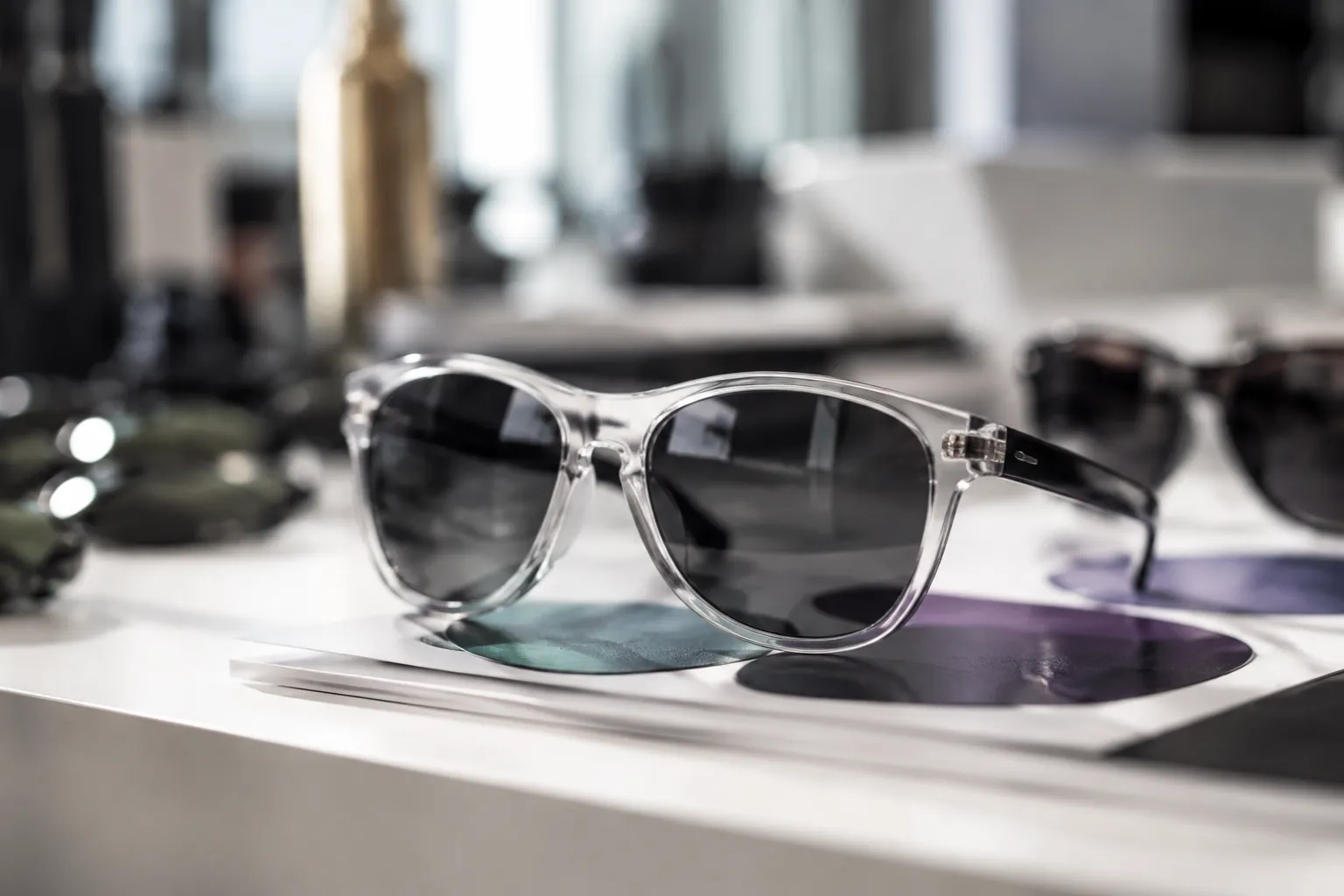
This guide is for brand owners, importers, distributors, and retail buyers deciding whether polarized sunglasses belong in a product line. Polarization can reduce reflected glare from water, roads, snow, glass, and other bright horizontal surfaces. It can also create predictable complaints: hard-to-read screens, rainbow stress patterns, dashboard visibility issues, and pushback on price. The question is not whether polarized lenses are better in general. They are not. The question is whether the target user will notice enough benefit in the real use case to justify the added cost, testing, labeling, and production control.
Start with the channel
Many buyers choose polarized lenses too early. They hear "reduced glare" and treat it as a premium upgrade for every style. That is a mistake.
Polarization solves a specific optical problem. It reduces certain forms of reflected glare, especially from water, wet roads, snow, glass, and other flat reflective surfaces. If the end customer rarely faces that problem, the added lens cost may not improve conversion, reviews, or reorder rates.
Sort the product by channel before discussing lens color, mirror coating, or packaging claims.
- High-fit channel: fishing, boating, beach retail, outdoor travel, snow destinations, sports stores, and driving-focused products where glare reduction is easy to notice.
- Mixed-fit channel: fashion chains, department store programs, resort shops, lifestyle brands, and private-label ranges where style still drives the sale and lens function is secondary.
- Poor-fit channel: promo giveaways, low-ticket impulse displays, many kids' collections, and screen-heavy use cases such as technicians, delivery drivers, pilots, or users who constantly check digital displays.
For mixed-fit channels, ask one direct question: will the customer notice the glare benefit before they notice the screen drawback or price increase? If the answer is unclear, carry both polarized and non-polarized options.
Most complaints appear after purchase. A polarized lens can look fine in a showroom and still disappoint when the wearer sits in a car, checks a phone outdoors, or sees rainbow patterns in the lens. Good sourcing starts with the use environment.
The complaints buyers actually get
Polarized returns are rarely about basic optical quality alone. Most come from a mismatch between use case, customer expectation, and product labeling. The complaints are predictable. Plan for them before bulk production.
- "My phone screen looks dark or strange." Polarized lenses can interfere with LCD screens and some other displays. Depending on screen orientation and viewing angle, a phone, tablet, payment terminal, or vehicle display may look dim, distorted, or partly black.
- "I can't read my dashboard clearly." Some infotainment systems, digital dashboards, head-up displays, and marine instruments are harder to view through polarized lenses. This is a known compatibility issue, not automatically a lens defect.
- "The lens has rainbow marks." Stress birefringence in polycarbonate lenses, molded parts, or high-curvature assemblies can become more visible when viewed through a polarized filter. Customers often mistake it for contamination, cracking, or coating failure.
- "These sunglasses are too dark." Customers often confuse polarization with tint darkness. Polarization reduces glare. It does not define how light or dark the lens is. A polarized Category 3 lens may work well in bright sun but feel too dark for mixed shade, cloudy weather, or frequent indoor-outdoor movement.
- "Why is this pair more expensive?" If the product, packaging, and sales copy do not explain the use-driven benefit, the price premium becomes the most visible difference.
The fix starts in product planning. In marine, driving, angling, and snow channels, polarization can be a strong selling point. In general fashion channels, it needs tighter SKU selection, clearer labeling, and a non-polarized alternative.
Polarization is not a universal upgrade. It is a use-case feature with known tradeoffs.
Where polarization helps or hurts
| Use case / channel | Polarized fit | Typical lens target | Main benefit | Main risk | Buyer recommendation |
|---|---|---|---|---|---|
| Fishing, boating, beach retail | High | Category 3 gray, brown, or green; VLT defined by market and product target | Reduces reflected water glare and improves visual comfort | Higher unit cost and tighter cosmetic control if mirror coatings are used | Use polarized on key SKUs and explain glare reduction clearly on hangtag and product page |
| Driving and outdoor travel | High | Category 2 or 3; brown, gray, or G15-style green | Reduces road glare and can improve comfort in bright conditions | Some dashboards, HUDs, and screens may be difficult to read | Test common vehicle displays before bulk approval and avoid promising full display compatibility |
| Fashion chain private label | Medium | Category 2-3 fashion tints; avoid very dark cosmetic colors without a defined use case | Adds a functional lens story to selected styles | Price pushback and screen-related complaints | Split the range: polarized hero styles, non-polarized volume styles |
| Promo, event, low-ticket retail | Low | Usually non-polarized UV-protective lens specified to the target market requirement | Limited perceived value at a low price point | Added cost can erode margin without improving sell-through | Stay non-polarized unless the event or channel is clearly outdoor-performance focused |
| Kids and teen mass retail | Low to medium | Impact-appropriate lens material with clear category labeling | Can reduce outdoor glare in bright conditions | Screen-heavy behavior and parent complaints about visibility or darkness | Use selectively; prioritize compliance, fit, durability, and clear age-appropriate positioning |
For most buyers, the right answer is not "all polarized" or "no polarized." It is a split assortment. Use polarization where the customer can feel the benefit quickly. Leave it out where the first experience is checking a screen, comparing price, or making an impulse fashion purchase.
Cost, MOQ, and lead-time logic
Polarized lenses add material cost and process control. A common polarized sunglass lens uses a laminated construction with a polarizing film between protective layers. Polycarbonate, TAC, nylon, and other constructions are used depending on impact needs, lens shape, curvature, and price target. Each material behaves differently in cutting, edging, drilling, mounting, and cosmetic inspection.
Do not treat polarization as a fixed surcharge. The cost effect depends on lens construction, tint, coating, curvature, cosmetic standard, and reject rate. A basic polarized lens may add only moderate cost. A polarized lens with mirror coating, gradient tint, high base curve, custom marking, or tight cosmetic tolerances usually adds more. Yield can fall fast.
Lead time depends on how many variables are being approved at once. Standard frame and lens combinations move faster than custom colors, mirrored finishes, decorated lenses, or special packaging. If you need to compare polarized and non-polarized versions, sample them at the same time. Testing one version first and adding the second later slows the decision and can force repeat approvals.
Build the schedule around these checkpoints:
- Sample timing: confirm the supplier's normal sample window for standard materials, then ask separately about extra time for custom lens colors, coatings, logos, or packaging.
- Bulk timing: confirm the production window only after sample approval, artwork confirmation, packaging approval, and compliance-file alignment.
- Approval buffer: allow time for lens color comments, category review, packaging copy review, and carton-marking confirmation.
- Comparison sampling: sample polarized and non-polarized versions together when the commercial decision is still open.
For specialty outdoor programs, the added discipline often pays back through clearer positioning and lower return risk. For low-price open-sell retail, it can add complexity without adding enough customer value.
Material behavior and factory controls
Buyers do not need to run a lens lab. They do need to understand the failure modes that drive returns. Most problems come from four areas: axis orientation, material stress, color or category mismatch, and weak retail claims.
Axis orientation and consistency: Polarized lenses need controlled filter orientation. If lamination, cutting, or lens matching is inconsistent, the optical effect between left and right lenses can differ. A practical incoming check is to use a polarization tester or a consistent LCD reference and compare left and right lenses at the same angle. Define the acceptance standard in the purchase specification and align it with the supplier's inspection process.
Stress patterns: Polycarbonate lenses and high-wrap constructions can show rainbow effects under polarized viewing because molded material and mounted assemblies retain internal stress. The effect is often more visible on thick edges, strong curves, drilled areas, or frames where the lens is forced into a tight groove. Better tooling, controlled cooling, correct edging, and reasonable frame tension can reduce the issue. Still, evaluate samples under polarized viewing before approval.
Color and category mismatch: A fashion tint combined with polarization can feel darker than expected. Define the lens category and visible light transmission target before approving the color. Category 3 is common for bright sun products. Category 2 may suit mixed urban light. Category 4 is generally not suitable for driving and must be labeled correctly where sold.
Retail claim control: A hangtag that only says "premium polarized" is too vague. Better copy links the feature to a real use case such as road glare, water glare, bright sand, or snow reflection. It should not imply that the product improves phone, dashboard, or screen visibility.
The sourcing point is simple: polarization is both a lens feature and a product-system issue. Lens construction, frame tension, curvature, labeling, and channel fit all affect whether the product succeeds.
Pre-bulk testing that finds mistakes
A useful pre-bulk test does not need to be expensive. It needs to be repeatable and tied to the intended use case. The goal is to confirm that the polarized benefit is real for the target channel and that the likely objections are understood before the purchase order gets large.
- Order paired samples: test the same frame in polarized and non-polarized lenses. If lens color is still open, sample two relevant colors such as gray and brown because color changes perceived contrast.
- Check glare reduction outdoors: compare reflected glare from wet roads, water, glass, and pale ground surfaces. Test in conditions that match the selling environment as closely as possible.
- Check display compatibility: test smartphones, tablets, payment terminals, car dashboards, marine displays, and any channel-specific equipment. Rotate the product to reveal blackout or distortion risk.
- Inspect stress and cosmetics: use a polarization viewer or LCD reference to check stress patterns, lamination issues, color consistency, edge quality, and coating defects.
- Verify fit under frame tension: inspect whether the lens sits securely without visible pressure marks, warping, rattling, or retention problems after assembly. Wrapped sports frames need extra attention.
- Review compliance files: ask which destination-market standard the finished sunglasses are being tested against, such as CE EN ISO 12312-1, ANSI Z80.3, or AS/NZS 1067. If material compliance is relevant, confirm REACH documentation where required. FDA registration may appear in U.S. importer documentation, but it is not a substitute for finished-product performance testing.
- Run a controlled launch: place a small first run, track return reasons, and collect comments from customer service and sales before scaling the program.
This process gives the sales team better language: who the product is for, who may not like it, and what tradeoffs the customer should expect.
Write a spec that prevents arguments
Weak specifications create expensive disputes. If a buyer writes only "polarized TAC lens, black," the factory can deliver a reasonable lens and the market can still reject it. The spec needs to connect lens construction, use case, inspection criteria, packaging claims, and compliance documentation.
A working polarized sunglasses spec should include:
- Target user and channel: driving, fishing, boating, fashion, travel, resort, or general outdoor.
- Lens construction: TAC polarized, polycarbonate polarized, nylon, CR-39, or another approved build, with base curve and thickness where relevant.
- Lens color and category: target visible light transmission range, category, mirror or non-mirror finish, gradient or solid tint, and approved master sample.
- Polarization control: left-right consistency requirement, acceptable visual variation, and test method.
- Frame-lens pairing: groove fit, wrap angle, lens retention, and pressure risk for sports or high-curve frames.
- Decoration methods: lens marking, temple printing, metal trim, foil stamping, or other approved branding details, with artwork approval points defined.
- Packaging and copy: hangtag, pouch, case, barcode, warning copy, lens category marking, and use-case wording.
- Compliance documents: CE EN ISO 12312-1, ANSI Z80.3, AS/NZS 1067, REACH, FDA registration where relevant to the import process, ISO 9001, BSCI, or retailer-required records if applicable.
This keeps product development, compliance, sales, and quality control working from one specification. It also reduces the chance that customer service has to explain avoidable problems after launch.
Use a split assortment
For many buyers, the cleanest commercial answer is a tiered assortment, not a fully polarized range.
Core line: non-polarized lenses positioned for broad fashion appeal, lower cost, and fewer screen-related objections. This usually fits entry price points, fast fashion, event programs, and volume retail.
Step-up line: polarized lenses in proven outdoor shapes and commercially safe colors such as gray, brown, or green. This works where staff, packaging, or online content can explain the benefit clearly and accurately.
Special line: channel-specific polarized products for boating, fishing, driving, cycling, or snow programs. These SKUs can justify more detailed packaging, stronger use-case claims, and tighter inspection standards.
Use side-by-side sampling and a small first order to test one frame in both lens versions. Compare return reasons, reorder speed, and customer comments, not just initial buyer enthusiasm. A polarized SKU that gets attention but no repeat order has not proved channel fit. One that reorders after the first controlled run is a stronger candidate for scale.
Short version: polarization sells best where reflected glare is a real problem. It creates friction where screens, low price sensitivity, or vague claims dominate the buying decision. Build the assortment around that reality.
Have a custom sunglasses project in mind?
Send us your styles, target market and quantities and we will return a detailed quote with MOQ, lead time and a sample plan.
Get a QuoteWhy source this from Wenzhou with LumiShades
Wenzhou in Zhejiang Province is widely regarded as China’s eyewear manufacturing capital, producing a large share of the world’s sunglasses. That concentration matters to buyers: a deep local supply chain for acetate sheet, hinges, lens blanks, plating and packaging means shorter component lead times, easier color and material matching, and a workforce with decades of eyewear-specific skill. LumiShades has manufactured in this ecosystem since 2009, and our vertical integration — in-house injection molding, acetate cutting, CNC milling, lens tinting, decoration and quality control — means no part of your order is quietly subcontracted to a workshop you cannot audit.
For international buyers, that vertical control translates into accountability. When a single factory owns every step, defects are traced and fixed at source rather than bounced between vendors, and your specifications survive intact from first sample to bulk. We back this with 15+ years of experience, shipments to 60+ countries, more than 5 million pairs produced per year and a 98.5% on-time delivery rate. Our certifications — CE EN ISO 12312-1, FDA registration, ANSI Z80.3, AS/NZS 1067, REACH, ISO 9001 and BSCI audit — mean the compliance documentation your market requires already exists. Explore our manufacturing capabilities and quality control process to see how this works in practice.
Frequently asked questions
Should I make my whole sunglass collection polarized? Usually no. First separate SKUs bought for function from SKUs bought mainly for price or fashion. Polarization makes the most sense for driving, marine, fishing, snow, and outdoor-use products where glare reduction is easy to notice. Keep non-polarized options for fashion volume, low-ticket retail, promo programs, and users who rely heavily on digital screens. A practical first step is to sample the same frame in both versions and compare sales feedback and returns.
What lens category is common for polarized sunglasses? Category 3 is common for bright-sun polarized sunglasses. Category 2 may be better for mixed urban light. The right choice depends on market, intended use, and visible light transmission target. Do not approve color by appearance alone. Ask the supplier to define the category and VLT range in the specification and confirm that the finished sunglasses are tested to the relevant market standard, such as CE EN ISO 12312-1, ANSI Z80.3, or AS/NZS 1067.
Why do customers think rainbow patterns are defects? They are often seeing stress birefringence made visible through the polarized filter. It can come from molded polycarbonate lenses, high-wrap shapes, drilled areas, or frame pressure after assembly. Customers may read it as a crack, coating issue, or contamination. To reduce the risk, inspect pre-production samples under polarized viewing, review frame tension and lens fit, and agree on cosmetic acceptance criteria before bulk production.
Do polarized lenses automatically meet CE or ANSI requirements? No. Polarization is a lens feature, not a compliance result. The finished sunglasses still need to meet the destination-market requirements for the product category. Buyers commonly review compliance against CE EN ISO 12312-1, ANSI Z80.3, or AS/NZS 1067 depending on the sales market. If chemical compliance is relevant, request REACH documentation separately. FDA registration, where it appears in U.S. importer documentation, does not replace finished-product performance testing.
What is the safest way to test a polarized program with a new supplier? Use a controlled comparison. Order the same frame in polarized and non-polarized versions, test glare reduction outdoors, check phones and vehicle displays, inspect for stress patterns and cosmetic defects, and review compliance documents for the destination market. Then place a small first run and track return reasons by SKU. This gives you evidence on channel fit, not just supplier claims or sample-room impressions.
How much lead time should I expect for polarized sunglasses? There is no single lead time. It depends on lens construction, color development, coatings, branding, packaging, and supplier capacity. What matters is the approval sequence. Confirm separate timing for samples, artwork approval, packaging approval, and bulk production. If you are still deciding between polarized and non-polarized, sample both at the same time so the commercial decision does not delay production. Ask the supplier for a stage-by-stage timeline rather than one headline lead-time number.
Ready to start?
Explore our sport wrap sunglasses or request a quote — our sales team replies within 12 hours.
Request a Quote