
When Nylon Lenses Belong in a Sunglasses Line
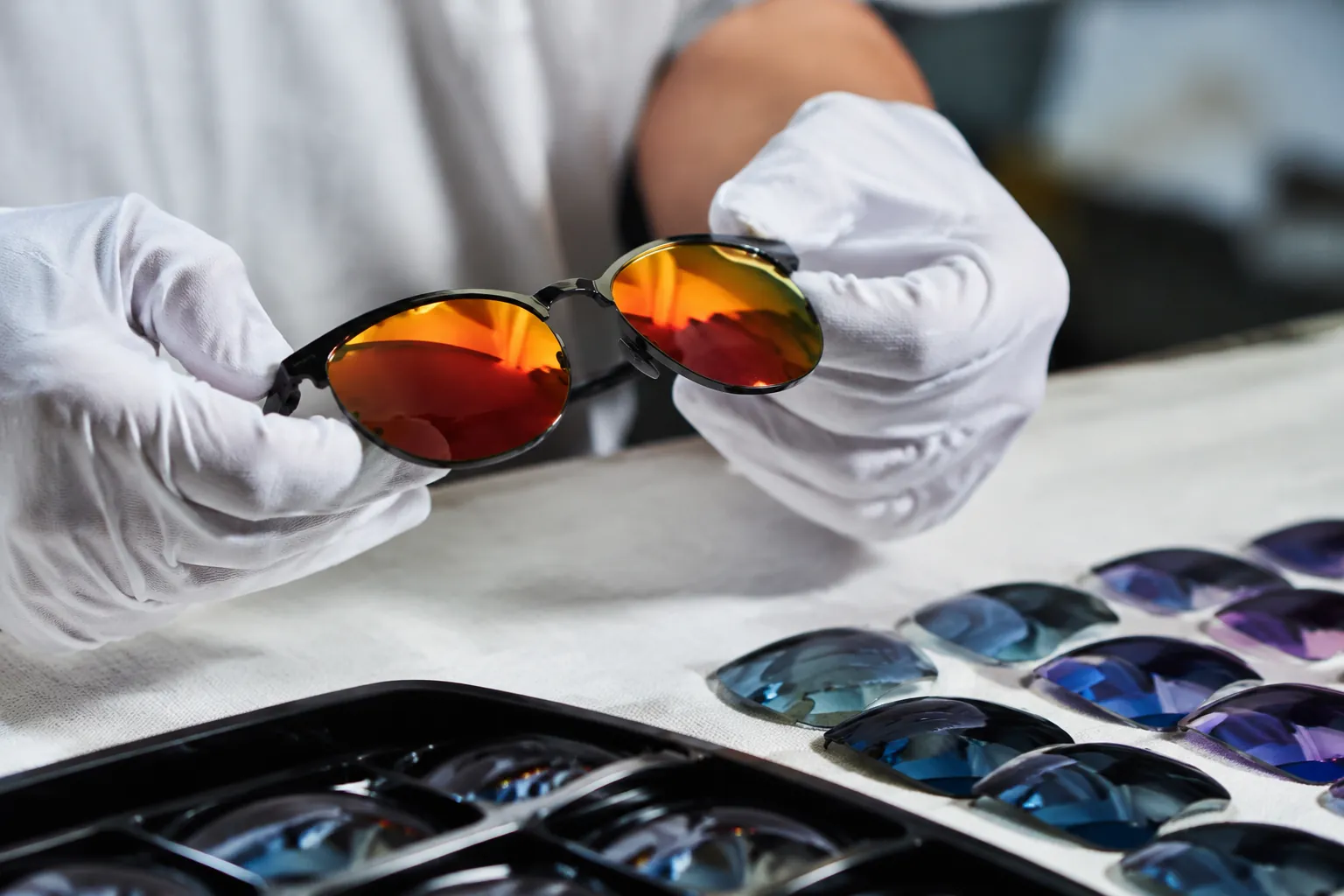
This guide is for brand owners, importers, distributors, and retail buyers deciding whether nylon lenses belong in a sunglasses program. The real question is not whether nylon sounds premium. It is whether nylon improves product performance enough to justify the cost on the sunglasses you are buying. That answer depends on frame wrap, lens geometry, optical expectations, coating requirements, assembly stress, compliance targets, and price position. The sections below show where nylon creates a real commercial advantage, where standard alternatives are usually enough, and which production details should be fixed early to avoid wasted cost and delay.
Start with the use case, not the material
Nylon lenses usually make sense when lens performance is part of the product promise. That often means high-wrap sport frames, shields, performance-led lifestyle sunglasses, and premium products where low weight, comfort, and clean optics are expected. They are harder to justify in opening-price fashion sunglasses, simple promotional programs, or flatter frames where the lens sees less mechanical stress and the buyer is competing mostly on style or price.
Many buyers start by comparing nylon with polycarbonate. Fair enough. But that is only the start. The more useful question is how the lens behaves after forming, edging, coating, mounting, shipping, and daily wear. In higher-wrap geometries, nylon is often chosen because it can offer good optical performance at low weight while tolerating assembly stress well. That matters when the lens is carrying load from front curvature, groove design, retention points, and insertion force rather than just filling an eye wire.
If your assortment includes cycling, running, golf, fishing, marine, driving, or shield-based sport sunglasses, evaluate nylon early. If you are buying flatter fashion frames, entry-price private label sunglasses, or short seasonal programs with a hard retail ceiling, standard alternatives are often the more rational choice.
Simple filter: If the frame is fairly flat, the target retail is tight, and the user is unlikely to notice optical refinement, nylon is often unnecessary. If the frame is highly curved, sold on comfort or visual quality, or built in semi-rimless or shield construction, nylon is more likely to earn its keep.
Where nylon can beat standard lens options
Buyers usually consider nylon for three reasons: optical performance in curved forms, low weight with strong impact resistance, and good toughness under assembly stress. These are not abstract material claims. They affect fit consistency, scrap risk, remake rates, and post-sale complaints.
| Lens option | Typical thickness range | Best use | Strengths | Trade-offs |
|---|---|---|---|---|
| Nylon | About 1.0-2.0 mm depending on design | Sports, wrap, shield, premium sunglasses | Low weight, good impact resistance, often preferred for high-wrap optics and for lens builds exposed to more assembly stress | Higher cost than mass-market lens options; process control for tint, coatings, and cosmetics matters |
| Polycarbonate | About 1.0-2.2 mm | Mass-market sport and fashion | High impact resistance, broad availability, competitive cost, scalable for large-volume programs | Optical quality in stronger wraps depends heavily on lens design and process control |
| CR-39 | About 1.4-2.2 mm | Fashion, lower-wrap premium optics | Good optical clarity and tint stability in flatter or moderately curved products | Heavier than nylon; generally less suitable where high impact resistance or aggressive wrap is required |
| TAC polarized assemblies | Usually around 1.1-1.5 mm laminated | Value polarized programs | Common route to polarization for entry and mid-tier sunglasses | May be less suitable for demanding wrap geometries; edge durability and premium positioning depend on build quality |
The pressure point is curvature. As wrap increases, prism effects, distortion, and fitting stress get harder to control. Nylon is often used in 6-base to 8-base products because it can support curved designs while staying light and durable. That does not mean every nylon lens will beat every polycarbonate lens. It means nylon is often the safer material to test first when frame geometry is demanding and the product is sold on wear performance.
Nylon also matters when the frame design loads the lens edge. Semi-rimless constructions, drilled details, snap-fit shields, and sport fronts with strong horizontal bow are less forgiving than standard fashion frames. In those builds, a lens material with good toughness and stable processing can reduce cracking, whitening, or cosmetic rejection during edging and mounting.
The cost question: where the extra spend pays back
Nylon lenses usually cost more than standard mass-market options. The commercial question is simple: where does that extra spend create measurable value? In most programs, the return comes from one or more of four places: stronger product positioning, better wearer acceptance in high-wrap or sport categories, fewer stress- or optics-related problems, or a cleaner sales story for specialty channels.
The exact cost gap depends on lens design, coatings, color treatment, polarization, thickness, order volume, and rejection rate during production. So do not rely on generic price claims. Quote against a fixed lens specification. A nylon upgrade that looks hard to defend in an opening-price fashion SKU may be easy to absorb in a premium sport SKU where the customer expects better clarity, lower weight, and better all-day comfort.
As a rule, nylon is easier to defend when the user can feel or see the performance difference, or when failure risk from a cheaper material is real. It is harder to defend when the frame is simple, the wrap is moderate, the retail ceiling is strict, and the buyer is competing mainly on price.
- Sampling and pilot runs: Use them to validate fit, optics, tint, and cosmetics before assuming nylon is worth the upgrade.
- Launch programs: Nylon often makes more sense when the product story depends on sport function, wrap comfort, or premium wear quality.
- Repeat programs: The material is easier to justify when the lens build is fixed, compliance is already defined, and the product has proven demand.
- Price-led basics: Standard alternatives usually remain the stronger commercial choice unless frame geometry creates a clear technical need.
Good buyers do not ask only which lens is cheaper at quote stage. They ask which lens keeps the SKU stable through sampling, production, compliance review, and sell-through.
Wrap styles are where nylon usually proves its value
Wrap frames expose lens limitations fast. Strong horizontal curvature changes how the lens sits in front of the eye, how it edges into the frame, and where stress builds during insertion. A material that performs well enough in a flatter lifestyle frame may become difficult in a true sport wrap or large shield.
Nylon is often specified in these products because it can support curved profiles while keeping a good balance of low weight, durability, and optical quality. For buyers, that can reduce the need to compromise on front curve, retention design, or lens thickness just to make assembly easier.
The problem becomes more visible in shields and strongly wrapped two-lens designs. Large visual areas make cosmetic inconsistency easier to spot. Tighter curves leave less room for process drift. If edging is off, insertion force is too high, or stress builds near the temple side, the finished pair may show whitening, local distortion, or fit-related rejects. That is why nylon is often easier to justify in premium wrap programs than in standard lifestyle sunglasses.
This matters most in these categories:
- Cycling and running sunglasses with close facial wrap and low tolerance for visual distortion
- Fishing and marine styles where long wear time makes optical comfort more noticeable
- Golf and driving sunglasses where clarity strongly affects perceived quality
- Large shield products that require consistent curve, tint, and mirror appearance across a broad lens area
If the design brief calls for aggressive wrap but the sourcing brief is built entirely around the lowest lens cost, trouble usually appears during sampling. Either lens performance drops or the frame geometry gets softened to protect yield. Decide that trade-off before tooling and approvals are locked.
What changes in production, QC, and lead time
Nylon lens programs usually need tighter process control than basic sunglass builds. The material choice affects lens forming, edging, coating performance, assembly fit, and cosmetic review. That does not make the project slow by default. It does mean the sample brief and approval criteria need to be exact from the start.
A practical production path usually looks like this:
- Confirm base curve, target thickness, final shape, tint category, and whether polarization, mirror, anti-reflective, or hydrophobic coatings are required.
- Produce functional samples and check insertion stress at the bridge, lower corners, and retention points.
- Review optical quality, surface cosmetics, and left-right color consistency against the approved standard.
- Validate the final build against the required market standard, such as CE EN ISO 12312-1, ANSI Z80.3, or AS/NZS 1067.
- Lock the approved sample and keep lens category, coatings, branding placement, and packaging aligned with what was tested and signed off.
Lead time depends more on project discipline than on the word nylon itself. Delays usually come from vague briefs, late changes to tint category, mirror additions after sample approval, or unresolved wrap-fit problems that force repeated sample rounds.
Useful QC checkpoints include lens thickness consistency, edge finish, left-right color match, coating adhesion, visible surface defects, and fit stress after conditioning. Branding method matters too. Lens printing may work for some fashion or promotional products, but premium sport sunglasses often benefit from branding that keeps the visual field clean and reduces avoidable cosmetic rejection.
Compliance is not optional, and lens choice affects it
Sunglass compliance is driven heavily by the lens build. Nylon removes none of that. It changes the build variables that must be controlled, because visible light transmission, UV performance, optical quality, and impact-related requirements must be checked on the final lens specification, not on a visually similar sample.
For commercial programs, the relevant references may include CE EN ISO 12312-1, ANSI Z80.3, AS/NZS 1067, REACH, FDA registration, ISO 9001, and BSCI, depending on market and customer requirements. These are not interchangeable. Product-performance standards such as CE EN ISO 12312-1, ANSI Z80.3, and AS/NZS 1067 should match the destination market and the final lens construction. REACH covers chemical compliance. FDA registration, where applicable, is a regulatory requirement, not a substitute for product testing. ISO 9001 and BSCI relate to management systems and social compliance, not sunglass lens performance.
Three common mistakes create avoidable retest cost and shipment delay:
- Approving a sample by appearance alone without fixing visible light transmission category and UV requirements
- Changing tint density, mirror treatment, or polarization structure after compliance planning has started
- Assuming a mirrored or polarized variant performs the same as the base tinted lens without confirming it against the required standard
For private label programs, the RFQ should state the destination market, required standard, target lens category, and documentation expected at shipment. Fix that before final sample approval. Small changes in tint, mirror, polarization, or wrap can affect whether the tested build still represents the shipped product.
Buyer scenarios and the final decision rule
Consider two common sourcing situations. First: a fashion-led program with moderate wrap, a strict retail ceiling, and limited need for technical lens performance. Second: a sport-led program with stronger wrap, a performance-based product story, and low tolerance for optical or fit-related complaints.
In the first case, nylon is often unnecessary. The frame geometry is more forgiving, the customer is buying mainly on look and price, and standard approved lens options will usually meet the brief more efficiently.
In the second case, nylon deserves serious consideration. If the product promise depends on long-wear comfort, clean optics in wrap, low weight, and reduced assembly stress, a cheaper lens can become more expensive once remakes, rejects, and customer dissatisfaction are counted.
Before placing the order, settle these points:
- Base curve and front wrap level
- Whether the frame is full-rim, semi-rimless, or shield construction
- Lens function: fashion, driving, fishing, sport, or general lifestyle
- Whether the build needs solid tint, gradient, mirror, polarization, or backside anti-reflective coating
- Destination market and compliance standard
- True quantity by colorway and by design
- Branding method on frame or lens
The working rule is simple. Choose nylon where the user can detect the performance difference, where frame geometry creates higher lens stress, or where complaint risk from a cheaper lens is materially higher. Skip it where the value will be invisible and the program is driven mainly by opening price.
Have a custom sunglasses project in mind?
Send us your styles, target market and quantities and we will return a detailed quote with MOQ, lead time and a sample plan.
Get a QuoteWhy source this from Wenzhou with LumiShades
Wenzhou in Zhejiang Province is widely regarded as China’s eyewear manufacturing capital, producing a large share of the world’s sunglasses. That concentration matters to buyers: a deep local supply chain for acetate sheet, hinges, lens blanks, plating and packaging means shorter component lead times, easier color and material matching, and a workforce with decades of eyewear-specific skill. LumiShades has manufactured in this ecosystem since 2009, and our vertical integration — in-house injection molding, acetate cutting, CNC milling, lens tinting, decoration and quality control — means no part of your order is quietly subcontracted to a workshop you cannot audit.
For international buyers, that vertical control translates into accountability. When a single factory owns every step, defects are traced and fixed at source rather than bounced between vendors, and your specifications survive intact from first sample to bulk. We back this with 15+ years of experience, shipments to 60+ countries, more than 5 million pairs produced per year and a 98.5% on-time delivery rate. Our certifications — CE EN ISO 12312-1, FDA registration, ANSI Z80.3, AS/NZS 1067, REACH, ISO 9001 and BSCI audit — mean the compliance documentation your market requires already exists. Explore our manufacturing capabilities and quality control process to see how this works in practice.
Frequently asked questions
Are nylon lenses always better than polycarbonate for sunglasses? No. Nylon is not automatically better across all sunglasses. It is usually strongest in high-wrap, shield, sport, and premium programs where low weight, good optics in curved forms, and toughness under assembly stress matter. Polycarbonate often remains the better commercial option for cost-sensitive fashion styles, promotional sunglasses, and large-volume basics with moderate wrap. The right comparison is on the actual frame geometry, lens category, coatings, and compliance target, not on material reputation alone.
At what stage should a buyer decide on nylon lenses? Decide before the first functional sample if possible. Changing from a standard lens material to nylon after frame tooling, lens shape approval, or compliance planning can trigger new fit checks, new color approvals, updated costing, and sometimes revised frame retention details. A clean RFQ should already define base curve, lens material, thickness target, tint category, coatings, polarization requirement, destination market, and the standard the finished product must meet.
Do nylon lenses increase lead time? Not by themselves. Lead time usually grows because the brief is incomplete or the lens build changes after approvals start. Common delay points include changing tint category after color signoff, adding mirror or polarization late, or finding fit stress in a high-wrap frame after the lens shape has already been approved. To keep timing under control, lock the lens material, wrap, tint category, coatings, and compliance target before bulk approval.
Which compliance standards matter for nylon sunglass lenses? That depends on where the product will be sold. For sunglass performance, buyers commonly work to CE EN ISO 12312-1, ANSI Z80.3, or AS/NZS 1067. REACH may apply for chemical compliance. FDA registration may be relevant depending on the product and market pathway. ISO 9001 and BSCI are factory or system-level references, not substitutes for product testing. The practical step is to name the destination market and required standard in the RFQ, then make sure the tested sample matches the final shipped lens build, including tint, mirror, polarization, and wrap.
Can nylon lenses be used on small MOQ private label orders? Yes, but the main question is commercial fit, not technical possibility. Nylon can be used in smaller private label runs if the buyer is willing to absorb the higher unit cost and fund proper sample validation. It makes the most sense when the SKU is performance-led, highly wrapped, or positioned as premium. Before approving a small-MOQ nylon program, confirm that the target retail price, margin, compliance cost, and sample cycle still make sense for the order size.
Ready to start?
Explore our round sunglasses or request a quote — our sales team replies within 12 hours.
Request a Quote