
Polarized vs Photochromic Sunglasses: Buyer Guide
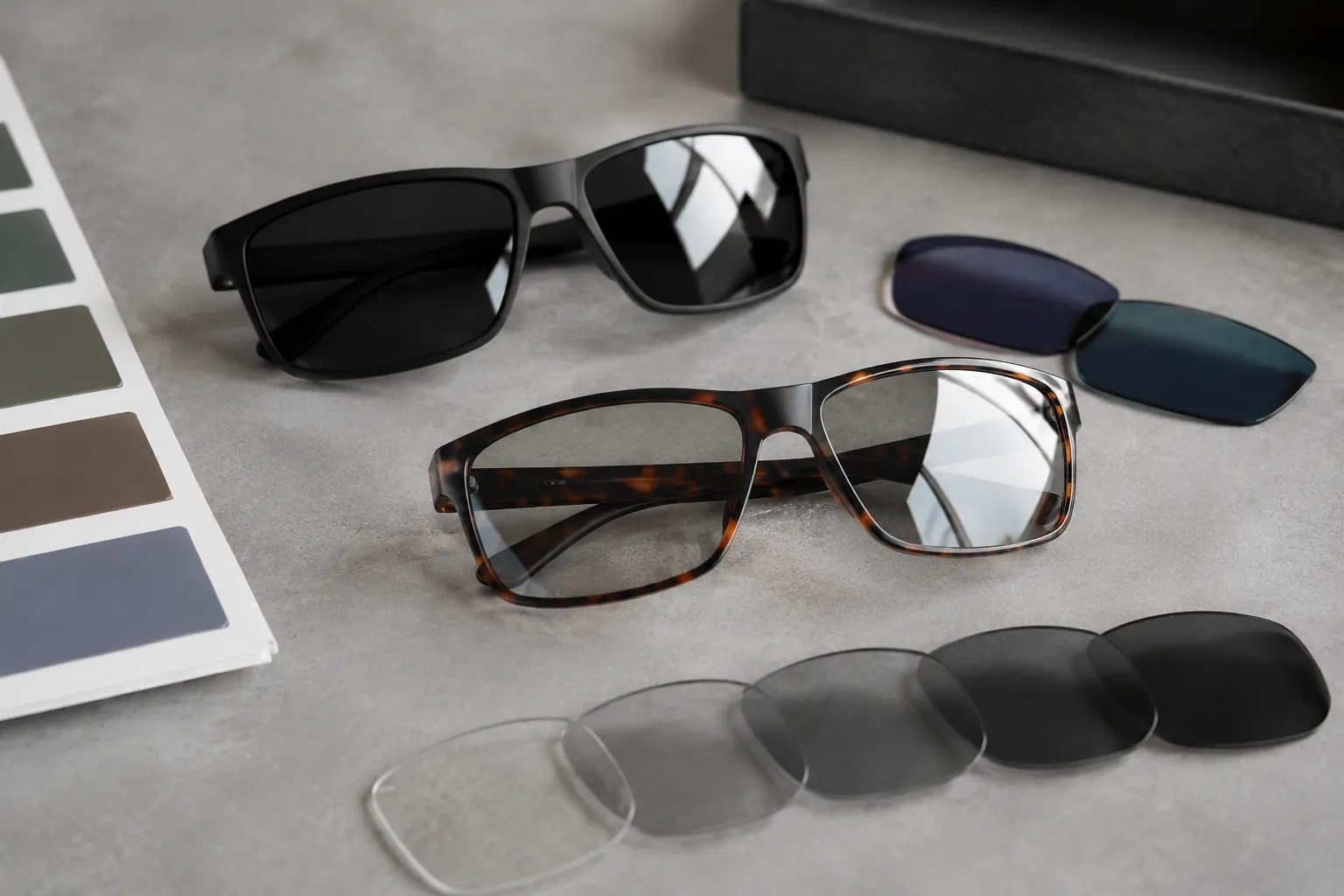
This guide helps brands, importers, distributors, and retail buyers choose between polarized, photochromic, and standard tinted lenses for bulk sunglasses orders. It focuses on the decisions that affect sell-through, claims, MOQ, pricing, lead time, compliance, tolerances, and QC. Use it before you lock the lens function, target price, packaging copy, and document set.
Start With the Use Case, Not the Feature
Bad lens briefs usually start the same way: make it polarized, make it photochromic, make it premium. That is the wrong order. Start with the channel, the wearer, and the problem the product is supposed to solve. If the channel cannot explain the benefit fast, the feature will not help.
Polarized lenses cut reflected glare from water, roads, snow, glass, polished floors, and wet pavement. The benefit is immediate. That makes polarization a strong fit for fishing, driving, beachwear, boating, travel retail, and outdoor lifestyle programs where glare is the main complaint.
Photochromic lenses change tint under UV and lighten when the UV source drops. The function is useful, but it is harder to explain at shelf. It fits cycling, hiking, outdoor work, golf, and mixed-light use where the wearer moves between shade and sun.
Standard tinted lenses still have a place. They are often the right answer for fashion-driven programs, low-education channels, and price-sensitive orders. If the function does not improve sell-through, do not force it.
- Choose polarized for glare-led use cases such as water, driving, beach, and travel.
- Choose photochromic for variable-light use where adaptation matters more than instant darkness.
- Choose standard tinted when price pressure is high and the shelf cannot explain extra function.
- Avoid stacking functions casually; polarized photochromic lenses exist, but they raise cost, lead time, and rejection risk.
Short rule: if the customer can see the problem before they buy, the feature can help. If the benefit needs a long explanation, it may be too expensive for the channel.
What the Buyer Actually Gets
This is the first filter we use with overseas buyers. It does not replace testing. It stops obvious mismatches before they become expensive.
| Lens option | Best use case | Buyer benefit | Main sourcing risk | Typical price fit |
|---|---|---|---|---|
| Standard tinted TAC or PC | Fashion, promo, entry retail, event programs | Lowest cost, straightforward color control, fast approval | Overclaiming UV or impact performance without supporting documents | Entry to mid |
| Polarized TAC | Driving, fishing, beach, travel, outdoor lifestyle | Reduces reflected glare and improves visual comfort | Axis alignment, lamination defects, stress marks after edging | Mid to upper-mid |
| Polarized PC | Sports frames, shields, and sunwear programs that want a tougher lens substrate | Glare reduction plus a more impact-resistant lens material than TAC | Higher molding tolerance demands and more coating control | Mid to premium |
| Photochromic PC | Cycling, hiking, outdoor work, variable-light use | Changes darkness with UV exposure | Reaction speed, final darkness, batch consistency, temperature sensitivity | Upper-mid to premium |
| Polarized photochromic | Niche technical programs with a strong sales story | Glare control plus adaptive tint | Longer validation, higher rejection rate, more expensive replacements | Premium only |
From a sourcing view, polarized TAC often gives the cleanest balance for bulk orders. It is familiar, widely produced, and works across many frame styles. Photochromic should be used on purpose, not just because it looks good in a spec sheet.
Material matters too. TAC usually fits lighter-cost sunglass programs. PC is chosen when impact resistance or a tougher substrate matters more. The real question is not "polarized or photochromic?" It is "which lens can we produce consistently, sell clearly, and restock without trouble?"
Climate Changes the Answer
Lens behavior is not the same in every market. A sunglass sold in Queensland, Dubai, Vancouver, and Hamburg may need a different lens choice even if the frame is identical. Geography affects glare, UV, temperature, and how often the product is used behind glass.
Polarized lenses work well wherever glare is the problem. Coastal markets, boating channels, road-trip retailers, ski towns, and tropical tourist zones are natural fits. The benefit is easy to show. The customer sees the reflection disappear.
Photochromic lenses depend on UV exposure and temperature. In many materials, darkening is stronger in cooler sunlight and weaker in hot conditions. Inside a warm car, or behind glass that blocks part of the UV, the lens may not reach the same darkness it does outdoors. That is normal if it was specified honestly. It becomes a complaint if the packaging promises more than the lens can do.
Before you use photochromic in a multi-country program, ask these questions:
- Will the product be used mostly outdoors rather than behind glass?
- Is the market hot enough that final darkness may be reduced?
- Can retail staff or the product page explain activation and fading time clearly?
- Does the buyer accept visible color shift during transition?
- Will the same SKU sell in both high-UV and low-UV seasons?
Field testing is better than catalog copy. If the market is mixed or unclear, start with a smaller run and validate the function in the real selling environment before scaling.
Do Not Pay for a Feature the Shelf Cannot Sell
Lens function has to match the retail price and the channel's level of education. A low-price impulse rack has little room for explanation. An outdoor specialty store can support a higher-spec product because the sales conversation is already technical. E-commerce sits in the middle. You can explain more, but you also raise the risk of returns if the claim outpaces the experience.
At factory level, MOQ and price move together. A small MOQ helps you test demand before you commit to a larger order. Bigger quantities usually improve unit cost, but the breakpoints depend on the frame, lens, decoration, packaging, and test scope. Polarized films, photochromic layers, mirror coatings, logo plates, and premium packaging all add cost.
The right question is not "which lens is cooler?" It is "which lens can the channel absorb at the target margin?" For entry retail, standard UV-protective tinted lenses are usually safest unless polarization is the main reason the product exists. For mid-price retail, polarized TAC is often the best upgrade because the benefit is easy to understand. For upper-mid and premium outdoor channels, photochromic PC can work if the product page states clearly what it does and does not do.
Decoration and finishing matter too. A simple molded frame with a printed logo and basic polybag is far cheaper than a frame with a metal badge, soft-touch coating, microfiber pouch, and rigid box. On many orders, packaging and decoration add meaningful cost before freight. Lens choice has to be judged with the full bill of materials, not alone.
Practical rule: add a lens function only if it improves sell-through, reduces complaints, or supports a higher retail price. If it only looks better in a presentation, cut it.
Assortment planning matters as well. You may not need every colorway in photochromic. Use the feature on one or two technical SKUs, keep fashion colors simple, and protect margin where the customer is buying style rather than function.
What to Put in the Purchase Order
A purchase order that says "polarized sunglasses" is not enough. The supplier needs measurable requirements, and QC needs something to inspect. Vague specs create disputes later, especially when the order repeats after sample approval has faded from memory.
For polarized lenses, specify the lens material, color, category, UV claim, polarization requirement if applicable, coating, base curve, thickness range, and whether the lens will be decentered or edged after lamination. For photochromic lenses, add activated and unactivated color, target darkness range, activation and fading test conditions, and acceptable batch variation. If the frame is curved, note the lens curvature and whether the lens is meant to sit flush without stress after assembly.
Keep tolerances simple. Define visible tint consistency within a batch, left-right color match within an agreed tolerance if the supplier can measure it, and acceptable optical distortion for wrapped frames. If the frame uses a deep groove, specify groove width and lens edge thickness compatibility so the lens does not pop out or crack during assembly. Buyers do not need to over-engineer the PO. They do need enough detail to avoid avoidable disputes.
For regulated markets, claims must match documents. Common references include CE EN ISO 12312-1, ANSI Z80.3, AS/NZS 1067, REACH, FDA registration, ISO 9001, and BSCI, depending on the market and product scope. Do not ask a factory to print a claim that is not supported by the actual lens and test report for that order. If the product is sold as "UV400," but the document set is for a different standard or sampling lot, that mismatch can create customs or retail problems.
- UV claim: define whether the product is UV400 or meets the relevant sunglass standard for the target market.
- Lens category: confirm visible light transmission, especially for light tints and fashion gradients.
- Driving warning: check whether the tint and category are suitable for driving under the applicable standard.
- Polarization check: inspect axis consistency across left and right lenses.
- Photochromic check: test activation under controlled UV, not only under warehouse lighting.
- Chemical compliance: include REACH requirements for EU-bound orders, including coatings, plastics, and decorations.
Better specs slow quotation a little. They speed up everything after that.
Where Factory Risk Actually Shows Up
Lens function interacts with frame production. That is where many importers underestimate risk. A good sample lens can still fail in bulk if edging, assembly, coating, or frame stress is not controlled. The lens does not live alone. It sits inside a production sequence.
In Wenzhou production, polarized TAC lenses are often laminated sheet lenses that are cut and edged to shape. If the lens is forced into a frame with poor groove control, stress marks can appear. If the polarization axis is not controlled, one lens may block glare differently from the other. The customer will not describe it technically. They will just say the glasses feel wrong.
Photochromic PC lenses need tight control of coating uniformity and curing. The reaction layer has to be even across the lens surface. Color match between left and right lenses matters, and so does transition speed. A small mismatch is easy to spot when both lenses sit in the same frame and change in sunlight at the same time.
A reliable factory should check incoming lens quality, frame groove dimensions, edging accuracy, assembly stress, hinge torque, surface cosmetics, and function performance before packing. For molded frames, gate marks, warpage, and temple alignment can affect how the lens sits. For acetate frames, cutting precision and groove finish matter. For metal frames, pad printing and plating quality matter because secondary decoration affects final appearance and perceived quality.
A practical QC checklist should include incoming lens inspection, frame groove check, lens edging verification, assembly stress check, hinge and screw torque check, cosmetic inspection under consistent light, polarization or photochromic function check, and final AQL inspection before packing. If the order includes mirror coating, add coating adhesion and scratch resistance, especially for humid shipping lanes.
The key point is simple: a functional lens must be validated in the actual frame, not just as a standalone lens sample. If frame fit, groove depth, and lens thickness are not aligned, the final product can fail even when the lens itself meets spec.
Sampling and Lead Time
Do not approve a technical lens from photos alone. Lens color, darkness, reaction speed, glare reduction, and coating defects are physical properties. You need samples in hand, ideally in the same frame shape and finish that will go into bulk production.
A practical approval sequence is straightforward. First, confirm the target market and compliance standard. Second, choose the lens type and frame material. Third, request samples with the exact lens color and function. Fourth, test them in the real selling condition: road glare, water glare, shade-to-sun transition, or outdoor sport use. Fifth, freeze the approved sample and packaging claims before bulk starts.
Sample and production timing should be treated as estimates, not promises. Many factories can produce samples in about one to two weeks, and bulk production often takes several weeks after sample approval and deposit. Custom colors, metal logo plates, laser engraving, special photochromic lenses, third-party testing, and packaging changes can extend the schedule. Build that into the calendar instead of trying to compress QC at the end.
For first orders, a small MOQ is useful for market testing and function validation. Larger quantities make sense once the lens choice is proven and the claim is stable. Small orders spread setup time, lens sourcing, color matching, and inspection effort across fewer units, so the per-pair price is higher even if the factory margin is unchanged.
Keep one retained sample at your office and one at the factory. If a repeat order shifts lens darkness, mirror tone, or polarization axis, both sides need the same reference. For larger programs, keep one retained sample from each approved batch so future production can be checked against the actual accepted lot, not memory.
A Simple Framework for the Final Choice
Use this decision path before you issue the final brief. It is not fancy. It works. The goal is to line up the spec with the channel and remove guesswork.
- Define the channel. Discount rack, fashion retail, outdoor specialty, distributor catalog, corporate gift, and e-commerce all need different feature levels.
- Define the wearing problem. Glare, changing light, impact risk, UV protection, style, or low price. Pick the main one.
- Set the retail price first. Then work backward to factory cost, packaging, and test budget.
- Match the lens function. Standard tinted for price-led programs, polarized for glare-led programs, photochromic for variable-light programs.
- Check compliance. Match CE EN ISO 12312-1, ANSI Z80.3, AS/NZS 1067, FDA registration, REACH, ISO 9001, or BSCI requirements to the target market and claim.
- Approve physical samples. Do not approve technical lenses from renders or lab sheets alone.
- Lock the wording. Packaging claims should match the tested function. Keep the language plain.
If you are still unsure, split the order. Run one polarized SKU and one standard tinted SKU first. Or test photochromic in a small design run before pushing it across the whole range. Bulk sunglasses sourcing rewards restraint. The best lens is not the most technical one. It is the one your customer understands, uses, and does not return.
That matters even more for private-label and distributor programs. A simple, repeatable SKU with stable color, clear labeling, and low claim risk often outperforms a complicated product that looks strong in a presentation but is hard to restock. The market usually rewards consistency. Not cleverness.
Have a custom sunglasses project in mind?
Send us your styles, target market and quantities and we will return a detailed quote with MOQ, lead time and a sample plan.
Get a QuoteWhy source this from Wenzhou with LumiShades
Wenzhou in Zhejiang Province is widely regarded as China’s eyewear manufacturing capital, producing a large share of the world’s sunglasses. That concentration matters to buyers: a deep local supply chain for acetate sheet, hinges, lens blanks, plating and packaging means shorter component lead times, easier color and material matching, and a workforce with decades of eyewear-specific skill. LumiShades has manufactured in this ecosystem since 2009, and our vertical integration — in-house injection molding, acetate cutting, CNC milling, lens tinting, decoration and quality control — means no part of your order is quietly subcontracted to a workshop you cannot audit.
For international buyers, that vertical control translates into accountability. When a single factory owns every step, defects are traced and fixed at source rather than bounced between vendors, and your specifications survive intact from first sample to bulk. We back this with 15+ years of experience, shipments to 60+ countries, more than 5 million pairs produced per year and a 98.5% on-time delivery rate. Our certifications — CE EN ISO 12312-1, FDA registration, ANSI Z80.3, AS/NZS 1067, REACH, ISO 9001 and BSCI audit — mean the compliance documentation your market requires already exists. Explore our manufacturing capabilities and quality control process to see how this works in practice.
Frequently asked questions
Can I use photochromic sunglasses for driving products? Use caution. Many photochromic lenses darken less behind car glass because windshields block much of the UV that activates the lens. If driving is the main use case, polarized lenses are usually easier to explain and easier for buyers to understand. If you still want photochromic in a driving-adjacent program, test it in a vehicle before you approve the claim or packaging copy.
Is polarized always more expensive than standard tinted lenses? Usually yes. Polarized lenses add film, lamination control, edging care, and extra inspection steps, so the cost is normally higher than a standard tinted lens. The final difference depends on lens material, frame type, order quantity, coating stack, and packaging. Ask your supplier for a side-by-side quote on the same frame before you compare options.
What MOQ should I use to test a new lens function? Use the smallest quantity your supplier can support for a real market test, then validate the product in the actual selling channel. A small run is useful when you need to check demand, function, and claim clarity before scaling. If the first sample performs well, move to a larger repeat order only after the retail team or distributor confirms the sell story works.
Which certifications should I ask for on sunglasses orders? Ask for the documents that match the target market and the product claim. Common references include CE EN ISO 12312-1 for many EU sunglass requirements, ANSI Z80.3 for the US, AS/NZS 1067 for Australia and New Zealand, and REACH for EU chemical compliance. Depending on the factory and program, you may also ask whether the supplier has FDA registration, ISO 9001, or BSCI. Match the documents to the destination market and the exact SKU.
Can one frame style use both polarized and photochromic lenses? Yes, if the frame groove, curve, and lens thickness are compatible. Treat them as separate approved SKUs, not one shared spec, because the color targets, function testing, cost, and QC criteria will differ. Keep separate approved samples for each version so repeat orders can be checked against the right reference.
How long should I allow from sample to shipment? Plan in two stages: sample approval first, then bulk production. Many suppliers can provide samples in about 7 to 10 days, while bulk production often takes about 25 to 35 days after approval and deposit. Add time for field testing, compliance review, packaging approval, and any required rework or third-party testing before you set a launch date.
Ready to start?
Explore our square sunglasses or request a quote — our sales team replies within 12 hours.
Request a Quote