
Polarized Sunglasses Sourcing Guide for Buyers
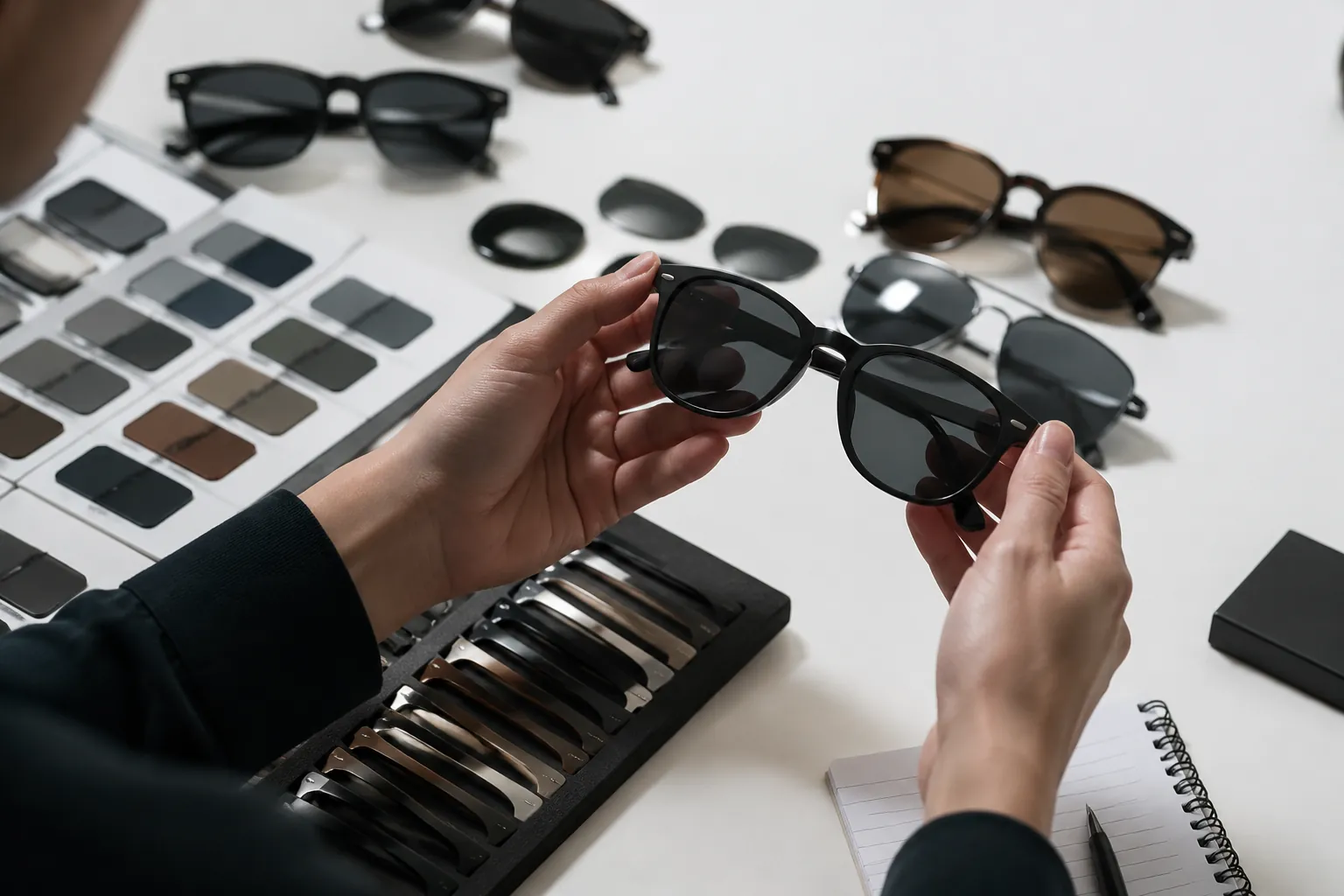
This guide is for brands, importers, distributors, and retail buyers deciding whether polarized sunglasses belong in a wholesale assortment. It explains where polarization adds real value, how to check that lenses are genuinely polarized, which specifications belong in a purchase order, and what to confirm before approving pre-production samples. Use it before you set price tiers, approve packaging claims, or commit to bulk production.
Where Polarized Lenses Actually Pay
Polarized lenses matter when glare reduction is part of the sale. They reduce horizontally reflected glare from water, wet roads, snow, glass, dashboards, and metal. That benefit is easy to explain in driving, fishing, boating, beach retail, outdoor sports, travel, resort, and marina assortments.
They matter less in low-price festival frames, neon fashion drops, giveaways, and photo-prop sunglasses. In those products, customers mainly buy shape, color, logo, and price. Do not pay for a function the channel will not sell.
Polarized lenses cost more because they use a polarizing filter layer, controlled alignment, suitable lamination or lens construction, accurate cutting, and extra inspection. The gap is more visible on small first runs. It is easier to absorb on repeat programs where decoration, packing, and inspection can be planned in advance.
A useful rule is simple: add polarization where glare reduction helps close the sale. Do not add it just because the word sounds premium. Many buyers do better with a mixed line: non-polarized UV-protective lenses for color-led fashion SKUs, and polarized lenses for core black, tortoise, sport, driving, fishing, and travel models. If a frame already sells year-round, polarization can support a higher perceived value. If the frame is a one-season color test, a standard UV-protective tinted lens may be the better buy.
MOQ, Price, and Lead-Time Logic
MOQ and pricing depend on the supplier, frame construction, lens material, lens color, coating, decoration method, packaging, compliance documents, and inspection requirements. If a factory supports low-MOQ testing, use it to check fit, lens color, retail presentation, and channel response before scaling.
Decide on polarized lenses before sample approval. Do not treat polarization as a late add-on. Lens thickness, curve, groove fit, tint, and coating may need adjustment.
| Order stage | Typical use | Commercial impact | Timing logic |
|---|---|---|---|
| Low-MOQ test | Market test, influencer kit, retail trial, buyer presentation | Highest unit cost; limited efficiency for custom lens colors, packaging, or tooling | Fastest when using existing frames, existing lens colors, and simple decoration |
| First wholesale run | Boutique launch, regional test, seasonal introduction | Better efficiency for decoration, packing, and carton planning | Timing depends on approved samples, material availability, and whether new tooling is required |
| Core SKU run | Repeat style, distributor order, larger seasonal program | Polarized lens cost spreads better across production and inspection setup | Plan lens color, logo, packaging artwork, and compliance files before bulk material purchase |
| High-volume program | Chain retail, distributor volume, or repeat OEM program | Lower unit cost is more achievable; stronger AQL inspection and batch records are justified | Book materials early, especially for custom tint, mirror coating, retail boxes, and barcode labels |
Lead time depends on what is custom. A stock plastic frame with common gray or brown polarized lenses is usually faster than a new frame mold, custom acetate shape, special mirror coating, gradient lens, logo hardware, barcode label program, or rigid retail box. A new injection mold or custom component can add a separate tooling stage before bulk production.
Do not cut polarized lens inspection to save a few days. Axis errors, coating defects, UV failures, and poor lens fit become returns or retailer rejections. They are not minor cosmetic issues.
Lens Construction and Material Behavior
Most wholesale polarized sunglasses use a polarizing filter layer inside the lens structure. The filter alignment is what reduces glare. Lens material affects clarity, impact behavior, scratch resistance, curve stability, weight, and cost.
The frame and lens must work together. A high-wrap sports frame needs tighter control of base curve and optical distortion than a flatter fashion frame.
| Lens option | Best fit | Behavior and watch-outs | Buyer note |
|---|---|---|---|
| PC polarized lens | Sport, kids, driving, mass retail | Lightweight with good impact resistance; can scratch without a hard coat; poor processing may create optical waves | Good balance of cost and durability; specify hard coating if scratch resistance matters |
| TAC polarized lens | Fashion, beach, travel, lifestyle | Lightweight and widely used; generally lower impact resistance than PC; rough edging can cause chipping | Common for wholesale programs where cost, weight, and appearance matter |
| Nylon polarized lens | Higher-grade sport, cycling, wrap frames | Good optical stability for curved lenses; higher cost; forming and tint control matter | Useful when base curve and distortion control are key selling points |
| CR-39 polarized lens | Optical-style fashion frames | Good scratch behavior compared with uncoated PC; heavier and less impact resistant | Suitable for selected lifestyle designs, not usually the first choice for sport use |
Put measurable lens details in the tech pack: lens material, lens category, UV requirement, base curve, center thickness, edge thickness, coating, tint type, transmission target if needed, and mirror color if used. Confirm lens thickness and tolerance against the frame design and groove.
For many injection frames, small lens-size deviations can decide whether the lens fits securely or creates stress marks. Set final tolerance after reviewing tooling, frame shrinkage, and sample fitting.
Mirror coating over a polarized lens can work well in marine, sport, and resort channels. Still, check adhesion and scratch resistance on the approved construction. Gradient polarized lenses need closer color control because uneven tint can expose film or lamination defects. Approve a physical master color sample. Compare bulk production under consistent light, not only under factory office lighting.
Decoration, Branding, and Packaging
Decoration affects cost, appearance, durability, and reject rate. A logo that works on acetate may fail on rubberized plastic, painted metal, or a thin temple. Confirm the process before sampling. Then approve a physical pre-production sample, not just artwork.
- Pad printing: cost-effective for temples and simple one- or two-color logos. Require adhesion testing on the actual surface coating.
- Laser engraving: durable on many metal parts, selected acetate, and some coated surfaces. The final mark color depends on the substrate and finish.
- Metal logo plates: create a premium look but add tooling, plating, assembly, and alignment checks. Define placement tolerance in the approval file.
- Hot stamping or foil: useful for cases, pouches, hang tags, and packaging. Avoid using it on surfaces that flex heavily unless tested.
- Lens sticker: helpful for retail communication, but the adhesive must remove cleanly without damaging mirror coating or leaving residue.
Packaging changes landed cost, lead time, and defect risk. A microfiber pouch is usually simpler than a rigid retail box. Barcode stickers, hang tags, instruction cards, recycled-content claims, and anti-scratch sleeves all need artwork approval and carton planning.
Mirrored polarized lenses need protection. Avoid lens-to-lens contact without a sleeve, tissue, or protective film. For chain retail, specify inner quantity, master carton quantity, carton marks, barcode placement, display needs, and any drop-test expectations before bulk packing starts.
How to Verify Real Polarization
Do not trust a sticker that says polarized. Test the approved sample. Then test production pieces during inspection. Simple checks catch serious mistakes before shipment, but UV protection and regulatory claims still need proper equipment or valid documentation.
- Rotate against an LCD screen. Hold the lens in front of a phone, laptop, or calculator screen and rotate it. A polarized lens should darken significantly at one orientation. This is a quick field check, not a compliance test.
- Use a polarization test card. Hidden images or patterns should appear through a polarized lens. Ask the supplier to include a test card with samples if your team does not have one.
- Check both lenses together. The left and right lenses should have the same polarization axis. A mismatch can cause uneven glare reduction and visual discomfort.
- Inspect optical distortion. Look through the lenses at a straight grid, window frame, or tiled wall. Waves, bending, or swimming distortion are warning signs, especially on high-wrap frames.
- Confirm UV separately. Polarization does not prove UV protection. UV400 or the applicable UV requirement must be checked with suitable equipment or supported by a valid test report.
For wholesale orders, request pre-production samples and a signed specification sheet before bulk production. For larger orders, ask for batch inspection records or third-party inspection results. One showroom sample is not enough.
A practical QC plan should include polarization axis checks, UV transmission checks, lens category or visible light transmission checks where relevant, visual inspection for scratches and bubbles, hinge cycling, screw security, logo position checks, packaging checks, and carton count verification.
Compliance Specs to Put in the PO
For export orders, compliance language must be clear in the purchase order, artwork file, and sample approval record. Avoid vague phrases such as good UV, export standard, or premium lens. Name the standards required for the destination market. Make sure product, packaging, and website claims match the test file.
Common eyewear and factory-related requirements include CE EN ISO 12312-1, ANSI Z80.3, AS/NZS 1067, REACH, FDA registration, ISO 9001, and BSCI. For sunglasses performance, the applicable standard depends on the destination: CE EN ISO 12312-1 is commonly used for European programs, ANSI Z80.3 for the United States, and AS/NZS 1067 for Australia and New Zealand.
REACH relates to restricted substances in materials such as frame resin, coatings, colorants, screws, pads, logo plates, and packaging inks. ISO 9001 and BSCI relate to management systems and social compliance. They do not prove lens performance.
- State the destination market: identify whether the goods are for the EU, U.S., Australia, New Zealand, or mixed distribution.
- State the lens category: very dark lenses may be restricted for driving or unsuitable for some uses under the applicable standard.
- State the UV requirement: specify UV400 or the exact UV wording required by the test plan and destination market.
- Control claims: packaging claims such as polarized, anti-glare, driving, sport, recycled, or kids must be supported by the specification and test file.
- Keep material records: frame resin, lens material, coatings, nose pads, screws, logo plates, and packaging components may be requested during audits or retailer reviews.
Compliance is not decoration. A wrong icon, unsupported driving claim, or missing restricted-substance record can delay customs clearance or trigger retailer rejection. Put requirements in writing before the factory buys material. Changing lens category, tint darkness, or packaging claims after production starts is expensive.
Channel Planning for Polarized Assortments
Polarized sunglasses sell best where customers understand glare reduction or where staff can explain it fast. They are weaker in channels driven mainly by novelty color, impulse pricing, or one-time promotional volume.
A conservative first polarized SKU is a black frame with gray polarized UV-protective lenses. Next, test tortoise with brown polarized UV-protective lenses. These combinations are easier to position for driving, travel, outdoor, and resort use than unusual colors or highly reflective fashion mirrors.
| Channel | Polarized fit | Recommended assortment | Risk to manage |
|---|---|---|---|
| Fishing, boating, marina retail | Very strong | Gray, brown, green, and selected blue mirror lenses; secure-fit frames | Saltwater exposure, lens scratches, mirror coating durability, and cleaning instructions |
| Automotive and travel retail | Strong | Classic black, tortoise, gunmetal; neutral gray or brown lenses | Some drivers may notice LCD dashboard or screen visibility issues with polarized lenses |
| Beach and resort stores | Medium to strong | Fashion shapes plus polarized core colors | Impulse price sensitivity, display-rack scratches, and rough handling |
| Fashion boutiques | Selective | Use polarized lenses on carryover shapes, not every seasonal color | Frame shape, lens color, and styling may matter more than function |
| Promotional giveaways | Weak to medium | Use only for outdoor, marine, travel, or driving campaigns | Polarized lens cost may not fit the campaign budget |
For a first buy, do not make every color polarized. Choose frames with steady demand and add one or two functional lens colors. Mirrored blue or green lenses can work for water sports and resort assortments, but approve them under sunlight. Mirror color shifts by light source and viewing angle.
If the retailer uses counter displays, check how the lenses look under store lighting. Some dark polarized lenses look strong outdoors but too dark indoors.
Factory Brief, Tolerances, and Failure Modes
A clear factory brief reduces sampling delays and stops the factory from guessing. It should connect frame design, lens construction, decoration, compliance, packaging, inspection, and shipment requirements in one approval file.
Send the factory frame material, lens material, lens color, polarization requirement, UV requirement, target standard, frame measurements, base curve, logo method, packaging, barcode needs, order quantity, and approved reference samples. For measurements, include lens width, bridge, temple length, front width, lens height, temple opening, and any fit-critical dimensions.
Approve logo position, lens color, lens fit, hinge tension, and packaging layout against a physical sample or signed drawing. Do not rely on loose descriptions such as black, brown, smoke, or standard logo.
Polarized sunglasses fail in predictable ways. Wrong lens axis happens when lenses are cut or inserted without checking filter direction. Lens popping can come from frame shrinkage, shallow grooves, unstable cooling, inaccurate lens edging, or assembly stress. Coating complaints occur when mirror layers scratch, peel, stain, or show uneven color. Unsupported driving claims occur when lens darkness or category is not checked against the applicable standard. Mixed bulk color is common with brown, green, gradient, and mirror lenses if batches are not compared to an approved master sample.
The practical approval test is blunt: would you accept the production pair if you paid retail for it? If not, stop shipment, sort the batch, or correct the process before cartons leave the factory.
Factory QC matters, but buyers still need written acceptance criteria. For larger shipments, use AQL inspection, batch reporting, or third-party inspection where appropriate. Trust helps. Measurable checks protect the order.
Have a custom sunglasses project in mind?
Send us your styles, target market and quantities and we will return a detailed quote with MOQ, lead time and a sample plan.
Get a QuoteWhy source this from Wenzhou with LumiShades
Wenzhou in Zhejiang Province is widely regarded as China’s eyewear manufacturing capital, producing a large share of the world’s sunglasses. That concentration matters to buyers: a deep local supply chain for acetate sheet, hinges, lens blanks, plating and packaging means shorter component lead times, easier color and material matching, and a workforce with decades of eyewear-specific skill. LumiShades has manufactured in this ecosystem since 2009, and our vertical integration — in-house injection molding, acetate cutting, CNC milling, lens tinting, decoration and quality control — means no part of your order is quietly subcontracted to a workshop you cannot audit.
For international buyers, that vertical control translates into accountability. When a single factory owns every step, defects are traced and fixed at source rather than bounced between vendors, and your specifications survive intact from first sample to bulk. We back this with 15+ years of experience, shipments to 60+ countries, more than 5 million pairs produced per year and a 98.5% on-time delivery rate. Our certifications — CE EN ISO 12312-1, FDA registration, ANSI Z80.3, AS/NZS 1067, REACH, ISO 9001 and BSCI audit — mean the compliance documentation your market requires already exists. Explore our manufacturing capabilities and quality control process to see how this works in practice.
Frequently asked questions
Is polarization worth adding to all sunglasses in a wholesale line? No. Use polarized lenses where glare reduction supports the sale: driving, fishing, boating, marina, beach, travel, resort, and sport styles. Keep low-price fashion, novelty, and promotional SKUs non-polarized unless the channel can support the higher unit cost and the product claim can be verified.
How can I confirm a sample is truly polarized? Use at least two checks before approval: rotate the lens in front of an LCD screen and view a polarization test card through the lens. Both lenses should darken at the same orientation. Then confirm UV protection separately with suitable equipment or a valid test report, because polarization and UV protection are different properties.
What MOQ should I use to test polarized sunglasses? Start with the lowest MOQ your supplier can support using the actual frame, lens color, logo method, and packaging you plan to sell. For a commercial test, do not judge only a handmade sample; approve a pre-production sample and confirm the bulk MOQ, price breaks, lead time, and inspection plan in writing before placing the order.
Which standards should I request for polarized sunglasses? Match the standard to the destination market. Common requirements include CE EN ISO 12312-1 for many European programs, ANSI Z80.3 for the United States, AS/NZS 1067 for Australia and New Zealand, and REACH for restricted substances. FDA registration, ISO 9001, and BSCI may also be relevant depending on import, retailer, or factory-audit requirements.
Do mirrored polarized lenses take longer to produce? They can. Custom mirror colors, gradient tints, and tight color matching usually require extra sample approval and more careful bulk comparison. Before ordering, approve a master color sample, define acceptable shade variation, confirm coating durability expectations, and protect lenses properly during packing.
What is the safest first polarized SKU for a new buyer? Choose a proven frame shape in black or tortoise with gray or brown polarized UV-protective lenses. This gives the sales team a clear glare-reduction story and fits multiple channels, including driving, travel, resort, and general outdoor retail. Add brighter mirrors or seasonal colors only after the core SKU is validated.
Ready to start?
Explore our wayfarer sunglasses or request a quote — our sales team replies within 12 hours.
Request a Quote