
Polarized Sunglasses Sourcing Guide for Buyers
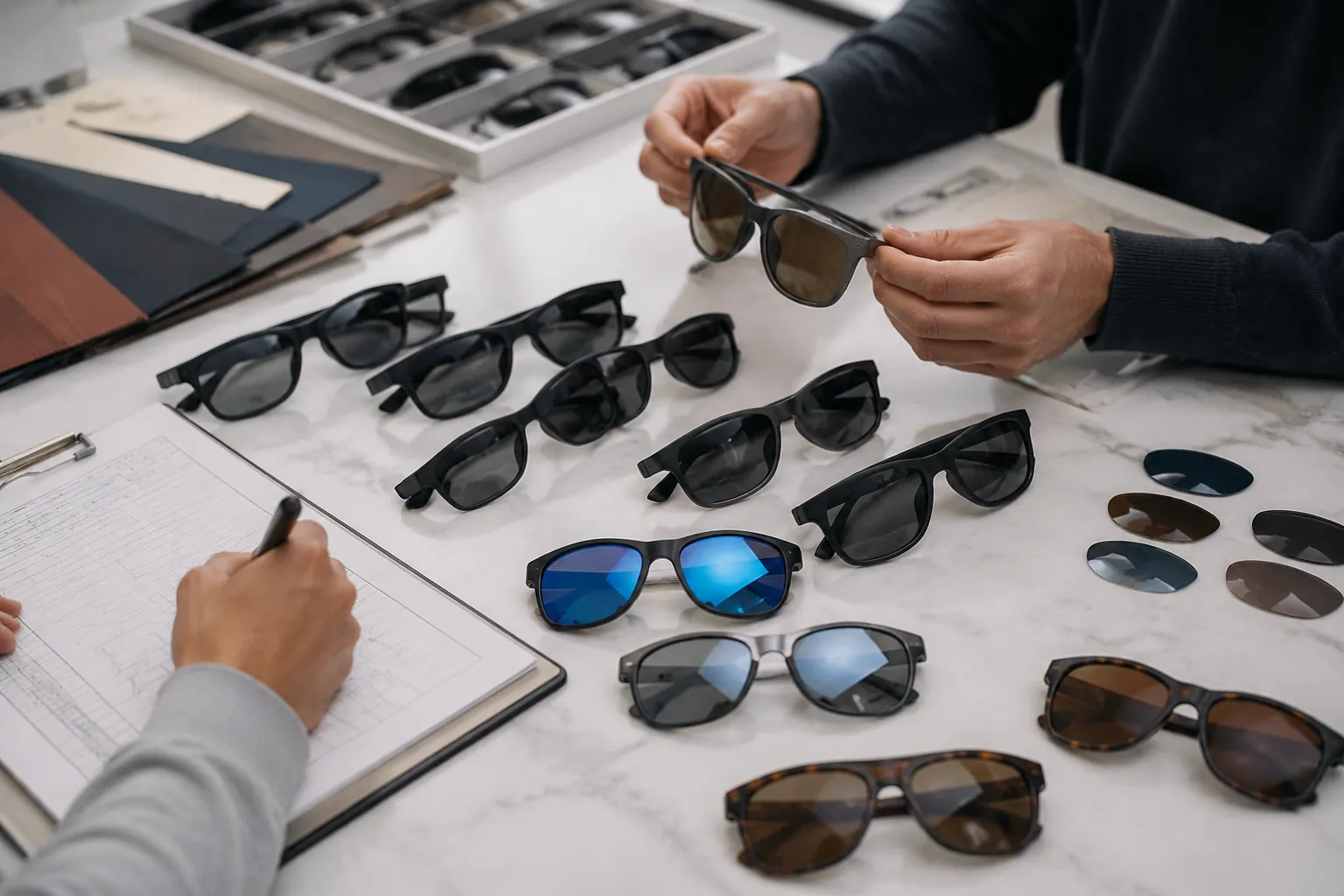
This guide is for retail buyers, importers, distributors, and promotional buyers deciding whether polarized sunglasses deserve the higher unit cost. It explains where polarization adds real value, how lens and frame choices affect price, what to test before bulk production, and how to brief a factory with fewer gaps. Use it to write sharper RFQs, avoid film-lens failures, and plan budget, mid-range, and premium polarized SKUs with realistic MOQ, lead-time, and compliance expectations.
Where polarization actually pays
Polarized lenses are not better for every sunglasses order. They reduce glare from horizontal reflective surfaces such as water, wet roads, car hoods, snow, glass, and polished stone. That matters when the wearer faces reflected light for more than a few minutes: fishing, driving, boating, marina retail, beach shops, ski resort stores, golf events, outdoor workwear, and higher-margin fashion lines with a functional claim.
For a one-day music festival giveaway, polarization may not earn back the cost. The wearer may care more about frame color, logo visibility, and low price. For a fishing brand or driving accessory program, the calculation changes. A dark non-polarized lens reduces brightness, but it does not cut surface glare in the same way. The product claim is weaker.
Use a simple rule: add polarization when the sales message includes glare reduction, outdoor performance, driving comfort, fishing, boating, snow, water, or premium retail positioning. Skip it when the order is mainly a low-cost handout and the end user will not notice or pay for the feature.
Blunt sourcing advice: do not pay for polarized lenses if the hangtag, listing, counter display, or sales team does not explain the benefit. Polarization only adds value when the buyer understands why it matters.
Lens construction and common failures
A polarized sunglass lens normally uses a polarizing film laminated inside or bonded to the lens structure. The film has an axis. If that axis is not controlled during cutting, edging, and assembly, the left and right lenses may block glare differently. The consumer may not know the technical reason. They may simply feel eye fatigue, see uneven darkness, or notice poor glare reduction.
The main volume choices are TAC and PC polarized lenses. TAC is light, affordable, and common for promotional and mass-market sunglasses. PC offers stronger impact resistance and works well in sport and injected-frame programs. Nylon is better for high-wrap sport designs and handles optical geometry well, but it costs more. CR-39 gives good clarity and a clean tint appearance. It is often used in premium fashion or optical-style frames, but it is less impact resistant than PC.
| Lens type | Typical use | Strengths | Watch-outs |
|---|---|---|---|
| TAC polarized | Promotional, beach retail, entry mass retail | Low cost, light weight, fast availability | Edge delamination risk if poorly cut; coating quality varies by supplier |
| PC polarized | Sport, kids, driving, mid-range retail | High impact resistance, good for injected frames | Can show stress or distortion if lens curve and frame groove are not controlled |
| Nylon polarized | Premium sport, high-wrap frames | Good toughness and dimensional stability | Higher cost; requires tighter processing control |
| CR-39 polarized | Premium fashion, acetate, optical-style frames | Good optical clarity and tint appearance | Heavier than TAC; not ideal for all impact-sensitive programs |
Common failures include film misalignment, edge delamination, tint drift, warped optics, weak mirror coating adhesion, and left-right color mismatch. Approve a physical color master for lens appearance, not only a Pantone reference. For visual quality, ask the factory to check lenses against a grid and reject obvious waves, ripples, chips, whitening, bubbles, or lifted layers. LumiShades controls key processes in-house in Wenzhou, including injection molding, acetate cutting, CNC milling, lens tinting, decoration, assembly, and QC. That reduces finger-pointing between frame and lens suppliers. Lens quality depends on the whole build: frame groove depth, lens curve, edging pressure, hinge alignment, and final inspection.
Budget, mid-range, and premium SKU planning
Do not build one polarized SKU and expect it to fit every channel. A petrol station program, fishing retailer, and premium fashion line need different cost structures. Start with retail price, channel margin, return risk, and the strength of the brand promise.
For budget polarized sunglasses, keep the product simple: one or two frame colors, one lens tint, one logo position, and a standard pouch or polybag. For mid-range retail, spend on better tint consistency, cleaner hinges, stronger logo decoration, and retail packaging. For premium, the lens cannot carry the whole product. Buyers will also judge hinge feel, temple balance, acetate polish, screw quality, metal parts, and packaging.
| Channel position | Typical lens choice | Frame direction | Decoration method | Buyer risk to control |
|---|---|---|---|---|
| Budget promotional | TAC polarized, Category 3 grey or brown | Injected PC or basic TR-style plastic | Pad print or single-color temple logo | Adding custom packaging that breaks the target price |
| Mass retail mid-range | PC or higher-grade TAC polarized with tighter tint control | PC, TR90-style, or entry acetate | Pad print, laser mark, metal logo plate, or printed pouch | Lens color drift between replenishment orders |
| Outdoor sport premium | PC or nylon polarized, often with mirror or hydrophobic coating | TR90-style sport frame or rubberized injected frame | Temple insert, raised logo, lens mark, or custom nose pad | Distortion on high-wrap lenses and untested coating claims |
| Fashion premium | CR-39, nylon, or high-grade PC polarized | Acetate, metal, or combination frame | Metal badge, engraving, custom temple core, foil logo on case | Paying for lens technology while neglecting finishing and hinge quality |
At LumiShades, custom orders can start from 50 pairs per design. That helps with pilot runs, influencer drops, buyer presentations, and distributor testing. Real cost improvement usually starts when buyers consolidate variants at 300, 1000, and 5000+ pairs. Every added frame color, lens color, logo method, and package version adds setup time, inspection work, and inventory complexity.
MOQ, price, and lead-time logic
Polarized sunglasses cost more because they add material cost, scrap risk, orientation control, inspection time, and sometimes slower assembly. The factory must avoid overheating the film, control the lens axis, check left-right consistency, and reject visible stress or distortion. A cheap non-polarized smoke lens is easier to process. That is the point.
Quote the same specification across several quantity tiers. A 50-pair pilot order may be right for market testing, but it will carry a higher unit cost because setup work is spread across very few pieces. At 300 pairs, decoration and tint setup become more efficient. At 1000 pairs, material buying and assembly planning improve. At 5000+ pairs, tooling, color control, carton packing, and QC can be planned better. On some simple volume models, pricing can come down to about $2.10 per pair, depending on frame material, lens construction, decoration, packaging, and compliance requirements. Premium acetate, metal plates, mirror coatings, special packaging, or multi-market testing will raise the price.
- 50 pairs per design: best for samples, pilots, influencer tests, and retail buyer review; expect a higher unit price.
- 300 pairs: useful for small retail runs or regional distributor launches; better decoration efficiency.
- 1000 pairs: practical for stable pricing, controlled packaging, and more efficient QC.
- 5000+ pairs: strongest for volume negotiation, production planning, and replenishment programs.
Typical samples take 7 to 10 days after the specification is clear. Bulk production usually takes 25 to 35 days after sample approval and order confirmation. Extra time may be needed for new molds, custom acetate colors, special metal parts, printed retail boxes, or lab testing. Buyer-side logo debate is not a factory delay. Lock the logo file, lens color, frame color, packaging, and compliance route before starting the clock.
Decoration, branding, and packaging costs
Decoration looks simple on a quote sheet. It is not. It affects cost, durability, and lead time. Pad printing is usually the most economical option for plastic temples and simple one- or two-color logos. Laser marking is clean and durable on suitable surfaces, especially metal parts or coated temples, but the result depends on material reaction. Metal logo plates add perceived value, but they require plate tooling, placement control, and adhesion or riveting checks. Engraving works well on metal and some acetate designs. Lens logos need careful approval because poor placement can affect the wearer's view.
Packaging should match the channel. A polybag or microfiber pouch may be enough for promotional programs. Mass retail may need a hangtag, barcode sticker, warning label, microfiber pouch, and display-ready carton. Premium retail may justify a case, cleaning cloth, printed box, instruction leaflet, and outer carton marks. Packaging often costs more than buyers expect, especially when each SKU needs separate barcodes or language versions.
- Pad print: economical, fast, good for simple logos; check rub resistance and placement tolerance.
- Laser logo: clean and durable on compatible materials; test contrast before bulk.
- Metal badge or plate: premium look; adds tooling and assembly control.
- Engraving: strong for metal or acetate; less suitable for very low-cost injected frames.
- Lens mark: useful for sport branding; keep it small and outside the main sight line.
For logo placement, ask for a marked pre-production sample and define the acceptable tolerance. For temple logos, that may be within 1 mm to 1.5 mm from the approved position, depending on frame geometry. For printed logos, request a basic adhesion or rub check during QC. For metal badges, check alignment, glue overflow, gaps, and whether the badge catches hair or fabric.
How to verify polarization before bulk
Do not approve bulk production from a dark lens photo on a desk. Polarization needs simple, disciplined checks before mass production. Some can be done by your team. Others belong in the factory QC plan.
The fastest check is the crossed-lens test. Hold two polarized lenses in front of a bright screen or white background and rotate one lens 90 degrees. The view should darken strongly. Then compare the left and right lenses from the same pair. They should behave consistently. This does not replace a lab report, but it catches obvious non-polarized substitutions and poor film orientation.
- LCD screen check: rotate the sunglasses in front of a phone or monitor. A polarized lens should darken at certain angles, although screen types vary.
- Glare target check: test against water, glossy tile, wet road, or a reflective car hood outdoors. The lens should reduce harsh reflection, not only dim the scene.
- Axis consistency check: compare several pairs from the same batch. Random differences suggest uncontrolled film orientation.
- Distortion check: look through the lens at a straight grid, window frame, or door frame. Lines should not bend, ripple, or swim.
- Edge check: inspect lens edges after fitting. Chips, whitening, cracks, bubbles, or lifted layers are early warnings.
- Fit check: open and close temples, flex gently, and confirm lenses do not pop out under normal handling.
For bulk orders, add AQL inspection criteria covering polarization effect, lens color match, frame alignment, hinge function, screw tightness, logo placement, scratches, coating defects, packaging, and carton marks. Classify broken frames, missing lenses, wrong lens type, sharp edges, and incorrect compliance labels as major or critical defects. Minor cosmetic marks can be handled separately if they are small and outside the visible inspection distance. Define the standard before production. Not during a dispute.
Compliance documents and what they prove
Polarized does not mean compliant. It is a lens function, not a safety standard. Overseas buyers still need to confirm UV protection, visible light transmittance, lens category, labeling, warnings, and restricted substances for the destination market.
LumiShades works with recognized compliance routes including CE EN ISO 12312-1, FDA registration, ANSI Z80.3, AS/NZS 1067, REACH, ISO 9001, and BSCI. Do not ask a supplier to invent extra badges for a catalog page. Serious retailers and customs teams may check whether documents match the actual product.
| Market or use | Relevant requirement | What the buyer should verify |
|---|---|---|
| European Union retail | CE EN ISO 12312-1 and REACH | Lens category, UV claim, user information, restricted substance compliance |
| United States retail | FDA registration and ANSI Z80.3 | UV performance, impact-related requirements, labeling, supplier documentation |
| Australia and New Zealand | AS/NZS 1067 | Lens category, UV protection, required warning statements |
| Chain store or brand program | ISO 9001, BSCI, retailer-specific audits | Quality system records, audit status, traceability, social compliance |
Ask for test reports that match the product family, lens type, tint color, and lens category you are buying. A report for a non-polarized grey lens does not automatically prove a polarized brown mirror lens. Mirror coatings can affect transmittance, and different colors may fall into different categories. If your SKU has grey, brown, green, and blue mirror lenses, confirm whether each version needs separate verification for your market or retailer.
Production workflow and delay control
Polarized sunglasses move faster when the buyer provides a clean specification at the start. A complete RFQ should include frame material, lens material, polarization requirement, lens color, category target, frame color, logo artwork, logo method, packaging, destination market, quantity tiers, target ex-factory price, and required documents.
A practical development flow is: RFQ and spec lock, factory feasibility check, sample production, buyer testing, golden sample approval, bulk production, final inspection, and shipment release. The golden sample matters. Keep one approved physical sample with the buyer and one at the factory so both sides compare bulk goods against the same reference.
During production, key control points include frame color matching, lens tint matching, lens axis control, edging quality, hinge tension, temple alignment, logo position, coating surface, and final packing. For replenishment orders, keep the same approved lens supplier, tint code, frame color master, and packaging specification. Changing one of those can shift the look enough for retail customers to notice.
The strongest polarized program usually has three layers: a simple entry polarized model for price-sensitive channels, a mid-range style with cleaner finishing and better packaging, and a premium model where the lens, frame, hinge, decoration, and case all justify the price. Give sales teams a ladder. Do not force one product to do every job.
Have a custom sunglasses project in mind?
Send us your styles, target market and quantities and we will return a detailed quote with MOQ, lead time and a sample plan.
Get a QuoteWhy source this from Wenzhou with LumiShades
Wenzhou in Zhejiang Province is widely regarded as China’s eyewear manufacturing capital, producing a large share of the world’s sunglasses. That concentration matters to buyers: a deep local supply chain for acetate sheet, hinges, lens blanks, plating and packaging means shorter component lead times, easier color and material matching, and a workforce with decades of eyewear-specific skill. LumiShades has manufactured in this ecosystem since 2009, and our vertical integration — in-house injection molding, acetate cutting, CNC milling, lens tinting, decoration and quality control — means no part of your order is quietly subcontracted to a workshop you cannot audit.
For international buyers, that vertical control translates into accountability. When a single factory owns every step, defects are traced and fixed at source rather than bounced between vendors, and your specifications survive intact from first sample to bulk. We back this with 15+ years of experience, shipments to 60+ countries, more than 5 million pairs produced per year and a 98.5% on-time delivery rate. Our certifications — CE EN ISO 12312-1, FDA registration, ANSI Z80.3, AS/NZS 1067, REACH, ISO 9001 and BSCI audit — mean the compliance documentation your market requires already exists. Explore our manufacturing capabilities and quality control process to see how this works in practice.
Frequently asked questions
What MOQ should I use for a first polarized sunglasses test order? Use 50 pairs per design for market testing, buyer presentations, or influencer drops. For better cost visibility, quote the same specification at 300, 1000, and 5000+ pairs so you can see the real price curve.
How long do custom polarized sunglasses take to produce? Typical samples take 7 to 10 days after the specification is clear. Bulk production is usually 25 to 35 days after sample approval and order confirmation. New molds, custom acetate, special packaging, or extra lab testing can add time.
Which polarized lens material is best for bulk sunglasses? TAC is common for budget and mass-market programs. PC is stronger for sport, kids, and impact-sensitive use. Nylon suits premium high-wrap sport frames. CR-39 is often chosen for premium fashion or optical-style frames where clarity and appearance matter.
Can I use one test report for every polarized lens color? Not always. Different lens colors, mirror coatings, and transmittance categories may require separate verification depending on the destination market and retailer rules. Confirm this before bulk production.
Are polarized sunglasses always better than non-polarized sunglasses? No. They are better for glare reduction on water, roads, snow, and reflective surfaces. For very low-cost giveaways, the added cost may not return value unless the audience understands the feature.
What is the simplest way to check if a sample is polarized? Use the crossed-lens or LCD screen check. Rotate the lens against another polarized lens or a screen; it should darken strongly at certain angles. Then compare both lenses in the same frame for consistency.
Which compliance documents should I ask for before shipment? Request documents relevant to your market: CE EN ISO 12312-1 and REACH for the EU, FDA registration and ANSI Z80.3 for the US, and AS/NZS 1067 for Australia and New Zealand. Chain stores may also request ISO 9001, BSCI, or their own audit documents.
Ready to start?
Explore our round sunglasses or request a quote — our sales team replies within 12 hours.
Request a Quote