
Best-Selling Wholesale Sunglasses Right Now
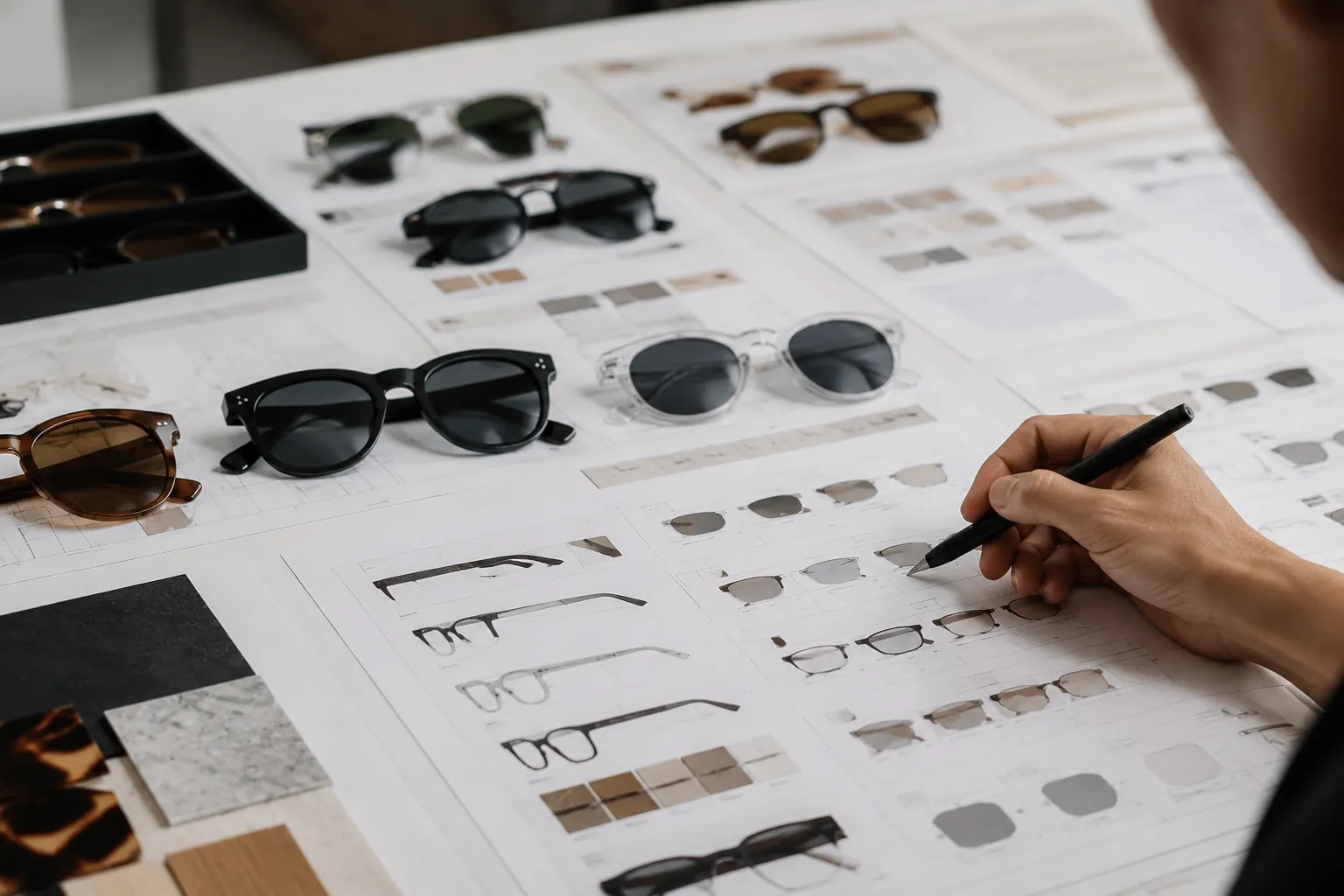
If you buy sunglasses for a brand, chain, distributor, or online store, you do not need trend noise. You need the shapes, colors, and feature sets that sell and keep complaints low after landing. This guide breaks down what is moving now in wholesale sunglasses, where demand changes by market, and how to spec products so the line keeps moving. It also covers the practical factory points: MOQ, tooling, lead time, decoration, tolerances, and compliance.
1) Start with the buyer math, not the mood board
Fast sellers have one thing in common: buyers can understand them quickly. A shopper can try them on in seconds and feel they made a safe choice. That usually means a familiar silhouette with one clean update. Not a strange frame shape with too many features to explain.
For wholesale, the real question is not "what looks new?" It is "what will reorder?" Reorders usually come from three buckets: classic shapes with updated lens color, lightweight daily-wear frames, and value-led sport or UV styles. Keep the core line broad. Keep the fashion line tight. A sensible opening order usually leans on core silhouettes, with a smaller share for trend tests and a few experimental styles.
MOQ, tooling, and packaging choices affect unit cost and risk. Lower-volume runs cost more per pair because setup, labor, and inspection are spread across fewer units. That is why trend testing should stay small until you have real sell-through data. If a shape is unproven, test it in limited quantity first. Scale only the winners.
Standard dimensions also matter. Small changes in bridge width or temple length can change fit. Proven silhouettes usually beat highly specialized shapes in wholesale because they fit more people and create fewer complaints.
Rule of thumb: buy repeatable shapes first. Novelty gets attention. Repeatable shapes pay the bills.
2) Shapes that are moving fastest in volume programs
The shapes below are not complicated. They sell because they fit more faces, work in more channels, and are easy to merchandise. In export programs, they also reduce fit complaints and return risk.
| Shape | Why it sells | Best use | Risk |
|---|---|---|---|
| Wayfarer / soft square | Easy fit, broad appeal, works for men and women | Core catalog, retail wall, e-commerce hero SKU | If the front is too thick, it can look heavy on smaller faces |
| Round / pantos | Feels style-led without being hard to wear | Fashion drops, urban markets, optical-adjacent looks | Very round eyes may narrow the audience in some channels |
| Oval / slim rectangle | Strong for fashion-forward and lower-profile looks | Women's fashion, social-led collections, club and streetwear | Too narrow and it becomes a niche piece, not a volume piece |
| Sport wrap / semi-wrap | Function is obvious; useful for outdoor and active channels | Sport retail, promotional, fishing, cycling, travel | Needs lens coverage and fit to avoid a cheap-looking result |
In production, the best-selling shapes are usually the ones that tolerate minor dimensional changes without losing the silhouette. A soft square with a small lens-width shift still looks familiar. A narrow fashion rectangle may not. That matters because molding shrinkage, polishing, and hinge assembly can move final dimensions slightly. A supplier that controls temple alignment closely and keeps left-right lens symmetry tight will generally ship cleaner product, especially on glossy fronts.
Materials also affect sales. TR90 and similar injection materials are lightweight and flexible. That makes them practical for entry-level and sport programs. Acetate feels richer, takes polish well, and supports deeper color effects, but it needs controlled cutting, tumbling, and hand-finishing to avoid edge waviness. Buyers choosing acetate should expect tighter finishing control. Buyers choosing injection should expect faster turnaround and lower cost, but less depth in premium color effects.
If you want to refresh a stable frame, change the bridge, temple profile, or front thickness rather than rebuilding the whole silhouette. Small adjustments update the look without a full retool. That cuts lead-time risk and lowers the chance of a weak first sample.
3) Lens colors and frame colors buyers keep reordering
Color is often what separates a safe item from a fast item. You do not need thirty lens tints. You need the ones that photograph well, show the lens effect, and still work in daylight. Lens color also affects manufacturing. Darker tints can hide minor optical issues better. Pale fashion tints need cleaner base lens material and tighter coating control.
- Gray tint: a safe choice for general sun use. Neutral. Easy to sell. Less likely to trigger complaints about color distortion.
- Brown / amber tint: common in outdoor and lifestyle programs. Warm tone. Reads well in brighter markets.
- Green tint: still a dependable classic for heritage and premium-looking collections.
- Mirror finishes: useful for sport and youth-led programs, but too much mirror can make a line feel repetitive.
- Gradient lenses: work well in fashion and citywear. Less suitable when the buyer expects full, uniform darkening.
The frame colors that reorder most consistently are black, tortoise, transparent smoke, transparent gray, olive, tea, and sand. Black and tortoise stay low-risk because they need little explanation. Transparent frames are popular because they add color without feeling loud, and they show the lens more clearly in photos. Tortoise in acetate often looks richer than printed tortoise on injection frames, especially when the finish is clean and the lamination depth is good.
Finish matters almost as much as color. Matte reads modern and helps hide fingerprints, but it can show whitening at bend points and may scratch differently from gloss. High gloss can look more premium, but it also shows mold marks, sink lines, and polishing haze more easily. For mass retail, a satin or semi-matte finish often gives the best balance of appearance and durability.
For private label programs, consistency matters more than variety. Ask for approved color references, lens tint samples, and a defined tolerance window before mass production. Even a small shift in lens dye batch can be visible side by side on a shelf.
4) Features that help a style move faster at retail
Features should support the sale, not complicate it. The best-selling add-ons are the ones a buyer can explain in one line. If the description needs a paragraph, it is probably too much for a standard wholesale program.
- UV protection that is clearly documented. If a sunglasses program is sold as sun-protection eyewear, the relevant compliance and test documents should be in place for the target market.
- Lightweight feel. Consumers notice nose pressure and temple clamping quickly. A frame that feels light on first try often sells better in physical retail.
- Flexible or comfort-fit temples. Useful for mass-market and promotional accounts, especially when the buyer wants fewer complaints.
- Polarized lens options. These sell well for outdoor and driving use, provided the price and claims match the market.
- Low-profile branding. Laser engraving, pad printing, or a small metal logo plate is often enough. Large logos narrow the audience.
Each feature affects production. Polarization adds cost and can extend lead time because the lens stack, lamination, and testing need to stay consistent. Mirror coating adds visual impact but can increase the risk of edge flaking if coating thickness or curing is not controlled. Spring hinges improve comfort and perceived quality, but they also add assembly steps and more potential failure points if screw torque is not controlled. For many wholesale accounts, spring hinges make most sense in mid-tier and above.
Decoration should be decided early because it changes tooling and finishing. Pad printing is flexible and economical for small logos, but it may wear faster on surfaces that see heavy rubbing. Laser engraving is cleaner and more permanent on acetate, metal, or painted surfaces, although it depends on material color contrast. Hot stamping or foil branding can look premium on packaging and some temple surfaces, but alignment tolerance matters. A metal logo plate can read upscale, yet it adds assembly labor and can create a small snag point if placed poorly.
The real goal is a frame that feels light in hand without feeling flimsy on face. In wholesale, "premium" usually means "not cheap-looking." That comes from good surface finish, balanced hinges, and a clean lens edge. Not from a long feature list.
5) What the price ladder really means for trend tests
Trend buying should follow cost logic. If a style is unproven, buying too deep is how dead stock gets created. If a style is proven, buying too shallow means you miss the margin window and pay more for the same unit. The price ladder is tied to process efficiency: lower volume means more setup cost per pair, more packaging handling, and more inspection time relative to output.
| Order size | Typical buyer use | Commercial note |
|---|---|---|
| 50 pairs/design | Trend test, sample market, small private label launch | Useful for validating shape and color. Unit cost is usually highest at this level. |
| 300 pairs/design | First real retail or distributor buy | Often the point where pricing becomes more workable for a margin test. |
| 1000 pairs/design | Core SKU replenishment | Better cost level. Often where a winner starts to matter in a program. |
| 5000+ pairs/design | Program buy, chain rollout, seasonal volume | Lowest unit pricing. Exact cost depends on spec, material, lens type, decoration, and packaging. |
There is no universal price floor. A basic injection frame with a standard UV lens and simple print can cost much less than an acetate frame with polarized lenses, custom hinges, and branded cartons. The point is not the exact number. It is understanding that the biggest cost drops usually come from standardizing the specification.
For lead time, use the timeline your supplier confirms in writing for the exact order. Sample time and bulk time depend on design complexity, material, decoration, packaging, and factory workload. Approval time also matters. Delays often happen when artwork, logo placement, or packaging copy are not frozen early.
If you are running a trend test, keep the first order simple: one frame material, one lens tint, one decoration method, one packaging spec. Simple is faster. Simple is easier to inspect. It also lets you compare sales performance more cleanly. If the first test wins, the second order can expand colorways or add polarization. If it fails, you do not need to unwind a complicated spec sheet.
6) Compliance and market entry: do not skip the boring part
Retailers and importers still get burned by weak compliance files. A style can sell well and still be a bad buy if the documentation is incomplete for the target market. Compliance is not just a certificate request. It affects labeling, test reports, packaging language, and sometimes the lens category that can be sold legally.
The references commonly requested for sunglasses programs include CE EN ISO 12312-1, ANSI Z80.3, AS/NZS 1067, REACH, FDA registration, ISO 9001, and BSCI. The right standard depends on where the goods are sold and what claims are made.
- CE EN ISO 12312-1: relevant for EU sunglasses compliance.
- ANSI Z80.3: used for U.S. sunglasses performance expectations.
- AS/NZS 1067: important for Australia and New Zealand.
- REACH: chemical compliance concern for the EU supply chain.
- FDA registration: often requested in U.S. trade and import files.
- ISO 9001 and BSCI: useful for factory system and social compliance checks.
A solid export file should include product photos, material declarations, test reports, carton marks, label copy, and the exact model reference that matches the report. If the sample was tested under one frame code and bulk is shipped under another, some import teams will stop the shipment until the mismatch is fixed.
QC should cover frame dimensions, lens tint consistency, surface finish, hinge action, and logo alignment. On sunglasses, small defects are visible. A shifted logo, a hinge that opens too stiffly, or a scratch near the lens edge can turn a sellable unit into a reject. For bulk orders, ask for an AQL-based inspection plan and a clear defect list so minor cosmetic marks are not confused with functional failures.
7) A practical shortlist for the next buying cycle
If you need a useful starting assortment, build around the following mix. It is not flashy. It is commercial.
- One soft-square acetate style in black and tortoise
- One slim rectangle in transparent gray or smoke
- One round or pantos fashion style in a muted color
- One sport or wrap style with a darker lens
- One branded entry model with simple pad print or laser engraving
That mix gives you a core seller, a fashion tester, and a functional piece. It also keeps you from putting the whole order on one trend. If one style slows, the others can still carry traffic. If you want to control inventory risk further, split the first order so the core shape carries most of the units and the test styles share the rest.
In-house production can help here. Injection molding, acetate cutting, CNC milling, tinting, decoration, and QC under one roof shorten the loop between sample and bulk. That does not remove risk. It reduces the number of places where a spec can be misunderstood. It also makes it easier to hold dimensional consistency across reorders because the same process notes can be reused instead of rewritten for each subcontractor.
For overseas buyers, the safest buying pattern is plain: request a sample, review fit and finish, confirm compliance documents for the target market, then scale the styles with the clearest sell-through story. The market still rewards wearable sunglasses that look current and arrive on time. Flashy is optional. Sellable is not.
Have a custom sunglasses project in mind?
Send us your styles, target market and quantities and we will return a detailed quote with MOQ, lead time and a sample plan.
Get a QuoteWhy source this from Wenzhou with LumiShades
Wenzhou in Zhejiang Province is widely regarded as China’s eyewear manufacturing capital, producing a large share of the world’s sunglasses. That concentration matters to buyers: a deep local supply chain for acetate sheet, hinges, lens blanks, plating and packaging means shorter component lead times, easier color and material matching, and a workforce with decades of eyewear-specific skill. LumiShades has manufactured in this ecosystem since 2009, and our vertical integration — in-house injection molding, acetate cutting, CNC milling, lens tinting, decoration and quality control — means no part of your order is quietly subcontracted to a workshop you cannot audit.
For international buyers, that vertical control translates into accountability. When a single factory owns every step, defects are traced and fixed at source rather than bounced between vendors, and your specifications survive intact from first sample to bulk. We back this with 15+ years of experience, shipments to 60+ countries, more than 5 million pairs produced per year and a 98.5% on-time delivery rate. Our certifications — CE EN ISO 12312-1, FDA registration, ANSI Z80.3, AS/NZS 1067, REACH, ISO 9001 and BSCI audit — mean the compliance documentation your market requires already exists. Explore our manufacturing capabilities and quality control process to see how this works in practice.
Frequently asked questions
Which sunglasses shape is the safest bet for a first wholesale order? A soft square or wayfarer-style frame is usually the safest starting point. It fits a broad range of faces, merchandises easily, and is less risky than niche fashion shapes. If you are unsure, test that shape first in black, tortoise, or a neutral transparent color.
What is the fastest way to test a new trend without overbuying? Order a limited run, keep the spec simple, and test one change at a time. For example, use one frame material, one lens tint, and one branding method. That makes it easier to judge sell-through and reduces the chance that a weak result is caused by too many variables.
How long should I plan for samples and bulk production? Confirm timing with the supplier for the exact style, but your plan should separate sample development, approval time, and bulk production. Complex materials, polarized lenses, custom decoration, and packaging changes can all extend lead time, so lock artwork and specifications early.
Which documents matter most for export sunglasses? Ask for the documents that match the destination market and the exact model code on the goods. Common references include CE EN ISO 12312-1 for the EU, ANSI Z80.3 for the U.S., AS/NZS 1067 for Australia and New Zealand, and REACH where chemical compliance is required. Also confirm the product photos, label copy, carton marks, and test report all match the same model reference.
What decoration method is best for private label sunglasses? For most private label programs, pad printing and laser engraving are the most practical options. Pad printing is flexible and cost-effective for small logos, while laser engraving is more permanent on compatible materials. If you want a premium look, a metal logo plate can work, but it adds assembly steps and cost.
Ready to start?
Explore our aviator sunglasses or request a quote — our sales team replies within 12 hours.
Request a Quote