
How to Plan a B2B Sunglasses SKU Lineup
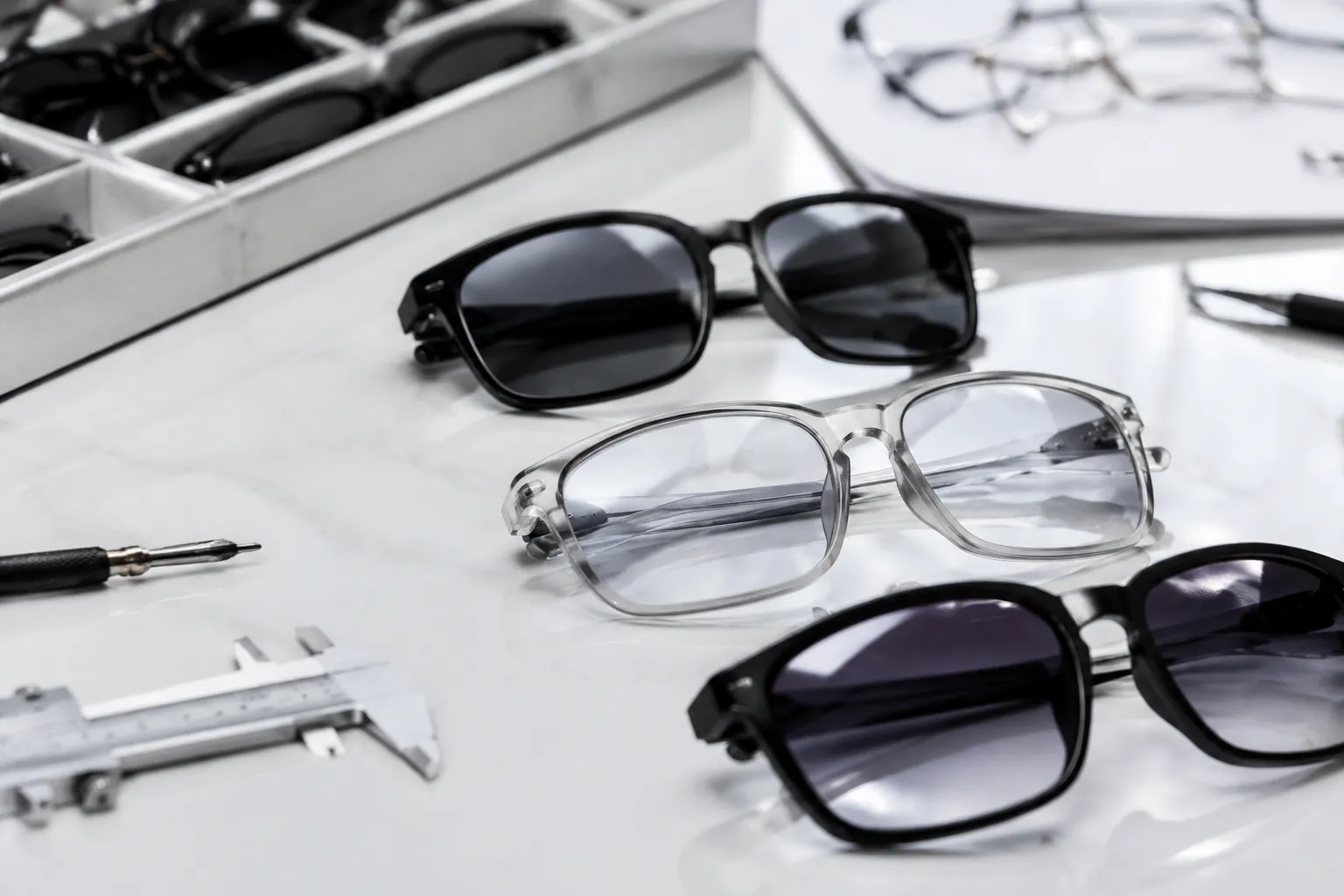
If you source sunglasses for a distributor, retail chain, or promo program, the first order should be a controlled SKU lineup—not a random mix of shapes and colors. Strong assortments are built around buyer behavior, margin targets, reorder logic, and destination-market requirements. Miss those basics and you get dead stock, weak sell-through, margin pressure, and too many low-volume variants that never repeat. This guide explains how to build an opening assortment that is commercially sound: the right SKU count, the right price ladder, the right decoration method, and the right production plan for reorder business.
Start With Buyer Type, Not the Frame Catalog
Build the opening assortment around how the buyer sells, not around whatever styles a factory has ready to quote. A distributor, a retailer, and a promo buyer do not buy the same way. They replenish differently. They price differently. They tolerate risk differently.
Ignore that, and the SKU plan gets too broad, too expensive, or too hard to repeat.
Start every project with four commercial questions:
- Target landed cost: What cost band must each SKU hit after decoration, packaging, freight, and duty?
- Target sell price: Is the buyer selling at promo volume pricing, mass retail pricing, or boutique retail margins?
- Channel structure: Will the line go into stores, accounts, or distributor-managed customers?
- Stock risk tolerance: Can the buyer carry backup inventory, or must every SKU move quickly with minimal leftovers?
The answers set the assortment width. A distributor usually needs more breadth because account needs vary, but the styles still need to be repeatable. A retailer usually needs fewer silhouettes and tighter color control so the shelf looks intentional. A promo buyer often needs one or two approved shapes with a large printable area and reliable delivery.
| Buyer type | Opening SKU goal | Style depth | Price focus |
|---|---|---|---|
| Distributor | Cover several account types and reorder patterns | 4-6 styles, usually 2-3 colorways each | Low-mid to mid, with room for margin tiers |
| Retailer | Create a clean shelf story with controlled depth | 3-4 styles, usually 2 colorways each | Retail margin and visual consistency first |
| Promo buyer | Match campaign brief, logo area, and turnaround needs | 1-2 styles, 1-2 colors each | Lowest repeatable landed cost at the intended volume |
Treat MOQ as a test tool, not as permission to create too many weak SKUs. Use lower MOQ to validate fit, finish, branding, and demand. Then build the broader line only after the strongest shapes prove themselves.
Build a Three-Tier Price Ladder
A flat assortment is hard to sell. If every SKU lands in the same cost band, the buyer has no entry item for volume, no core item for stable margin, and no hero item for trade-up.
Keep it simple: entry, core, and premium-looking.
In B2B sunglasses, cost differences between tiers usually come from four things: frame material, lens specification, decoration complexity, and packaging. Volume matters too. A style often becomes more attractive economically at higher reorder quantities if the factory setup, packaging choice, and decoration method fit the program.
A practical ladder looks like this:
- Entry band: injection-molded frame, standard smoke or brown lens, basic pad print, simple polybag or pouch packaging.
- Core band: better surface finish, tighter color matching, improved hinge feel, more durable logo application, cleaner retail presentation.
- Premium-looking band: acetate or mixed-material build, thicker front profile, bevel detail, metal logo element or engraving, upgraded box or case.
Do not let the line cluster inside one narrow cost range. If cost is too uniform, merchandising usually is too. A visible spread between the entry tier and the hero tier gives sales teams room to upsell and gives retailers a clearer shelf hierarchy.
At larger reorder volumes, simple builds can reach lower unit costs than small test runs—but only under the right conditions: straightforward injection construction, standard lens package, low-complexity decoration, and simple packing. Add acetate fronts, metal details, multiple branding steps, or premium packaging, and the economics change fast. Plan the SKU ladder around expected volume from the start, not around a one-off sample quote.
Choose Styles for Reorder Stability
The best-looking sample is not always the best reorder SKU. For an opening assortment, prioritize shapes that fit a broad range of faces, can be produced consistently, and do not create avoidable returns.
Usually that means classic square, wayfarer-inspired, soft rectangle, slim oval, and simple sport-wrap shapes. Not every trend frame belongs in the first order.
Material choice matters because it affects cost, speed, finish consistency, and defect risk.
| Material / build | Strengths | Limitations | Best use |
|---|---|---|---|
| Injection molded | Lower unit cost, stable repeat production, faster scaling at volume | Can feel less premium if wall thickness and finish are weak | Promo, distributor core lines, value retail |
| Acetate | Heavier hand-feel, richer polish, stronger premium perception | Higher material and labor cost, needs tighter polishing and alignment control | Fashion retail, hero SKUs, higher-margin programs |
| Mixed material | Visual differentiation, can support stronger branding details | More parts, more assembly steps, more QC points | Image styles, retail capsules, gift programs |
Spell out basic QC tolerances in the purchase order instead of relying on vague language like "good quality." For example:
- Temple symmetry: check left/right visual deviation on a flat surface.
- Lens fit: no visible gap, rattle, or edge stress.
- Hinge alignment: open and close motion should be even, with no obvious looseness out of carton.
- Color consistency: approve a master sample so production color can be checked against a fixed reference.
- Decoration position: measure logo location from a fixed point on the temple or frame, not by eye.
Simple sunglasses still fail for simple reasons: poor bridge comfort, pinching temples, loose hinges, or inconsistent front curvature. In B2B programs, consistency beats novelty.
Match Decoration to Channel and Lead Time
Decoration affects more than looks. It changes setup time, unit cost, durability, and whether a style fits promo, retail, or gifting.
Buyers should confirm the actual decoration method, approved artwork, and final placement before bulk production. Do not assume.
| Decoration method | Best use | Trade-off | Buyer note |
|---|---|---|---|
| Laser engraving | Subtle branding on acetate or metal components | Low color impact; branding is refined rather than loud | Strong for retail, private label, and premium corporate gifting |
| Pad printing | Visible logo color on temple or frame front | Can wear if ink system or surface prep is weak | Best for promo, mid-price programs, and fast-turn volume |
| Metal logo plate | High-perceived value and stronger brand presence | Adds part cost, assembly time, and another QC checkpoint | Use on hero SKUs or premium lines, not the whole assortment |
The process details matter. Pad printing needs artwork with workable line weight, a consistent print area, and a surface that supports adhesion. Laser engraving works only when the substrate and finish allow a clean mark. Metal logo plates need controlled placement and reliable fixation so they do not lift or sit crooked in bulk.
For promo orders, the simplest repeatable option usually wins: one logo position, one print color, one approved artwork file, and one packaging format. For retail, one consistent branding treatment across the line usually looks stronger than mixing logo styles without a clear reason.
Control Color, Lens, and Packaging Complexity
Most assortments get bloated through color decisions, not silhouette decisions. On paper, six or eight frame colors may look exciting. In production and inventory, they usually mean split demand, more material handling, and more slow movers.
Be disciplined early.
For most buyers, a practical starting mix is:
- 1-2 core silhouettes that carry most of the expected volume
- 2-3 colorways per silhouette at most for the first wave
- 1 hero style with stronger branding or premium material
- 1 test style at a smaller quantity if the buyer wants to probe trend demand
Low-risk frame colors remain black, tortoise, smoke gray, matte navy, and clear. In promo, white can also work if logo visibility matters. Bright colors can support seasonal campaigns or youth programs, but they should not dominate the opening buy unless the channel already proves demand.
Use the same discipline for lenses. Gray and brown tints are broad commercial options. Mirror, gradient, or fashion tints can improve shelf appeal, but they add risk if the buyer has not tested them before. In mass promo or practical outdoor retail, standard tints usually have the widest appeal.
Packaging is another common source of SKU sprawl. If every style gets a different pouch, insert card, barcode location, and carton configuration, the line becomes harder to pack and harder to replenish. Standardize wherever possible:
- Use one hangtag structure across the opening line
- Keep one or two outer carton pack counts
- Standardize barcode position for retail receiving
- Reserve premium boxes or cases for hero SKUs only
If budget gets tight, cut color count or packaging variation before cutting lens quality or compliance coverage. Those shortcuts usually cost more later.
Use MOQ and Lead Time to Launch in Two Waves
The safest way to start a new sunglasses program is a two-wave launch. Wave one shows what works. Wave two scales the winners and adds only controlled variation.
That keeps the first order focused and stops the buyer from tying up too much cash in unproven SKUs.
Confirm sample and bulk timing in writing before the order is placed. Lead time depends on style complexity, decoration, packaging, component availability, and whether artwork is final. Change any of those inputs, and the schedule can move.
A practical two-wave process looks like this:
- Shortlist 3-5 candidate styles based on channel fit, target cost, and printability.
- Sample with real specifications—actual logo, actual lens tint, actual packaging level.
- Review in hand for fit, finish, hinge feel, branding placement, and carton presentation.
- Launch only the best 2-3 SKUs in wave one, rather than forcing all sampled styles into bulk.
- Read reorder data by color, channel, and account response before wave two.
Small MOQ helps with validation, but buyers should avoid spreading a limited budget across too many styles. A small order divided across many SKUs gives weak demand data and weak economics. The same budget concentrated into fewer stronger SKUs gives a much clearer read on what deserves reorder volume.
Once a style proves itself, move it into the order band that matches real demand. That is the point. Not more SKUs. Better repeat SKUs.
Treat Compliance as Part of the SKU Plan
Compliance is not a document to request after the assortment is set. It shapes the product from the start: lens specification, labeling, material selection, and destination-market claims.
If the buyer plans to sell into multiple regions, check the strictest relevant market requirement first. Otherwise, the line may need rework later.
Use only certifications and compliance references that match the destination market and are backed by the supplier's actual records. Common references for sunglasses include CE EN ISO 12312-1, ANSI Z80.3, AS/NZS 1067, REACH, FDA registration, ISO 9001, and BSCI. They are not interchangeable.
- CE EN ISO 12312-1: relevant for sunglass safety performance in applicable markets.
- ANSI Z80.3: relevant for U.S. sunglass standard planning.
- AS/NZS 1067: relevant for Australia and New Zealand where applicable.
- REACH: relevant for chemical substance control in materials and components.
- FDA registration: relevant for U.S. import and registration-related requirements where applicable to the supplier or product path.
- ISO 9001 and BSCI: useful for understanding factory management systems and social compliance context.
Before bulk approval, request the market-specific compliance file set: relevant test references, material declarations where needed, and packaging or labeling details that match the destination market. It is cheaper to standardize one compliant line than to relabel, retest, or rebuild stock after production.
A Simple Opening SKU Plan That Works
A strong opening assortment is usually smaller than buyers expect. Its job is not to show everything a factory can make. Its job is to establish a line that sells, repeats, and scales without confusion.
A practical framework is:
| Plan type | Style count | Color count | Decoration strategy | Order logic |
|---|---|---|---|---|
| Distributor launch | 4-6 | 2-3 each | Mix laser and pad print | Test breadth, then double down on repeat winners |
| Retail launch | 3-4 | 2 each | One consistent branding method | Prioritize shelf clarity, fit consistency, and margin |
| Promo launch | 1-2 | 1-2 each | Usually pad print; metal plate only if budget supports it | Keep specification simple and pricing aggressive |
For most first programs, that is enough. Build one entry item for volume, one or two core items for dependable reorder business, and one hero item that lifts perception. Keep color count tight, decoration repeatable, and packaging standardized. Define QC expectations in writing. Match compliance to destination markets before bulk approval. Then use wave-one sales data to decide what deserves deeper inventory.
The goal is not the biggest assortment. It is the most useful one: fewer random SKUs, fewer special components, cleaner purchasing decisions, and better odds that the second order is larger than the first.
Have a custom sunglasses project in mind?
Send us your styles, target market and quantities and we will return a detailed quote with MOQ, lead time and a sample plan.
Get a QuoteWhy source this from Wenzhou with LumiShades
Wenzhou in Zhejiang Province is widely regarded as China’s eyewear manufacturing capital, producing a large share of the world’s sunglasses. That concentration matters to buyers: a deep local supply chain for acetate sheet, hinges, lens blanks, plating and packaging means shorter component lead times, easier color and material matching, and a workforce with decades of eyewear-specific skill. LumiShades has manufactured in this ecosystem since 2009, and our vertical integration — in-house injection molding, acetate cutting, CNC milling, lens tinting, decoration and quality control — means no part of your order is quietly subcontracted to a workshop you cannot audit.
For international buyers, that vertical control translates into accountability. When a single factory owns every step, defects are traced and fixed at source rather than bounced between vendors, and your specifications survive intact from first sample to bulk. We back this with 15+ years of experience, shipments to 60+ countries, more than 5 million pairs produced per year and a 98.5% on-time delivery rate. Our certifications — CE EN ISO 12312-1, FDA registration, ANSI Z80.3, AS/NZS 1067, REACH, ISO 9001 and BSCI audit — mean the compliance documentation your market requires already exists. Explore our manufacturing capabilities and quality control process to see how this works in practice.
Frequently asked questions
How many sunglasses SKUs should I open with? Start with enough variety to test the channel, but not so much that inventory fragments. For most B2B programs, 3-6 SKUs is a practical starting point. If you already have sales data by store, account, or customer segment, use it to decide whether to stay near the low end or expand the lineup.
What is the safest way to split the assortment by price? Use a three-tier ladder: entry, core, and premium-looking hero styles. That gives you an opening price point, a margin-driving middle, and an upsell option. Make sure the tiers differ in material, finish, packaging, or branding so the price gap is easy to justify.
Which decoration method is best for promo orders? Pad printing is usually the best starting point for promo because it is visible, widely used, and efficient for volume branding. Use one logo position, keep artwork simple, and confirm that the print holds up on the chosen frame material before bulk approval.
How should I check quality before placing a bulk order? Approve a master sample and inspect the finished pre-production sample against it. Check temple symmetry, lens fit, hinge action, color consistency, and logo placement. Put the acceptance points in writing so the bulk order is judged against the same reference each time.
What compliance documents should I ask for first? Start with the destination market, then request the documents that match that market. Common references include CE EN ISO 12312-1, ANSI Z80.3, AS/NZS 1067, REACH, FDA registration, ISO 9001, and BSCI. Ask the supplier for the exact test reports, declarations, or registration records that apply to your product and destination.
How do I reduce the risk of dead stock? Limit color count, avoid launching too many styles, and keep packaging standardized. Use a two-wave launch: test a small group of styles first, then reorder only the winners. That way, inventory follows real demand instead of assumptions.
When should I move a style from test quantity to reorder volume? Move it after you have enough real sales or order data to show that the style repeats in the channel. If it sells consistently, shows no recurring quality issues, and can be produced with stable lead time and compliant documentation, it is ready for a larger reorder band.
Ready to start?
Explore our shield & oversized sunglasses or request a quote — our sales team replies within 12 hours.
Request a Quote