
Custom Sunglasses for Attraction Retail Buyers
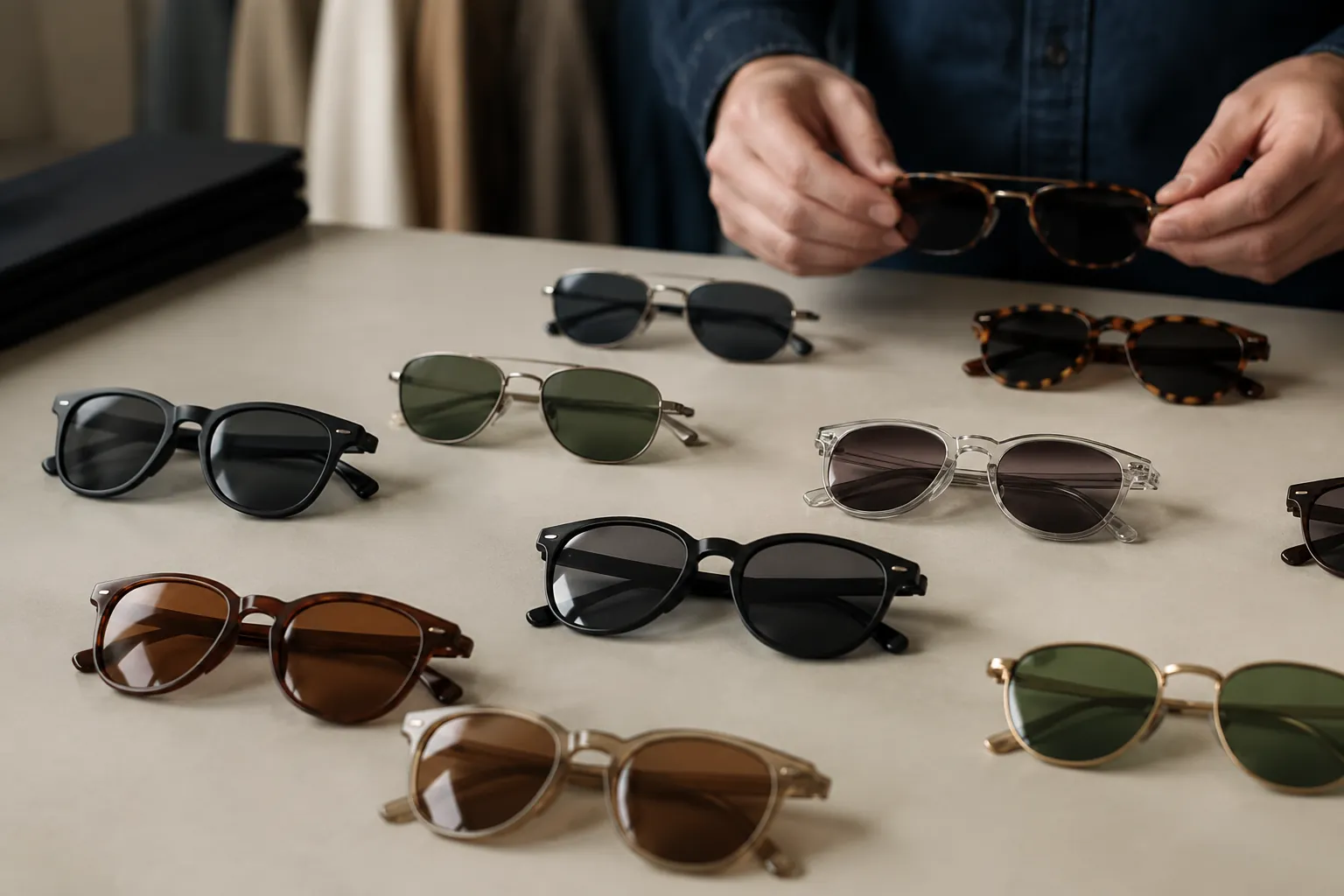
This guide is for museum stores, zoo gift shops, aquarium buyers, amusement and destination retail teams, and the importers who supply them. In attraction retail, sunglasses are usually bought as a program, not as one-off fashion items. The range has to fit a broad visitor base, hit a target retail price, hold up to constant handling, and reorder on time before peak season. That makes early decisions on frame shape, branding layout, materials, packaging, compliance documents, and replenishment timing tightly linked. Get those choices aligned early, and approvals move faster. Miss them, and revision costs pile up.
Start with the retail setting, not the frame catalog
Attraction retail does not work like fashion retail. Many customers buy quickly near the end of a visit. They do not stand around comparing ten frame shapes. That favors styles that read clearly on display, fit a wide range of visitors, and still look good after repeated try-ons.
A frame can look great in a line sheet and still fail on the floor. Maybe the fit is too narrow. Maybe the logo is hard to read. Maybe the finish scuffs too fast. Store reality matters more than presentation.
A practical opening assortment usually has three buckets: adult core, youth or family, and location graphic styles. Adult core carries most of the volume because it serves the widest audience with the lowest fit risk. Typical options include medium square, soft round, and classic wayfarer-inspired shapes. Youth or family styles should be light, easy to fit, and durable. Location graphic styles are the place for stronger color, themed pouches, or event-specific artwork.
Many first-time buyers approve too many shapes too early. That spreads inventory across too many SKUs and makes sales harder to read. Start narrower. A stronger launch is usually 3 to 5 designs with 1 to 2 colorways each, not a broad range with shallow depth. MOQ can help with trial planning, but only if buyers confirm how the supplier defines it: per design, per color, per logo treatment, or per shipment.
- Adult core: 2 to 3 broad-fit shapes in dependable colors such as black, tortoise, or translucent smoke.
- Youth/family: 1 to 2 lighter styles with lower fit risk and good day-to-day durability.
- Graphic/location: 1 style reserved for stronger artwork, event programs, or destination storytelling.
- Opening depth: favor fewer SKUs with enough units to support display, replenishment, and clear sales analysis.
For most attraction stores, the first goal is not maximum variety. It is a clean opening assortment with clear customer targets and a price structure that is easy to merchandise.
Choose materials for handling, display life, and price
Material choice affects more than looks. It changes tooling, unit cost, hinge performance, color consistency, decoration options, and reorder repeatability. In attraction retail, the usual decision is between injection-molded plastic and acetate, sometimes with a metal logo plate or another accent part added.
Injection-molded plastic is often the practical choice for souvenir and destination programs. It works well in volume retail because it supports repeatable production, straightforward decoration, and accessible pricing. Once tooling and color standards are approved, reorders are usually easier to control than with handmade or heavily finished constructions. Buyers still need to confirm resin type, finish, hinge assembly, and decoration durability on the approved sample.
Acetate fits a more premium or design-led setting. It gives a richer pattern and a heavier hand-feel that can support a higher shelf price. The trade-off is simple: more manual work, more process steps, more cost, and often more time. Buyers should also expect natural pattern variation, especially in tortoise and laminated colors. That is normal. It still needs a visual approval standard for reorders.
| Material | Typical weight/feel | Best use | Cost and MOQ logic | Main trade-off |
|---|---|---|---|---|
| Injection-molded plastic | Light to medium, consistent | Volume souvenir and destination retail | Usually the most cost-efficient option for repeat programs; confirm MOQ by design and decoration method | Less premium hand-feel than acetate |
| Acetate | Heavier, richer feel | Higher-price museum or design-store assortments | Higher frame cost and more processing steps; added colors can increase complexity | Natural pattern variation and longer production path |
| Injection frame with metal logo plate | Medium with added detail | Mid-tier branded programs | Higher cost than a basic printed frame because of extra parts and assembly | More checkpoints for plate fit, alignment, and attachment |
| Premium acetate with branded case | Heaviest, gift-oriented | Collector, design, or premium destination SKU | Highest landed cost; best where the retail margin supports presentation packaging | Slowest approval and production route |
For many zoos, aquariums, and general destination stores, injection-molded plastic is the core material. Acetate often makes more sense as one premium SKU than as the full opening range.
Plan branding space before you approve the shape
Many buyers pick the frame first and ask about logos second. That causes trouble. Sunglasses have limited usable branding space, and temple height, taper, front curve, hinge position, and surface texture all affect what can be decorated well.
A temple may look long on screen and still offer only a small flat print area once curvature and hardware are factored in. That is why branding needs to be part of frame selection, not a step after it.
The main branding zones are the outer temple, inner temple, and sometimes a metal plate near the hinge. For most attraction programs, outer temple branding matters most because it stays visible on display. Pad printing is the common choice for one-color or two-color logos. It scales well, but it needs a stable surface and artwork that transfers cleanly. Fine lines, tiny outlined type, and logos placed over strong texture often fail.
Laser marking can be durable, but only if the material and finish create enough contrast for the mark to stay visible. On some plastics, the result is too subtle for souvenir retail. Metal logo plates can add perceived value, but they also add cost, assembly steps, and alignment risk. In every case, buyers should approve a physical decorated sample, not just a render.
- Confirm usable logo area in millimeters before final artwork approval.
- Match artwork to the decoration method: pad print for simple marks, laser for subtle permanence, plate for stronger perceived value.
- Approve a physical decorated sample, not just a digital mockup.
- Check left-right consistency, legibility, and abrasion on the actual finish before bulk approval.
In high-touch retail, decoration durability affects sell-through. A frame can stay structurally sound and still become hard to sell if the logo wears off on display.
Build the price ladder from retail math backward
A working program needs a clear opening, middle, and premium tier. Without that structure, every SKU fights for the same customer and the assortment gets muddy. Start with the target shelf price. Then work backward through margin, packaging, freight, duty, and ex-factory cost.
MOQ and unit cost are linked, but buyers should read quoted breakpoints carefully and confirm what actually changes at each level. A low trial MOQ may help test a concept, but it usually carries higher setup absorption because artwork prep, decoration setup, and line changeover are spread across fewer units. Bigger volume can improve cost efficiency, but only if the product specification is already right.
Do not chase the lowest quote too early. Cheap hinges, inconsistent finish, and weak branding cost more later. The useful comparison is not the lowest factory price. It is the landed, margin-ready cost of each tier once packaging, decoration, compliance work, and reorder practicality are included.
| Program tier | Typical retail role | Common build | Cost direction | When it works best |
|---|---|---|---|---|
| Opening | Impulse souvenir style | Injection frame, standard lens, simple pad print, tag or pouch | Lowest spec target | High-traffic visitor retail with a clear entry price |
| Middle | Main branded assortment | Improved finish, stronger decoration, better pouch or case | Moderate | Core branded offer where margin and presentation both matter |
| Premium | Design-store or collector SKU | Acetate or mixed construction, metal plate, presentation packaging | Highest | Higher-spend museum and gift-led environments |
A simple three-tier ladder also makes reorders easier to manage. Buyers can see the volume driver, the item that lifts perceived value, and the premium style that only belongs in stores able to support the ticket.
Get the compliance file straight before bulk payment
For international buyers, compliance documents are part of the product record. Not an afterthought. Exact requirements depend on the destination market, but buyers should always confirm which reports and supplier records apply to the exact frame and lens combination being purchased.
Common references include CE EN ISO 12312-1 for Europe, ANSI Z80.3 for the United States, AS/NZS 1067 for Australia and New Zealand, and REACH where chemical compliance applies. Some buyers also request FDA registration details from the supplier during U.S. supplier qualification. Factories may also provide ISO 9001 and BSCI. Those are useful for reviewing quality systems and social compliance practices, but they do not replace product-level test reports.
The key issue is traceability. A report should match the actual construction being ordered, including frame material, lens specification, tint category, and labeling. Buyers should not assume that one older report covers every colorway, mirrored lens, polarized lens, or packaging version. If the lens specification changes, the compliance file should be checked again before shipment.
- Ask for: product-level documents tied to the exact frame and lens specification being ordered.
- Verify: UV claim, lens category, required labeling, and any REACH-related declarations requested by your market.
- Separate: product test reports from factory credentials such as ISO 9001 and BSCI.
- Review timing: complete document review before bulk balance payment and before shipment is booked.
Clear paperwork is also a control signal. If a supplier cannot match documents to the approved product, the same weakness may show up later in labeling, carton marking, or shipping paperwork.
Work backward from season dates to set reorders
Attraction retail has a narrow, visible peak season. Reorder planning needs to start from the in-store date, not the intended factory start date. Work backward from the floor set and add real time for approvals, transit, and receiving.
Sample lead time and bulk lead time are only part of the schedule. Buyers also need to account for artwork revision, internal sign-off, courier transit, purchase-order confirmation, deposit processing, freight booking, customs procedures, and warehouse intake. These steps are not small. They often decide whether the goods arrive on time.
A practical approach is to lock core carryover styles first and seasonal or graphic styles second. Reorders on approved carryovers are easier because fit, tooling, branding placement, and packaging specs are already set. For spring and summer programs, buyers usually protect the season better by reordering while stock is still healthy than by waiting for near-stockout conditions.
| Stage | Typical time | What happens here | Buyer risk if delayed |
|---|---|---|---|
| Artwork and spec confirmation | Several days to 2 weeks | Finalize logo, colors, packaging, barcode, and carton details | Sample start slips immediately |
| Sample making | About 1 to 2 weeks | Produce decorated approval sample or pre-production sample | Bulk planning window compresses |
| Bulk production | Often several weeks, depending on construction and order size | Molding or cutting, lens fitting, decoration, packing, and QC | Planned ship window may be missed |
| Freight and receiving | Route-dependent | Export handling, transit, customs, and local receiving | Peak-season stockout |
For repeat programs, keeping one or two core year-round styles active is usually more reliable than rebuilding the full assortment every season. Carryovers reduce approval friction and improve demand planning.
Use sampling to catch expensive mistakes early
A sample is not just a sales tool. It is the cheapest point in the process to catch mistakes that become expensive in bulk production. Buyers should use a repeatable checklist for every decorated sample or pre-production sample, especially when the order includes new tooling, a new finish, or a new branding method.
Start with construction. Open and close the temples repeatedly to compare hinge feel and consistency. Check whether the frame sits level and whether the temples close evenly. Review lens fit and look for signs of stress at the groove or lens edge. If the frame uses a logo plate, confirm both left-right alignment and secure seating. If the frame uses pad printing, do a basic rub check after curing on the actual finished surface.
Then check the packaging. Barcode readability, pouch or case fit, assortment labeling, and refill speed all matter. Store staff will notice the weak points fast.
For family-focused venues, basic handling checks are useful too. Repeated try-ons, contact with display hardware, and ordinary counter drops can show whether the product will look worn too early in real retail conditions. These checks do not replace formal testing. They do help buyers judge day-to-day presentation risk before releasing bulk.
- Fit: verify broad wearability, temple pressure, and practical comfort for the intended visitor group.
- Finish: inspect mold lines, polish consistency, edge smoothness, and color match against the approved standard.
- Branding: measure print or plate position, check clarity, and document basic abrasion results.
- Lens: confirm the lens specification matches the approved product file and labeling plan.
- Packing: check barcode placement, assortment identification, carton counts, and fixture practicality.
Even when a factory handles molding, decoration, and final QC in-house, the buyer still needs to approve the right sample and record any visual limits or tolerances before bulk release.
Keep the first program simple enough to repeat
The strongest attraction sunglasses program is rarely the one with the most variation. It is the one that reorders cleanly, fits the visitor base, and holds margin through the season. Start with a narrow range, clear price architecture, and branding that suits the frame instead of forcing decoration onto a poor surface.
If the first season works, expand carefully. Add one seasonal color to a proven core shape. Test one premium acetate or metal-plate SKU only in stores that can support a higher ticket. Introduce stronger local artwork only after the base frame and decoration method have proven themselves under real handling.
That protects the carryover business while still leaving room for newness. Suppliers that can support both lower trial quantities and larger production runs give buyers flexibility, but that only helps when used with discipline. Start with a controlled pilot. Track sell-through by style, color, and price tier. Reorder proven winners early. Standardize what repeats cleanly and cut what does not.
That is how a destination retail sunglasses line becomes a dependable seasonal category instead of a one-season experiment.
Have a custom sunglasses project in mind?
Send us your styles, target market and quantities and we will return a detailed quote with MOQ, lead time and a sample plan.
Get a QuoteWhy source this from Wenzhou with LumiShades
Wenzhou in Zhejiang Province is widely regarded as China’s eyewear manufacturing capital, producing a large share of the world’s sunglasses. That concentration matters to buyers: a deep local supply chain for acetate sheet, hinges, lens blanks, plating and packaging means shorter component lead times, easier color and material matching, and a workforce with decades of eyewear-specific skill. LumiShades has manufactured in this ecosystem since 2009, and our vertical integration — in-house injection molding, acetate cutting, CNC milling, lens tinting, decoration and quality control — means no part of your order is quietly subcontracted to a workshop you cannot audit.
For international buyers, that vertical control translates into accountability. When a single factory owns every step, defects are traced and fixed at source rather than bounced between vendors, and your specifications survive intact from first sample to bulk. We back this with 15+ years of experience, shipments to 60+ countries, more than 5 million pairs produced per year and a 98.5% on-time delivery rate. Our certifications — CE EN ISO 12312-1, FDA registration, ANSI Z80.3, AS/NZS 1067, REACH, ISO 9001 and BSCI audit — mean the compliance documentation your market requires already exists. Explore our manufacturing capabilities and quality control process to see how this works in practice.
Frequently asked questions
What is a sensible opening order for a museum or zoo sunglasses program? Start with a compact assortment that is easy to read on the sales floor and easy to judge after launch. For most first programs, that means 3 to 5 designs: 2 to 3 adult core styles, 1 youth or family style if relevant, and 1 location-graphic option. Before placing the PO, confirm four points with the supplier in writing: whether MOQ is per design or per color, what decoration is included in that MOQ, what packaging is included, and whether the same frame can be reordered without new tooling or artwork charges. That gives you a cleaner first read on sell-through and makes replenishment planning easier.
Which branding method holds up best in high-touch retail? There is no single best method for every frame. Durability depends on both the decoration method and the substrate. Ask the supplier to quote the same artwork in pad print, laser marking if suitable, and metal plate if the frame design allows it. Then review a physical decorated sample and do a basic abrasion check on the actual finish. Choose pad print for simple, readable logos on suitable flat surfaces, laser marking where material contrast is clear and subtle branding is acceptable, and metal plates only when the added cost and alignment control make sense for the retail price.
How early should I place a reorder before peak season? Count backward from the required in-store date and include time for approvals, freight, customs, and receiving, not just factory lead time. Set an internal reorder trigger before the season starts based on weeks of cover for your core styles. Reorder carryover items while stock is still healthy enough to absorb approval or transit delays. If the reorder includes new artwork, new packaging, or any lens change, treat it more like a fresh project and allow extra time for document review and sample confirmation.
Do ISO 9001 or BSCI replace product compliance testing? No. ISO 9001 and BSCI are supplier-level credentials, not product-level proof that the sunglasses meet market requirements. Ask for product documents that match the exact item you are buying, and review them against your destination market. Typical references include CE EN ISO 12312-1, ANSI Z80.3, AS/NZS 1067, REACH-related declarations where required, and FDA registration details if you request them during supplier qualification. The key step is to verify that the frame, lens specification, and labeling on the paperwork match the approved production item.
When does acetate make sense for attraction retail? Acetate makes sense when the store environment can support a higher retail price and the product is meant to feel more gift-led or design-led than a standard souvenir item. It is usually more practical as a premium tier or a limited part of the assortment than as the full opening program. Before choosing it, compare not only factory cost but also approval time, pattern variation tolerance, packaging expectations, and reorder consistency against an injection-molded alternative. If the main goal is broad price accessibility and easy repeat ordering, injection-molded plastic is usually the safer starting point.
Ready to start?
Explore our shield & oversized sunglasses or request a quote — our sales team replies within 12 hours.
Request a Quote