
Launch Matching Adult and Kids Sunglasses Smarter
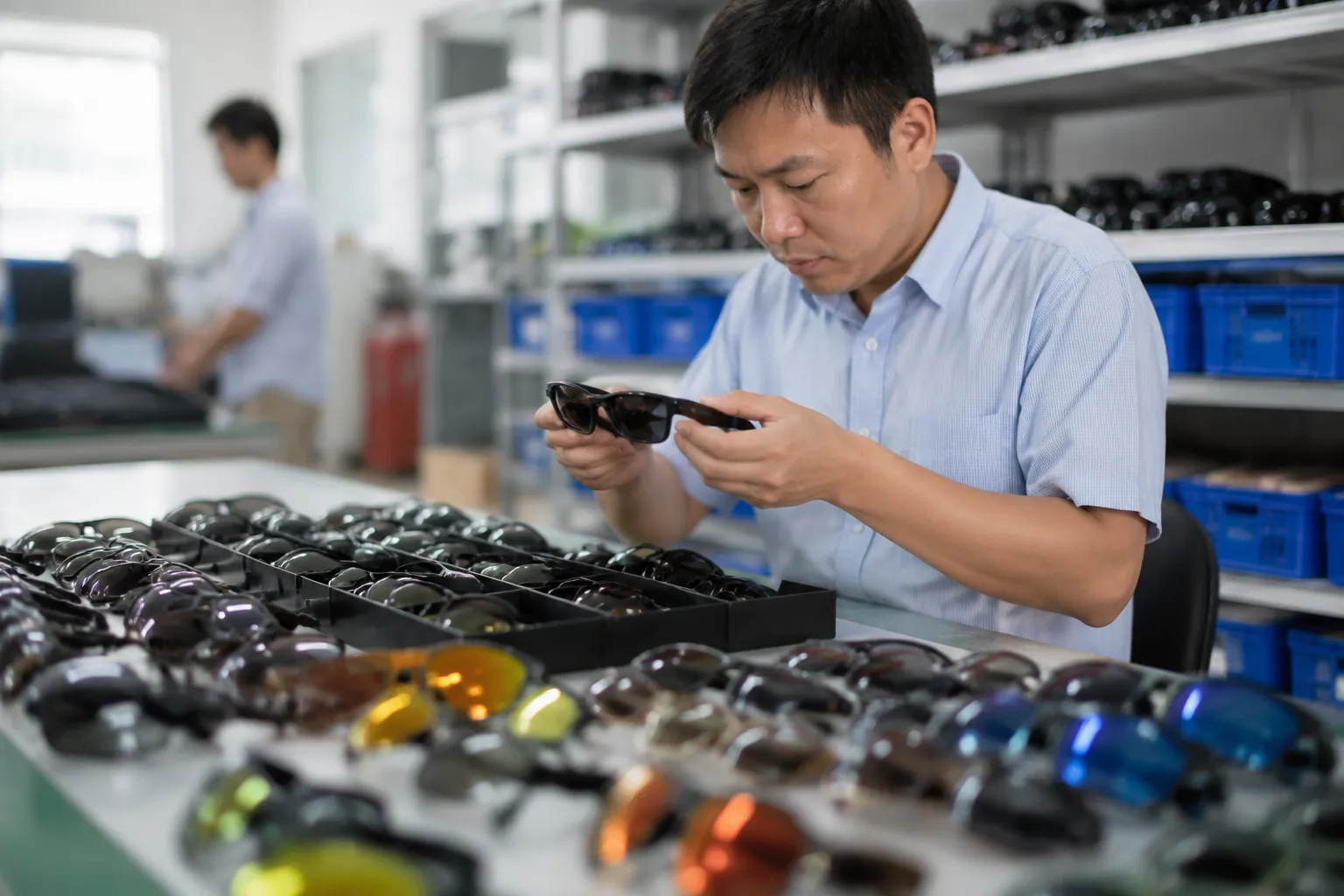
This article is for brand owners, importers, distributors, and retailers building coordinated adult and kids sunglasses lines. The goal is not just to make both sizes look related. The goal is to launch a family collection without doubling development work, tooling choices, testing requirements, and inventory risk. The practical approach is simple: standardize what should stay the same, engineer what must change by size, and document those decisions early. Done well, a matching adult-and-kids range runs as one sourcing program with two fit executions, not two separate projects.
Start With One Platform, Not Two Separate Projects
A common sourcing mistake in family-look eyewear is treating the adult frame and kids frame as unrelated products from day one. That usually leads to duplicate sample comments, separate artwork decisions, inconsistent lens specs, and packaging changes late in development. There is a better way. Define one product platform first, then split the geometry only where fit, comfort, and safety require it.
For most matching programs, the visual language should stay aligned across both sizes: front shape family, temple profile, logo position, lens tint family, finish level, and packaging graphics. The dimensions should not. Kids sunglasses usually need shorter temples, lower total weight, narrower front width, and a bridge shape built for a smaller face. Simply shrinking an adult frame often produces poor fit and weaker wearability.
Lock the common elements before the factory finalizes adult and kids dimensions separately. Approve one style direction, one construction route, one decoration method, one lens palette, and one packaging format before moving into detailed fit engineering. That order matters. If you reverse it, aesthetic comments and fit comments start colliding, and development gets messy fast.
- Keep shared: shape family, temple design, texture or gloss level, logo artwork, lens color family, barcode structure, care card, pouch, and carton graphics.
- Split by size: eye size, bridge profile, temple length, base curve review, hinge resistance, overall weight, and small-part review.
- Lock early: injected plastic, acetate, or mixed construction. That choice affects tooling, sampling method, MOQ logic, and lead time.
If one supplier can manage frame production, logo application, lens tinting, and final QC in-house, platform decisions are usually easier to coordinate. Buyers can compare an injected family program built for lower unit cost with an acetate-led collection built for higher perceived value without restarting development with multiple vendors.
Grade Fit Properly Instead of Just Shrinking the Frame
Adult and kids sunglasses should look related, but they should not be direct scale copies. A simple size reduction often fails at the bridge, temple tension, and lens coverage. That creates comfort complaints, inconsistent fit across age groups, and avoidable returns.
Start with the target wearer, then grade the frame around that use case. Adult and kids sizes need separate review of front width, bridge shape, temple length, lens depth, and finished weight. The right dimensions depend on age range, style direction, and material choice, so do not assume a fixed percentage reduction from the adult sample will work. It usually will not.
Material behavior matters too. Injection-molded frames can deliver repeatable geometry once tooling is approved, but weight and hinge tension still need careful review on smaller sizes. Acetate offers broader color and finish options, but a kids frame can become too heavy if the front and temples keep the same apparent thickness as the adult version. On smaller acetate styles, the internal milling and edge profile often need to be reduced to keep the frame wearable.
Before sample approval or mold release, ask for a side-by-side drawing review with key dimensions clearly marked. For either CNC sampling or mold development, review these points:
- Overall front width against the exact age range being targeted.
- Bridge contact and nose support, especially if the collection is intended for low-bridge consumers.
- Temple opening force and closing resistance, so the frame feels secure but still easy to use.
- Finished weight after lenses are fitted, not frame-only weight.
- Lens coverage from brow line to cheek line when worn.
A capable factory should be able to revise prototype geometry before production is approved. That is the stage to fix preventable fit problems. After tooling or bulk production starts, the cost goes up quickly.
Control the SKU Plan or MOQ Efficiency Falls Apart
Matching collections often become commercially weak because the color plan spreads too fast. A buyer may want black, tortoise, crystal smoke, pink, sage, and seasonal shades in both adult and kids versions. On a line sheet, that looks complete. In production, it fragments volume, weakens purchasing leverage, and creates slow-moving inventory.
The disciplined approach is to separate the range into a shared core palette and a small number of age-specific accents. If the supplier offers MOQ from 50 pairs per design, treat that as a technical starting point, not proof that every color plan makes business sense. Actual MOQ efficiency depends on how the order is grouped across colors, sizes, packaging, and decoration steps.
| Collection Plan | Adult Colors | Kids Colors | Total SKUs | MOQ Pressure | Commercial Effect |
|---|---|---|---|---|---|
| Loose matching | 6 | 6 | 12 | High | Volume fragments, inventory turns slow, reorders become uneven |
| Shared core palette | 3 | 3 | 6 | Moderate | Better MOQ utilization and cleaner retail storytelling |
| Core plus accents | 3 core + 1 adult only | 3 core + 1 kids only | 8 | Controlled | Range feels broader without losing purchasing discipline |
| Hero launch | 2 | 2 | 4 | Low | Best option for market testing and fastest replenishment logic |
For a first launch, four to six total SKUs is often easier to manage than a broad assortment. Two or three shared colors across both sizes usually give a clearer commercial read than a large mixed palette. If order volume supports it, one adult-only or kids-only accent can widen the offer without weakening the collection structure.
A tighter palette also helps QC. Even when the color name is the same, acetate sheet variation, injection masterbatch dosing, and lens tint depth can differ between lots. Fewer colors are easier to control when adult and kids frames need to merchandise together.
Share Branding Specs Even When Tooling Must Split
Tooling is where matching programs often get expensive. In injection-molded programs, adult and kids frames usually need separate molds because lens groove position, structural thickness, overall width, and hinge geometry differ by size. That does not mean every setup cost should double. Many branding specifications can stay standardized.
The same logo artwork can often be reused for laser engraving, pad printing, hot stamping, or metal badge application, with only minor changes to size or placement. Standardized decoration specs give the factory one master branding reference for QC instead of separate adult and kids artwork files.
Common decoration routes each carry different cost, appearance, and durability tradeoffs:
- Pad printing: relatively low setup cost and suitable for simple temple logos, but ink adhesion should be checked on coated or rubberized surfaces.
- Laser engraving: useful for tone-on-tone branding on compatible injected temples and some metal parts.
- Hot foil stamping: often used on acetate, but edge sharpness and consistency depend on surface flatness and process control.
- Metal logo insert or badge: can support a more premium look, but adds assembly steps, alignment checks, and small-part review for kids styles.
Construction choice should follow volume, market position, and margin strategy, not styling preference alone.
| Construction | Best Use | Tooling Impact | Sampling Speed | Cost Direction |
|---|---|---|---|---|
| Injection molded | Large-volume coordinated programs | Separate adult and kids molds normally required | Fast after drawings are frozen | Lower unit cost at scale |
| Acetate cut and CNC milled | Fashion-led collections and smaller runs | Lower mold dependency | Flexible for design changes | Higher unit cost but easier revisions |
| Mixed approach | Adult premium, kids value line | Two process tracks to manage | Moderate | Useful only when margin structure justifies complexity |
If the commercial goal is broad retail, distributor, or promotional volume, keeping both sizes in the same manufacturing family usually lowers operational risk. Shared process flow makes approvals, scheduling, and launch timing easier to manage.
Treat Lens Specs and Compliance as One System
Matching collections should share one lens specification framework even when frame sizes differ. Define lens category, tint family, UV claim, coating requirement, and destination-market compliance path at collection level first. Then review each size against that same framework. This keeps the adult style and kids style from drifting into different performance targets without clear approval.
For overseas sourcing, map compliance before final sample sign-off. Relevant requirements may include CE EN ISO 12312-1 for applicable European market requirements, ANSI Z80.3 for the United States, AS/NZS 1067 for Australia and New Zealand, and REACH where chemical restrictions apply. Buyers should also confirm whether FDA registration or importer-side regulatory steps apply to the destination market and sales model. At the factory system level, ISO 9001 and BSCI can help indicate process management or social compliance scope, but they do not replace product-level testing or destination-market documentation.
Do not assume the adult approval covers the kids version. It does not. The kids style still needs its own review for lens retention, assembly stress, cosmetic consistency, and any construction detail that could affect safety or product acceptance.
- Freeze once: lens base tint, transmittance target, UV claim, coating requirement, and allowed shade variation.
- Validate twice: check adult and kids versions separately for lens seating, edge stress, cosmetic consistency, and optical acceptability after assembly.
- Document by market: do not assume one test report or declaration automatically covers every destination or every marketing claim.
In-house lens tinting and final QC can help keep shade consistency across adult and kids lots. That matters when both sizes sit side by side at retail and the family-look concept depends on visible alignment between frame color and lens tint.
Build MOQ and Pricing Around the Collection
A matching adult-and-kids program should be costed as a collection, not as isolated items. If each color in each size is negotiated separately, purchasing leverage usually drops. Material planning becomes fragmented, decoration setup becomes less efficient, and the supplier has less reason to optimize scheduling across the full order.
A better approach is to aggregate volume wherever construction, components, branding method, and packing format are shared. If MOQ starts at 50 pairs per design, use that as a technical minimum rather than the default commercial plan. Serious buyers usually get a clearer cost structure when they concentrate volume into fewer colorways and fewer setup changes.
A workable opening order could look like this:
- Adult style A: 300 pairs across 2 shared colors
- Kids style A: 300 pairs across the same 2 colors
- Adult style B: 300 pairs across 2 shared colors
- Kids style B: 300 pairs across the same 2 colors
That creates a 1,200-pair coordinated collection and gives the factory a clearer plan for material purchasing, logo setup, packing, and final inspection. The opposite approach is common and costly: too many low-volume colorways, weak control in production, and awkward replenishment later.
If the market is untested, start narrower. One hero shape in adult and kids sizes, each in two shared colors, is often enough to test demand. If the launch performs well, expansion is easier because the platform decisions are already documented.
Run a Sample-to-Bulk Timeline That Cuts Rework
Many delays in family-range sourcing come from sequence errors, not factory capability. A buyer approves the adult sample first, requests the kids version later, changes branding after both are sampled, and only then starts clarifying compliance documents for the destination market. That sequence creates avoidable rework.
A better process is to align the collection before bulk approval. Sample lead time and production lead time vary by construction, tooling status, order size, and season, so buyers should always confirm actual timing with the supplier before setting launch dates. The point is not a standard number of days. The point is getting the approval order right.
- Step 1: confirm destination markets, frame material, target age range, lens category, branding method, and packaging structure.
- Step 2: review adult and kids samples together so comments stay aligned across the collection.
- Step 3: freeze one final color standard, one logo placement reference, and one packing method for both sizes.
- Step 4: before deposit, confirm required compliance documents, carton assortment, barcode list, and bulk QC checkpoints.
- Step 5: during bulk production, monitor color consistency, hinge function, lens cleanliness, branding placement, and ratio packing by SKU.
Define measurable tolerances before production starts. Logo placement tolerance, lens cosmetic standard, color reference standard, and packing accuracy by assortment ratio should be written into the PO or bulk specification sheet. That makes QC objective. Without that, it turns into negotiation.
If the supplier handles frame production, decoration, lens processing, and final QC in one facility, communication loops may be shorter. Even then, the buyer still needs a documented approval process and a clear bulk standard.
Use a Pre-PO Checklist Before You Pay Deposit
Before placing the purchase order, run the collection through a strict checklist. If any answer is still vague, the program is not ready for deposit. This matters even more in matching collections because unresolved issues multiply across both sizes.
- Design: are adult and kids versions visually matched but dimensionally engineered separately?
- Materials: is the frame construction locked for both sizes, with approved finish and color references?
- Branding: are logo method, artwork, size, and placement approved on both frames?
- Lens: are tint, UV claim, category target, and destination-market compliance requirements defined?
- MOQ: does the SKU count support a realistic commercial order plan rather than only the technical minimum?
- Timeline: are sample approval, compliance review, and ship dates built around confirmed supplier lead times?
- QC: are pass points for color, fit, decoration, lens cosmetics, and assortment packing written into the bulk standard?
That is how matching collections stay manageable. Cut decisions early. Document what matters. When the shared platform, fit grading, MOQ structure, compliance path, and approval timeline are all clear, adult and kids sunglasses can launch as one coordinated commercial program instead of two separate sourcing problems.
Have a custom sunglasses project in mind?
Send us your styles, target market and quantities and we will return a detailed quote with MOQ, lead time and a sample plan.
Get a QuoteWhy source this from Wenzhou with LumiShades
Wenzhou in Zhejiang Province is widely regarded as China’s eyewear manufacturing capital, producing a large share of the world’s sunglasses. That concentration matters to buyers: a deep local supply chain for acetate sheet, hinges, lens blanks, plating and packaging means shorter component lead times, easier color and material matching, and a workforce with decades of eyewear-specific skill. LumiShades has manufactured in this ecosystem since 2009, and our vertical integration — in-house injection molding, acetate cutting, CNC milling, lens tinting, decoration and quality control — means no part of your order is quietly subcontracted to a workshop you cannot audit.
For international buyers, that vertical control translates into accountability. When a single factory owns every step, defects are traced and fixed at source rather than bounced between vendors, and your specifications survive intact from first sample to bulk. We back this with 15+ years of experience, shipments to 60+ countries, more than 5 million pairs produced per year and a 98.5% on-time delivery rate. Our certifications — CE EN ISO 12312-1, FDA registration, ANSI Z80.3, AS/NZS 1067, REACH, ISO 9001 and BSCI audit — mean the compliance documentation your market requires already exists. Explore our manufacturing capabilities and quality control process to see how this works in practice.
Frequently asked questions
Do adult and kids matching sunglasses usually need separate molds? In most injection-molded programs, yes. Adult and kids frames may share the same design language, but the lens groove position, front width, temple length, bridge shape, structural thickness, and hinge geometry are usually different enough to require separate molds. Ask the supplier to confirm this at quotation stage and request a tooling breakdown that separates frame molds from reusable items such as logo artwork, packaging graphics, and decoration references.
What is the safest MOQ strategy for a first family-style launch? Start with the narrowest range that still tests the concept clearly: usually one adult shape and one kids shape in the same two or three shared colors. That keeps volume concentrated, makes QC easier, and gives cleaner reorder data. When requesting quotes, ask the supplier for pricing at the technical MOQ and at one or two higher consolidated order levels so you can compare whether a broader launch actually improves unit economics.
Can the same lens color be used for both adult and kids versions? Usually yes, if the lens material, tint target, UV claim, and category requirement are defined at collection level first. Still, require separate validation for the adult and kids sizes because lens retention, edge stress, assembly fit, and final optical appearance can change with frame geometry. Ask the supplier to keep one approved master shade reference and confirm acceptable lot-to-lot variation before bulk production starts.
Which compliance points should I confirm before bulk production? First confirm the destination market and the exact product claims you plan to make. Then match the program to the relevant requirements, which may include CE EN ISO 12312-1, ANSI Z80.3, AS/NZS 1067, REACH, and any FDA registration or importer-side obligations that apply to your market. Also ask the supplier which documents will be available before shipment, such as test reports, declarations, material information, and labeling details, and confirm whether adult and kids sizes will be documented separately.
How should I plan lead time for matching adult and kids collections? Do not rely on a standard lead-time claim without confirming the actual program conditions. Sampling and bulk timing will depend on frame material, whether molds are new or existing, how many colorways are involved, the branding method, the factory schedule, and whether compliance testing is needed before shipment. Ask the supplier for a dated critical path covering samples, revisions, approval cutoff, production, inspection, and shipment, then add buffer for any step that depends on outside testing or internal buyer approval.
Ready to start?
Explore our square sunglasses or request a quote — our sales team replies within 12 hours.
Request a Quote