
Resort Sunglasses Specs That Actually Hold Up
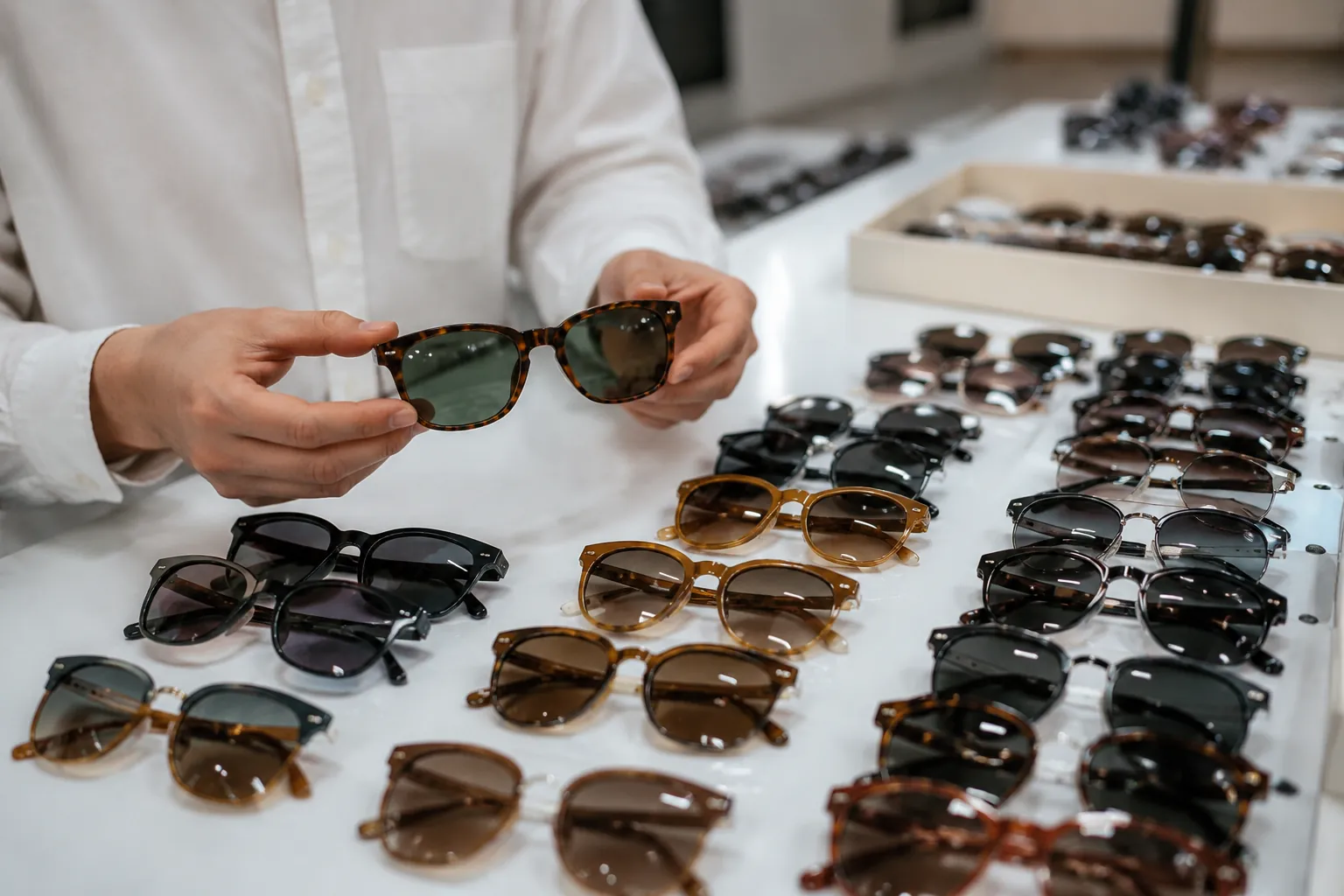
This guide is for resort groups, beach clubs, hotel retailers, and distributors buying sunglasses for gift shops, pool bars, amenity programs, and rental fleets. The goal is not just to pick a good-looking frame. It is to specify a product that can handle heat, sunscreen, salt air, repeated wiping, and rough handling without pushing replacement costs too high. The sections below focus on practical spec decisions: frame materials, lens choices, decoration durability, QC checkpoints, MOQ and lead-time planning, and how to build a reorder program that works during peak season. If you are sourcing from China, it also explains which factory capabilities affect consistency and which claims need proof through documents, samples, and inspection.
Start with the operating model
Most hospitality buyers are running more than one sunglass program at once. Each one needs a different spec.
- Retail gift shop or branded merchandise: visual finish, packaging, and logo execution matter most. Guests compare the item with other paid accessories, so polish and lens appearance affect sell-through.
- Complimentary amenity or event giveaway: cost discipline matters more than long service life. The product still needs compliant lenses, usable fit, and branding that survives normal use.
- Rental or reusable poolside stock: durability and speed matter first. Frames get twisted, dropped, wiped quickly, stacked in bins, and exposed to sunscreen again and again.
That changes the spec immediately. A thin fashion temple may work for low-volume retail. Rental stock usually needs a thicker temple around the hinge area. A soft-touch coating may look good in a sample, then turn sticky after repeated contact with sunscreen or body oil. A mirror lens can help a retail display, but scratches show fast in high-circulation use.
Write the brief in operating terms. Include daily issue volume, whether guests keep or return the pair, target service life, direct-sun exposure, target ex-factory price, and acceptable replacement rate. If one property expects heavy rental use and another only needs occasional amenity use, do not buy the same frame by default. Suppliers with in-house molding, lens tinting, decoration, and QC can control these variables earlier, but verify those capabilities. Do not rely on sales language.
Frame material and construction
For resorts and beach clubs, frame material is mostly a durability, maintenance, and cost decision.
| Option | Best use | Strengths | Watch-outs |
|---|---|---|---|
| Injection-molded PC frame | Giveaways, entry retail, rental | Low cost, light weight, good impact resistance, suitable for volume production | Can feel basic if geometry is too thin; printed logos need proper surface preparation and adhesion testing |
| TR90-style lightweight frame | Better retail, active resort use | Flexible, comfortable, lower risk of brittle temple breakage than some rigid plastics | Higher frame cost than basic PC; may be unnecessary for short-life promo use |
| Acetate frame | Higher-end retail shops | Premium hand feel, deeper color, stronger perceived value | Higher processing time and cost; generally less practical for rental fleets |
| Metal frame | Fashion retail only | Thin profile, premium look, fashion flexibility | More maintenance risk around salt air, nose pads, plating wear, and deformation |
For high-turnover hospitality programs, injection-molded PC is often the most economical choice. It balances impact resistance, mold repeatability, and cost. The common mistake is not choosing PC. It is under-building the geometry. Ask the factory to review the bridge and hinge-adjacent temple areas for weakness. Those are common failure points.
Useful construction details to specify include:
- Temple thickness: avoid very thin fashion temples for rental circulation.
- Bridge strength: ask whether the selected mold has a known stress point.
- Hinge fit: stable screw seating matters more than decorative hinge styling.
- Mixed-material trim: keep it minimal near pools and sea air unless it adds clear retail value.
Acetate can work well in resort retail when the goal is margin and shelf appeal. It should be chosen for clear commercial reasons. Metal frames belong mainly in fashion-led retail programs, not reusable pool stock, because they add corrosion and maintenance concerns.
Lens specification and compliance
Buyers often spend more time on frame color than lens performance, even though the lens does the actual protection work in bright resort conditions.
Start with market compliance. Common standards include EN ISO 12312-1 for Europe, ANSI Z80.3 for the United States, and AS/NZS 1067 for Australia and New Zealand. If your vendor onboarding includes chemical compliance, request REACH documentation where relevant. For US imports, some suppliers may also provide FDA registration information for the facility or product category. That is not a substitute for sunglass performance testing to ANSI Z80.3.
For many volume programs, polycarbonate lenses are the practical choice because they are light, impact-resistant, and cost-efficient. In beach settings, neutral gray or smoke lenses are often the safest large-volume option. They are broadly acceptable, easy to manage, and visually forgiving when minor scuffs appear. Brown can also work well in retail, but bright fashion tints create more lot-matching risk.
Define the lens spec clearly:
- Lens material: usually PC for entry and mid-tier hospitality use.
- Tint target: approve against a retained master sample, not only a verbal description.
- Left-right matching: require no visible shade difference within one pair at final QC.
- Surface standard: define acceptable limits for scratches, flow marks, edge chips, and coating defects.
- Polarization: reserve mainly for paid retail unless the property has a specific commercial reason to add it.
Mirror coatings need caution. They look strong on arrival and in display photos, but they make scratches and rub marks easier to see in rental circulation. The same applies to gradient lenses if batch consistency is weak. If the supplier performs lens tinting in-house, shade control may be easier. It still needs to be checked against approved samples and incoming inspection records.
Decoration and finish
This is where many programs get expensive. Hospitality eyewear is judged not only on day-one appearance, but on how it looks after repeated wiping, contact with lotion, and storage in baskets, bins, or drawers.
Lower-risk choices for reusable stock include gloss injection surfaces, molded-in color, and modest one-color temple branding. These are easier to clean and usually more forgiving cosmetically. By contrast, sprayed cosmetic coatings can chip, rubber-touch finishes can degrade, and large metallic effects make wear more obvious.
| Method or finish | Best use | Durability level | Operational note |
|---|---|---|---|
| Gloss molded surface | Rental, amenity, entry retail | High | Wipes clean easily and usually handles oily residue better than soft-touch coatings |
| Pad-printed logo | Most hospitality programs | Medium | Cost-efficient, but adhesion should be tested on the actual resin and finish |
| Laser engraving | Rental, understated retail | High | Usually outlasts printing if material contrast is strong enough |
| Metal logo plate | Premium retail | Medium | Premium appearance, but loosening, edge wear, and corrosion are concerns in rental use |
| Rubber-touch coating | Fashion retail only | Low in resort use | Can become tacky or worn-looking with sunscreen and body oil exposure |
Pad printing remains a common value option for custom logo programs because setup cost is manageable and the logo is easy to see. The key issue is adhesion. Ask whether the factory tests the exact ink system on the exact resin and finish after curing, not whether the logo merely looked fine right after printing. Laser engraving tends to survive better, but only if the contrast is readable enough for the intended use. Metal plates are best limited to paid retail styles where the premium look justifies the extra assembly and maintenance risk.
Build a rental spec staff can process fast
Rental sunglasses often fail less from guest misuse than from poor operational design. If staff cannot sort, clean, count, and reissue them quickly, loss rates and replacement cost rise.
A practical rental spec usually looks like this:
- Fit: medium, unisex shape that works for the widest range of guests.
- Frame profile: easy to stack and hard to deform, not oversized fashion geometry.
- Color: black, dark tortoise, dark gray, or other darker colors that hide scuffs.
- Lens: solid dark PC lens, non-mirror, often Category 3 where appropriate for bright sun and compliant with the destination market standard.
- Branding: one small outside temple logo plus an inside temple item code for stock control.
- Packaging: bulk-packed by count, not individual retail boxes.
The inside temple code is worth adding even on low-cost builds. It helps staff separate old and new batches, identify which version is failing faster, and simplify reorders. If one batch develops a logo problem or hinge issue, operations can isolate it quickly instead of treating all stock as the same.
Ask the supplier to confirm cleaning compatibility with the non-abrasive solutions your property actually uses. Also ask for a spare-stock plan. Opening a rental pool with no replacement buffer creates avoidable shortages. A better approach is to launch with opening stock plus reserve quantity, then review breakage, loss, and cosmetic downgrade after the first operating period.
MOQ, price breaks, and lead time
The lowest unit price is not always the cheapest program. Order planning should reflect setup cost, revision risk, and replacement predictability.
| Order size | Typical use | Commercial effect | Planning note |
|---|---|---|---|
| 50 pairs per design | Property test, event trial, pilot retail | MOQ may be met, but unit cost is usually highest because setup is spread over very few pairs | Best for checking guest response, fit, and logo visibility before rollout |
| 300 pairs | Single-property launch | Unit economics usually improve versus pilot quantity | Often practical for one resort plus reserve stock |
| 1000 pairs | Multi-property program, established rental fleet | Better spread of molding, printing, and packing setup cost | Best used for proven specs, not untested cosmetic concepts |
| 5000+ pairs | Chain-wide programs, distributor stock | Best leverage on stable core styles if demand is repeatable | Makes sense only when the specification is unlikely to change |
Lead times vary by factory, season, decoration method, packaging complexity, and material availability. Treat sampling and bulk production as separate stages. Ask for the timeline in writing from artwork approval to ex-factory date. For seasonal hospitality demand, the biggest delays are often internal: late artwork changes, packaging indecision, or slow approval on minor cosmetic details.
Use the first sample round to approve fit, lens darkness, hinge feel, logo size, and finish behavior. After those are fixed, finalize insert cards, barcode labels, pouches, or gift boxes. That sequence reduces the chance of reopening core product decisions after packaging work has already started.
Factory process and documents
Capability lists are easy to print. The question is which capabilities reduce risk for your order and which documents support the supplier's claims.
Useful in-house processes for hospitality programs include injection molding, acetate processing, lens tinting, decoration, and final QC. These matter because resort sunglasses are vulnerable to batch inconsistency across larger quantities.
- Injection molding in-house: can help control frame warp, gate marks, wall-thickness consistency, and color repeatability.
- Lens tinting in-house: can make shade correction faster when a lot does not match the approved sample.
- Decoration in-house: can shorten logo revision cycles and clarify accountability for print adhesion.
- QC in-house: can help defects be isolated by process stage rather than discovered only at packing.
Ask direct questions. What is checked before packing? How are left-right lens shade differences handled? Is print adhesion tested after cure or only checked visually? Are hinges checked to a defined standard? Are cosmetic defects judged under defined lighting conditions?
Also ask for documents that can be verified. Depending on the supplier and program, these may include product test reports to CE EN ISO 12312-1, ANSI Z80.3, or AS/NZS 1067; chemical compliance documentation such as REACH; and factory-level certifications or audits such as ISO 9001 or BSCI. If a supplier mentions FDA registration, confirm exactly what is registered. Do not treat that as proof of optical compliance. Use current documents, approved samples, and inspection results. Not claims.
Replacement planning for resorts and chains
Smart hospitality buyers treat sunglasses as consumable durable goods: not fully disposable, but not worth over-engineering for unlimited life either.
A simple replacement model is usually more useful than focusing only on a small opening-order price reduction:
- Estimate opening stock by property and by use case: retail, amenity, rental.
- Add a realistic replacement buffer for breakage, loss, and cosmetic downgrade.
- Split the assortment into one core replenishment style and one optional seasonal style.
- Reorder the core style before peak season using the same approved sample, artwork file, and written specification.
Keep the replenishment SKU simple. A black or dark tortoise frame with a neutral dark lens is easier to reorder, easier to mix across batches, and easier for operations teams to manage than a fashion color that changes every season. If you want novelty, keep it in shop retail only.
Rule of thumb: For rental or high-circulation use, choose the spec that still looks acceptable after repeated wiping and rough storage, not the one that looks best under showroom lights.
If you need to test first, start with a pilot quantity, track breakage, disappearance, and appearance downgrade by month, then scale once the spec proves itself in actual operation. That is usually cheaper than launching a heavily coated or mirrored build across multiple properties and finding out early that the logo is rubbing off or the finish is degrading too fast.
Have a custom sunglasses project in mind?
Send us your styles, target market and quantities and we will return a detailed quote with MOQ, lead time and a sample plan.
Get a QuoteWhy source this from Wenzhou with LumiShades
Wenzhou in Zhejiang Province is widely regarded as China’s eyewear manufacturing capital, producing a large share of the world’s sunglasses. That concentration matters to buyers: a deep local supply chain for acetate sheet, hinges, lens blanks, plating and packaging means shorter component lead times, easier color and material matching, and a workforce with decades of eyewear-specific skill. LumiShades has manufactured in this ecosystem since 2009, and our vertical integration — in-house injection molding, acetate cutting, CNC milling, lens tinting, decoration and quality control — means no part of your order is quietly subcontracted to a workshop you cannot audit.
For international buyers, that vertical control translates into accountability. When a single factory owns every step, defects are traced and fixed at source rather than bounced between vendors, and your specifications survive intact from first sample to bulk. We back this with 15+ years of experience, shipments to 60+ countries, more than 5 million pairs produced per year and a 98.5% on-time delivery rate. Our certifications — CE EN ISO 12312-1, FDA registration, ANSI Z80.3, AS/NZS 1067, REACH, ISO 9001 and BSCI audit — mean the compliance documentation your market requires already exists. Explore our manufacturing capabilities and quality control process to see how this works in practice.
Frequently asked questions
What is the best frame material for beach club rental sunglasses? For most rental programs, injection-molded polycarbonate is the safest starting point because it combines low cost, good impact resistance, light weight, and repeatable production. If the property wants a more flexible or upgraded feel, a TR90-style frame may also be worth testing. Ask suppliers for both options in sample form, then compare them for hinge stability, bridge strength, cleaning performance, and appearance after repeated handling. For rental use, do not choose only by hand feel. Choose by service-life performance.
Should we use polarized lenses for resort programs? Use polarization mainly for paid retail, not as a default for rental or complimentary programs. Polarized lenses can reduce glare, but they add cost and may not make commercial sense in high-loss or high-turnover fleets. If you are considering them, request side-by-side samples of polarized and non-polarized versions in the same frame, confirm compliance to the destination market standard, and calculate whether the price increase is justified by the selling price or guest experience goal.
Which logo method lasts longest around sunscreen and cleaning? Laser engraving usually lasts longer than surface printing because it does not depend on an ink layer sitting on top of the frame. However, it only works well when the engraved mark has enough contrast to stay visible. Pad printing is still the most common value option, but buyers should require adhesion testing on the exact resin, color, and finish they are ordering. For reusable stock, ask the supplier to provide a decorated sample made with production-intent materials and evaluate it after wiping, handling, and exposure to sunscreen or body oil.
How long should we allow for sampling and bulk production? There is no single reliable lead time for all factories, so treat any generic timeline as only a starting point. Ask the supplier to break the schedule into sample development, sample revision if needed, artwork approval, bulk production, inspection, and ex-factory release. Then add your own internal time for approvals and shipping. The practical step is to request a written time-and-action plan before you place the order, especially if the program is tied to a resort opening, seasonal launch, or chain-wide rollout.
What compliance documents should US, EU, and AU buyers ask for? Ask for current product test reports that match your destination market and the exact product specification being purchased. For Europe, request compliance to CE EN ISO 12312-1. For the United States, request ANSI Z80.3 test documentation. For Australia and New Zealand, request AS/NZS 1067 documentation. If your company reviews chemical compliance, ask for relevant REACH documentation as well. At factory level, ISO 9001 and BSCI can be useful supporting documents, but they do not replace product testing. If a supplier mentions FDA registration, confirm what is registered and remember that FDA registration does not replace ANSI Z80.3 or other sunglass performance requirements.
Ready to start?
Explore our aviator sunglasses or request a quote — our sales team replies within 12 hours.
Request a Quote