
Custom Sunglasses for Subscription Boxes
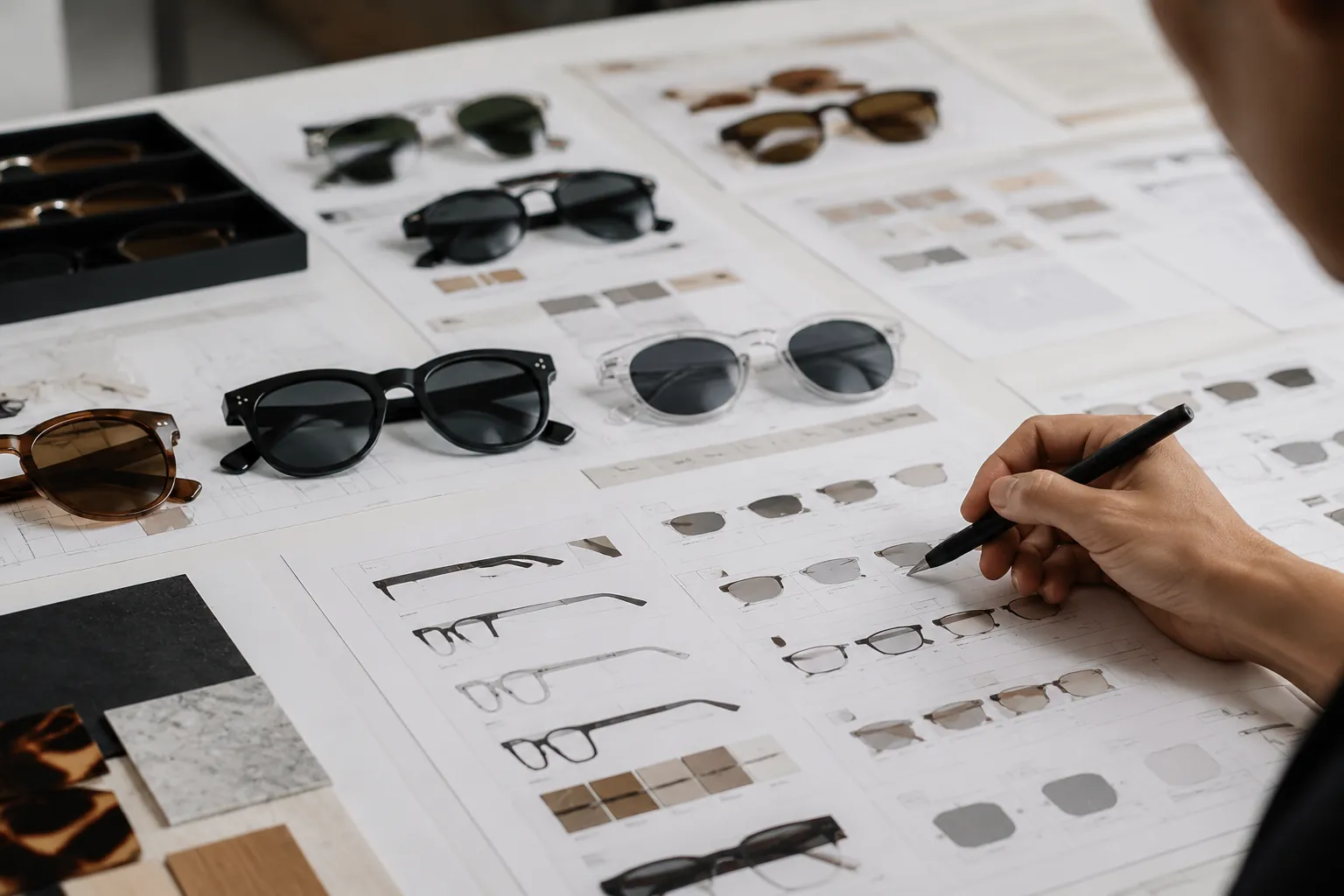
For subscription boxes, sunglasses are simple to source and easy to get wrong. A frame that is too wide, too heavy, or too loose in the insert can arrive with hinge stress, lens rub, or bent temples. Customers notice fast. So do return teams. This guide is for brands, importers, distributors, and retailers building recurring box programs. It covers frame construction, pack-out design, branding, compliance, MOQ, lead time, and the factory checks that matter before repeat production. It also explains how a Wenzhou manufacturer such as LumiShades can handle molding, cutting, decoration, tinting, and QC in one workflow.
Start with the box, not the frame
Most subscription eyewear problems start after the frame is approved. The sample looks fine on a desk. Then it goes into a carton with a paperboard insert, the temples compress, the lens edge touches a hard fold, and the frame comes out stressed. That is the real test.
Start with fit. Get the exact internal dimensions of the shipper, insert, pouch, and outer case before you finalize style. For recurring box programs, the frame should be compact enough to sit securely in the insert without forcing the temples closed or pushing the lens edges against hard surfaces.
Develop the carton, insert, and frame together. Not in sequence. Clearance matters more than shelf presentation. The insert should hold the frame firmly enough to limit movement in transit, but not so tightly that it creates rubbing, pressure points, or hinge strain.
Ask the factory to test the exact shipper, not just the sunglass case. A pair that survives a clamshell can still fail inside a subscription carton. LumiShades can support injection molding, acetate cutting, CNC milling, lens tinting, and in-house decoration, which helps if frame shape, logo placement, or finish needs adjustment before mass production. That is cheaper than finding a fit issue after the inserts are printed.
Choose a construction that survives fulfillment
Lightweight is not the same as cheap. It means the frame has enough stiffness in the bridge, rim, and hinge block to handle packing and transit without carrying extra mass.
For subscription boxes, injection-molded TR90 or a similar nylon-based material is often the safest default. It is light, resilient, and usually easier to repeat across production runs. Acetate can look more premium and photograph well, but it is often thicker and heavier, and it is less forgiving in tight pack-outs. Metal frames save space, but they need stricter hinge alignment and more careful handling.
| Frame type | Typical weight range | Box-program behavior | Best use | Watch-outs |
|---|---|---|---|---|
| Injection-molded TR90 / similar | Varies by design | Light, repeatable, and usually easier to pack | Core subscription SKUs and repeat reorders | Surface finish and color consistency must be controlled |
| Acetate | Varies by design | Premium feel, but tighter pack-out planning is needed | Premium tiers, seasonal drops, and influencer boxes | Heavier freight, more pressure at tight hinge points, and slower packing if the insert is narrow |
| Metal / mixed metal | Varies by design | Compact, but sensitive to bending and alignment | Small cartons and fashion-forward programs | Needs tighter QC on temple symmetry, nose pad alignment, and coating durability |
Match the material to the economics of the program. Monthly shipments magnify small weight differences. Freight changes. Packing behavior changes. Replacement risk changes.
Ask for more than color. Check flexibility, finish, and surface behavior. TR90-style frames should recover from normal temple flex without whitening or cracking. Acetate should be polished cleanly so rough edges do not damage the insert. Metal frames should pass an open-close check without visible misalignment at the lens rim.
Use branding people will actually notice
In a box program, the logo has to survive fulfillment and still read clearly in the hand, on camera, and after the first wear. Usually that means a simple temple mark, not a large front print. Temples are flatter, easier to register, and less exposed to scratching during pack-out.
Pick decoration methods that match the material. Laser engraving works well on metal parts and some coated surfaces. Pad printing is efficient for flat, repeatable marks on temples, especially for one-color logos at scale. Hot stamping can work on select surfaces, but only if the substrate and adhesion are right. Logo plates can look premium, but they add weight and can catch in tight inserts. Use them only if the packaging protects them.
Keep branding controlled. One or two branded touchpoints are usually enough. More print locations mean more chances for misregistration, reject rate, and color drift. For a recurring monthly box, one clean logo position is easier to repeat and easier to update later if the packaging changes.
Lens tint affects inspection too. Dark tints can look strong in product photos, but they make scratches, dust, and coating haze harder to spot during QC. Mid-tone smoke, gray, or brown lenses are often easier to inspect under light. If the program uses mirrored lenses or special coatings, plan for more sample review and more inspection time. LumiShades offers in-house lens tinting, which can help keep color and density consistent from sample to bulk.
Build a spec sheet that prevents damage
For recurring fulfillment, the spec sheet should work as a production and shipping document, not just a design brief. The factory needs measurable targets: dimensions, hinge behavior, lens surface requirements, cosmetic limits, and exact pack-out orientation. If those details are vague, the factory fills in the gaps. That is where damage starts.
Use nominal values and tolerances. Include frame width, bridge width, lens width, lens height, temple length, total weight limit, hinge type, and print location. If spring hinges are used, specify the opening feel so the temple does not over-compress the insert.
- Set the target and maximum frame weight for the SKU.
- Define dimensional tolerances for width, bridge, temple length, and lens size.
- Specify hinge type and opening resistance.
- State the lens-contact rule: no lens-to-lens contact, no hard-edge pressure, and no exposed staples or sharp folds.
- Lock the logo location, size, and print method before sample approval.
- Approve the carton, insert, and pouch together with the actual packed unit.
- Request transit-fit testing using the final shipper, not a loose frame sample.
If the temple tips bend under the insert after repeated opening and closing, the design is wrong. Do not fix that with more packing labor. Change the insert depth, widen the pocket, or revise the frame geometry. Product and packaging need to work as one system.
Compliance still applies to subscription boxes
Fast-moving box programs do not get a pass on compliance. Eyewear still has to meet the rules of the destination market. Buyers commonly ask about CE EN ISO 12312-1, ANSI Z80.3, AS/NZS 1067, REACH, FDA registration, ISO 9001, and BSCI. These are different controls. They are not interchangeable.
Do not accept compliance as a generic factory claim. A sunglass is not compliant because a supplier says it is. Ask for test reports tied to the exact model, lens tint, and material build. Change the frame resin, lens color, coating, or decoration method, and the test file may need updating.
For the U.S., buyers often ask for ANSI Z80.3 and FDA registration status. For Europe, CE EN ISO 12312-1 is the main sunglasses standard. REACH matters when buyers want restricted-substance control for frame materials, coatings, inks, or adhesives. Australia and New Zealand may require AS/NZS 1067. ISO 9001 and BSCI relate to factory management and social compliance. They do not replace product-performance testing.
Buyer rule: verify compliance by model, material, and lens tint. A report for one frame does not automatically cover another.
This matters even more as a subscription program grows. A retailer may start with one color and add more later, but each material or tint change can affect the document set.
MOQ, pricing, and lead time at volume
For subscription boxes, the real cost is not just unit price. It is landed cost inside the box: unit price, carton efficiency, freight, spoilage, replacement rate, and packing labor. LumiShades states a minimum order quantity of 50 pairs per design, with better pricing at 300, 1000, and 5000+ pairs. Sample lead time is stated at 7-10 days, and bulk production at 25-35 days, assuming the spec is approved and nothing changes mid-run.
| Order level | Commercial effect | Typical lead-time logic | Typical use case |
|---|---|---|---|
| 50 pairs/design | Lowest entry point, highest unit cost | Useful for sample-to-pilot testing | Influencer drop, proof-of-concept box, small regional test |
| 300 pairs | Better production efficiency | Enough volume to validate packaging and packing labor | First recurring shipment or short seasonal run |
| 1000 pairs | Clear unit-cost improvement | More stable material purchasing and process control | Established subscription program with predictable monthly demand |
| 5000+ pairs | Best pricing tier | Most efficient for repeat orders and reserve-stock planning | Large recurring program, multi-market rollout, retailer collaboration |
Plan backward from the ship date, not from the purchase order date. A workable timeline is sample approval, pack-out approval, production, QC, then freight and customs buffer. If the launch date is fixed, leave room for at least one sample round, especially if logo position or insert depth is still moving.
Cheap can get expensive fast. A frame that saves a little on piece cost but increases breakage or slows packing can erase the savings. For monthly programs, standardization usually protects margin better than chasing the lowest quote.
Cut scratches, bends, and returns
Most damage in subscription fulfillment comes from three things: friction, pressure, and bad orientation. Scratches happen when lenses rub against paper edges, rough tray walls, or another frame. Bent temples happen when inserts grip the arms too tightly. Broken bridges show up when stacked cartons transfer load through the center of the frame.
- Use a soft pouch or non-abrasive sleeve if the tray material is rough or glossy.
- Keep all lens-to-paper contact smooth; avoid exposed staples, sharp folds, and hard tabs.
- Test the full packed box with drop and compression testing, not just the frame alone.
- Check hinge alignment, lens centering, and temple symmetry before packing.
- Store samples and first bulk pieces for a defined internal hold period so you can watch for coating haze, print rub, and hinge relaxation.
- If possible, include one spare insert sample in production so packing staff can compare fit during the run.
Do a simple packed-unit test before sealing cartons. Open and close the packed unit several times. If the temple tips catch, the insert is too tight. If the frame slides around, the insert is too loose. The goal is a snug fit that loads quickly without forcing the temples.
QC should also check lens haze under bright light and coating rub at the temple tips and logo area. LumiShades handles QC in-house, which matters because box-program defects are often visual and mechanical at the same time. Catch them before shipment, not after unboxing complaints.
A practical sourcing path for recurring programs
The cleanest sourcing flow is simple: sample, pack-out test, pilot volume, then contract reorder. Start with a sample that matches the intended material, lens color, and decoration method. If the final product uses a printed temple and tinted lens, approve those exact features at sample stage. A plain black sample tells you very little about bulk performance.
Next, run a fit test in the actual box insert and measure packing time. Labor matters. If one unit takes too long to load, the box costs more than it should. If the frame snags on the insert or needs force to close, change the geometry before bulk production. Revising the insert is usually cheaper than absorbing returns and reprints later.
For monthly programs, repeatability is the real value. That means stable raw-material sourcing, first-article photos, clear sign-off records, and the ability to reproduce color and fit on reorder. LumiShades' Wenzhou setup covers injection molding, acetate cutting, CNC milling, lens tinting, decoration, and QC under one roof. That is useful for repeat production. No drama. Just control.
Before placing a long-term order, ask for a first-article checklist and a packed sample, not just a product photo. You need to see how the unit sits in the insert, how the temples close, and how the logo prints on the final material. That is what tells you whether the program will hold up month after month.
Have a custom sunglasses project in mind?
Send us your styles, target market and quantities and we will return a detailed quote with MOQ, lead time and a sample plan.
Get a QuoteWhy source this from Wenzhou with LumiShades
Wenzhou in Zhejiang Province is widely regarded as China’s eyewear manufacturing capital, producing a large share of the world’s sunglasses. That concentration matters to buyers: a deep local supply chain for acetate sheet, hinges, lens blanks, plating and packaging means shorter component lead times, easier color and material matching, and a workforce with decades of eyewear-specific skill. LumiShades has manufactured in this ecosystem since 2009, and our vertical integration — in-house injection molding, acetate cutting, CNC milling, lens tinting, decoration and quality control — means no part of your order is quietly subcontracted to a workshop you cannot audit.
For international buyers, that vertical control translates into accountability. When a single factory owns every step, defects are traced and fixed at source rather than bounced between vendors, and your specifications survive intact from first sample to bulk. We back this with 15+ years of experience, shipments to 60+ countries, more than 5 million pairs produced per year and a 98.5% on-time delivery rate. Our certifications — CE EN ISO 12312-1, FDA registration, ANSI Z80.3, AS/NZS 1067, REACH, ISO 9001 and BSCI audit — mean the compliance documentation your market requires already exists. Explore our manufacturing capabilities and quality control process to see how this works in practice.
Frequently asked questions
What frame type is safest for subscription box fulfillment? For most box programs, a lightweight injection-molded frame is the safest starting point because it is easier to pack and usually more tolerant of transit stress than heavier acetate or metal styles. The final choice should still follow your insert dimensions and packing method.
What MOQ should I expect for a custom subscription box sunglass run? For this supplier, the stated MOQ is 50 pairs per design. If you need better unit economics, ask for pricing at 300, 1000, and 5000+ pairs and compare those tiers against expected reorder volume.
How long does it take to get samples and bulk production? The stated sample lead time is 7-10 days and bulk production is 25-35 days, assuming the specification is approved and there are no mid-run changes. Add time for pack-out approval, freight, and customs if the launch date is fixed.
Which certifications matter for selling in multiple markets? Use the standard or certification that matches the destination market and the exact SKU. Common buyer requests include CE EN ISO 12312-1, ANSI Z80.3, AS/NZS 1067, REACH, FDA registration, ISO 9001, and BSCI. Ask for documents tied to the specific model, lens tint, and material build.
How do I lower damage rates in the box? Test the packed unit in the final insert, keep the frame away from hard edges, and confirm hinge tension before bulk packing. If the temples bend or the frame rattles, revise the insert or frame geometry instead of relying on extra packing labor.
Ready to start?
Explore our sport wrap sunglasses or request a quote — our sales team replies within 12 hours.
Request a Quote