
Private Label Sunglasses for Destination Stores
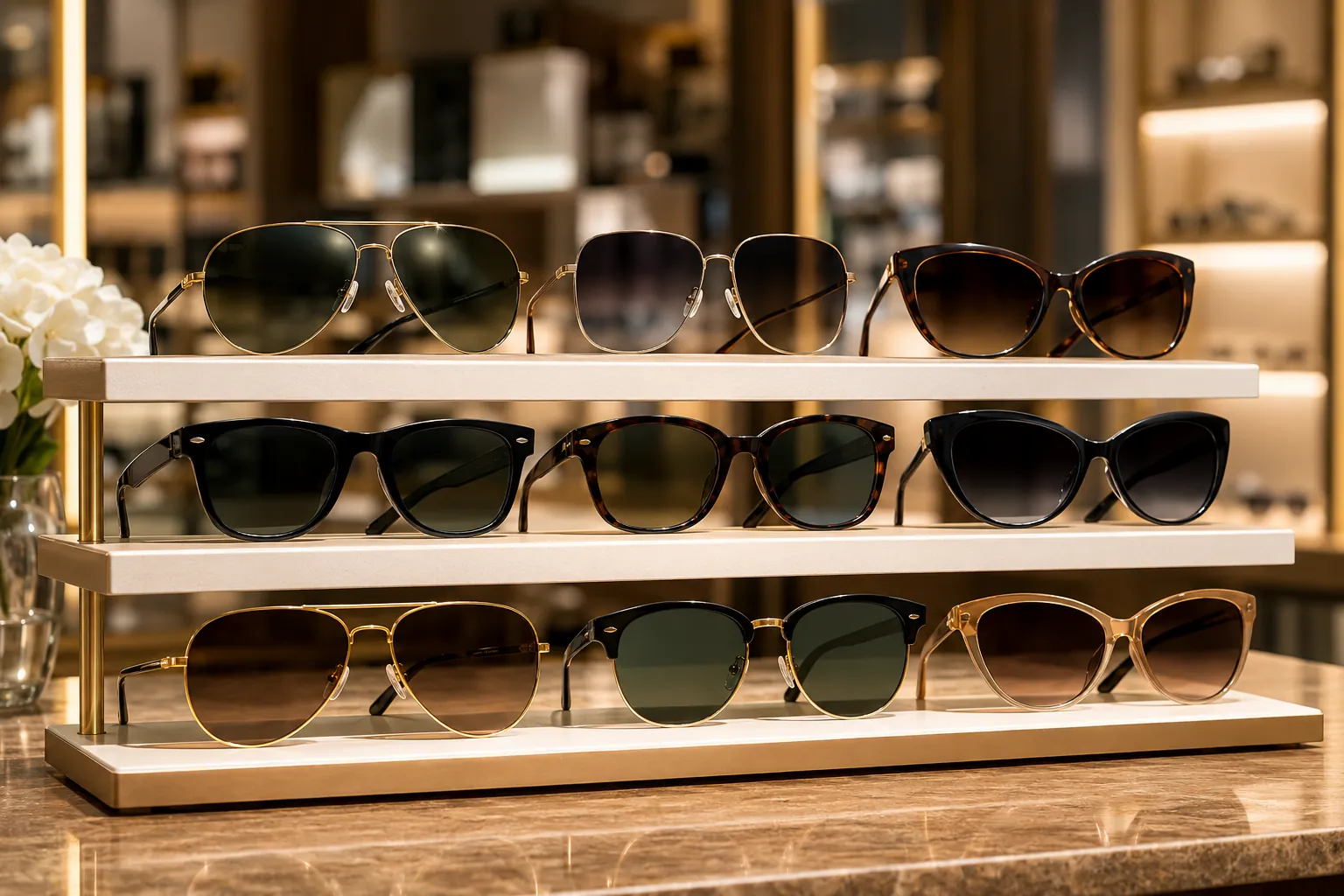
This guide is for museum stores, zoo shops, aquariums, tourist attractions, regional gift buyers, and distributors building private label sunglasses programs that need to sell fast and reorder cleanly. The goal is simple: choose frame shapes, materials, retail price bands, logo treatments, and packaging that fit destination retail without paying for features shoppers will not notice. In this category, the best product is rarely the most fashion-forward sample. It is the one that fits a broad visitor mix, survives heavy handling, meets applicable compliance requirements, supports the planned margin, and can be repeated consistently across seasons or locations.
Start with the store model, not the frame
Destination retail does not behave like optical retail. It does not behave like fashion-boutique wholesale either. Most purchases are quick and impulsive. Families, school groups, tourists, and day visitors want something useful, easy to carry, and easy to justify at checkout. That changes the brief right away.
A museum store often does better with restrained branding, cleaner color palettes, and packaging tied to an exhibition, architecture story, or institutional identity. A zoo or aquarium shop usually needs brighter color, clearer family appeal, and tougher construction because children handle the product hard. A scenic destination or landmark shop often needs instant souvenir recognition: city name, local icon, landmark graphic, or place-based packaging that reads fast from the fixture.
Before you request samples, define four variables in writing:
- Primary buyer: adult tourist, parent buying for a child, teen visitor, or local repeat customer.
- Target retail price: entry souvenir, mid-range branded gift, or premium item.
- Display method: clip strip, countertop tray, peg wall, boxed gift section, or apparel fixture.
- Brand message: subtle institutional branding, playful souvenir branding, seasonal event tie-in, or exhibition merchandise.
Those four decisions drive almost everything else: whether a standard injected frame is enough, whether a soft pouch works, whether outside-temple branding must be visible from a distance, and whether a basic smoke lens is sufficient. They also prevent a common sourcing mistake. A frame can look great in a rendering and still fail on fit, shelf visibility, or durability in a high-touch souvenir setting.
Best-selling frame types, materials, and color logic
For most destination programs, the safest sellers are proven commercial shapes with broad fit and low complaint risk. The aim is not a directional fashion assortment. The aim is unit movement across mixed demographics with little staff explanation.
- Wayfarer-style injection frames: a reliable adult volume shape for broad distribution. Easy to merchandise. Familiar to shoppers. Usually suitable for pad print, hot stamp, or laser branding depending on substrate and finish.
- Round or panto-inspired frames: often stronger in museum stores, design shops, and exhibition retail. Keep the proportions commercial, not exaggerated, to reduce fit issues and avoid a novelty feel.
- Kids' wrap or compact square frames: strong options for zoos, parks, and aquariums. In this segment, hinge stability and comfort usually matter more than trend-led styling.
- Acetate-look or premium-finish styles: useful for higher-ticket museum or heritage stores when visual merchandising supports a higher retail price and the buyer wants a more giftable presentation.
Material choice should follow the program tier. Standard injected plastics are practical for entry and many mid-range programs because they control cost and hold up under rough handling. Acetate can bring better color depth, polish, and perceived value, but it usually raises unit cost and may extend development or production timing depending on construction.
Color matters as much as shape. Black, tortoise, and dark transparent tones remain dependable adult base colors because shoppers will keep wearing them after the trip. For family venues, bright temples, translucent fronts, and two-tone combinations can stand out better on the fixture. Start with discipline: two to four colorways per style. More than that can raise sampling cost, fragment inventory, complicate replenishment, and dilute SKU productivity unless the assortment breadth is clearly justified.
Price-band framework: match the build to the retail
Retail price should set the build level, not the other way around. In destination retail, the gap between an entry souvenir sunglass and a higher-price branded gift item is not just margin. It changes what the shopper expects in finish, branding, packaging, and perceived durability.
| Program tier | Typical retail | Build direction | Typical FOB logic | Best use case |
|---|---|---|---|---|
| Entry souvenir | $9.99-$14.99 | Injected frame, standard smoke or brown lens, 1-color temple print, polybag or basic pouch | Focus on a simple specification and reduce unnecessary packaging or hardware | High-volume tourist stores, seasonal souvenir racks, multi-location replenishment |
| Mid-range branded gift | $16.99-$24.99 | Cleaner finish, improved perceived quality, upgraded pouch or hang card, inside and outside branding where appropriate | Accept a moderate cost increase if it improves presentation, giftability, or shelf appeal | Museums, aquariums, landmark stores, city gift programs |
| Premium destination item | $29.99-$39.99+ | Acetate or premium-feel construction, refined branding, dedicated packaging | Higher unit cost makes sense only if the channel can support a slower-turn, higher-value item | Design museums, heritage stores, premium exhibition merchandise |
Minimum order quantity is a planning tool, not just a negotiation point. A lower MOQ can make sense for pilot runs, exhibition capsules, or institution-specific tests. But unit economics usually improve once volume is consolidated into larger repeatable runs using the same mold, color, branding, and packaging setup.
If annual demand is spread across locations, combine the forecast before ordering when operations allow it. One production run for a multi-store program can reduce repeated setup work, improve branding consistency, and simplify quality control, even if final shipment is packed by store assortment.
Specs that matter more than buyers expect
Many buyers spend too much time on logo size and too little on lens performance, fit range, construction consistency, and documentation. That is backwards. If the frame pinches, if temples open unevenly, or if the UV claim on pack is not supported by documentation, the program turns into a complaint source.
For non-prescription sunglasses, ask suppliers to confirm testing and documentation relevant to the markets where you sell. Common references include CE EN ISO 12312-1, ANSI Z80.3, AS/NZS 1067, and chemical compliance requests such as REACH. Depending on market and channel, buyers may also request FDA registration details where relevant to importer or listing requirements, plus labeling support tied to the country of sale. Factory system and social compliance references such as ISO 9001 and BSCI can help with supplier assessment, but they do not replace finished-product compliance.
On the product itself, review these control points:
- Lens category and transmission: confirm that the lens category suits general sunwear use in your channel and that supporting test data is available.
- UV claim control: if packaging states UV400 or an equivalent claim, the supplier should be able to provide documentation supporting that claim for the finished product.
- Temple spread consistency: visible variation on the rack makes the product look cheap. Ask how opening-angle and symmetry checks are handled in QC.
- Hinge retention: especially important for kids' frames and self-serve fixtures where pairs are opened repeatedly during store traffic.
- Color and coating consistency: batch variation shows up fast under retail lighting, especially on transparent colors, mirrors, or effect finishes.
Also ask which production steps are handled internally and which are subcontracted. It matters. Repeatability often depends on how tightly the factory controls molding, lens finishing, decoration, assembly, and final inspection across the first order and the next reorder.
Decoration and packaging: fit the product to the venue
Logo treatment should match the venue. In a museum store, an oversized outside logo can make the product look cheap. In a tourist gift rack, branding that is too subtle may vanish at shelf level. The right method depends on retail price, frame material, artwork, and how visible the branding needs to be in the fixture.
| Method | Best for | Advantages | Operational limits |
|---|---|---|---|
| Pad printing | Entry and mid-range programs | Lower setup complexity, supports simple color logos, suitable for temples and inside branding | Can wear in high-rub areas; adhesion and artwork placement need review |
| Laser engraving | Museum, heritage, understated branding | Clean look, no surface ink layer, suitable for tonal premium branding | Visibility may be limited on dark, glossy, or highly textured surfaces without contrast treatment |
| Hot stamping | Gift-oriented mid-range product | Metallic or high-contrast effect, often more visible than subtle laser branding | Foil performance depends on substrate, finish, and placement |
| Metal logo plate | Premium destination items | Strong perceived value and clear brand presence | Adds components, assembly steps, and extra QC requirements for alignment and attachment |
Packaging should support display, transport, and margin. In most attraction retail, three structures cover most needs:
- Basic pouch: low bulk and easy to stock. Best for entry-volume programs.
- Hang-tag plus pouch: useful when peg display and barcode visibility matter.
- Folding carton: better suited to museum stores and premium sections where giftability matters.
Avoid oversized rigid boxes unless the store truly sells the item as a gift object. Large boxes add cube, freight cost, and storage pressure. In many destination programs, a microfiber pouch plus a printed insert or hang tag with barcode, country-of-origin marking, and care copy is a more efficient setup.
Lead time, MOQ, sampling, and reorder planning
Most destination buyers work backward from opening dates, seasonal traffic peaks, holiday periods, or exhibition launches. Miss the window and the product loses value fast. Build the calendar from the launch date, not the PO date.
Lead time varies by supplier, material, decoration method, packaging, and proofing process. Ask for a written timeline that separates sampling, sample revision if needed, pre-production approval, bulk production, final inspection, and shipping. Standard programs usually move faster when frame, lens color, artwork, packaging, and compliance requirements are defined before sampling starts. Custom acetate constructions, specialty lenses, multiple decoration passes, and printed packaging usually take longer.
- Initial brief: lock style, color references, lens tint, branding locations, packaging format, compliance requirements, and carton ratio.
- Sampling: produce a physical sample that reflects the actual specification as closely as possible.
- Approval stage: confirm appearance, fit, barcode placement, country-of-origin marking, warning text, and pack-out before bulk production starts.
- Bulk production and inspection: confirm production timing, inspection method, and export packing before shipment release.
For pilot orders, use MOQ to test demand with discipline. For proven sellers, move toward larger repeat runs when cash flow and forecast support it. The benefit is not only lower cost. Larger repeats can also improve consistency because approved references, packaging standards, and production settings are already in place.
Reorder planning matters as much as first-order planning. Set a reorder trigger based on average weekly sell-through, total lead time to restock, and a safety buffer for delays in approval, production, or transit. That turns replenishment into a managed program instead of a rush job.
Where destination eyewear programs usually go wrong
Most failures are not dramatic. They come from small specification errors that stack up across cost, fit, display, and timing.
- Too many launch SKUs: several average styles often underperform a tighter launch built around one or two clear winners.
- Wrong fit architecture: small adult frames are not a substitute for real kids' product in family-heavy venues.
- Overbuilt packaging: the box eats margin and freight while the shopper still sees the item as a souvenir purchase.
- Poor logo placement: temple artwork can look strong in a mockup but disappear when folded, or wear too fast if placed in a high-contact zone.
- No reorder system: a strong seller turns into a stockout because no threshold or restock process was defined at launch.
A disciplined starting structure is simple: one proven adult bestseller, one alternate color-led version, one dedicated kids' style if family traffic matters, and one upgraded gift-pack option if the venue supports a premium section. That gives range without unnecessary complexity.
Also ask for clear QC checkpoints on lens appearance, hinge function, print adhesion, labeling, and final assortment packing. A buyer should know what will be checked, when it will be checked, and how approval standards are documented before bulk production begins.
A simple buying checklist for first orders
If this is your first private label sunglasses order for a museum, zoo, aquarium, or destination store, keep it tight.
- Choose one proven adult shape first. Broad fit usually beats novelty.
- Set the retail target before discussing material. Let shelf price determine build level.
- Limit each style to 2-4 colors. Focus inventory and reduce carton fragmentation.
- Pick branding method by channel. Laser for understated museum branding, pad print for visible souvenir graphics, metal logo plates only when retail price and aesthetic support them.
- Confirm market compliance before bulk. Align testing and documentation to where you sell, not just where the factory exports.
- Approve a pre-production sample with packaging. Do not approve the frame alone if the item will ship with branded packaging or labeling.
- Set reorder thresholds at launch. Treat replenishment as part of the program, not an afterthought.
For most specialty retailers, the best program is not the most complex. It is the one that hits the right retail price, fits the broadest share of visitors, holds up under tourist handling, presents the right level of branding for the venue, and can be repeated cleanly when it sells through.
Have a custom sunglasses project in mind?
Send us your styles, target market and quantities and we will return a detailed quote with MOQ, lead time and a sample plan.
Get a QuoteWhy source this from Wenzhou with LumiShades
Wenzhou in Zhejiang Province is widely regarded as China’s eyewear manufacturing capital, producing a large share of the world’s sunglasses. That concentration matters to buyers: a deep local supply chain for acetate sheet, hinges, lens blanks, plating and packaging means shorter component lead times, easier color and material matching, and a workforce with decades of eyewear-specific skill. LumiShades has manufactured in this ecosystem since 2009, and our vertical integration — in-house injection molding, acetate cutting, CNC milling, lens tinting, decoration and quality control — means no part of your order is quietly subcontracted to a workshop you cannot audit.
For international buyers, that vertical control translates into accountability. When a single factory owns every step, defects are traced and fixed at source rather than bounced between vendors, and your specifications survive intact from first sample to bulk. We back this with 15+ years of experience, shipments to 60+ countries, more than 5 million pairs produced per year and a 98.5% on-time delivery rate. Our certifications — CE EN ISO 12312-1, FDA registration, ANSI Z80.3, AS/NZS 1067, REACH, ISO 9001 and BSCI audit — mean the compliance documentation your market requires already exists. Explore our manufacturing capabilities and quality control process to see how this works in practice.
Frequently asked questions
What is a sensible MOQ for a museum or zoo trial order? Use MOQ to answer a specific question, not just to cut spend. For a first test, start with one adult style in one or two core colors if you want a clean read on sell-through. Add a separate kids' style only if family traffic is a major part of the business. Before placing the order, ask the supplier for pricing at the trial MOQ and at the next volume break so you can see what scale would be required if the style works. Also confirm whether the MOQ applies per style, per color, or per total order, because that changes the real inventory commitment.
Which logo method lasts best on souvenir sunglasses? Laser engraving is usually the most durable option for understated branding because it does not rely on a surface ink layer in the same way pad printing does. That said, durability still depends on substrate, finish, and placement. For visible color logos, pad printing is often the most practical and cost-effective method, but ask where the logo will sit and whether that area gets frequent hand contact. If you are considering hot stamping or metal logo plates, request a production sample rather than a rendering so you can judge both appearance and attachment quality before bulk approval.
Do I need different products for kids and adults? In most destination-retail programs, yes. If children are a meaningful share of traffic, use a true kids' frame rather than assuming a smaller adult frame will work. Ask the supplier to identify the intended age range, construction details, and fit differences between the kids' and adult styles. Then review the product in person if possible, paying close attention to temple length, front width, hinge feel, and comfort. Separate adult and kids' options usually reduce fit complaints and make merchandising clearer in store.
How long should I allow from concept to bulk delivery? Ask for a written schedule from the supplier, but build in time for four stages: brief and artwork confirmation, physical sampling, approval of the pre-production sample and packaging, and bulk production plus shipping. Standard specifications usually move faster than custom acetate constructions, specialty lenses, or printed packaging. Do not plan only around factory production days. Include time for internal approvals, barcode setup, compliance document review, inspection, and transit to your warehouse or stores. For event-driven or exhibition launches, leave buffer time in case sample revisions or packaging proofs take longer than expected.
What compliance documents should I ask for? Ask for documents based on your sales market and the claims you plan to make on the product or packaging. Common references include CE EN ISO 12312-1, ANSI Z80.3, AS/NZS 1067, and REACH-related material compliance. If your importer or retail channel requests it, ask about FDA registration details where relevant. Also request the actual test report or other supporting documentation for the finished product, not just a statement that the factory knows the standard. Separately, ISO 9001 and BSCI can help you assess supplier systems and social compliance, but they do not replace product-level testing. Before bulk approval, confirm that labeling, country-of-origin marking, and any UV claim on the packaging match the documentation provided.
Ready to start?
Explore our wayfarer sunglasses or request a quote — our sales team replies within 12 hours.
Request a Quote