
Sourcing Adult and Kids Sunglasses for Family Lines
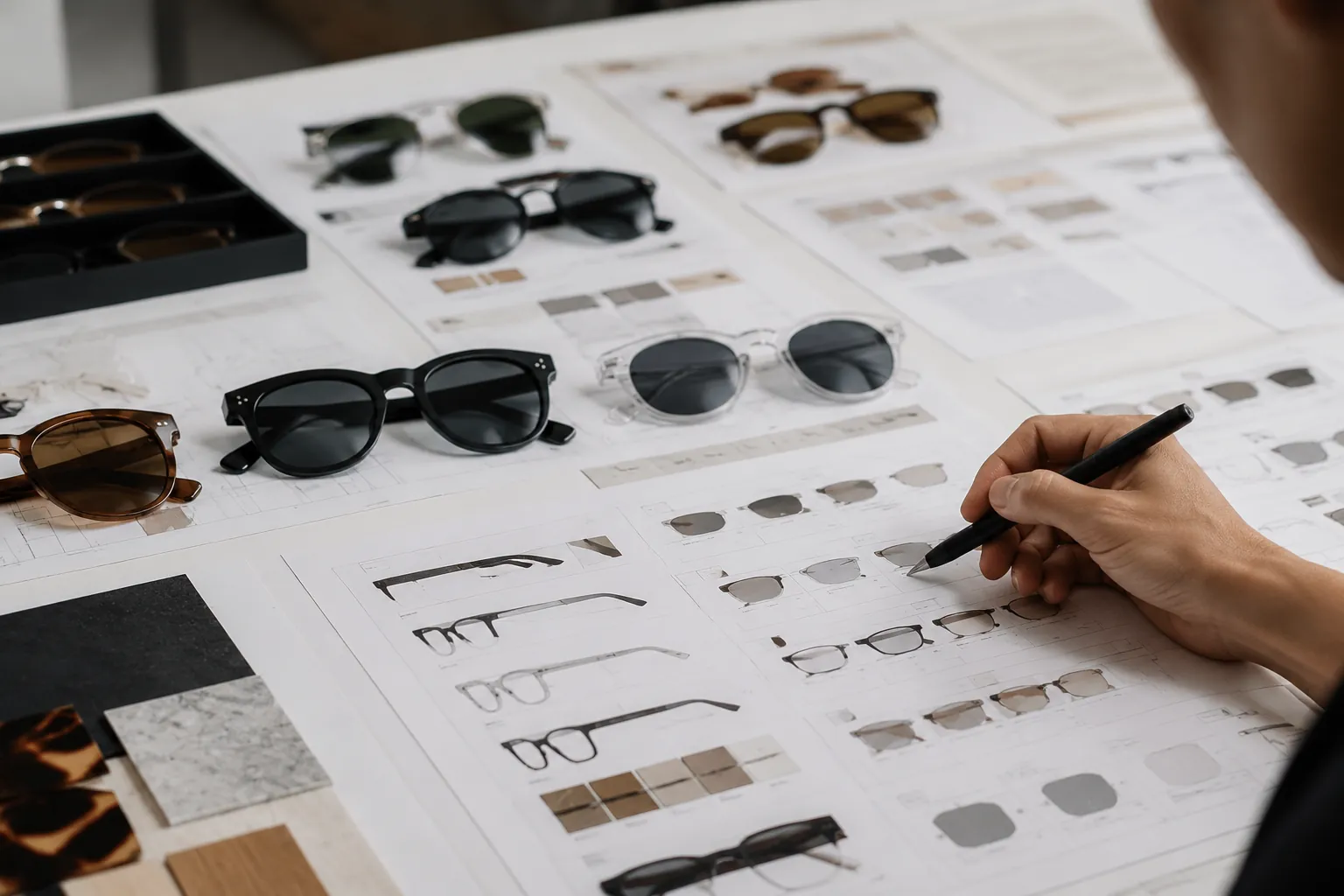
This guide is for buyers building coordinated adult and kids sunglasses programs for brands, chains, distributors, and family retailers. The hard part is not making two frames look related. It is aligning fit, lens performance, compliance files, pricing, packaging, and replenishment across age groups without creating avoidable claims after launch. A good family program strengthens merchandising and makes the brand story easier to read. A weak one creates fit returns, color mismatch, document gaps, and too many SKUs.
Start with the retail program, then brief design
Many family sunglasses programs go off track early. Development starts from one adult sketch, and the kids version gets treated as a late adaptation. That usually leads to rework. The kids fit is off. The cost target moves. The construction changes after compliance review has already started.
Set the commercial model first. A family program for resort gift retail is not the same as one for chain drugstores, children's specialty stores, or a fashion capsule. The retail model affects SKU count, color depth, packaging, and whether the line should favor broad age tolerance or a tighter fit by age band.
- Parent-child matching program: usually a focused assortment with shared colors and clearly paired adult and kids styles.
- Value chain retail: fewer color splits, simpler decoration, a lower ex-factory target, and more emphasis on replenishable basics.
- Fashion capsule: smaller volume, more finish detail, higher sample revision risk, and shorter reorder windows.
- Resort or seasonal program: compressed launch timing, gift-oriented packaging, and stronger emphasis on visual coordination.
For a first launch, keep the assortment tight. Spreading volume across too many colorways weakens pricing and makes approvals harder to control. Even if MOQ starts low, unit economics usually improve when quantities are concentrated into fewer SKUs with repeatable packaging and shared components.
Write the supplier brief in three layers: commercial target (retail price, landed-cost goal, destination market, launch date), fit target (adult size range, kids age band, coverage style), and compliance target (required standards, labeling, and document pack by market). If one layer is vague, the factory will fill the gap with assumptions. That is how sample rounds drift.
Build matching looks from separate fit architectures
Adult and kids sunglasses should share design language, not identical geometry. A simple scale-down of the adult front often looks fine on the table and fails on face. Children's bridges are usually lower. Face width changes fast by age. Temple retention matters more in real wear. Photos do not show that.
Start with a clear kids target band, such as 3 to 6 years or 7 to 10 years. Even if the line will be sold as one kids size, the factory still needs a declared fit target. Without it, a sample can look acceptable in CAD and fit poorly in use.
| Fit element | Adult program | Kids program | Buyer note |
|---|---|---|---|
| Lens width | Typically larger, depending on style and coverage target | Typically narrower, depending on age band and face width | Do not scale down blindly; cheek contact changes quickly |
| Bridge | More shape variation based on style | Usually needs lower, softer geometry and stable contact | Bridge fit is a common source of early kids returns |
| Temple length | Set for adult head size and intended fit | Shorter lengths are often needed for younger users | Too long can cause slipping; too short can create pressure |
| Front curve | Chosen for styling, coverage, and lens profile | Often adjusted to improve retention and lash clearance | Review on face, not only in CAD or flat photos |
Ask for wear testing on the intended age range before bulk approval. Focus on practical failure points: nose slip after short wear, temple pinch, lash touch on blink, and lower rim contact with the cheek when smiling. A frame can pass visual review and still fail in use.
Factories with in-house sample revision capability can usually correct bridge shape, front curve, or temple bend faster than factories that outsource most changes. That does not guarantee better fit. It does reduce turnaround time and the chance of mixed messages between sample rounds.
Choose materials by use case, cost, and visual role
Material choice should reflect the sales channel and the wear profile, not just appearance. Adult fashion styles may benefit from acetate for color depth, polish, and laminated effects. Kids programs often need durability, lower unit cost, and easier replenishment. That is why injected plastic is common.
In sourcing terms:
- Injection-molded plastic is often the most practical option for higher-volume retail, active use, and tighter ex-factory targets. Once tooling is approved, it can support repeatable output and simpler replenishment.
- Acetate offers richer finish quality and stronger pattern expression, especially in tortoise and translucent colors. It often suits adult premium programs better, but it may not fit every kids price point or wear profile.
- Hybrid programs can work well: adult acetate paired with kids injected frames, tied together through shared color references, logo position, and packaging cues.
Give lens specification the same attention. Define the required standard, tint category, base color, mirror or flash finish if used, and any consistency requirement between adult and kids styles. Darker is not automatically better. What matters is whether lens performance and labeling match the destination market and the approved build.
Decoration also has a durability trade-off. Pad print is cost-efficient, but check adhesion and rub resistance. Laser marking is often more stable on compatible surfaces. Metal logo plates can raise perceived value, but they also add component control, alignment, and attachment risk. On kids styles especially, simpler branding methods are usually easier to repeat in production.
Lock compliance and documentation before bulk approval
Kids products usually get more scrutiny from retailers, import teams, and marketplaces. Sunglasses are no exception. A style can look ready to ship and still get delayed if the test scope, labeling, or declarations do not match the actual construction.
Common requirements for export programs may include CE EN ISO 12312-1, ANSI Z80.3, AS/NZS 1067, REACH, and FDA registration where applicable. Many buyers also request supplier-system documents such as ISO 9001 and BSCI. The key point is simple: the file set must match the exact SKU being shipped.
- Confirm destination market by SKU before sampling starts.
- Match the test scope to the actual lens material, tint category, coating, and frame material.
- Review warning text, product labeling, and carton marks during pre-production, not after packing.
- Check decorative components separately where chemical compliance declarations are required.
- Do not assume one document pack covers every region in a mixed-market shipment.
Late changes to a mirror finish, logo plate, frame colorant, or packaging label can create document gaps. Even a cosmetic revision may require confirmation that existing test reports and declarations still apply. For multi-region programs, the simplest route is often one approved visual collection with market-specific labels, inserts, or document files rather than one universal packout.
Control MOQ, pricing, and lead times across both size groups
Family programs can look efficient because the branding is shared. They are only efficient if SKU count, color count, tooling, and packout choices stay under control. Shared artwork and common packaging can save cost. Shared fit tooling usually cannot. Buyers often expect more reuse than the geometry allows.
| Program choice | Typical cost effect | Lead-time effect | Main risk |
|---|---|---|---|
| Separate adult and kids tools with shared branding | Higher development spend, cleaner fit outcome | Normal sample cycle, fewer corrective loops later | Lower fit risk |
| Kids frame adapted from adult geometry | Lower upfront spend | May appear faster initially | Higher chance of re-sampling and return issues |
| 4 to 6 SKUs with deeper quantity per SKU | Better unit economics and simpler packout | Smoother bulk planning | Lower inventory complexity |
| Many low-volume colors | Higher unit cost due to setup fragmentation | More approvals and slower consolidation | Higher delay and stock imbalance risk |
Lead time depends on construction, sampling method, packaging complexity, and how quickly approvals are consolidated. Sample timing is usually shorter when the buyer has already fixed lens color, branding method, packaging, barcode placement, and assortment logic. Bulk timing is more predictable when adult and kids comments are returned together instead of through separate internal review cycles.
MOQ may start at a pilot level with some suppliers, but the minimum opening quantity is only part of the picture. Ask where price breaks begin, whether those breaks apply by color or by total style quantity, and how packaging choices affect ex-factory cost. Extra mirrors, special pouches, multi-language inserts, or custom hardware can raise the true delivered cost even if the frame stays the same.
Run a stricter sample approval process
A family line needs tougher approval discipline than a standalone adult fashion frame. Adults may tolerate a style-first frame for occasional wear. Kids usually will not. Parents notice fast when a frame slips, pinches, or feels unstable.
Use a structured review checklist and record the result for every sample revision:
- Visual match: compare adult and kids frames under the same light source for frame color, lens tint, mirror effect, and logo placement.
- Fit check: test bridge hold, side pressure, temple retention, cheek contact, and lash clearance on the intended age range.
- Hinge and opening feel: open and close repeatedly and compare left-right symmetry; inconsistency here often becomes a production complaint.
- Decoration security: inspect print edges, engraving quality, and metal plate attachment after handling.
- Abuse check: perform basic handling checks appropriate to the product and review for whitening, cracks, hinge shift, or loose trim.
- Packout review: confirm pouch, insert, barcode, carton assortment, and country-specific markings before bulk starts.
Ask the factory to retain a signed golden sample set tied to the purchase order and packing specification. That set should include the approved adult style, approved kids style, lens specification, branding method, packaging, barcode placement, and carton assortment notes. If a retailer later raises a consistency claim, the golden sample becomes the QC reference.
Keep branding coordinated and easy to repeat
The best family branding reads quickly and repeats cleanly across age groups. Too many programs overwork small decorative details and ignore the cues that actually drive shelf recognition. In production terms, simple branding is not just easier to see. It is easier to reproduce on reorders.
Limit the collection to three or four repeatable brand cues:
- One shared shape family, even if adult and kids geometry differs.
- Two or three carryover colors across both size groups.
- One repeat branding method, such as laser mark or inside-temple pad print.
- One packaging cue, such as pouch color, insert design, or hangtag format.
Be careful with metal logo plates on kids products. They can look premium, but they also add sourcing, alignment, attachment, and inspection complexity. If the target is sharp pricing and stable replenishment, engraved or printed branding often gives a cleaner result with fewer variables.
Plan replenishment visually as well as commercially. A family program is easier to restock when core adult colors map directly to core kids colors. If the adult core range has no clear kids equivalent, the matching story weakens and inventory planning gets harder. Strong family programs are built for reorder clarity, not just launch presentation.
Use a practical sourcing sequence for a first family program
If this is your first coordinated adult and kids collection, discipline matters more than novelty. The safest way to protect margin is to remove avoidable variables in round one.
- Set the commercial frame: target retail price, landed-cost goal, destination markets, and launch date.
- Define the assortment: keep to a controlled number of SKUs with clear adult-kids pairing logic.
- Freeze compliance requirements: specify the required standards and region-specific labeling before samples are finalized.
- Sample both groups together: do not approve the adult style while the kids version is still unresolved.
- Run fit and handling checks: focus on bridge hold, temple retention, hinge feel, and visual consistency.
- Approve one golden sample set: include frame, lens, branding, packaging, barcode, and carton rules.
- Book volume at the right break: use pilot quantities only for a true market test, then consolidate once the concept is proven.
When sourcing from established eyewear clusters such as Wenzhou, process control matters. Family programs require synchronized output across two size groups. Verify what the supplier handles directly, what is subcontracted, how color consistency is controlled, and how document files are maintained against the final approved SKU. That due diligence matters more than broad capability claims.
Keep the first family program simple. Fit must be right. The visual link must be obvious. The compliance file must match the shipped construction. Reorders must be easy to plan. That is what makes the program durable.
Have a custom sunglasses project in mind?
Send us your styles, target market and quantities and we will return a detailed quote with MOQ, lead time and a sample plan.
Get a QuoteWhy source this from Wenzhou with LumiShades
Wenzhou in Zhejiang Province is widely regarded as China’s eyewear manufacturing capital, producing a large share of the world’s sunglasses. That concentration matters to buyers: a deep local supply chain for acetate sheet, hinges, lens blanks, plating and packaging means shorter component lead times, easier color and material matching, and a workforce with decades of eyewear-specific skill. LumiShades has manufactured in this ecosystem since 2009, and our vertical integration — in-house injection molding, acetate cutting, CNC milling, lens tinting, decoration and quality control — means no part of your order is quietly subcontracted to a workshop you cannot audit.
For international buyers, that vertical control translates into accountability. When a single factory owns every step, defects are traced and fixed at source rather than bounced between vendors, and your specifications survive intact from first sample to bulk. We back this with 15+ years of experience, shipments to 60+ countries, more than 5 million pairs produced per year and a 98.5% on-time delivery rate. Our certifications — CE EN ISO 12312-1, FDA registration, ANSI Z80.3, AS/NZS 1067, REACH, ISO 9001 and BSCI audit — mean the compliance documentation your market requires already exists. Explore our manufacturing capabilities and quality control process to see how this works in practice.
Frequently asked questions
Should adult and kids matching sunglasses use the same frame material? Not necessarily. Choose material by use case and target price. If the adult style needs richer finish and stronger pattern depth, acetate may fit. If the kids style needs lower cost, lighter weight, or easier replenishment, injected plastic may be the better choice. To keep the family look consistent, align visible cues such as color reference, logo placement, lens tone, and packaging. Ask the supplier to submit both materials together under the same light source so you can judge the match at shelf level.
What is the safest MOQ strategy for a new family eyewear program? Keep the first order focused. Ask the supplier for MOQ by style, by color, and by packaging version, because those are not always calculated the same way. Then compare the minimum opening quantity with the first meaningful price break. In practice, buyers are usually better served by fewer SKUs with enough depth to test real sell-through than by many low-volume colorways. Before placing the order, confirm that replenishment can repeat the same frame color, lens tint, and packout without reopening development.
How long should sampling and bulk production take? There is no standard timeline, so treat every estimate as project-specific. Ask for a stage-by-stage schedule covering sample making, sample revision, approval cutoff, testing or document preparation if needed, bulk production, and final inspection. Then confirm which buyer inputs can stop the clock, such as late barcode files, packaging approval, or lens-color changes. If adult and kids samples are reviewed by different internal teams, combine comments into one return to reduce avoidable revision rounds.
Which compliance documents should buyers ask for on family sunglasses lines? Start with the destination market and request documents that match that market and the actual product construction. Depending on where the goods will be sold, that may include CE EN ISO 12312-1, ANSI Z80.3, AS/NZS 1067, REACH, and FDA registration where applicable. Many buyers also request ISO 9001 and BSCI as part of supplier qualification. Beyond collecting the files, verify that the reports and declarations align with the approved lens material, tint category, coatings, frame material, decorative components, and labeling for the exact SKU being shipped.
What causes the most problems in kids versions of matching sunglasses? The most common issues are poor bridge fit, weak temple retention, and over-reliance on a scaled-down adult shape. These problems can cause slipping, cheek contact, side pressure, or unstable wear even when the frame looks good in photos. To reduce risk, define the target age band before sampling, test the frame on actual users in that band if possible, and record fit feedback in a simple checklist covering nose hold, lash clearance, temple pressure, hinge feel, and movement during normal wear. Do not approve the kids frame on appearance alone.
Ready to start?
Explore our round sunglasses or request a quote — our sales team replies within 12 hours.
Request a Quote