
Matching Adult and Kids Sunglasses: Buyer Guide
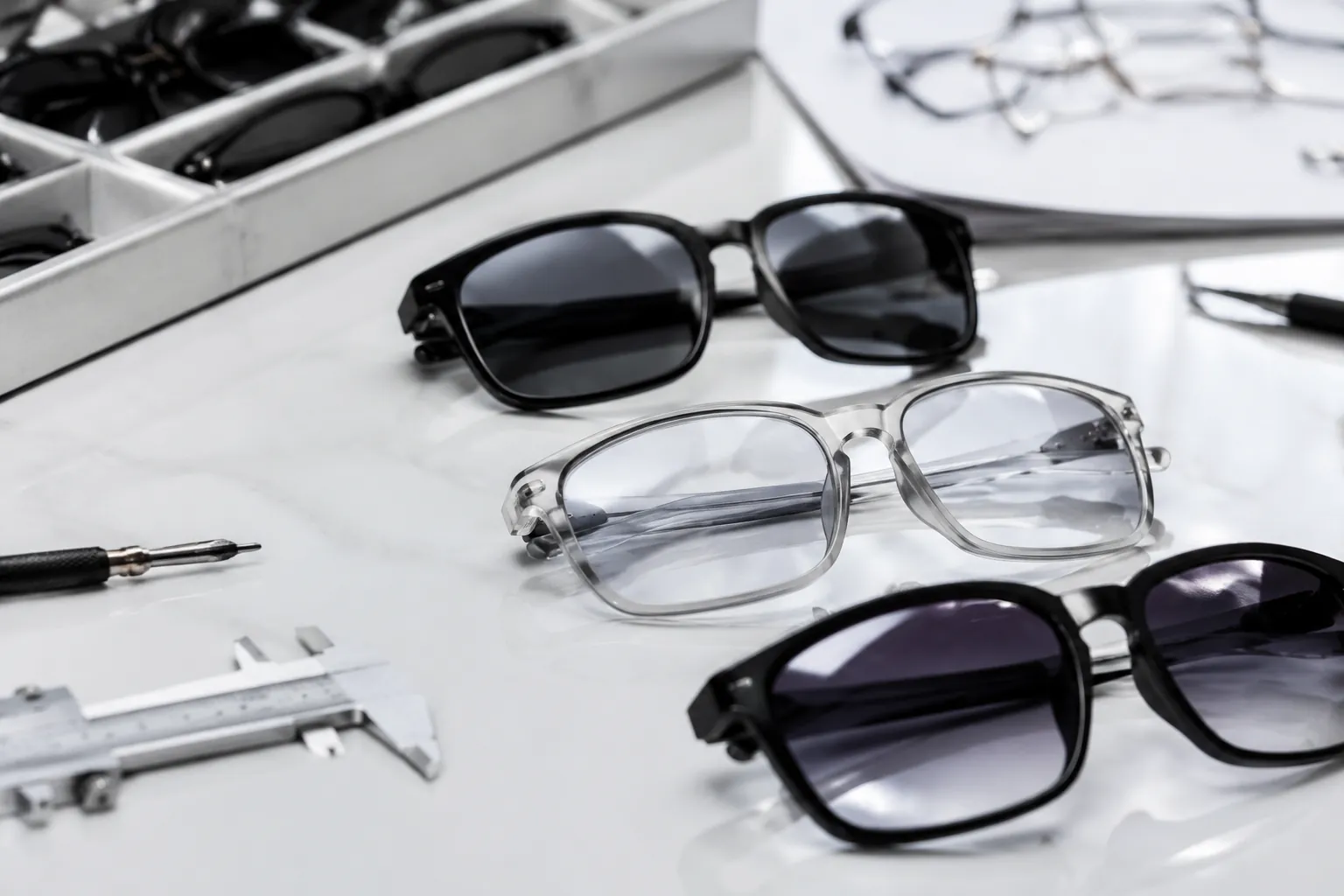
This guide is for brand owners, importers, distributors, and retailers planning a matching adult and kids sunglasses line. The goal is not to make two frames that simply look alike. It is to build a coordinated program that fits each age group, meets market requirements, supports margin, and can be reordered without friction. Matching family collections can work well at retail because they combine gifting appeal with strong visual merchandising. But they often miss the mark when the kids frame is treated as a shrunken adult style. That is the core mistake. The work is in fit, materials, lens specification, compliance, costing, quality control, and timing. The sections below turn those decisions into a sourcing brief you can use with a manufacturer.
Set the Program Before the Design
A matching family collection is easier to manage when the commercial structure is set before design approval. Many launches go wrong the same way: too many shapes, too many colors, and no replenishment plan. A tighter opening range usually works better. Start with one adult hero shape, one kids companion shape, and one shared color story with a limited number of repeatable colorways.
Do not position matching sets as novelty unless that is truly the business model. Novelty programs often create broad assortments with shallow stock, which makes reorders harder and leaves inventory stranded in weak colors. A stronger approach is a compact core range built on consistent design language: the same shape family, a related temple line, aligned logo placement, and coordinated lens colors. The construction, however, should differ by age group.
- Adult frame: usually carries the main brand image and often supports the higher ticket.
- Kids frame: should keep the look, but use its own fit block, weight target, hinge behavior, and material specification.
- Shared details: color naming, packaging language, branding treatment, and merchandising story should align across both sizes.
- Launch depth: a smaller opening palette is usually easier to manage than a wide range with low inventory per color.
If a supplier offers MOQ from 50 pairs per design, treat that as a pilot threshold, not proof that it is the right opening quantity. The right buy depends on channel, target retail, and your ability to reorder fast on proven colors. In most cases, it is better to put more depth behind the most repeatable options than to spread volume evenly across every variation.
Review each opening colorway with discipline. If it has no clear role, cut it. Matching programs usually perform better when replenishment is simple and shelf presentation stays consistent across adult and kids sizes.
Build Adult and Kids Sizes Separately
Do not shrink an adult CAD file by a fixed percentage and call it a kids style. That shortcut creates poor bridge contact, unstable temple fit, and uneven wear. Kids heads are not just smaller adult heads. Nose development, ear position, face depth, and tolerance for pressure points are different. The fit block must be different too.
Most matching programs need at least two real size blocks. Some need three if the children's range spans a wider age band.
| Segment | Typical Eye Size | Bridge | Temple | Target Weight | Key Fit Notes |
|---|---|---|---|---|---|
| Adult | 50-54 mm | 18-21 mm | 140-145 mm | 24-34 g | Broader bridge tolerance, more styling freedom |
| Kids 3-6 | 42-46 mm | 14-16 mm | 115-125 mm | 14-20 g | Lower weight, softer grip, reduced wrap pressure |
| Kids 7-12 | 46-49 mm | 15-17 mm | 125-135 mm | 18-24 g | Closer to junior fit, still not a mini adult block |
On every sample approval sheet, request measured front width, eye size, bridge, temple length, lens height, total weight, hinge position, and basic angle notes. If a supplier cannot provide those measurements consistently, reorder control gets harder. On kids product, small changes in temple length, front width, or temple curvature can be enough to cause slipping or pressure complaints.
Material and process also affect fit. In injected TR90 or polycarbonate, the supplier can often adjust temple curvature, end-piece thickness, or nose geometry during development if the tooling plan allows it. In acetate, design carryover may be visually strong, but thicker sections, hinges, core wire, and lenses can increase finished weight fast. That is why physical sample review matters.
Ask for more than CAD dimensions. Ask for measured weight and a physical fit assessment on the first wearable sample. Every time.
Keep the Style, Change the Specs
The best matching programs keep a family resemblance without forcing identical construction. Exact duplication often hurts fit, durability, or cost. Visual continuity matters. Technical independence matters more.
What should usually carry over:
- Front-shape family, such as soft square, rounded panto, or modified cat-eye.
- Signature temple detail, such as a bevel line, molded rib, metal insert, or color-block placement.
- Shared lens color logic, for example smoke, brown, rose, or blue-grey across the range.
- Consistent branding point, such as pad print, laser mark, hot foil, or a small metal logo plate.
What often should change:
- Lens curve: kids may need a different base curve or front angle for better comfort and more stable positioning.
- Temple thickness: very thin temples may reduce grip and increase breakage risk near the hinge; overly thick temples can add unnecessary weight.
- Bridge geometry: direct carryover from adult tooling often causes the kids frame to sit too low or too far from the face.
- Decoration method: adult acetate may justify inset metal logos, while kids injected styles often work better with pad print or laser marking because they reduce parts count and assembly complexity.
There is a cost reason to separate the builds as well. A metal logo plate may look inexpensive on a quotation, but it adds component sourcing, insertion labor, placement control, and reject risk. For a kids core style, a tested pad print or laser mark is often easier to scale. For an adult premium frame, the metal detail may still make sense if it supports the intended price point.
A common solution is adult acetate with premium trim paired with a kids injected frame that keeps the same silhouette, logo location, and color naming. On shelf, the collection reads as one family. Operationally, it protects fit, weight, and margin.
Choose Materials for Use, Margin, and Risk
Material choice decides whether a matching concept stays workable after launch. Adult and kids units do not need the same bill of materials. In many programs, they should not share one.
| Material Route | Best Use | Main Advantages | Main Risks |
|---|---|---|---|
| Injected TR90 or similar lightweight polymer | Kids core program | Light weight, flexibility, efficient repeat production, good comfort | May have lower premium perception than acetate in some markets |
| Polycarbonate injected frame | Entry-price or promotional programs | Lower cost, scalable production, straightforward color programs | Can feel rigid, finish quality depends heavily on tooling and polishing control |
| Acetate cut and CNC finished | Adult premium styles and selected junior capsules | Richer color depth, stronger presentation, higher perceived value | Higher weight, more labor steps, higher material waste and cost |
| Hybrid acetate front with metal or molded temples | Fashion capsules | Distinct shelf appeal, stronger design differentiation | Higher assembly complexity and tighter fit-control requirement |
Lens choice needs the same discipline. For many retail programs, tinted lenses with validated UV performance and the correct category for the destination market are enough. Polarized lenses, mirror coatings, gradients, and flash finishes can strengthen the adult offer, but they also add cost and make visual matching across adult and kids sizes harder. If the family look is important, lock the base lens color first, then review the finish on both sizes because appearance can shift with lens area and curvature.
Decoration affects durability too. Pad print is flexible and cost-efficient, but it should be checked for adhesion and rub resistance. Laser marking can be durable and clean, but the result varies by material and color. Metal badges can raise perceived value, but they also add assembly steps and another possible failure point if tolerances or adhesives are not controlled.
Ask a simple question: which material supports the target retail price, expected use case, return risk, and reorder plan? For many family programs, adult acetate plus kids TR90 is a stronger model than forcing acetate across both age groups.
Confirm Compliance Early
Compliance is not a paperwork task to handle at the end. It affects lens specification, labeling, packaging copy, decoration chemistry, and timing. Matching collections still need the right technical path for each destination market, and that path should be confirmed before bulk production starts.
For export sunglasses, buyers commonly review requirements such as CE EN ISO 12312-1, ANSI Z80.3, AS/NZS 1067, REACH, and FDA registration, depending on destination and importer process. Factory-management and social-compliance documents such as ISO 9001 and BSCI may also be requested during supplier qualification, but they do not replace product testing or chemical compliance.
- CE EN ISO 12312-1: commonly referenced for non-prescription sunglasses placed on many international markets.
- ANSI Z80.3: commonly referenced for non-prescription sunglasses for the US market.
- AS/NZS 1067: relevant for Australia and New Zealand programs where applicable.
- REACH: important for chemical compliance relating to plastics, coatings, inks, paints, and metal components supplied into applicable markets.
- FDA registration: often reviewed as part of US importer documentation workflows, depending on product category and importer requirements.
Be precise about what each document covers. A report for one frame material, one lens tint, and one branding method does not automatically validate a different coating, mirror finish, adhesive system, paint, or metal trim. Ask the supplier to map each report to the exact construction that will ship.
Set one compliance checkpoint before purchase order release and another before shipment booking. Ask the supplier to confirm that the documents apply to the final production specification, including frame material, lens category, and decoration method. Delays during development are manageable. Discovering a document mismatch after production is not.
Use MOQ and Cost Tiers to Build the Range
A matching program can look strong in a presentation and still fail at launch if the assortment is spread too thin. MOQ discipline matters because cost changes with volume, material choice, decoration method, and packaging complexity.
A factory may quote a low starting MOQ per design, but that level is usually most useful for sampling extensions, market testing, or limited pilot runs. For a broader launch, buyers should identify the quantity at which pricing, packaging, and replenishment actually work for their channel rather than anchoring on the lowest technical MOQ.
A practical opening structure often looks like this:
- 1 adult style + 1 kids style with one clear shared design story.
- 3 core colors that can be repeated if sell-through is strong.
- 1 fashion color bought more cautiously if the channel can support it.
- Simple packaging first if cost pressure is high; add upgraded accessories only when the sell-through case is proven.
Discuss price logic in the same conversation as packaging and decoration. Buyers often underestimate the landed-cost effect of logo plates, custom cloths, rigid cases, barcode labels, swing tags, and color-matched pouches. Each item may look minor on its own. Together, they can change the margin structure.
In early runs, the more reliable strategy is disciplined packaging, tight color control, and reorder readiness rather than premium extras on every SKU. If your channel is chain retail, build around merchandising sets and key gifting periods. If your channel is distribution, keep the range simple enough that country-level customers can repeat proven colors quickly without carrying dead stock in fringe options.
Work Backward From the Shelf Date
Timeline mistakes are common because buyers assume the kids version is only a derivative of the adult frame. It is not. It has its own fit approval path even when design language and artwork are shared. Treat it as a separate development track in the calendar.
A realistic sourcing timeline often starts with 7-10 days for first samples and 25-35 days for bulk production after approvals are frozen, assuming materials are available and branding details are confirmed. That baseline still needs time for revisions, testing, packaging approval, and freight booking.
- Day 1-3: submit the tech pack, target price, compliance list, packaging brief, and a clear adult-versus-kids spec matrix.
- Day 7-10: receive first samples with measured dimensions and weight.
- Day 11-16: review fit, color, branding position, lens category, decoration quality, and package mock-up.
- Day 17-22: approve a revised sample or pre-production sample if changes are required.
- Day 23-57: complete bulk production within the stated 25-35 day window, subject to material availability and final approvals.
- Final stage: complete QC, carton confirmation, export documents, and shipment release.
Build in more time if the program includes new tooling, mirrored lenses, custom hardware, or multiple packaging components. Send one consolidated revision sheet after sample review. Split feedback from multiple stakeholders is a common cause of delay, especially when adult and kids comments get mixed together.
The safest method is to work backward from the in-store date and hold a buffer between final approval and freight booking. A matching family collection tied to a seasonal or gifting window loses value fast if it lands late.
Set QC Around Real Use
QC for matching sunglasses should focus on real-use failure points, not cosmetic inspection alone. Adult buyers often focus on polish, color, and branding alignment. Kids product is more likely to be twisted, dropped, sat on, or cleaned roughly. The inspection plan should reflect that. Plainly.
Key checkpoints to include in the purchase order or QC protocol:
- Color consistency: adult and kids frames should match approved master samples under the same viewing conditions and across production lots.
- Lens shade consistency: especially important when the products are merchandised side by side; variation is easy to see at shelf level.
- Hinge function: opening and closing resistance should be consistent across pairs; overly loose or uneven temples can drive returns.
- Logo placement: pad print, laser mark, foil, or metal trim should remain in the approved position pair to pair.
- Weight control: kids units should stay within the approved tolerance so wearing balance is maintained.
- Edge finish and burr check: important on molded parts, acetate bevels, nose areas, and any exposed trim or hardware.
Ask for both in-line QC and final random inspection. Request measured spec sheets and pre-shipment photos before cartons are sealed. For matching family collections, it makes sense to hold tighter visual tolerance on color and branding placement than on a standard single-style order, because adult and kids units will be compared directly on shelf.
The rule is simple: keep the family look consistent, but engineer the adult and kids frames as separate products. That protects fit, compliance, and margin across repeat orders.
Have a custom sunglasses project in mind?
Send us your styles, target market and quantities and we will return a detailed quote with MOQ, lead time and a sample plan.
Get a QuoteWhy source this from Wenzhou with LumiShades
Wenzhou in Zhejiang Province is widely regarded as China’s eyewear manufacturing capital, producing a large share of the world’s sunglasses. That concentration matters to buyers: a deep local supply chain for acetate sheet, hinges, lens blanks, plating and packaging means shorter component lead times, easier color and material matching, and a workforce with decades of eyewear-specific skill. LumiShades has manufactured in this ecosystem since 2009, and our vertical integration — in-house injection molding, acetate cutting, CNC milling, lens tinting, decoration and quality control — means no part of your order is quietly subcontracted to a workshop you cannot audit.
For international buyers, that vertical control translates into accountability. When a single factory owns every step, defects are traced and fixed at source rather than bounced between vendors, and your specifications survive intact from first sample to bulk. We back this with 15+ years of experience, shipments to 60+ countries, more than 5 million pairs produced per year and a 98.5% on-time delivery rate. Our certifications — CE EN ISO 12312-1, FDA registration, ANSI Z80.3, AS/NZS 1067, REACH, ISO 9001 and BSCI audit — mean the compliance documentation your market requires already exists. Explore our manufacturing capabilities and quality control process to see how this works in practice.
Frequently asked questions
Should the kids frame be an exact scaled-down version of the adult frame? Usually no. Keep the same design language, but develop the kids frame with its own bridge shape, temple length, front width, weight target, and wearing balance. Ask the factory for separate measured specs and a physical kids fit sample, not just a scaled CAD drawing. When reviewing the sample, check bridge contact, temple pressure, and whether the frame stays stable during normal movement.
What is a sensible MOQ for testing a matching family program? The factory's technical MOQ may start around 50 pairs per design, but that is usually best for sampling extensions, pilot runs, or limited market tests. For a commercial opening, choose a quantity that gives you workable unit economics and enough stock in the core colors to support replenishment. A practical approach is to test one adult style and one kids style in a small number of shared colors, then reorder only the proven winners.
How long should I allow from concept approval to shipment? Use 7-10 days for first samples and 25-35 days for bulk production as a working base after approvals are frozen, then add time for revisions, compliance confirmation, packaging approval, inspection, and freight booking. If the launch is tied to a seasonal or gifting date, build in a buffer rather than planning to the shortest possible timeline. Ask the supplier to confirm whether new tooling, special lenses, or custom packaging will extend the schedule.
Which compliance documents matter most for export sunglasses? That depends on the destination market and the importer's process, but buyers commonly review CE EN ISO 12312-1, ANSI Z80.3, AS/NZS 1067, REACH, and FDA registration where applicable. During supplier qualification, you may also request ISO 9001 and BSCI, but those do not replace product-specific compliance documents. The key step is to ask the supplier to match each report to the exact frame material, lens type, tint, and decoration method that will ship.
Is acetate a good choice for kids matching sunglasses? It can work for junior capsules or more premium positioning, but it requires closer control of weight, durability, and cost. Before approving acetate for a kids style, ask for the finished sample weight, hinge specification, and drop- or handling-related QC plan. For many core kids programs, injected materials are more practical because they are lighter, easier to scale, and often more forgiving in everyday use, while acetate may remain the better fit for the adult companion style.
Ready to start?
Explore our cat-eye sunglasses or request a quote — our sales team replies within 12 hours.
Request a Quote