
UV400 Sunglasses Sourcing Verification Guide
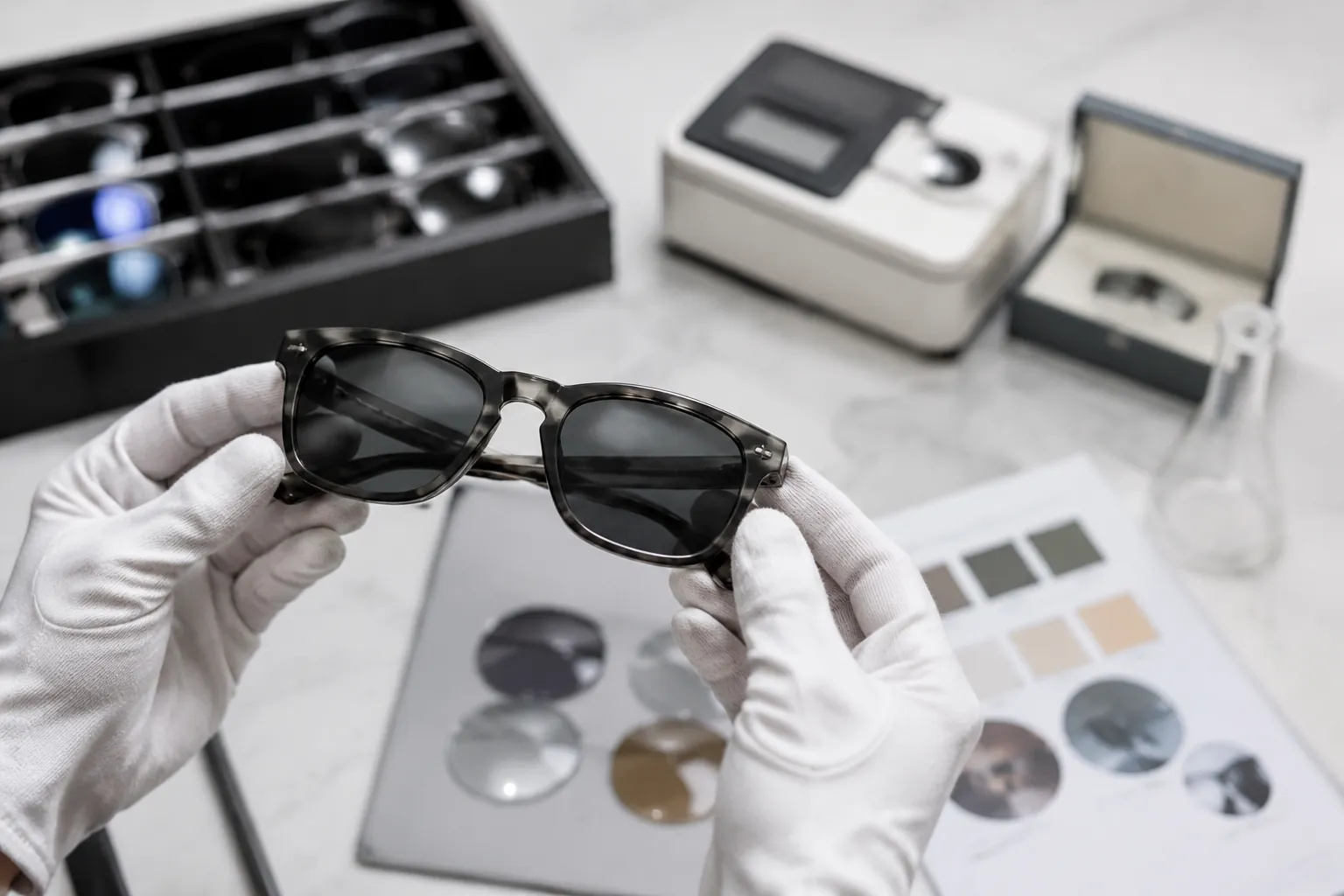
This guide is for brands, importers, distributors, and retailers buying custom sunglasses in volume. It shows what to verify before approving UV400 claims, how to read test reports, how lens material and tint affect results, and which labeling errors create compliance risk. Use it before sample approval. Use it again before bulk production starts.
Start with the UV400 claim
UV400 means the sunglass lens is intended to protect against ultraviolet radiation up to 400 nm. In sourcing calls, people often treat it as a simple sales phrase. It is not. In compliance review, UV400 is a measurable performance claim.
If the lens does not support the statement printed on the hangtag, pouch, product detail page, or online listing, the issue is not cosmetic. It is a product compliance problem.
Control the wording first. Put the exact claim in the purchase order, artwork file, product specification sheet, packaging brief, and inspection checklist. Do not let one file say UV400, another say 100% UV protection, and a third say blocks all harmful rays unless your test data and target-market rules support each statement. Many disputes start because the lens is acceptable, but the retail claim goes further than the evidence.
For custom sunglasses, approve UV wording before lens tinting, logo printing, and packaging production begin. Correcting artwork early is simple. Reprinting hangtags, relabeling cartons, or missing a retailer delivery window is expensive. Treat UV wording as part of the technical file, not late copywriting.
Match the standard to the market
Do not rely on a generic factory statement that the sunglasses are UV protected. Ask which standard the product is designed and tested against. The core checks are similar across markets: UV transmittance, visible light transmittance, lens category, optical quality, impact-related expectations, chemical safety, and consumer labeling. The details differ. Fix the target market before quotation, sampling, and artwork approval.
| Market or requirement | Common document | Buyer verification point |
|---|---|---|
| European Union | CE, EN ISO 12312-1 | Confirm applicable sunglass requirements, UV transmittance, visible light category, user information, CE marking basis, manufacturer/importer details, and category 4 warnings where applicable. |
| United States | FDA registration context, ANSI Z80.3 | Confirm non-prescription sunglass performance expectations, impact-related requirements where applicable, product labeling, and avoid medical or therapeutic claims. |
| Australia/New Zealand | AS/NZS 1067 | Confirm lens category, UV protection, required user information, and driving suitability statements. |
| EU chemical safety | REACH | Check restricted substances in frames, coatings, nose pads, inks, metal trims, plating, and other relevant components. |
| Factory management and social compliance | ISO 9001, BSCI | Useful for supplier qualification and process screening, but these do not prove UV400 performance for a specific SKU. |
When qualifying a supplier, request current documentation. This may include CE EN ISO 12312-1 test evidence, ANSI Z80.3 reports, AS/NZS 1067 reports, REACH documentation, FDA registration information where relevant, ISO 9001 certification, and BSCI audit records.
Check the document owner, scope, issuing body, test date, product description, and product match. Factory-level certificates and old reports can help with screening. They do not replace SKU-level or batch-level verification for your exact frame, lens material, color, coating, category, and claim.
Control material, tint, and coating
Two sunglasses can look nearly identical in a product photo and test very differently. UV performance and visible light category can change with base lens material, absorber package, tint process, coating stack, lens thickness, and whether the lens is solid, gradient, polarized, or mirrored.
Darkness is not proof of UV protection. A pale lens may support a UV400 claim if the construction is right. A very dark lens may fail if the material or coating package is wrong.
| Lens or frame choice | Typical sourcing use | Process detail to control |
|---|---|---|
| PC lens | Common for promotional, fashion, and sports styles; often selected for impact resistance and cost efficiency. | Control injection quality, lens thickness, tint uniformity, coating adhesion, and scratch-resistance expectations. PC lenses often require a hard coating when scratch resistance is important. |
| TAC polarized lens | Common for polarized sunglasses used in fishing, driving, outdoor, and mid-range retail programs. | Check polarization axis, delamination risk, mirror coating consistency, heat and humidity performance where relevant, and whether the report covers the exact color and coating. |
| Nylon lens | Often used for performance eyewear where optical clarity, flexibility, and wrap designs matter. | Confirm base curve, optical distortion, coating compatibility, and lens retention in wraparound or high-curve frames. |
| Acetate frame | Used for premium fashion programs where hand-feel, color depth, and polish quality are priorities. | Control cutting, tumbling, polishing, hinge installation, lens seating, and color approval between production batches. |
| TR90 or PC injection frame | Used where consistent shape, lighter weight, and repeatability are important. | Control shrinkage, bridge width, temple length, lens groove fit, flash at the parting line, and color matching against the approved sample. |
Define assembly and appearance tolerances before production. Practical controls may include logo position tolerance, temple length tolerance, frame front width tolerance, visible lens gap limit, hinge tension range, and color approval against a sealed golden sample under consistent lighting.
The right tolerance depends on the style, material, decoration method, and retailer requirement. If tolerances are vague, inspection arguments are almost guaranteed.
Make reports match the shipped product
The most common report problem is not always missing paperwork. It is mismatch. A smoke PC lens tested for a previous order does not automatically cover a new brown gradient TAC lens, a blue mirror lens, or a children's style with different frame paint.
A useful report must connect clearly to the product you are buying. Before bulk approval, compare the report against at least five identifiers: model number, lens material, lens color or coating, lens category, and production date or batch reference where available.
A strong test report normally includes photos or a clear sample description, test standard, test date, laboratory name, measured values, and tested product reference. If the report only says sunglasses with no image, no color, and no model reference, ask for a more specific report or arrange fresh testing.
- Lens material: PC, TAC, nylon, acrylic, and CR-39 can behave differently during tinting, coating, optical checks, and impact-related testing.
- Lens color: Smoke, brown, green, yellow, blue, gradient, and mirror finishes can change visible light transmittance and lens category.
- Frame material: PC injection, TR90, acetate, stainless steel, alloy, or mixed-material frames may require different chemical and durability checks.
- Decoration: Pad printing, silk screen, laser marking, hot stamping, metal logo plates, plating, and enamel fills can create separate chemical, adhesion, or durability concerns.
- Intended user and use: Fashion, sports, children's, snow, cycling, and category 4 sunglasses may require different warnings, labeling, or performance checks.
For new custom sunglasses, arrange lab confirmation after representative pre-production samples are made and before packaging is printed or bulk cartons are packed. Confirm the lab scope in writing: test standard, number of colorways, lens materials, polarized or non-polarized status, chemical testing if required, and report language.
Build testing time into the launch calendar. Do not leave it for final inspection.
Check category and driving wording
UV protection and lens darkness are separate controls. UV400 relates to ultraviolet protection. Lens category relates mainly to visible light transmittance. This distinction matters because lens category affects consumer instructions and driving suitability.
A category 0 fashion tint and a category 3 beach sunglass may both support a UV400 claim. They should not be labeled or used in the same way.
Category 0 and 1 lenses are generally light tint or limited sun-glare reduction lenses. Category 2 and 3 lenses are common for general sun protection. Category 4 lenses are very dark and are generally not suitable for driving. If the artwork says suitable for driving while the measured category or required warning says otherwise, the product file is inconsistent. Fix it before approval.
In production, lens category can shift when the tint recipe or coating changes. Dipping time, dye concentration, base lens color, gradient depth, mirror coating, hard coating, and lens curvature can all influence visible light transmittance. For gradient lenses, agree on the measurement position because the top and bottom of the lens may differ significantly.
For polarized lenses, also check polarization efficiency and alignment. Mismatched axes between left and right lenses can affect comfort and perceived quality.
Golden samples should be measured, sealed, signed, and retained. Keep at least one buyer-approved sample and one factory-retained sample. During bulk QC, inspectors should compare color, lens category reference, logo placement, fitting, hinge function, and packaging wording against those sealed samples.
Use approval gates before bulk production
Do not leave UV verification until final inspection. By then, the choices are usually bad: ship, rework, discount, delay, or scrap. A stronger process uses approval gates. Each gate needs a document, measurement, or physical sample attached to it.
- Define target markets: List EU, US, Australia/New Zealand, UK, Canada, or other destinations before quotation. This determines test standards, labeling, warnings, document language, and importer responsibilities.
- Lock product specifications: Confirm frame material, lens material, lens color, coating, lens category target, polarization if any, logo method, packaging, barcode, and exact UV claim.
- Confirm MOQ, tooling, and price logic: Ask the supplier to separate unit price, tooling or mold cost, packaging cost, decoration cost, testing cost, and any surcharge for small runs or multiple colorways. Price changes should be tied to clear factors such as material purchasing, setup time, printing plates, mold requirements, packing labor, and inspection scope.
- Make representative pre-production samples: Samples should use the intended lens material, color, coating, frame material, decoration, and packaging whenever possible. If a sample uses substitute materials, record the difference and do not treat it as final compliance evidence.
- Measure lenses: Check UV transmittance and visible light transmittance on representative samples. Confirm lens category and driving warnings before packaging and listing copy are approved.
- Review artwork: Approve temple logos, lens stickers if used, hangtags, pouch printing, box copy, instruction sheets, warning icons, barcode labels, and e-commerce text.
- Approve the production and QC plan: Confirm AQL level, in-line inspection timing, final inspection scope, carton markings, packing method, drop-test requirements if applicable, and allowed substitutions. If substitutions are not allowed, state that in writing.
- Run bulk QC: Check incoming materials, first-piece production, in-process lens color, hinge function, logo location, packing accuracy, and final comparison with the golden sample and approved artwork.
Confirm lead time in the quotation and purchase order. Do not assume it. Order size, component readiness, lens type, tooling, decoration complexity, custom packaging, third-party testing, retailer documentation, and seasonal factory capacity can all change the schedule.
Avoid risky marketing language
Many sunglasses fail retailer or compliance review because the marketing copy overreaches. UV400 is a technical claim. Do not turn it into an absolute safety promise, disease-prevention statement, or medical-device implication.
Keep wording specific, test-supported, and consistent across packaging, instructions, marketplace listings, and translations.
| Risky wording | Why it is a problem | Safer approach |
|---|---|---|
| Blocks all harmful rays | Too broad and difficult to prove across all radiation types and use conditions. | Use UV400 protection only when the lens test supports it, or state the tested standard when documented. |
| 100% eye safety | Implies total protection from injury, glare, impact, or disease. | Describe the tested sunglass performance and avoid total safety promises. |
| Medical-grade UV protection | May imply a regulated medical or therapeutic claim. | Avoid unless the product is legally positioned, tested, labeled, and sold as such in the target market. |
| Safe for driving in all conditions | Lens category, weather, night use, and road conditions may contradict the claim. | Use driving wording based on the measured category and required warnings. |
| Kids' eyes fully protected | Absolute protection claims are especially sensitive for children's products. | Use tested UV protection plus age, supervision, and use warnings where appropriate. |
Translations need the same control as the source language. Careful English hangtag copy can become risky after translation into German, French, Spanish, Japanese, Arabic, or another language. Send final language files to the factory as controlled artwork. Do not let a packaging supplier, marketplace operator, or local sales team rewrite UV claims without approval.
Put the right details in the PO file
The purchase order should do more than list quantity, price, and delivery date. It should protect the claim you will print on the product. A good approval file is clear, complete, and easy to audit. That matters when a retailer, customs broker, marketplace reviewer, testing lab, or third-party inspector asks questions.
- Target market and required standards, such as CE EN ISO 12312-1, ANSI Z80.3, AS/NZS 1067, REACH, or FDA-related documentation where applicable.
- Exact UV claim and approved marketing wording for packaging, listing copy, inserts, labels, and translations.
- Frame material, lens material, lens color, coating type, polarization if any, and lens category target.
- Decoration method, such as pad printing, silk screen, hot stamping, laser marking, metal plate, enamel fill, or lens sticker.
- Approved sample photos, signed golden sample reference, and acceptable tolerance notes.
- Lab report number, tested model, test date, sample description, standard used, measured values, and whether fresh testing is required for this order.
- Artwork files for temples, lens markings if any, hangtags, pouch, retail box, barcode label, and instruction sheet.
- Inspection plan, AQL level, carton marking rules, packing method, drop-test needs, pallet requirements, and inspection responsibility.
- Allowed substitutions, if any. If none are allowed, state that no material, lens, coating, color, component, decoration, or packaging change is permitted without written buyer approval.
This discipline matters even on small runs. A market test can become a larger reorder quickly. If the first technical file is clean, scaling is easier. If the first file is vague, every reorder carries the same risk.
Have a custom sunglasses project in mind?
Send us your styles, target market and quantities and we will return a detailed quote with MOQ, lead time and a sample plan.
Get a QuoteWhy source this from Wenzhou with LumiShades
Wenzhou in Zhejiang Province is widely regarded as China’s eyewear manufacturing capital, producing a large share of the world’s sunglasses. That concentration matters to buyers: a deep local supply chain for acetate sheet, hinges, lens blanks, plating and packaging means shorter component lead times, easier color and material matching, and a workforce with decades of eyewear-specific skill. LumiShades has manufactured in this ecosystem since 2009, and our vertical integration — in-house injection molding, acetate cutting, CNC milling, lens tinting, decoration and quality control — means no part of your order is quietly subcontracted to a workshop you cannot audit.
For international buyers, that vertical control translates into accountability. When a single factory owns every step, defects are traced and fixed at source rather than bounced between vendors, and your specifications survive intact from first sample to bulk. We back this with 15+ years of experience, shipments to 60+ countries, more than 5 million pairs produced per year and a 98.5% on-time delivery rate. Our certifications — CE EN ISO 12312-1, FDA registration, ANSI Z80.3, AS/NZS 1067, REACH, ISO 9001 and BSCI audit — mean the compliance documentation your market requires already exists. Explore our manufacturing capabilities and quality control process to see how this works in practice.
Frequently asked questions
Is UV400 the same as CE compliance? No. UV400 is a lens protection claim. CE compliance for sunglasses sold in the EU requires the product to meet applicable requirements, commonly assessed against EN ISO 12312-1 for sunglasses. Buyers should verify UV transmittance, visible light category, optical quality, required user information, labeling, manufacturer/importer details, and the technical documentation supporting the CE marking.
Can one UV test report cover all lens colors? Not automatically. A report should match the actual lens material, color, coating, polarization status, and lens category. Smoke, brown, gradient, mirrored, yellow, blue, and polarized lenses can have different visible light transmittance and may require separate confirmation. If the report does not clearly identify the tested color and construction, ask the supplier for a matching report or order new testing.
When should we order lab testing? Order testing after representative pre-production samples are made and before bulk production, packaging printing, or final carton packing. The sample sent to the lab should match the intended frame, lens material, lens color, coating, polarization, logo method, and packaging claim. Confirm the test standard, colorways covered, chemical tests if needed, and report language before sending samples.
What wording is safest on packaging? Use specific, test-supported wording. Use UV400 protection only when the lens data supports that claim. Use meets EN ISO 12312-1 or another standard only when you have documentation for that exact product. Avoid broad or absolute claims such as 100% eye safety, blocks all harmful rays, medical-grade protection, or safe for driving in all conditions unless you have a clear legal and testing basis.
Does REACH relate to UV protection? No. REACH does not prove UV performance. REACH concerns restricted chemicals in materials and components such as frames, coatings, inks, plating, nose pads, temple tips, metal trims, and other relevant parts. For EU sunglasses, a product can pass UV testing and still create a compliance issue if frame materials or decorations fail chemical requirements.
What should we send to a custom sunglasses manufacturer for an accurate quote? Send the target market, order quantity, frame material, lens material, lens color, coating, polarization requirement, desired UV claim, lens category if known, logo method, packaging requirements, barcode and labeling needs, inspection level, and any retailer testing requirements. Also state whether substitutions are allowed. This helps the supplier quote the correct construction instead of revising the price after samples or testing.
Ready to start?
Explore our cat-eye sunglasses or request a quote — our sales team replies within 12 hours.
Request a Quote