
UV400 Claims: Proof Sunglass Buyers Should Demand
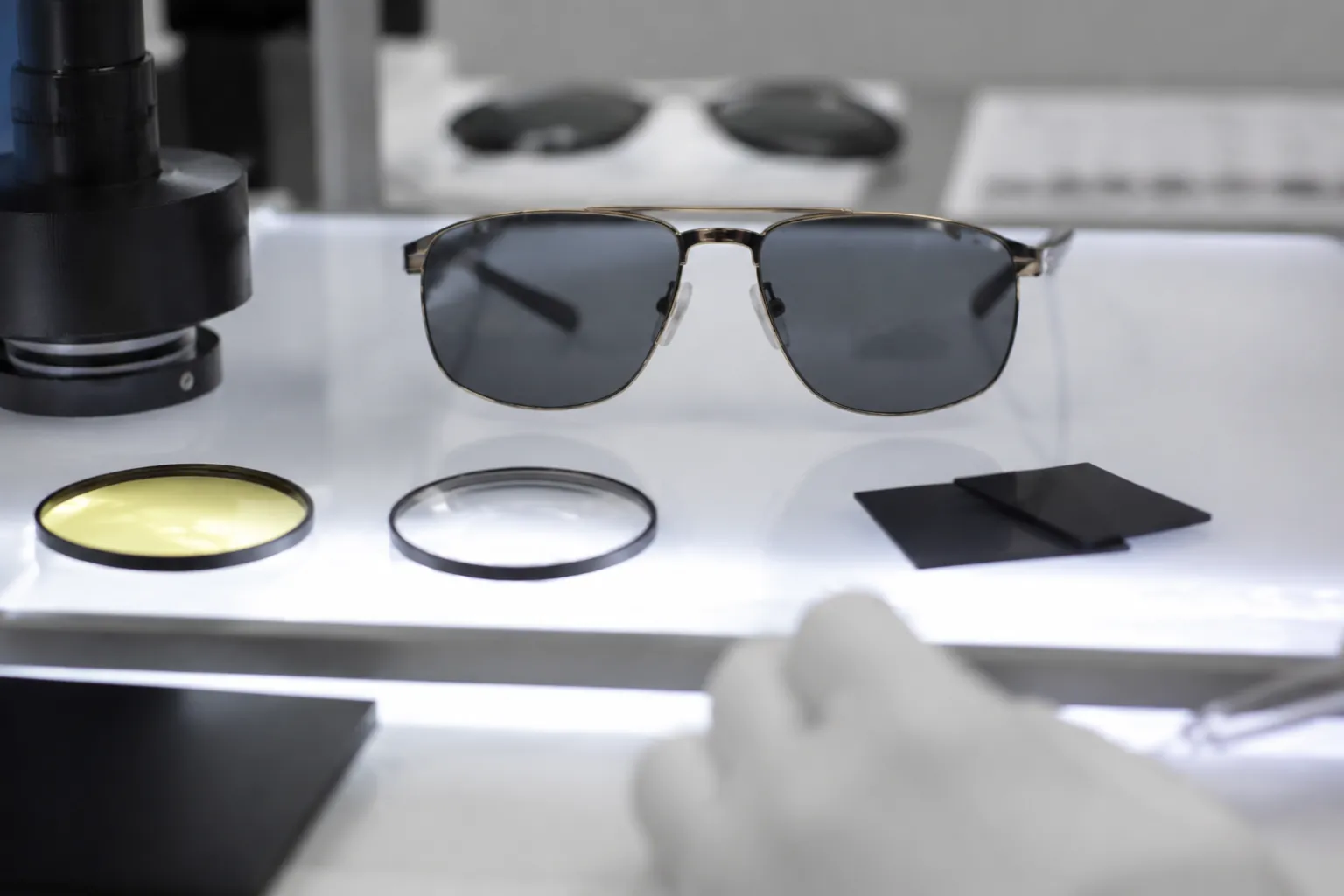
This guide is for brands, importers, distributors, and retailers sourcing custom sunglasses from overseas factories. It shows what proof to request before using UV400 on a lens, hangtag, product page, pouch, carton, or sales sheet. UV400 is a product claim. Not decoration. Buyers need to link that claim to the tested lens construction, the production batch, the target market standard, and the exact wording used on the finished goods. That paper trail helps reduce inspection disputes, customs questions, retailer holds, and unsupported-claim risk.
Start With The Claim, Not The Artwork
UV400 sounds straightforward. It is not. Buyers should treat it as a controlled performance claim. In practice, UV400 usually means the lens is intended to block ultraviolet radiation up to 400 nm. Whether that wording is acceptable depends on the destination market, the test standard used, the lens construction tested, and whether the tested sample matches the goods being shipped.
A common mistake is approving packaging, lens marks, and online copy before the lens specification is locked. That creates risk fast. A smoke PC lens, brown gradient TAC lens, mirrored nylon lens, and lightly tinted fashion lens may all look fine in a sample review, but they can differ in visible light transmission, UV transmittance, coating behavior, tint uniformity, polarization performance, and suitability for driving or general use.
Ask the factory to define the product in technical terms before any UV400 wording is approved:
- Lens material: PC, TAC, nylon, CR-39, acrylic, or another stated material
- Lens color and finish: solid, gradient, mirrored, flash-coated, polarized, clear, or transparent fashion tint
- Target lens category: based on visible light transmission and the destination market requirement
- Center thickness and base curve: because lens geometry and material thickness can affect consistency and optical behavior
- Applicable standard: EN ISO 12312-1, ANSI Z80.3, AS/NZS 1067, or a retailer-specific protocol where required
- Claim location: lens mark, sticker, hangtag, insert, pouch, carton, product page, or retailer data sheet
Do not rely on vague supplier phrases such as "EU approved," "export quality," "FDA certified," or "global UV standard." Those terms do not identify the test method, the sample tested, the report date, the market requirement, or whether the result applies to your lens color and production lot. FDA registration or device listing, where relevant, is not the same as a UV performance test. ISO 9001 and BSCI may help with supplier screening, but they do not prove that a sunglass lens meets UV or optical requirements.
Buyer rule: do not approve UV400 print, stickers, online copy, hangtags, or carton wording until the lens material, color, finish, category, test basis, and destination market are tied to the same product family.
The Proof Pack To Request Before Bulk Production
A useful proof pack must be current, traceable, and specific. If your team cannot connect the tested lens to the PO, style number, colorway, and shipment, the file is weak. Even a real report can be poor evidence.
Request the proof pack before bulk production starts. At minimum, it should include:
- UV and optical test report: issued by a competent internal or third-party laboratory, naming the test standard, sample description, lens material, lens color or family, visible light transmission, UV transmittance or UV performance result, and report date.
- Lens specification sheet: material, base curve, nominal center thickness, tint code, VLT target range, UV requirement, polarization status, mirror or hard-coat notes, and supplier or internal lens code.
- Approved artwork pack: exact UV400 wording and placement on the lens, sticker, temple, hangtag, pouch, barcode label, inner box, master carton, product page, or insert where used.
- Batch QC form: PO number, SKU, colorway, lot number, inspection date, quantity checked, UV check result, visual inspection result, packaging claim check, and inspector name or ID.
- Change control record: any change in lens vendor, resin, colorant formula, coating process, mirror coating, polarization film, pad-print ink, curing process, or molding tool after sample approval.
- Retained sample reference: one or more sealed finished pairs identified by PO, SKU, colorway, batch date, and internal trace code.
On custom programs, paperwork should move alongside sampling. Not after it. If documentation is left until packing week, buyers often face relabeling, shipment delay, or urgent testing. The main problem is rarely the document alone. It is the gap between the document and the actual goods being packed.
Ask one blunt question: "Is this report for the same lens family and color used in my order, or only for a similar reference style?" The answer usually tells you whether the factory has real traceability or is leaning on generic catalog paperwork.
Which Standard Applies To Which Market
Different markets use different standards, labeling rules, and compliance files. A factory may make one sunglass design for several regions, but the evidence still has to match the destination market and product version. One report does not automatically support every country, retailer, or lens color.
| Market or program | Common proof requested | What buyers should check | Common weak point |
|---|---|---|---|
| European Union | EN ISO 12312-1 test support, CE marking basis, EU Declaration of Conformity, and technical file where applicable | Lens category, UV transmittance, visible light transmission, restrictions for use, warnings, user information, and model traceability | CE mark used on product or packaging without a model-linked report and supporting technical documentation |
| United States | ANSI Z80.3 test support where used, accurate product labeling, and FDA registration or listing context where applicable | UV performance, luminous transmittance, traffic signal recognition where relevant, impact-related claims, and whether "FDA approved" wording is avoided | Supplier presents FDA registration as proof of UV protection instead of providing a performance report |
| Australia / New Zealand | AS/NZS 1067 test support and category labeling | Lens category, transmission performance, suitability warnings, driving restrictions, and UV claim wording | Light fashion tints treated as general-purpose sunglasses without checking category and labeling requirements |
| Retailer chemical compliance programs | REACH documentation or retailer chemical test reports where required | Frame resin, coatings, paints, metal parts, nose pads, logo plates, printed areas, pouch materials, and packaging inks | Only the lens is reviewed while decorated parts and accessories are ignored |
| Factory qualification review | ISO 9001 certificate, BSCI audit, business license, or supplier questionnaire where requested | Certificate scope, site name, validity, audit date, and whether the certificate covers the actual factory | Management-system or social-audit documents are mistaken for product compliance evidence |
Write the target market into the purchase order, product brief, and artwork approval. Be specific. If one frame is sold into multiple countries, keep separate compliance files for each market version when labeling, warnings, declarations, or retailer requirements differ. A small wording change on a hangtag or user insert can turn into a retail compliance problem.
Control Lens Materials, Markings, And Packaging Claims
Printing UV400 on the lens is common. It still needs control. Treat it like any other regulated or performance-related claim. The marking method, ink system, curing condition, adhesion check, and inspection standard all matter because the lens is both a performance component and a visible branded surface.
Material choice affects both optical performance and marking reliability:
| Lens type | Typical behavior | Common marking method | Buyer watchpoint |
|---|---|---|---|
| PC injected lens | Lightweight and widely used in promotional, fashion, and sport-style sunglasses | Pad print, sticker, or controlled print process | Check print adhesion and rubbing after curing; low-quality ink or poor curing can smear |
| TAC polarized lens | Layered construction commonly used for polarized sunglasses | Sticker or pad print on a suitable surface | Confirm the tested polarized lens stack matches production; do not assume all TAC lots are equivalent |
| Nylon lens | Good flexibility and optical clarity when properly specified | Laser marking or controlled print process | Test marking on the final coated lens; coating compatibility can vary |
| CR-39 or resin lens | Often selected for optical appearance or fashion programs | Sticker, selective print, or process approved by the lens supplier | Transparent and lighter tints need careful review for category, UV performance, and intended-use labeling |
Pad printing works for small marks, but buyers should ask about ink type, curing control, and adhesion inspection. Laser marking can be durable on some surfaces, but the wrong setting can create haze, visible marks, coating damage, or heat effects. Stickers are flexible and low cost, but they can peel, shift, or leave adhesive residue after storage and transport.
Then check the packaging. Broad phrases such as "100% protection," "all UV blocked," "medical grade," or "all-market compliant" create risk unless the claim is specifically supported. Keep wording narrow. Keep it testable. Tie it to the report. Approve a physical golden sample that includes the final lens, actual mark, hangtag, user information, pouch or box, barcode label, and carton artwork wherever the claim appears.
Batch Control: Where UV400 Claims Usually Break Down
Most UV400 claim failures do not start with a dramatic lab failure. They start with drift. A sample passes, then bulk production changes in a small way: a new lens supplier lot, a revised smoke pigment, a mirror coating substitution, a lighter transparent tint, a different polarization film, or a new printing process. The goods may still look acceptable. The proof trail does not.
A competent factory should control the batch through defined checkpoints:
- Incoming material check: verify lens material, color code, supplier lot, and basic UV check before assembly. If molded lenses are purchased externally, record the supplier batch number.
- First article approval: build the first finished pair using the production frame, final lens, final decoration, and final packaging components. Lock claim wording and mark placement at this stage.
- In-process inspection: check lens fit, stress marks around groove or screw areas, tint consistency between left and right lenses, logo position, and visible lens defects.
- Final QC: sample finished goods by SKU and colorway, confirm UV check result, inspect lens claims, confirm packaging wording, and verify carton labels against the PO.
- Retained sample storage: keep at least one finished pair per relevant colorway or batch with date, order number, lot reference, and inspector sign-off.
Ask about tolerances and acceptance criteria. The factory should be able to explain how it controls lens category, tint appearance, print placement, visible defects, and packaging claim checks. Internal UV meters can help with batch screening, but they should be calibrated or verified on a documented schedule. They are not a substitute for a required laboratory report.
Order size changes the level of formality, not the need for traceability. A small pilot order may use a simple QC record and retained sample. A larger retail or distributor order should use stronger lot control, carton-level identification where required, and clear segregation of reworked or replacement stock from approved goods.
How MOQ, Price, And Lead Time Affect Compliance Work
Buyers often expect the same documentation effort on very small and very large orders. The evidence needed may be similar. The cost structure and timing are not.
Low-MOQ programs can work for concept tests, distributor samples, influencer capsules, or pilot launches. They do not remove the need for testing, document review, artwork control, or claim approval. Unit price is affected by frame material, lens type, decoration process, packaging, order quantity, inspection requirements, and whether new testing is needed. Compliance cost rises when buyers keep changing lens tint, mirror coating, polarization status, claim wording, mark placement, or packaging after sample approval. Those changes can invalidate the original proof file or trigger a new technical review.
| Order stage | Typical quantity logic | Compliance approach | Buyer decision |
|---|---|---|---|
| Concept test | Small sample or low-MOQ run | Use an existing tested lens family where possible; avoid unusual claims and high-risk transparent tints unless testing is planned | Keep decoration simple and confirm claim wording before printing |
| Retail pilot | Limited first order | Request a model-specific proof pack and batch QC record | Decide the final market version before packaging is produced |
| Distributor order | Repeatable commercial order | Confirm the standard by destination market and retain finished samples by colorway | Budget time and cost for third-party testing if the customer or retailer requires reports in the importer name |
| Volume program | High-volume or multi-shipment program | Lock lens supplier lot rules, tint tolerance, marking method, inspection plan, and traceability process | Use a pre-production approval gate before full assembly and packing |
Lead time matters. Reserve time for document review, artwork corrections, golden-sample approval, and any required external testing before bulk materials are committed. If you wait until goods are packed to ask for model-specific proof, expect relabeling, repacking, delay, or revised product pages.
Red Flags In Reports, Supplier Replies, And Approval Flow
Some documents look official and still do not support the order well. Procurement, merchandising, product development, and compliance teams should know how to spot weak evidence early.
- The report is for a different color: a dark smoke lens report does not automatically support a light pink transparent lens, a gradient lens, or a mirrored version.
- The tested product is described vaguely: "sunglasses sample" or "fashion glasses" is weaker than a report naming the model, lens material, lens color, or lens family.
- The standard is missing: UV400 is a claim, not a complete test method by itself.
- The report is old with no change history: ask whether the lens resin, pigment, coating, polarization film, supplier, or production process has changed since testing.
- No batch records exist: a supplier who cannot show incoming checks, final QC, or retained samples may not be controlling production against the approved sample.
- The wording is inflated: "FDA certified," "FDA approved sunglasses," "global standard approved," and "all-market compliant" should trigger immediate follow-up.
- The certificate is not product-specific: ISO 9001, BSCI, business licenses, and factory profiles do not prove that a lens meets UV400, EN ISO 12312-1, ANSI Z80.3, or AS/NZS 1067 requirements.
Use direct questions. Ask: "Which report supports this exact lens color and finish?" "What changed since the tested sample?" "Which standard was used?" "How is the lens lot identified on QC records?" "Which retained sample matches this shipment?" Strong factories answer with documents, lot logic, sample references, and a clear test basis. Weak suppliers answer with brochures, screenshots, or sales talk.
The cleanest workflow is front-loaded. Define the market on the brief and PO. Lock the lens material, color, finish, category target, and polarization status. Request the supporting report, or decide whether fresh testing is needed. Approve a physical golden sample with the final UV400 mark, final lens, and final packaging wording. Then write the compliance requirement into the PO, specification sheet, and artwork approval record.
During production, request first-article photos and a short QC update before full assembly is complete. Before shipment, request the final QC record, carton label photos, retained sample ID, and the exact test report used to support the claim. Save those files by SKU, market version, and batch. Simple rule: if someone asks later what supports the UV400 statement, you should be able to answer in minutes.
Have a custom sunglasses project in mind?
Send us your styles, target market and quantities and we will return a detailed quote with MOQ, lead time and a sample plan.
Get a QuoteWhy source this from Wenzhou with LumiShades
Wenzhou in Zhejiang Province is widely regarded as China’s eyewear manufacturing capital, producing a large share of the world’s sunglasses. That concentration matters to buyers: a deep local supply chain for acetate sheet, hinges, lens blanks, plating and packaging means shorter component lead times, easier color and material matching, and a workforce with decades of eyewear-specific skill. LumiShades has manufactured in this ecosystem since 2009, and our vertical integration — in-house injection molding, acetate cutting, CNC milling, lens tinting, decoration and quality control — means no part of your order is quietly subcontracted to a workshop you cannot audit.
For international buyers, that vertical control translates into accountability. When a single factory owns every step, defects are traced and fixed at source rather than bounced between vendors, and your specifications survive intact from first sample to bulk. We back this with 15+ years of experience, shipments to 60+ countries, more than 5 million pairs produced per year and a 98.5% on-time delivery rate. Our certifications — CE EN ISO 12312-1, FDA registration, ANSI Z80.3, AS/NZS 1067, REACH, ISO 9001 and BSCI audit — mean the compliance documentation your market requires already exists. Explore our manufacturing capabilities and quality control process to see how this works in practice.
Frequently asked questions
Is UV400 the same as CE compliance? No. UV400 is a UV protection claim. CE compliance for sunglasses sold in the EU normally requires the product to meet the applicable requirements for sunglasses, commonly supported by EN ISO 12312-1 testing, a technical file, required user information, and an EU Declaration of Conformity. A UV400 mark alone does not prove CE compliance.
Can one UV400 report cover every color in a sunglasses range? Not automatically. A report may support a controlled lens family only when the tested sample is representative and the factory can justify that the material, pigment, coating, thickness, polarization status, and construction are equivalent. Light transparent tints, gradients, mirrored lenses, polarized lenses, and different materials should be reviewed separately and tested when equivalence is not clear.
Should UV400 be printed on the lens or only on packaging? Either can be acceptable if the claim is supported and controlled. The buyer should approve the exact wording, location, marking method, adhesion requirement, and packaging copy. The final QC record should confirm that the shipped goods match the approved sample and that every UV400 claim location is present, accurate, and not overstated.
What should I ask from a factory before paying for bulk production? Ask for the applicable test report, lens specification sheet, target market standard, approved UV400 wording, artwork showing claim placement, batch QC format, and retained-sample process. Also ask whether the report covers the exact lens color and finish in your order or only a similar reference product.
Does FDA registration prove sunglasses block UV? No. FDA registration or listing, where applicable, is not a UV performance test and should not be described as FDA approval of UV protection. For the US market, buyers should request product performance evidence such as ANSI Z80.3 support where relevant, plus accurate labeling and model-specific documentation.
Do ISO 9001 or BSCI certificates prove UV400 performance? No. ISO 9001 can indicate that a factory has a quality management system, and BSCI can relate to social compliance auditing. They do not prove that a specific sunglass lens meets UV400, EN ISO 12312-1, ANSI Z80.3, or AS/NZS 1067 requirements. Treat them as supplier qualification documents, not product test reports.
How early should UV400 compliance be checked in a custom order? Check it during sampling, before packaging artwork and lens markings are finalized. At that stage, confirm the lens material, color, finish, category target, claim wording, marking method, destination market, and whether existing reports are sufficient or new testing is needed. Waiting until packing makes correction slower and more expensive.
What is the most useful batch evidence for a buyer to keep? Keep the test report used to support the claim, the lens specification sheet, approved artwork, final QC record, carton label photos, change-control notes, and retained sample ID. Store them by PO, SKU, market version, lens color, and shipment date so the proof trail can be retrieved quickly if a retailer or compliance team asks for it.
Ready to start?
Explore our wayfarer sunglasses or request a quote — our sales team replies within 12 hours.
Request a Quote